






Metabolomics vs Lipidomics: Matching the Method to Research Goals
-
You are still exploring and do not yet know which molecules matter.
-
Your hypothesis spans several pathways or compound classes.
-
You want a broad differential picture between groups before narrowing down.
-
Lipids are central to the biology, such as in membrane remodeling, lipid signaling, energy storage, or lipid metabolism.
-
You need to distinguish specific lipid classes or species rather than treat "lipids" as one bulk signal.
-
A general metabolite scan has already hinted at lipid involvement and you want proper resolution.
-
The mechanism plausibly involves polar metabolites and lipids together.
-
You want pathway context from metabolomics alongside detailed lipid readouts.
Choose metabolomics when you want a broad view of the small molecules changing across your samples, and choose lipidomics when lipids are the biology you actually care about. The two are not competing techniques; they cover different chemical spaces and answer different questions.
An untargeted metabolomics workflow may detect some lipid-related features, but it is not optimized for lipid-focused coverage or detailed lipid annotation. The practical choice depends on whether the study requires broad metabolite profiling, lipid-focused analysis, or complementary information from both directions.
Why Metabolomics and Lipidomics Are Different Analyses
Lipidomics can be considered a subset of metabolomics from a biological perspective because lipids are metabolites. Analytically, though, they behave differently enough that they need their own workflows.
Polar metabolites such as amino acids, organic acids, sugars, and nucleotides occupy a different physicochemical space from many lipids. Lipids include numerous structurally related species that may differ in fatty acyl composition, chain length, degree of unsaturation, head group, or other structural features. Extraction, chromatographic separation, and annotation strategies therefore need to be matched to the analytical target.
Metabolite and lipid annotation may rely on different combinations of databases, spectral libraries, and structural resources according to the analytical workflow and the evidence available for each feature. The differences in extraction, separation, and annotation strategies are one reason metabolomics and lipidomics are generally handled through distinct analytical workflows.
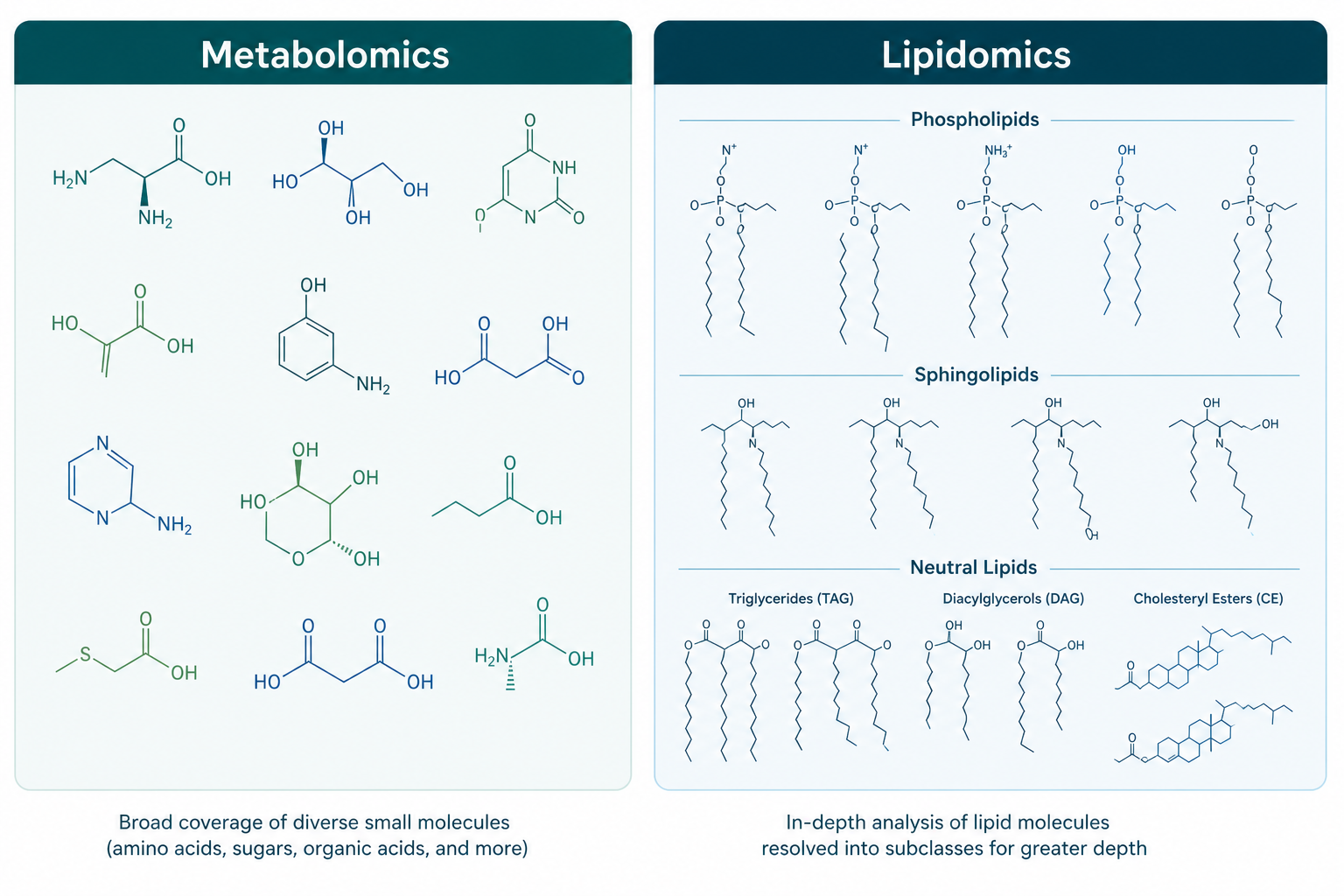
Figure 1. Metabolomics surveys broad polar metabolite space; lipidomics provides lipid-focused profiling across lipid classes and annotated species.
Side-by-Side Comparison
The table below summarizes the practical differences that matter when you are choosing a direction.
|
Aspect |
Metabolomics |
Lipidomics |
|---|---|---|
|
Primary target |
Broad small molecules (amino acids, organic acids, sugars, nucleotides, and more) |
Lipids and their many subclasses |
|
Best question |
"What small-molecule changes are happening overall?" |
"How is lipid composition or a specific lipid class changing?" |
|
Coverage style |
Wide survey across many compound classes |
Lipid-focused profiling across lipid classes and annotated species |
|
Annotation resources |
Metabolite-focused databases and spectral resources |
Lipid-specific databases, spectral libraries, and structural resources |
|
Untargeted option |
Yes, for discovery across detectable metabolites |
Yes, for broad lipid profiling |
|
Targeted option |
Yes, for defined metabolites from the current targeted list |
Yes, for predefined lipid targets subject to coverage review |
|
Typical use |
Early discovery, pathway-level exploration |
Membrane biology, lipid signaling, lipid metabolism studies |
Both directions support untargeted discovery and targeted measurement, but their project-review requirements differ. Targeted metabolomics depends on whether the proposed compounds are included in the current targeted detection list, while targeted lipidomics requires project-specific review of target coverage and analytical scope.
Matching the Method to Your Research Goal
The clearest way to decide is to start from the question you need to answer, not from the technique.
Reach for metabolomics when:
Reach for lipidomics when:
Consider running both when:
Consider both when the research question spans non-lipid metabolites and lipids and sufficient sample material is available. Parallel planning allows sample allocation and workflow requirements to be considered at the study-design stage. Metabolomics may provide broader context for changes involving non-lipid metabolites, while lipidomics provides lipid-focused information across classes and annotated species.
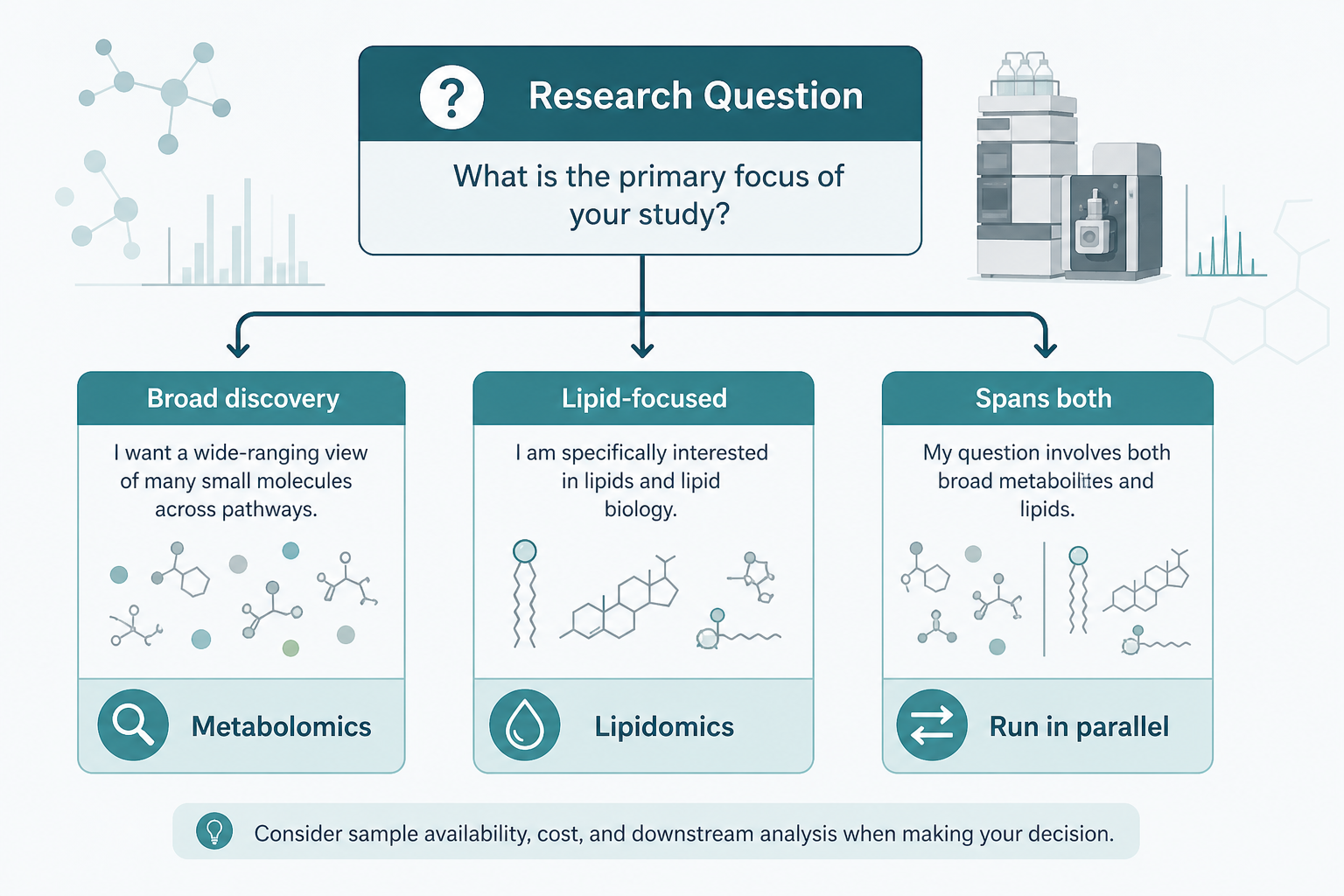
Figure 2. Let the research question drive the choice: broad discovery, lipid-focused detail, or both.
Untargeted or Targeted Within Each Direction
Once you have picked metabolomics or lipidomics, there is a second, smaller decision: discovery or focused measurement.
Untargeted work, in either direction, is the exploratory mode. Untargeted analysis profiles a broad range of detectable features and supports discovery-oriented comparison between groups. Candidate features should be prioritized by considering the magnitude and consistency of change, statistical support, signal quality, annotation confidence, and biological relevance.
Targeted analysis focuses on a predefined set of metabolites or lipid targets within an approved analytical scope. For targeted metabolomics, compounds included in the current targeted detection list can enter routine project review, while other targets require separate assessment where applicable. Targeted lipidomics requires project-specific review of target coverage and analytical scope. Candidates identified through untargeted analysis may be considered for targeted follow-up when the proposed targets and project design are suitable.
Considering the analytical direction and the choice between untargeted and targeted analysis together helps match the workflow to the stage of the study. Untargeted metabolomics or lipidomics can identify candidate changes, while selected candidates may be considered for targeted follow-up after target coverage and project feasibility are reviewed.
Sample Considerations for Metabolomics and Lipidomics
Sample type and available amount influence both metabolomics and lipidomics study design. Common biological matrices, including cells, tissues, plasma, serum, urine, feces, cerebrospinal fluid, and culture supernatants, can be considered for either workflow depending on the analytical objective, sample characteristics, and study design.
The required input amount varies depending on the selected workflow, sample condition, and analytical requirements. Specific sample suitability and input requirements should be reviewed before project initiation to ensure that the analytical strategy matches the study objectives.
Related Services
Metabolomics and Lipidomics Analysis Services
Targeted Metabolomics Analysis Service
Frequently Asked Questions
1. Is lipidomics just a type of metabolomics?
Biologically, lipids are metabolites, so in that sense yes. Analytically, lipids need dedicated extraction, separation, and lipid-specific libraries, so lipidomics is run as its own workflow rather than a slice of a general metabolite scan.
2. Will an untargeted metabolomics run also cover my lipids?
An untargeted metabolomics workflow may detect some lipid-related features, but the coverage depends on the extraction, chromatography, and analytical method. If lipid composition is central to the research question, a dedicated lipidomics workflow provides a more appropriate lipid-focused analysis.
3. How do I decide between the two?
Start from your question. Broad, still-exploring, multi-pathway questions point to metabolomics; lipid-centered mechanisms point to lipidomics. When the biology spans both, running them in parallel is a reasonable design.
4. Can metabolomics and lipidomics be planned in the same study?
Yes, when both analytical directions are relevant to the research question. Sample type, available amount, sample allocation, and the applicable workflows should be reviewed before the project scope is confirmed.
5. Do metabolomics and lipidomics use the same annotation resources?
Not necessarily. Metabolite and lipid annotation use different database, spectral-library, and structural resources according to the analytical workflow and the evidence available for each feature.
6. Are untargeted annotations confirmed identities?
No. Untargeted results provide candidate annotations based on the available database, spectral, and structural evidence rather than automatically providing confirmed molecular identities. Priority candidates requiring further evaluation may be considered for separately reviewed follow-up according to target coverage and project feasibility.
Conclusion
Metabolomics and lipidomics provide complementary but analytically distinct views of small-molecule and lipid changes. Metabolomics gives you breadth across small-molecule space and suits open-ended discovery; lipidomics provides lipid-focused information across lipid classes and annotated species and suits questions where lipid composition and change are central to the research question.
Let the research question set the direction, decide between untargeted and targeted within that direction, and match sample type and amount to the workflow. When the research question spans non-lipid metabolites and lipids, metabolomics and lipidomics can be considered together, subject to sample and workflow review. Teams weighing the choice can talk it through with MtoZ Biolabs to align direction, samples, and expectations before the project starts.
How to order?




