






LC-MS Truncated Form Analysis Service
MtoZ Biolabs delivers an LC-MS Truncated Form Analysis Service that helps you find, confirm, and quantify protein truncation variants with fit-for-purpose LC-MS and LC-MS/MS strategies. From biologics development and process characterization to stability studies and troubleshooting, our team provides clear evidence for N-terminal or C-terminal truncations, proteolytic clipping, and sequence loss events that impact identity, purity, potency, and comparability.
Introduction
Protein truncation is a common outcome of disrupted gene expression and protein processing. Nonsense and frameshift variants can introduce premature stop codons, and aberrant splicing can alter the coding sequence, both of which may produce shortened proteins that lack critical domains required for enzymatic activity, binding, or correct subcellular localization. In parallel, post-expression events such as proteolytic clipping and stress-driven instability can generate truncated species during expression, purification, storage, or in vivo turnover.
Although genetic sequencing can predict variants that might cause truncation, sequencing alone cannot confirm whether a truncated protein is actually produced, whether it remains stable, or how abundant it is relative to the full-length form. LC-MS based truncated form analysis provides direct protein-level evidence by linking chromatographic features and mass signals to specific sequence loss patterns, enabling confirmation of expression, localization of truncation boundaries, and comparative assessment across samples and conditions.
Protein truncation analysis supports mechanism studies of proteostasis by tracking degradation signatures, suggesting proteolytic pathways involved, and helping evaluate how perturbations such as inhibitors, stress conditions, or process changes shift truncation patterns. For biologics and therapeutic protein programs, these insights translate into actionable information for impurity characterization, stability assessment, and decision making in development workflows.
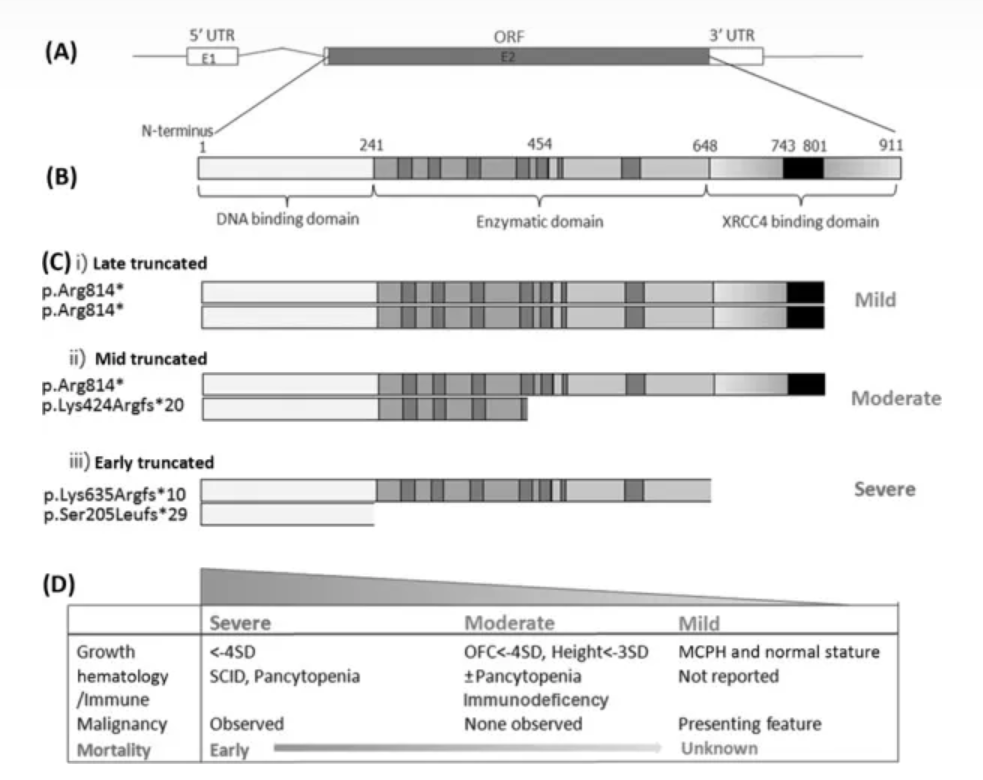
Murray, J. E. et al. Hum. Mutat. 2014.
Figure 1. Functional and Clinical Impact of Protein Truncation Events
LC-MS Truncated Form Analysis Service at MtoZ Biolabs
1. Targeted Protein Truncation Analysis
Targeted studies focus on a client-specified protein and a defined question. The workflow pinpoints N-terminal or C-terminal truncation boundaries with LC-MS and LC-MS/MS evidence and supports verification of suspected processing events, condition-specific proteolytic cleavage assessment, and characterization of truncated variants that may impact function or developability.
2. Proteomics-Based Truncation Profiling
Protein truncation proteomics provides discovery-oriented, large-scale profiling of truncation patterns in complex matrices. Using LC-MS/MS proteomics strategies, the workflow maps truncation-associated peptides across many proteins, compares condition-dependent truncation signatures, and helps reveal broader processing and degradation trends across tissues, cell types, or treatment groups.
Why Choose MtoZ Biolabs
✔️Advanced LC-MS Platforms
High-resolution instrumentation and optimized chromatography support confident separation and detection, even for low-level truncation species.
✔️Custom Study Design
Study plans are tailored to your goal and sample set, supporting dose-response, time-course, stress panels, and multi-lot comparisons with appropriate controls.
✔️High-Quality Data
Strict quality control is applied throughout the workflow to ensure reliable truncation identification and reproducible comparisons across samples and conditions.
✔️Responsive Customer Support
Communication stays direct and efficient from study setup through final delivery, with follow-up guidance available when you plan next steps.
Applications of LC-MS Truncated Form Analysis Service
1. Biologics Development
Truncated form profiling supports identity, purity characterization, comparability, and product-related variant assessment.
2. Stability and Stress Testing
LC-MS can reveal truncation driven by heat, pH shifts, oxidation-prone environments, or protease contamination.
3. Process Development and Troubleshooting
The service helps pinpoint where truncation emerges across upstream or downstream steps and guides process optimization.
4. Disease Mechanism Research
LC-MS truncated form analysis confirms whether predicted truncated proteins are actually expressed and reveals condition-associated truncation patterns that inform mechanism studies.
5. Basic Protein Research
Truncation mapping helps interpret unexpected band patterns, functional shifts, or cleavage-prone regions in recombinant proteins.
FAQ
Q1: What types of samples are suitable?
MtoZ Biolabs accepts purified proteins, cell lysates, tissue extracts, and process intermediates for LC-MS truncated form analysis.
Q2: How should I prepare my samples?
1. Input amount: Submit at least 50 µg total protein or 100 µL of solution at ≥ 0.5 µg/µL.
2. Storage: Aliquot when possible, avoid repeated freeze-thaw, and store at -80°C.
3. Shipping and documentation: Ship on dry ice and provide a sample sheet including protein source, sample type, and project objectives.
For more information, please refer to Sample Submission Guidelines for Proteomics and Sample Submission Guidelines for Metabolomics.
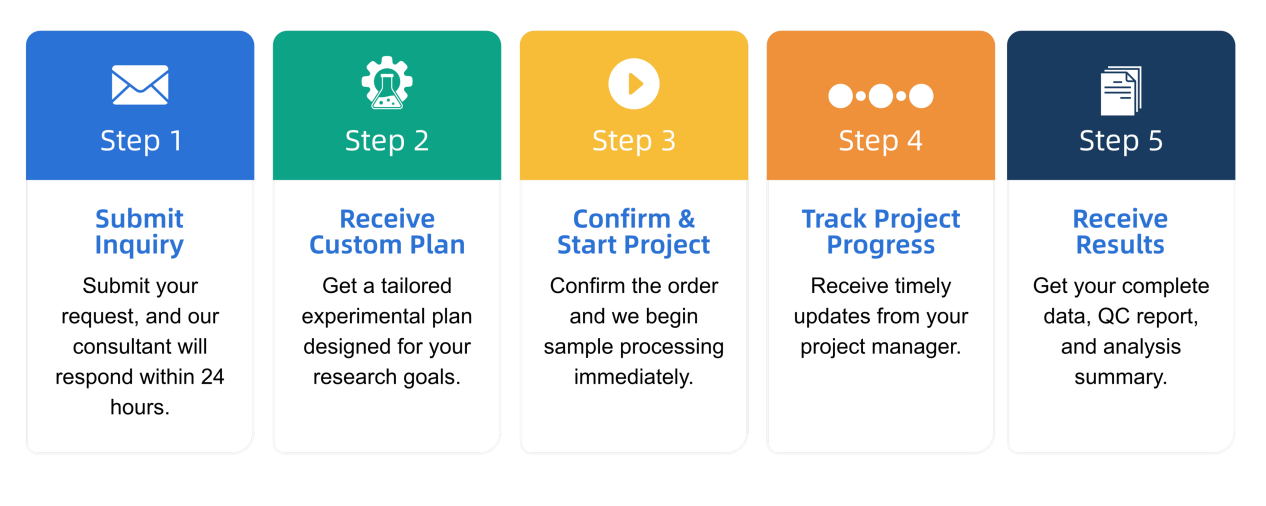
Q3: What is the service general workflow?
Q4: What data formats are provided?
1. Raw data: vendor native raw MS files based on the selected LC-MS platform
2. Processed tables: XLSX or CSV summarizing truncated species, observed masses, retention times, relative abundances, and confidence notes
3. Figures and QC: PDF plus PNG or TIFF, including chromatograms and deconvoluted mass spectra for key variants
4. Report and methods: concise PDF covering study design, key parameters, results summary, and interpretation notes
Additional formats can be provided upon request to meet specific analysis or publication requirements.
Start Your Project with MtoZ Biolabs
If truncated forms are complicating your purity profile or raising questions in development, LC-MS based evidence can turn uncertainty into a clear plan.
MtoZ Biolabs brings extensive experience in designing practical LC-MS and LC-MS/MS strategies for truncation detection, localization, and quantification. Contact us for a free business assessment.
How to order?




