



To perform targeted endoplasmic reticulum (ER) proteomics with PRM or SRM/MRM, enrich or isolate the ER fraction, digest under matched conditions, close an ER-relevant peptide panel, schedule precursors, and quantify extracted transitions or high-resolution fragment chromatograms under declared QC (Lange et al. 2008; Peterson et al. 2012). Optional stable isotope-labeled standards support absolute amount; otherwise the claim stays relative for scheduled peptides only. Prefer PRM when complex ER digests need accurate-mass fragment review; prefer SRM/MRM when transitions are mature and multiplex throughput matters; keep discovery LFQ or DIA if the ER inventory is still open.
Researchers who already have a closed ER peptide panel or a specific project objective can also review the MtoZ Biolabs Parallel Reaction Monitoring (PRM) Service and SRM-MRM Quantitative Proteomics Services for project-specific feasibility and assay planning.
Operational Workflow: Targeted ER Proteomics Step by Step
Step |
What to do |
Why it matters for ER targets |
|---|---|---|
1. Enrich the ER fraction |
Differential or density-gradient centrifugation, membrane enrichment, or kits with marker QC |
Reduces cytoplasmic background that swamps low-abundance ER peptides |
2. Match digestion |
Reduce, alkylate, digest, and clean up under one protocol across compared samples |
Prep drift looks like ER biology after targeting |
3. Close the peptide panel |
Choose proteotypic ER or UPR-related peptides with matrix evidence |
Unscheduled proteins remain invisible |
4. Build PRM or SRM methods |
Schedule precursors; lock transitions (SRM) or extract HR fragments (PRM) |
Cycle time and interference decide usable peaks |
5. Optional SIS spike |
Add heavy peptides at a recorded step if amount is required |
Absolute claim starts only from the spike point |
6. Acquire, QC, report |
Review peak shape, qualifiers, failed-target rules, and replicates |
Overpacked schedules destabilize quantification |
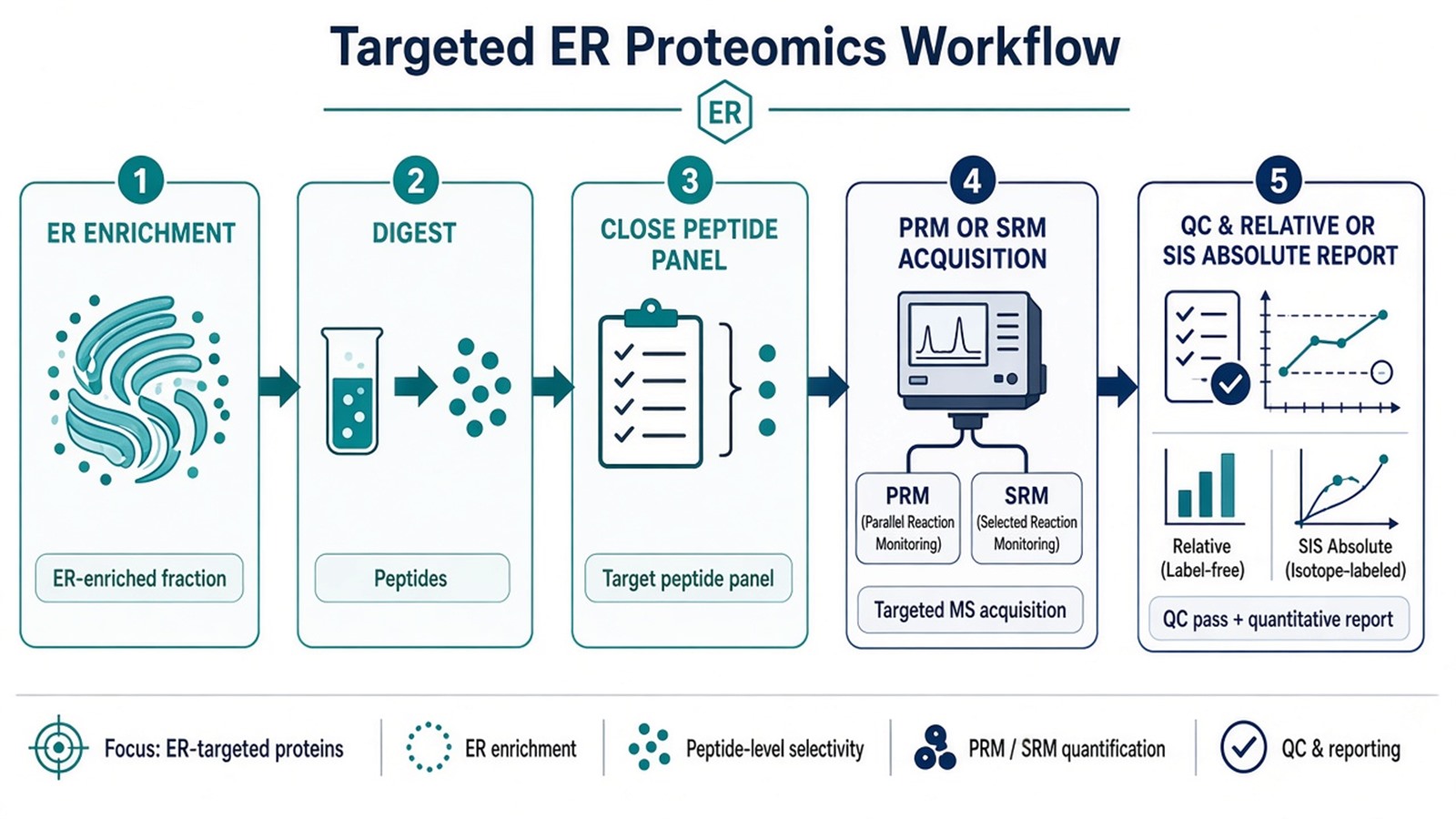
Figure 1. Targeted ER PRM/SRM is an enrichment-plus-closed-panel workflow, not an open organelle survey.
Skipping ER enrichment QC or launching an open protein list as if it were targeted monitoring produces undefended quantitative claims.
Practical notes on enrichment and peptides
Validate ER fraction quality with established marker proteins before method locking. Prefer peptides that are unique, stably chromatographic, and not dominated by uncontrolled modification sites unless the modification is the claim. Commercial isolation kits are convenient only when purity checks pass.
Choosing PRM Versus SRM/MRM for ER Digests
Need in ER work |
Prefer PRM |
Prefer SRM/MRM |
|---|---|---|
Matrix complexity |
Complex membrane digests needing fragment review |
Cleaner panels with locked transitions |
Method stage |
Panel still being refined |
Mature high-multiplex transition list |
Recorded ions |
Full high-resolution MS2; post-run fragment choice |
Predefined Q1-Q3 transitions |
Absolute amount |
Either route with SIS and calibration |
Either route with SIS and calibration |
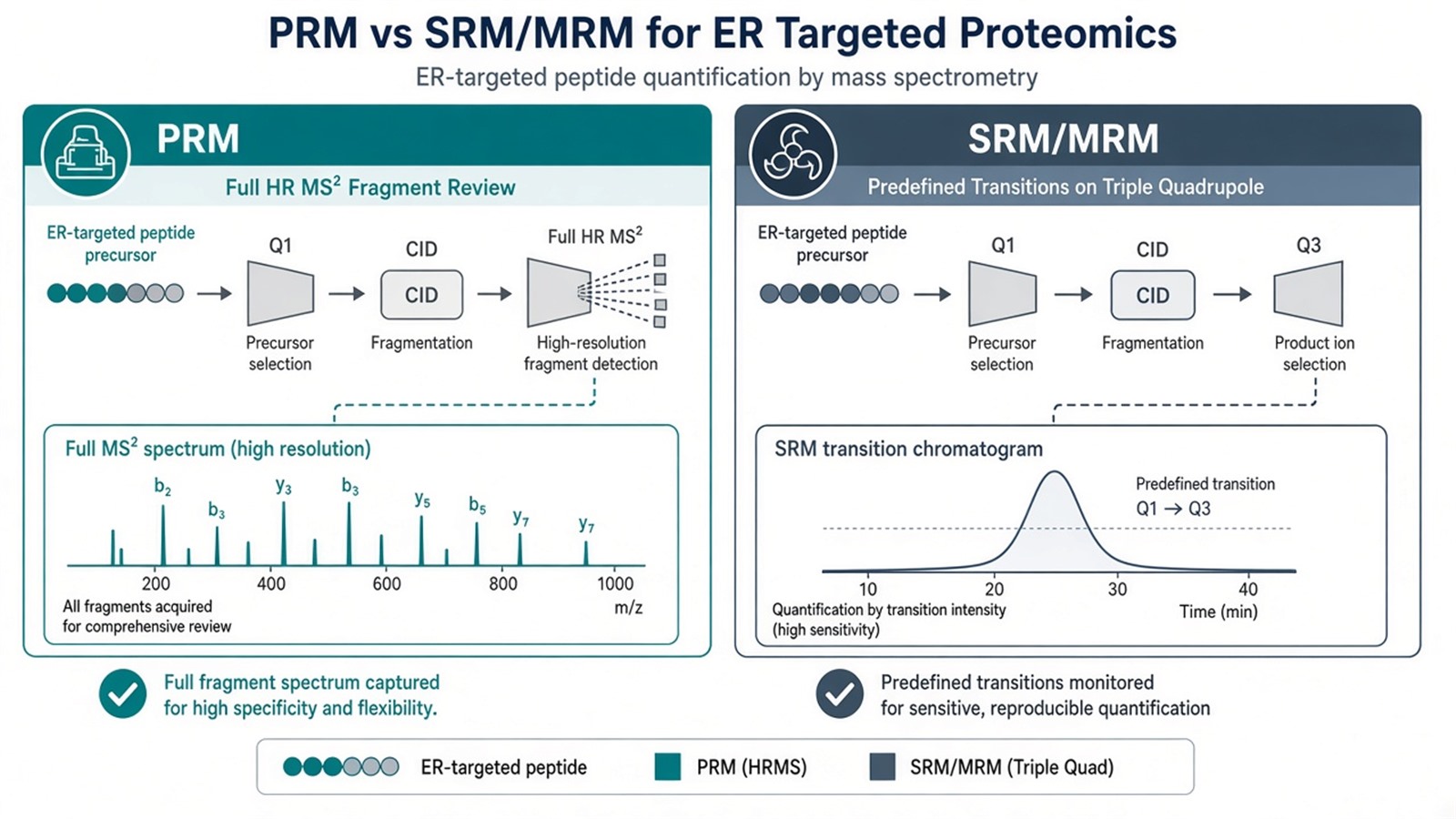
Figure 2. PRM and SRM both quantify closed ER peptide panels; they differ in recorded ions and multiplex versus fragment-review trade-offs.
For PRM principle, see Principles of PRM Quantitative Proteomics and Parallel Reaction Monitoring for Targeted Quantification. For SRM/MRM operations, see SRM Mass Spectrometry and Principle of Multiple Reaction Monitoring. For platform comparison, see PRM vs MRM: Comparative Analysis in Quantitative Proteomics. For general targeted planning, see How to Plan a Targeted Proteomics Validation Study.
Judgment Criteria: When Targeted ER PRM/SRM Fits
Study need |
Targeted ER PRM/SRM often fits |
Reassess before enrichment |
|---|---|---|
Inventory |
ER or UPR proteins already nominated as peptides |
Organelle proteome still being surveyed |
Sample |
ER enrichment is reproducible across compared groups |
Fraction purity unstable between conditions |
Claim |
Relative confirmation of scheduled ER peptides |
Absolute amount without SIS plan |
Platform |
PRM or triple-quadrupole SRM access matches panel size |
Cycle time cannot hold the list |
Follow-up |
Marker QC and failed-target rules can be declared |
Discovery depth is still the priority |
Prefer discovery LFQ or DIA on ER-enriched fractions first when the protein inventory is open. Prefer PRM for difficult membrane backgrounds. Prefer SRM/MRM for mature multiplex panels. Prefer AQUA-style SIS only when concentration units are required.
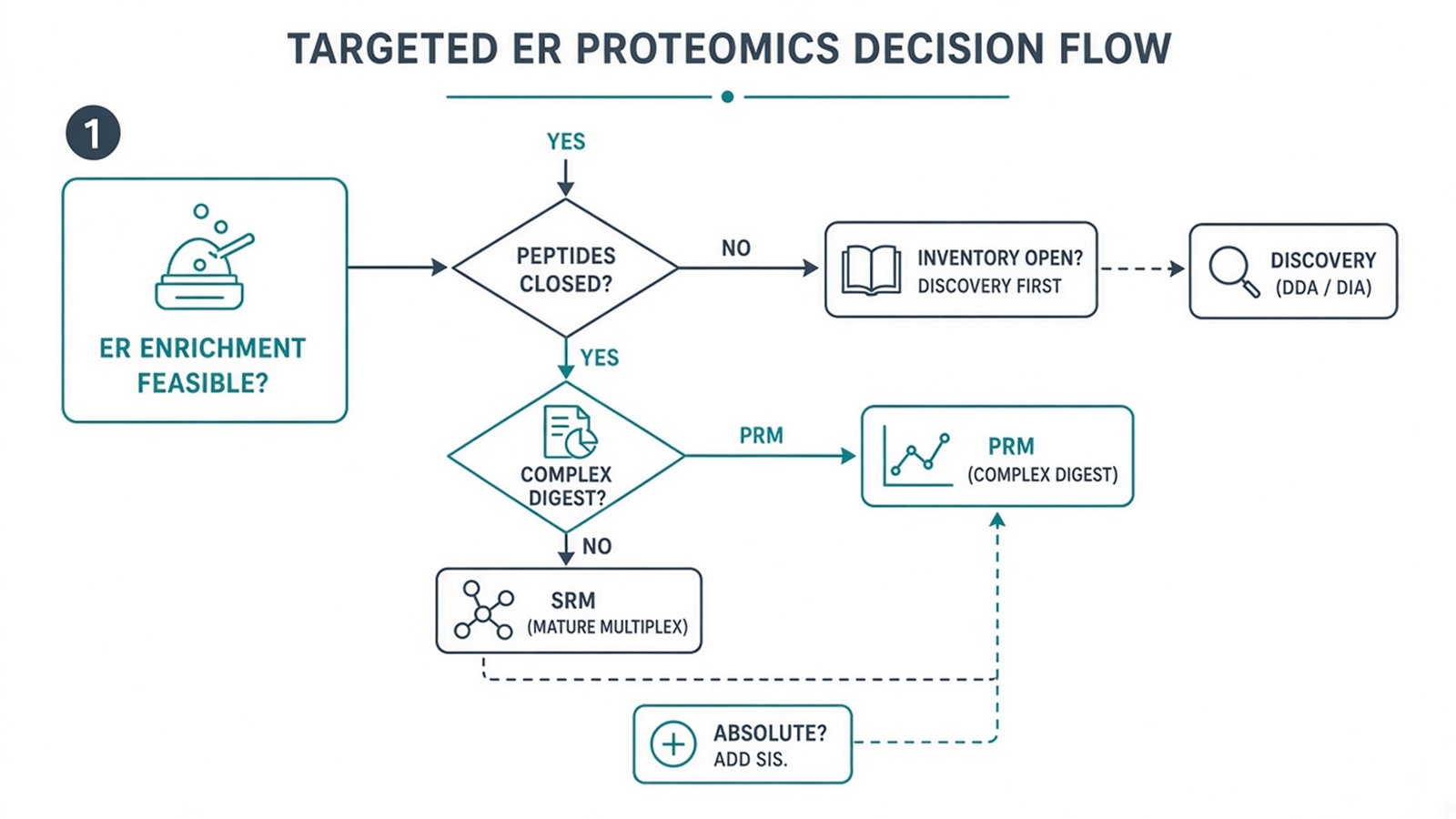
Figure 3. Perform targeted ER PRM/SRM only after enrichment QC and peptide closure; otherwise stay in discovery or redesign the absolute claim.
For challenge troubleshooting, see 5 Strategies to Address Challenges in Targeted Proteomics. For prep impact, see The Impact of Sample Preparation on Quantitative Results in Quantitative Proteomics. For absolute standards, see AQUA Peptides vs External Standards for Quantification.
Limits and Application Boundaries
Targeted ER methods do not measure proteins absent from the inclusion list. Enrichment bias can create apparent regulation that reflects fraction yield, not biology, unless markers and loads are controlled. SRM unit-resolution transitions can still be interfered; PRM does not erase isolation-window co-fragmentation. Absolute amount needs matched standards and recorded spike timing. Pathway enrichment on an ER shortlist reflects that panel only. Diagnostic cutoffs sit outside ordinary research reporting unless a separately validated assay framework is in place.
Typical applications after this workflow:
- Quantifying nominated ER stress or UPR proteins across treatments.
- Confirming discovery hits from ER-enriched fractions.
- Tracking membrane-associated ER targets with enrichment QC.
- Absolute ER peptide amount when SIS and calibration are in scope.
- Method transfer of a fixed ER panel after matrix pilots succeed.
Once enrichment QC, peptide list, PRM or SRM schedule, and claim type are defined, the project can be scoped as targeted ER proteomics. Researchers can review the MtoZ Biolabs Parallel Reaction Monitoring (PRM) Service and Targeted Proteomics Service for sample evaluation and assay planning.
Frequently Asked Questions
1. What is the core operational sequence for targeted ER PRM/SRM?
Enrich and QC the ER fraction, match digestion, close peptides, schedule PRM or SRM acquisition, then report relative areas or SIS-calibrated amounts.
2. Do I always need ER enrichment?
For many low-abundance ER targets, yes. Without enrichment, cytoplasmic background often blocks scheduled peptides. Marker QC is part of the method.
3. Should I choose PRM or SRM for ER work?
Choose PRM when complex membrane digests need fragment review. Choose SRM/MRM when transitions are locked and multiplex throughput dominates.
4. Can this workflow survey the whole ER proteome?
No. It quantifies only the closed peptide list. Use discovery on enriched fractions first if the inventory is open.
5. When should I add SIS peptides?
Only when absolute amount is required. SIS does not fix unstable enrichment or an unfinished peptide panel.
Reference
- V. Lange, P. Picotti, B. Domon, R. Aebersold (2008). Selected reaction monitoring for quantitative proteomics: a tutorial. Mol. Syst. Biol., 4, 222. https://doi.org/10.1038/msb.2008.61
- A.C. Peterson, J.D. Russell, D.J. Bailey, M.S. Westphall, J.J. Coon (2012). Parallel reaction monitoring for high resolution and high mass accuracy quantitative, targeted proteomics. Mol. Cell. Proteomics, 11, 1475-1488. https://doi.org/10.1074/mcp.O112.020131
