






How to Design a Pilot Study for Low-Abundance Endogenous Protein Interactions
Introduction
Low-abundance endogenous protein interactions are difficult to study because the signal can be lost at several points before mass spectrometry analysis begins. The bait protein may be weakly expressed, the interaction may be transient, and the antibody may enrich background proteins more efficiently than the true complex. A full-scale discovery experiment can waste rare samples if the bait is not detectable or if the capture condition is not selective enough. A pilot study reduces this risk. The pilot study tests whether the endogenous bait can be detected, whether the interaction can survive extraction, whether background is manageable, and whether LC-MS/MS sensitivity is adequate for the expected protein abundance.
The main goal is not to identify every possible interactor in the first run. The main goal is to decide whether the workflow is ready for a larger endogenous protein interaction study. A good pilot study gives clear answers to practical questions: How much starting material is needed? Which antibody or tag-free capture condition works best? Which lysis buffer preserves the complex? Which controls define nonspecific binding? Which findings are strong enough to justify scale-up?
Related Services
| Service Area | Recommended Service | Relevance to This Topic |
| Protein interaction MS | Fusion Protein Interaction Analysis Service | Pull-Down and MS | Supports affinity capture and LC-MS/MS workflows for protein interaction analysis. |
| Protein analysis | Protein Analysis Service | Helps evaluate protein-level detection, sample quality, and method fit. |
| Protein identification | Protein Identification Service | Supports confirmation of bait proteins and candidate interactors. |
| Proteomics | Proteomics Analysis Service | Provides LC-MS/MS analysis and proteomic data support for pilot and discovery studies. |
Researchers planning low-abundance endogenous protein interactions can consult MtoZ Biolabs before sample submission to align bait abundance, control design, and LC-MS/MS depth with the project goal.
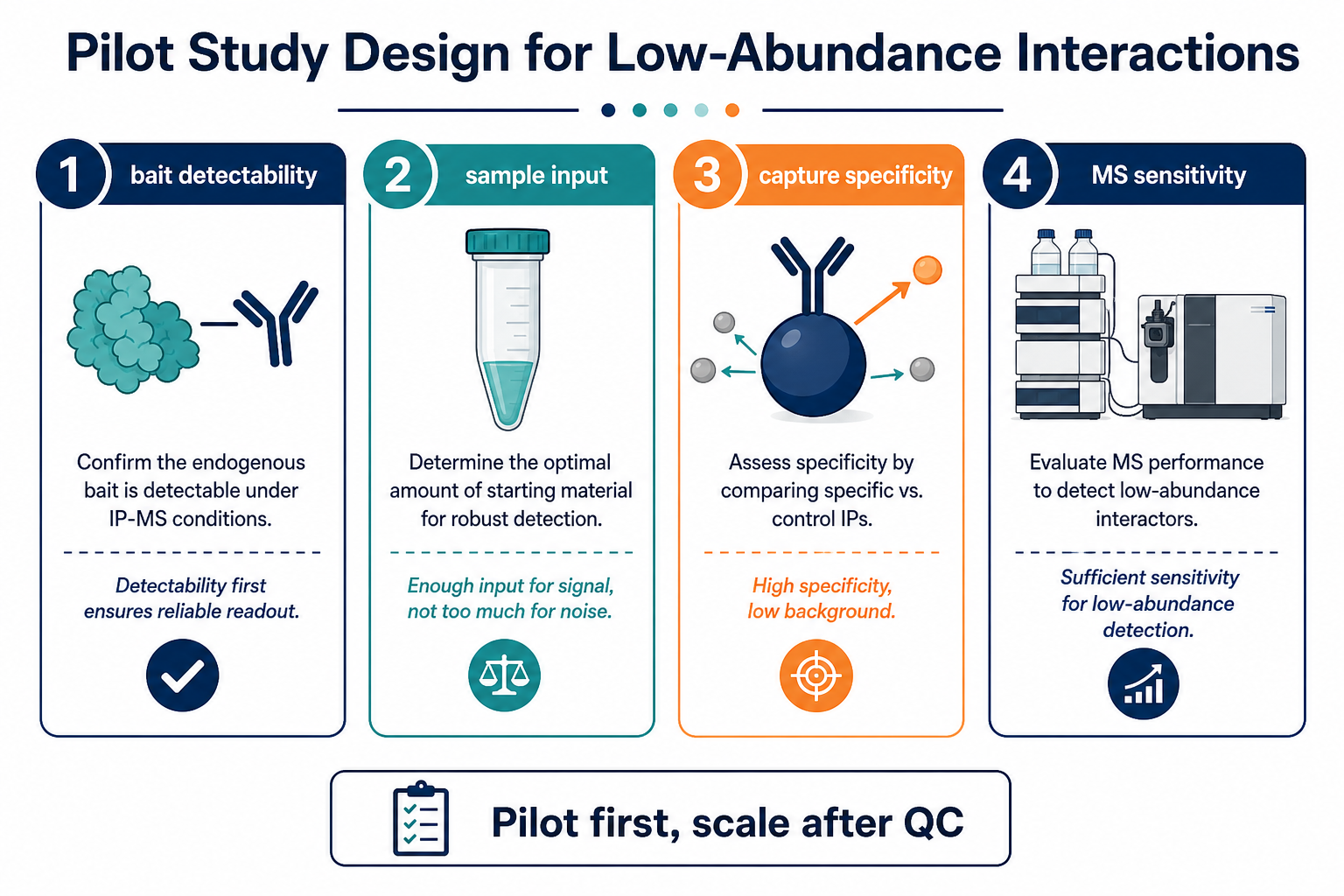
Figure 1. A pilot study should test bait detectability, sample input, capture specificity, and MS sensitivity before scale-up.
Start With the Biological Question
A pilot study should begin with a narrow biological question. Low-abundance endogenous protein interactions are rarely suitable for an unfocused screen on the first attempt. The project should define the bait, cell or tissue type, biological condition, and expected interaction class before sample preparation begins.
For example, the project may ask whether an endogenous transcription factor recruits a regulatory complex after stimulation. Another project may ask whether a low-abundance kinase changes binding partners after drug treatment. These questions require different extraction conditions, control groups, and validation methods. A clear question helps prevent the pilot from becoming a small but still unfocused discovery experiment.
Researchers should also decide whether the pilot is designed for feasibility, optimization, or early discovery. A feasibility pilot asks whether the bait can be captured. An optimization pilot compares lysis buffers, antibody lots, or sample inputs. An early discovery pilot may generate a short candidate list, but the candidate list should be interpreted cautiously.
Confirm Bait Detectability Before Interaction Capture
The first pilot checkpoint is bait detectability. If the endogenous bait cannot be detected in input lysate or enriched material, the interaction dataset will be unreliable. Detection can be checked by Western blotting, targeted MS, or an initial LC-MS/MS run depending on available material.
The assay should confirm that the bait is present in the biological condition being studied. Some low-abundance proteins are condition-specific. A protein may be detectable after stimulation but nearly absent at baseline. A pilot that ignores this biology may fail for the wrong reason.
When bait detection is weak, researchers can consider increasing starting material, enriching a relevant cell fraction, improving extraction efficiency, or using a more sensitive MS method. However, increasing input is not always the best answer. More material can also increase background, especially for sticky proteins and abundant contaminants.
Choose Sample Input Conservatively
Sample input should be high enough to support bait detection but not so high that nonspecific binding overwhelms the assay. Low-abundance endogenous protein interactions often need more starting material than overexpression-based studies. The optimal amount depends on bait abundance, antibody affinity, complex stability, tissue availability, and MS sensitivity.
A practical pilot can test two or three input levels rather than one arbitrary amount. The lowest input tests whether the workflow can work efficiently. The middle input often reflects the realistic discovery condition. The highest input tests whether more material improves enrichment or mainly increases background.
| Pilot Variable | Low Setting | Middle Setting | High Setting | What to Watch |
| Starting material | Minimal feasible input | Planned discovery input | Maximum available input | Bait signal, background, protein recovery |
| Antibody amount | Low antibody dose | Manufacturer or lab standard | Higher antibody dose | Bait enrichment, IgG background |
| Wash stringency | Mild wash | Balanced wash | Stronger wash | Complex loss, nonspecific carryover |
| LC-MS/MS depth | Short gradient | Standard pilot depth | Deep method | Low-abundance detection, run time |
This type of staged input design provides more useful information than a single pilot condition. The result can show whether the project is limited by biology, capture chemistry, or LC-MS/MS acquisition depth.
Optimize Lysis for Complex Preservation
Lysis conditions often determine whether endogenous interactions survive long enough to be captured. Mild buffers may preserve weak or transient complexes, but mild buffers can also leave membranes or chromatin incompletely extracted. Stronger detergents may improve recovery, but stronger detergents may disrupt the protein complex.
For low-abundance endogenous protein interactions, the pilot should test extraction conditions that match the bait location. Nuclear proteins, membrane-associated proteins, cytoskeletal proteins, and soluble cytoplasmic proteins require different lysis strategies. Protease and phosphatase inhibitors should be used when the interaction depends on protein integrity or post-translational modification state.
The pilot should record total protein recovery, bait recovery, viscosity, sample clarity, and downstream digestion performance. A lysis condition that produces the highest total protein yield may not be the best condition for interaction analysis. The best condition is the one that enriches bait-associated proteins with acceptable background.
Test Antibody and Capture Specificity
Antibody performance is a major risk in endogenous interaction studies. An antibody that works for Western blotting may not work for immunoprecipitation. An antibody that enriches the bait may also enrich many nonspecific proteins. For this reason, antibody testing should be part of the pilot rather than an assumption.
The pilot should compare the target IP with appropriate controls. IgG or isotype controls estimate antibody-related background. Beads-only controls estimate resin binders. Input samples show protein availability before enrichment. If possible, knockout, knockdown, or blocked-antigen controls provide stronger evidence that the bait signal is specific.
For tagged endogenous lines, a parental cell line or tag-negative control helps identify tag-related background. The same incubation time, wash volume, digestion method, and LC-MS/MS acquisition should be used across target and control samples. Unequal handling can make background appear lower than it really is.
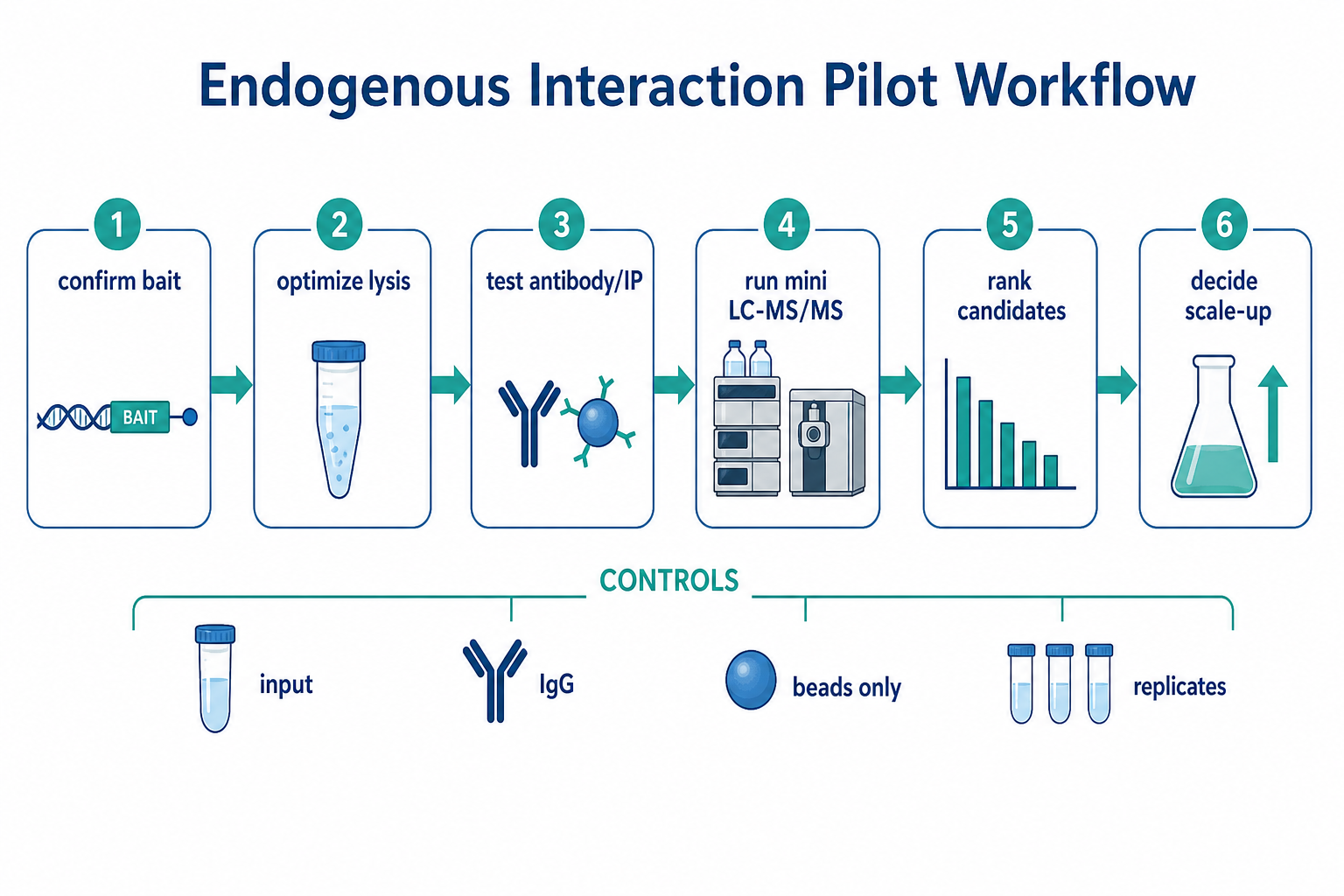
Figure 2. An endogenous interaction pilot should move from bait confirmation to capture testing, mini LC-MS/MS, candidate ranking, and scale-up decision-making.
Define LC-MS/MS Readout Before Running Samples
The pilot should define the LC-MS/MS readout before samples are submitted. For feasibility testing, the readout may focus on bait detection, peptide count, and enrichment over controls. For optimization, the readout may compare antibody lots, lysis buffers, or input levels. For early discovery, the readout may include candidate interactor ranking with replicate consistency.
Low-abundance protein detection depends on sample cleanup, peptide recovery, chromatographic depth, MS acquisition method, and database search strategy. A short method may be enough to detect the bait in a strong IP. A deeper method may be needed when the expected interactors are weak or when the sample has high complexity.
Researchers should avoid changing too many MS settings during a small pilot. If the pilot compares biological or capture conditions, the LC-MS/MS method should stay consistent. Otherwise, method differences can obscure the effect of sample preparation.
Use Go/No-Go Criteria
A pilot study is most useful when the decision criteria are defined in advance. The team should decide what result is good enough to move forward, what result requires optimization, and what result suggests that the project should be redesigned.
Practical Go/No-Go criteria can include bait detection in target IP, bait enrichment over controls, acceptable IgG and beads-only background, reproducible candidate patterns across replicates, and enough recovered material for downstream LC-MS/MS. These criteria do not need to be perfect. These criteria need to be explicit.
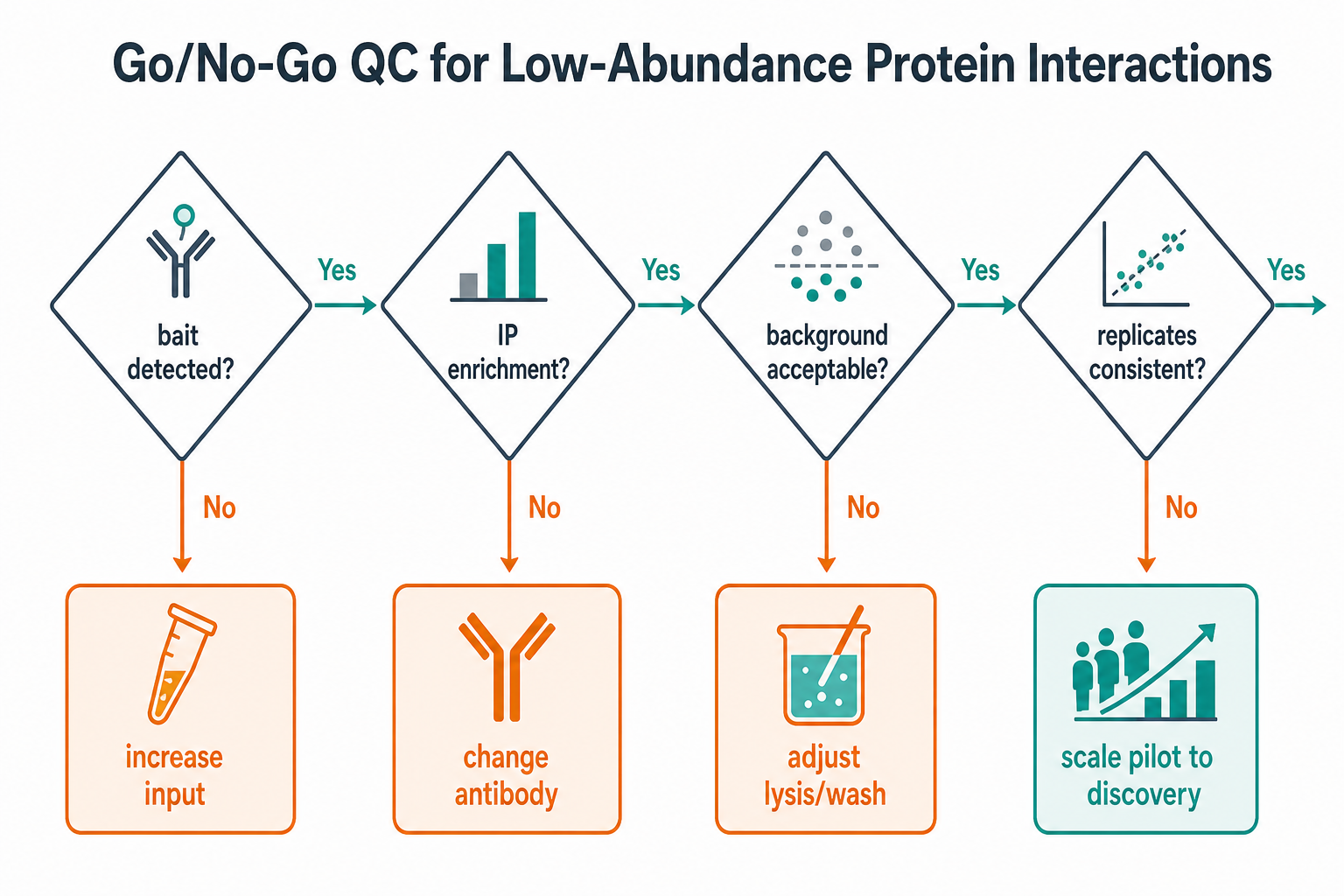
Figure 3. Go/No-Go criteria help determine whether to increase input, change antibody, adjust lysis, or scale the pilot to discovery.
Interpret Pilot Results Carefully
Pilot results should be treated as feasibility and optimization data. A candidate protein found in a pilot may be biologically interesting, but the finding should not be overinterpreted from one small run. A stronger candidate is enriched over controls, detected across biological replicates, consistent with known biology, and technically plausible.
Common background proteins should be reviewed carefully. Heat shock proteins, ribosomal proteins, cytoskeletal proteins, mitochondrial enzymes, and highly abundant metabolic proteins can appear in many affinity capture datasets. These proteins may still be biologically relevant in some contexts, but the control comparison must support that interpretation.
Low-abundance endogenous protein interactions also require attention to negative results. A failed pilot does not always mean the interaction does not exist. The bait may be poorly extracted, the epitope may be masked, the complex may be disrupted by detergent, or the interaction may require a condition that was not tested.
Plan the Scale-Up Experiment
If the pilot meets the Go criteria, the scale-up study should keep the optimized conditions stable. The larger experiment can increase biological replicates, expand treatment groups, deepen LC-MS/MS coverage, or add orthogonal validation. The scale-up design should not restart optimization unless the pilot exposed a clear weakness.
If the pilot gives mixed results, targeted adjustments are better than broad changes. For example, weak bait detection may call for more input or a different antibody. High background may call for wash optimization or bead blocking. Poor replicate consistency may call for tighter sample handling, randomized processing, or a more controlled biological model.
A technical review of pilot outcomes can help determine whether the endogenous interaction workflow is ready for discovery-scale LC-MS/MS or needs additional optimization first.
Frequently Asked Questions
1. How much sample is needed for low-abundance endogenous protein interactions?
There is no universal sample amount. The required input depends on bait abundance, antibody efficiency, cell or tissue type, and LC-MS/MS sensitivity. A pilot should test input levels before committing all available material.
2. Can overexpression data replace an endogenous pilot?
Overexpression data can provide useful preliminary clues, but overexpression data should not replace an endogenous pilot. Overexpression can change localization, stoichiometry, and binding behavior. Endogenous capture is more relevant when the biological question depends on native expression.
3. Which controls are most important in a Co-IP-MS pilot study?
Input lysate, IgG or isotype control, beads-only control, and biological replicates are usually important. Knockout, knockdown, parental cell line, or tag-only controls may be needed when specificity is uncertain.
4. What if the bait is detectable but no interactors are found?
The interaction may be transient, condition-specific, weak, or disrupted by lysis. The next step may be to adjust stimulation timing, lysis conditions, wash stringency, antibody choice, or MS depth before concluding that no interaction exists.
5. Should pilot candidates be validated?
Yes. Pilot candidates should be treated as preliminary findings. Reciprocal IP, targeted MS, Western blotting, mutagenesis, proximity labeling, or functional assays can help validate selected candidates.
Conclusion
A pilot study for low-abundance endogenous protein interactions should answer a practical question: is the workflow strong enough to support a larger discovery experiment? The pilot should confirm bait detectability, test sample input, optimize lysis, compare capture controls, evaluate LC-MS/MS sensitivity, and define Go/No-Go criteria before scale-up. This approach reduces sample waste and makes the final interaction dataset easier to interpret. For rare samples, weak endogenous expression, or unfamiliar capture conditions, researchers can request a technical discussion with MtoZ Biolabs to design a control-aware pilot study before moving into full-scale protein interaction mass spectrometry.
How to order?




