






How to Design a Mitochondrial Proteomics Study: Controls, Replicates, and Comparisons
A mitochondrial proteomics study can fail before the first LC-MS/MS run if the experimental design does not support the biological comparison.
Mitochondrial samples present several challenges that make study design especially important. Mitochondrial proteins span a wide abundance range, many inner-membrane proteins are hydrophobic, and mitochondrial preparations can contain material from the cytosol, endoplasmic reticulum, lysosomes, or other cellular compartments. In addition, mitochondrial composition can change with cell state, treatment, genotype, tissue type, and sample handling.
These variables make three design questions critical:
Controls: Does the experiment distinguish the intended biological effect from preparation and analytical artifacts?
Replicates: Is the observed difference reproducible across independent biological samples?
Comparisons: Does the group structure actually answer the research question?
A strong mitochondrial proteomics study should address all three before samples are processed.
Start With the Research Question
Before deciding between Label-Free, DIA, TMT, SILAC, or another quantitative strategy, define exactly what the study needs to compare.
Different questions require different experimental structures. Examples include:
- Which mitochondrial proteins change after treatment?
- Does a genotype alter the mitochondrial proteome?
- Are specific post-translational modifications remodeled?
- Does a protein redistribute between mitochondrial compartments?
- How does the mitochondrial proteome change over time?
- Does a metabolic perturbation alter both mitochondrial proteins and metabolites?
Three principles should guide the workflow: Controls establish specificity. Replicates establish reproducibility. Comparisons establish what biological conclusion can be made.
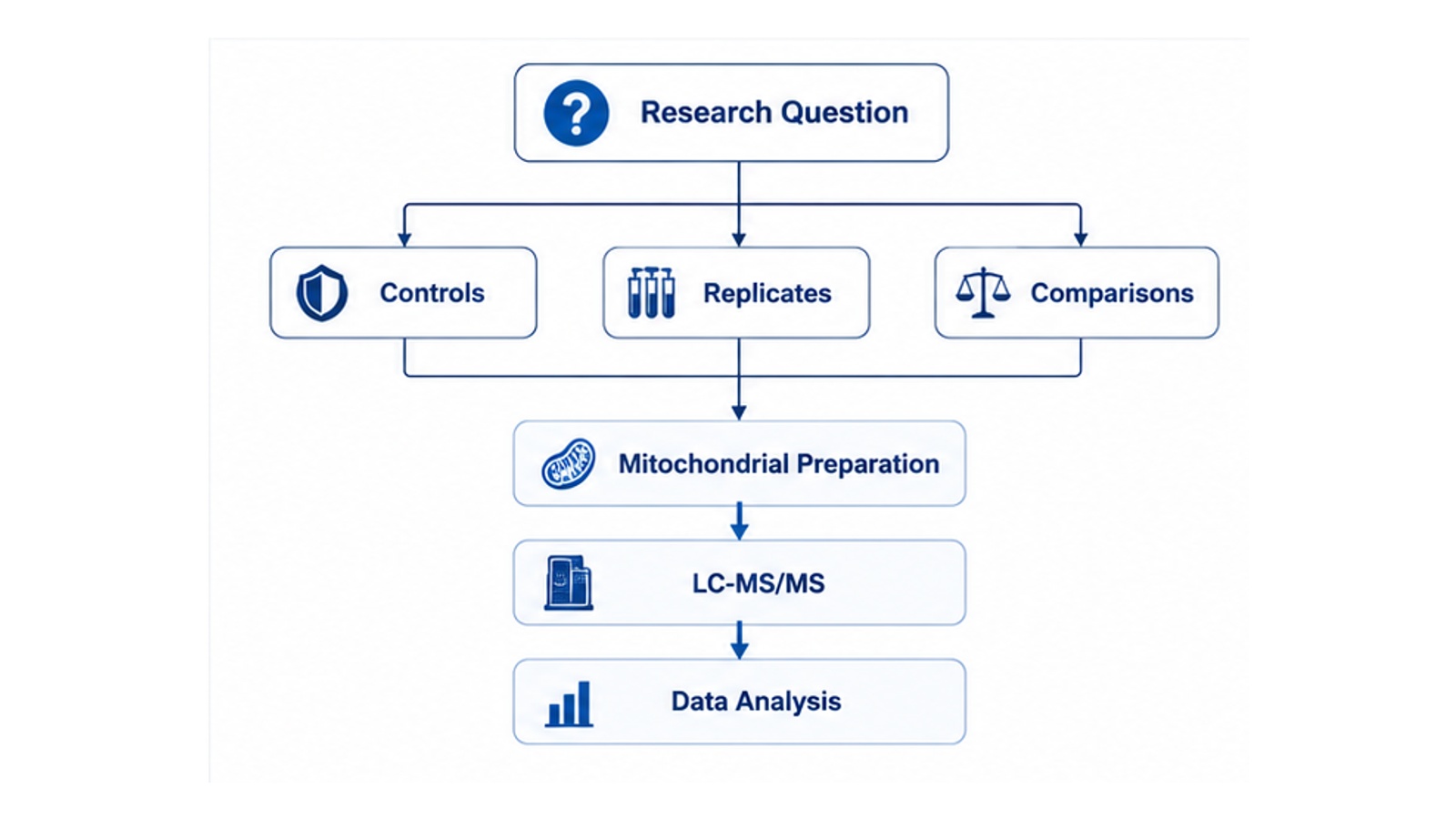
Figure 1. Core Design Framework for a Mitochondrial Proteomics Study
Clarifying these design elements before sample processing can make the downstream proteomics data more interpretable. Researchers who are still refining a mitochondrial proteomics study can discuss the project design and analytical options with MtoZ Biolabs before getting started.
Controls: Build Quality Checks Into the Entire Workflow
Controls in mitochondrial proteomics are not limited to a single untreated group. Different controls address different sources of uncertainty.
Verify Mitochondrial Enrichment
Mitochondrial preparation should be evaluated before protein abundance differences are interpreted. Useful positive mitochondrial markers may include proteins representing different mitochondrial compartments, such as:
- VDAC1 or TOMM20 for the outer mitochondrial membrane;
- COX IV or ATP5A for the inner membrane;
- HSP60 for the matrix;
- Cytochrome c for the intermembrane space.
Markers associated with other cellular compartments can help identify contamination. Examples include:
- GAPDH for cytosolic material;
- Calnexin for endoplasmic reticulum;
- LAMP1 for lysosomal material;
- nuclear markers when nuclear contamination is relevant.
Western blot is one way to assess enrichment. Proteomics data can also be reviewed for mitochondrial representation and non-mitochondrial proteins.
There is no universal numerical purity cutoff that applies to every mitochondrial proteomics project. What matters is whether enrichment quality is appropriate for the research question and sufficiently consistent across samples.
Include the Right Biological Control
The biological control should differ from the experimental group in the variable being tested, while other relevant conditions remain comparable.
Depending on the experiment, this may be:
- untreated versus treated;
- vehicle versus compound treatment;
- wild type versus genetic perturbation;
- control vector versus experimental construct;
- baseline versus stress condition.
Positive controls can be useful in selected mechanistic studies when a well-characterized perturbation is available, but they are not required for every discovery proteomics experiment.
Control Technical and Batch Variation
Large proteomics studies may extend across several preparation or LC-MS/MS batches.
Useful approaches can include:
- pooled QC samples;
- balanced sample placement across batches;
- blank runs where appropriate;
- a common reference or bridge sample across multiplexed batches;
- randomized or balanced run order.
For TMT studies spanning multiple multiplexes, a shared reference strategy can help support comparisons between batches.
Use Data-Level QC as a Check, Not a Substitute for Sample QC
Mitochondrial annotation resources such as MitoCarta can help assess whether the resulting protein profile is consistent with the intended mitochondrial enrichment.
PCA, clustering, replicate correlations, missing-value patterns, and quantitative variation can also reveal unusual samples.
However, computational filtering cannot fully correct a poorly prepared mitochondrial sample. QC should begin during sample preparation, not after data analysis.
Replicates: Capture Biological Variation Before Technical Precision
One of the most common design problems in proteomics is confusing biological replicates with technical replicates.
Biological Replicates Provide the Evidence for Biological Differences
Biological replicates are independently generated samples.
Depending on the experimental system, these may be:
- independent cell cultures;
- different animals;
- independent tissue specimens;
- separate biological preparations.
For a relatively controlled cell or animal experiment, at least three independent biological replicates per group is often treated as a practical starting point, but it should not be interpreted as a universal requirement or as evidence that a study is adequately powered.
More variable systems usually require more biological samples.
For human research samples or heterogeneous biological material, sample size should preferably be planned using expected effect size, variance, study heterogeneity, and statistical power rather than a fixed minimum.
Technical Replicates Answer a Different Question
Technical replicates repeat part of the analytical workflow using the same biological material.
They can help assess:
- LC-MS/MS repeatability;
- digestion variability;
- method development;
- analytical stability.
But they do not add independent biological information.
If resources are limited, additional biological replicates are often more informative for group comparisons than repeatedly measuring the same sample.
Randomization Helps Prevent Batch From Becoming Biology
A poor batch design can make technical variation indistinguishable from the experimental condition.
For example, processing every control sample on one day and every treated sample on another creates a confounded design.
Whenever possible, groups should be distributed across preparation and analytical batches. Larger studies may benefit from balanced block designs so that each batch contains comparable representation of the biological groups.
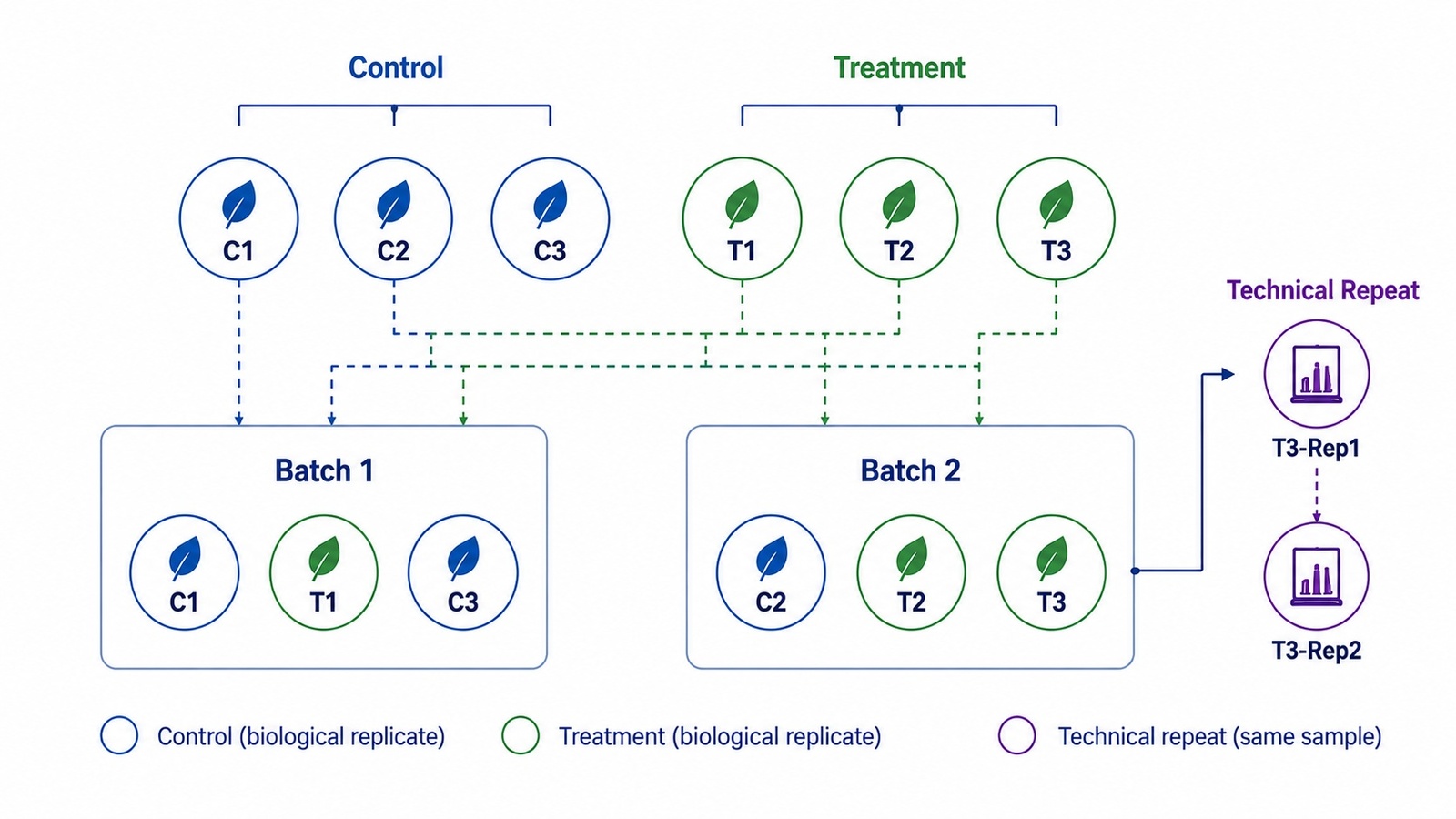
Figure 2. Biological Replicates, Technical Replicates, and Batch Design
Comparisons: Design the Experiment Around the Claim You Want to Make
A study can have excellent sample quality and many replicates but still fail if the comparison structure does not match the biological question.
Differential Mitochondrial Proteomics
The simplest design compares two biological conditions, such as treatment versus control or one genotype versus another.
More complex studies may include:
- several treatment doses;
- multiple genotypes;
- several time points;
- treatment-by-genotype interactions.
As additional factors are added, the analysis should be planned around those factors rather than conducting a large collection of unrelated pairwise comparisons.
The quantitative method should also match the study structure. Label-Free/DIA can provide flexibility as sample numbers increase, while TMT can support multiplexed comparisons within a defined labeling design. SILAC may be useful in compatible cultured-cell systems.
Sub-Mitochondrial Comparisons
Some studies ask where a protein is located rather than simply whether its total abundance changes.
Comparing outer membrane, inner membrane, intermembrane-space, or matrix-enriched fractions may support localization or redistribution questions.
These studies require careful fractionation controls because a difference between fractions is only interpretable if the fractions themselves are adequately characterized.
PTM-Focused Comparisons
Phosphorylation, acetylation, and other mitochondrial PTMs require a design that distinguishes changes in protein abundance from changes in modification level.
Whenever possible, the interpretation should consider both: Total Protein Abundance and Modified Peptide Abundance
A modified peptide may increase simply because the underlying protein increased. Normalization and appropriate reference data are therefore important for site-level interpretation.
Interaction-Focused Studies
Protein-interaction or proximity-labeling studies need controls that distinguish specific enrichment from background association.
The appropriate controls depend strongly on the experimental system and labeling strategy. Interaction-focused experiments should therefore be treated as a separate design problem rather than added to a conventional differential proteomics study without dedicated controls.
Time-Course Studies
Mitochondrial stress, protein turnover, mitophagy, and remodeling can be dynamic.
A single endpoint may miss transient responses. If timing is central to the hypothesis, sampling points should reflect the expected biological sequence rather than simply choosing equal intervals for convenience.
Multi-Omics Comparisons
Proteomics can also be integrated with metabolomics when the research question concerns mitochondrial metabolic remodeling.
The two omics layers should answer distinct questions:
Proteomics: Which proteins or pathways change?
Metabolomics: What metabolite patterns accompany those changes?
Multi-omics should be included because it changes the biological interpretation, not simply because more data appear more comprehensive.
Plan Statistical Analysis Before the Samples Are Run
Statistical decisions made after seeing the results can introduce bias.
The study plan should define, as far as possible:
- primary biological comparisons;
- biological replicate structure;
- batch variables;
- missing-data handling;
- multiple-testing correction;
- criteria for prioritizing differential proteins.
An adjusted P value or FDR can help control multiple comparisons, but no universal fold-change threshold fits every mitochondrial proteomics experiment.
A rigid cutoff can exclude modest but coordinated pathway-level changes. Statistical evidence should therefore be interpreted together with replicate consistency, protein abundance, mitochondrial localization, and pathway context.
FAQ
1. Can technical replicates replace biological replicates?
No. Technical replicates measure the same biological material more than once and are useful for assessing analytical repeatability or technical variation. They do not capture biological variation and therefore should not be treated as independent biological replicates.
2. Can control and treatment samples be processed in separate batches?
This should be avoided whenever possible. If all control samples are processed in one batch and all treatment samples in another, batch effects become confounded with the biological condition. A balanced batch design helps separate technical variation from true biological differences.
3. Is every differential protein detected in a mitochondrial-enriched sample a mitochondrial protein?
No. Mitochondrial-enriched fractions can still contain proteins from other cellular compartments. Differential proteins should be reviewed using mitochondrial localization evidence and relevant annotation resources before they are classified as mitochondrial-resident proteins.
MtoZ Biolabs supports mitochondrial isolation and protein preparation together with mitochondrial protein identification, quantitative proteomics, PTM analysis, and proteomics-metabolomics integration. Study planning can be evaluated based on the research objective, sample type, biological groups, mitochondrial preparation status, and intended quantitative strategy before sample analysis begins.
If you are preparing a mitochondrial proteomics project and want to check whether the control, replicate, or comparison design is appropriate, you can send the project information to MtoZ Biolabs for technical evaluation.
How to order?




