






How Many Biological Replicates Are Needed for Plant Proteomics?
Biological replicate number is one of the first design decisions in plant proteomics because it determines what a group difference actually represents. A comparison between treatment and control, tolerant and sensitive lines, or two breeding materials needs independently generated biological units to show whether protein changes are consistent rather than driven by one unusual sample.
Too few replicates can produce unstable differential protein lists and make biological variation difficult to distinguish from treatment effects. Adding more replicates without a clearly defined comparison, however, does not correct weak grouping, confounded treatments, or inconsistent sample collection.
There is no universal replicate number for every crop, tissue, stress protocol, or genotype comparison. Replicate planning should reflect the experimental unit, expected biological variability, effect size of interest, study objective, and number of groups being compared.
If you are planning a plant proteomics project, share the species, tissue type, comparison design, experimental unit, and expected variability with MtoZ Biolabs before sample collection begins.
Biological Replicates vs. Technical Replicates
In plant proteomics, the replicate unit must match how the experiment was conducted and the conclusion the study is intended to support.
A biological replicate is an independently generated experimental unit. Depending on the design, this may be an independently treated plant, pot, plot, fruit, tissue culture, or other biological source. Each replicate should be collected, labeled, and processed separately.
The plant itself is not always the experimental unit. For example, when a treatment is applied to an entire pot, several plants growing in that pot may be subsamples rather than independent biological replicates. Likewise, multiple leaves or fruits collected from one plant do not automatically become independent replicates for a plant-level comparison.
A technical replicate is a repeated measurement or processing step performed on material from the same biological source. Examples include repeated LC-MS/MS injections of the same digest or separate analytical measurements of the same prepared sample. Technical replicates can help assess analytical precision but cannot replace independent biological units.
Common pseudoreplication problems include:
-
Counting several leaves from one plant as independent plant replicates
-
Counting multiple plants from one jointly treated pot as independent treatment replicates
-
Treating duplicate LC-MS/MS injections as biological replication
-
Counting split aliquots from one extraction as separate biological samples
-
Pooling several plants and then treating the pooled sample as multiple replicates
Pooling may be appropriate when it is defined in advance and each pool is generated independently. However, pooling changes the replicate unit and reduces the ability to evaluate individual plant-to-plant variation.
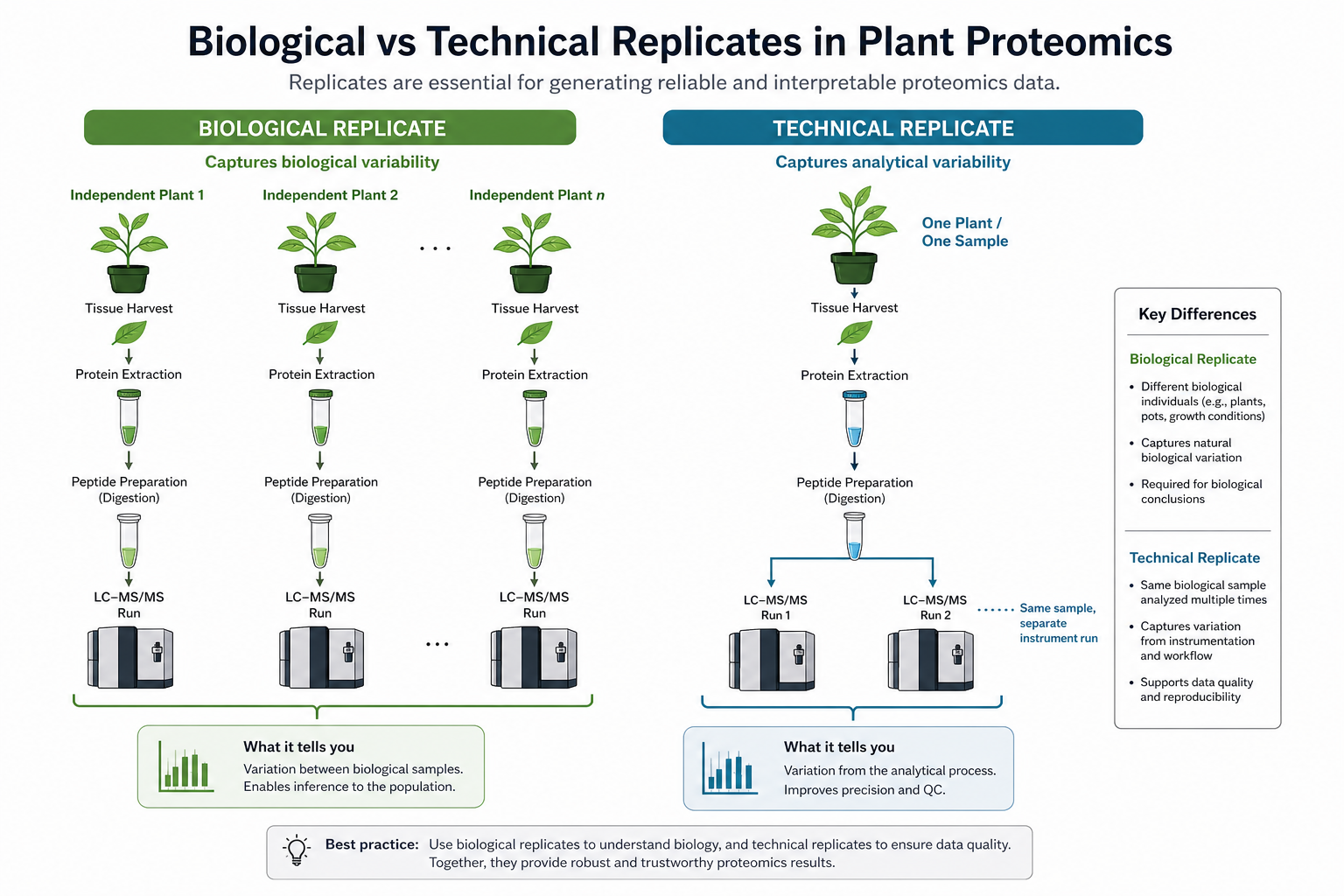
Figure 1. Biological replicates are independently generated experimental units, whereas repeated measurements from the same prepared sample are technical replicates.
What the Replicate Design Must Support
Replicate planning should begin with the comparison sentence rather than a default number borrowed from another project.
Examples include:
-
Drought-treated versus well-watered plants at a defined treatment stage
-
Tolerant versus sensitive lines under the same stress protocol
-
Two breeding materials collected at the same developmental stage
-
Several genotypes compared under matched growth conditions
-
Multiple treatment doses or harvest times within one experiment
The number of biological replicates needed depends partly on the strength and scope of the intended conclusion.
An exploratory pilot may be designed to evaluate sample preparation, estimate biological variation, or determine whether a comparison produces measurable protein-level differences. A confirmatory comparison intended for publication, breeding prioritization, or downstream validation generally requires stronger replication and clearer control of experimental variation.
Replicate planning should also account for the number of factors in the design. A simple two-group comparison is different from a study involving genotype, treatment, tissue, and time. Expanding the number of groups without increasing the total sample capacity can leave each comparison underpowered.
Planning Ranges Are Not Universal Minimums
Many comparative plant proteomics projects initially discuss approximately three to five biological replicates per group. This may be a practical starting range for project planning, but it should not be presented as a universal minimum or as evidence that a study is statistically sufficient.
Three biological replicates may provide limited information when plant-to-plant variation is high, the expected effect is moderate, or multiple-testing correction is required across thousands of proteins. Increasing replicate number can improve estimation of within-group variation and reduce the influence of individual samples, but the required number cannot be determined from sample count alone.
Where suitable pilot data are available, replicate number should ideally be informed by:
-
Expected within-group biological variability
-
The magnitude of the protein changes that matter biologically
-
The number of groups and planned comparisons
-
Acceptable false-discovery and false-negative risks
-
Sample loss or exclusion risk
-
Whether the study is exploratory or confirmatory
Power calculations for proteomics are approximate because protein missingness, abundance-dependent variance, and multiple testing complicate simple formulas. Even so, pilot variance estimates are usually more informative than selecting a replicate number solely by convention.
Factors That May Increase Replicate Need
More biological replicates are often valuable when:
-
Field-grown material is exposed to uneven microenvironments
-
Phenotype or stress scores vary widely among individuals
-
The tissue is heterogeneous or difficult to sample consistently
-
Several genotypes, doses, tissues, or time points are compared
-
Treatment response is expected to be modest
-
The project will support publication, breeding decisions, or external review
-
A second independent validation set is unlikely to be available
-
Sample loss or preparation failure is reasonably possible
Field studies may also require block, plot, or location effects to be included in the design. Plants collected from the same plot or block may not be fully independent if they share environmental conditions.
More replicates cannot correct a design in which treatment is completely confounded with greenhouse bench, growth batch, extraction batch, or LC-MS/MS run order. These factors should be balanced or randomized wherever possible.
When a Smaller Pilot May Be Reasonable
A smaller initial set may be appropriate when:
-
The project is explicitly exploratory
-
The first objective is to test extraction or LC-MS/MS feasibility
-
A new species or difficult tissue has not been evaluated previously
-
The harvest window is still being optimized
-
The main goal is to estimate variance for a larger experiment
-
A predefined second phase will expand the replicate number
A small pilot should not be described as a definitive group comparison. One biological unit per group cannot estimate within-group variation and therefore does not support a group-level differential protein claim.
| Project Situation | Replicate Planning Consideration | Pilot Suitability |
| Controlled two-group comparison | Replication should estimate within-group biological variation | Possible when explicitly exploratory |
| Field material with variable phenotype | Block structure and additional replication may be needed | Limited |
| Breeding-line comparison | Replication should support stable line-level differences | Pilot may guide a larger set |
| Multi-genotype or multi-dose study | Key comparisons and sample allocation should be prioritized | Useful before full expansion |
| New tissue or untested species | Initial samples may evaluate preparation feasibility | Often appropriate |
| Publication-oriented comparison | Replicate number should be justified by variance and study scope | Pilot alone is usually insufficient |
Acquisition Mode Does Not Replace Biological Replication
DDA and DIA are LC-MS/MS acquisition strategies. They can affect protein coverage, missing values, quantitative consistency, and sample throughput, but they do not determine whether the biological design is adequately replicated.
DIA may support consistent quantification across matched sample sets, while DDA can support identification and quantitative workflows in both pilot and larger studies. Neither approach compensates for pseudoreplication or insufficient independent biological samples.
The replicate design should therefore be established from biological variability and the intended comparison before the analytical mode is finalized.
Sample Collection Per Biological Replicate
Each biological replicate should provide enough tissue for the selected extraction and LC-MS/MS workflow without requiring unplanned pooling or repeated freeze–thaw cycles.
Required material varies according to:
-
Tissue type and water content
-
Protein abundance and extraction yield
-
Polyphenol, polysaccharide, lipid, pigment, or starch content
-
Standard proteomics or specialized enrichment workflow
-
Whether repeat preparation or quality review may be needed
Leaves, roots, seeds, bark, pollen, and other plant materials should not be assigned one universal collection amount. Tissue-specific guidance should be confirmed before harvest, particularly for limited, woody, lipid-rich, pigment-rich, or low-protein samples.
Samples involving pathogens, infectious agents, or quarantine risks require prior review and may be subject to acceptance restrictions.
Sample Preparation Choices That Protect Replicate Value
Replicate number only improves a study when each biological unit is collected and processed consistently.
Before harvest, define:
-
What constitutes one experimental unit
-
How treatments are independently assigned
-
Which tissue and tissue position will be collected
-
Whether several subsamples will be combined within each replicate
-
How samples will be labeled through collection, storage, and submission
-
What phenotype or treatment information will be recorded
During collection and preparation:
-
Process each biological replicate separately
-
Use the same tissue definition across compared groups
-
Keep harvest stage and collection time consistent
-
Balance or randomize extraction and LC-MS/MS order across groups
-
Avoid merging independent plants unless pooling is predefined
-
Preserve group, batch, and sample identifiers throughout the workflow
Visibly damaged or off-protocol samples should not be removed only after the results are known. Exclusion criteria should be defined in advance where possible, and any exclusion should be documented with its reason.
Plant proteomics workflows may include protein extraction, digestion, LC-MS/MS analysis, and bioinformatics reporting. Standalone gel imaging or preparation-only work is generally outside the workflow described here.
How to Interpret Results with Limited Replication
When replicate number is limited, differential protein results require careful sample-level review.
Check whether:
-
Protein abundance changes are consistent across most biological replicates
-
One sample disproportionately drives the group difference
-
Principal component analysis or clustering reveals unexpected batch effects
-
Phenotype measurements agree with the intended group labels
-
Missing values are concentrated in one group or sample
-
Effect direction remains stable when influential samples are examined
P-values or fold changes should not be interpreted in isolation. Effect size, replicate consistency, data completeness, and phenotype context should all contribute to candidate prioritization.
A nonsignificant result from a small study does not prove that no biological difference exists. It may reflect limited statistical power, high variation, missing values, or an inappropriate harvest stage.
Conversely, a protein showing a large apparent change in only one sample should not become the main biological conclusion simply because it passes an automated threshold.
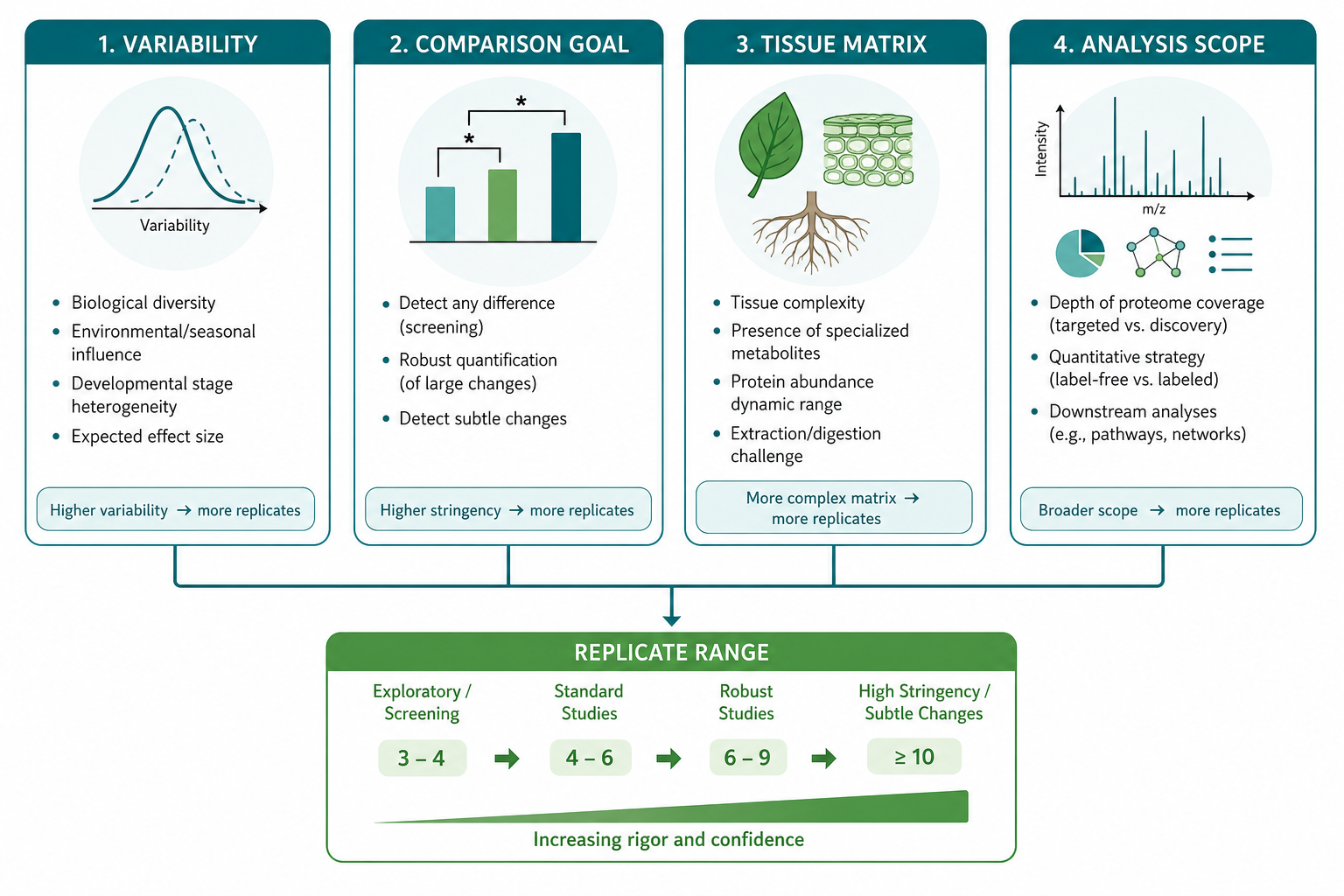
Figure 2. Biological variability, experimental structure, effect size, and intended conclusion together guide replicate planning.
Common Replicate Planning Mistakes
-
Treating leaves from one plant as independent plant replicates
-
Ignoring whether the treatment was applied at the plant, pot, or plot level
-
Choosing replicate number before defining the primary comparison
-
Using the same replicate target for exploratory and confirmatory studies
-
Pooling plants without redefining the experimental unit
-
Expanding time points or genotypes before securing adequate replication
-
Confounding experimental group with harvest or processing batch
-
Removing unusual samples without predefined criteria
-
Assuming repeated LC-MS/MS runs solve weak biological replication
-
Treating three replicates as a universal guarantee of sufficient statistical power
A Practical Replicate Planning Checklist
-
Write the primary comparison in one sentence.
-
Define the independently treated experimental unit.
-
Separate biological replicates from subsamples and technical measurements.
-
Estimate expected biological variability using prior or pilot data.
-
Identify the effect size that would matter biologically.
-
Prioritize the main comparisons before adding groups or time points.
-
Plan sufficient tissue for each independent replicate.
-
Balance collection, preparation, and LC-MS/MS order across groups.
-
Record phenotype, stress, batch, and storage information.
-
Decide whether the study is exploratory or intended to support a stronger conclusion.
When the design is ready, share the species, tissue type, experimental unit, group structure, expected variability, and planned replicate number so the design can be reviewed before collection begins.
Related Services
Frequently Asked Questions
1. How many biological replicates are needed for plant proteomics?
There is no universal number. Approximately three to five replicates per group may be discussed as an initial planning range, but the final design should consider biological variability, effect size, number of comparisons, and study objective.
2. What counts as a biological replicate?
A biological replicate is an independently generated experimental unit. It may be a plant, pot, plot, culture, or another biological source depending on how the treatment was assigned.
3. Are multiple leaves from one plant independent replicates?
Usually not for a plant-level comparison. They are generally subsamples from the same biological unit unless the research question and sampling design define another valid experimental unit.
4. Can duplicate LC-MS/MS runs replace biological replicates?
No. Repeated measurements from the same digest assess analytical variation but do not estimate biological variation between independently generated samples.
5. Is pooling several plants acceptable?
Pooling can be appropriate when defined in advance. Each independently generated pool then becomes one biological replicate, but individual plant variation within the pool cannot be evaluated.
6. When should a pilot study be considered?
A pilot can help evaluate sample preparation, harvest timing, protein coverage, missingness, and biological variability before a larger comparison is conducted.
Conclusion
Biological replicate planning in plant proteomics should be based on the experimental unit, expected variability, effect size, comparison structure, and intended strength of the conclusion rather than a fixed default.
A defensible design requires independent biological units, consistent tissue collection, balanced sample processing, and result interpretation that reflects the actual replication strength. Contact MtoZ Biolabs with the species, tissue type, experimental unit, comparison design, and expected variability to evaluate the replicate plan before samples are collected.
How to order?




