






How Does Sample Matrix Affect Metabolomics and Lipidomics Results?
The sample matrix shapes almost everything downstream in metabolomics and lipidomics: which molecules are even present to detect, how much background competes with your targets, how the sample must be extracted, and how much material you need to provide.
Blood, tissue, cells, and other matrices each carry a different chemical makeup, so the same analytical method can return quite different pictures depending on where the sample came from. The practical takeaways are straightforward: keep one matrix per comparison whenever possible, provide an adequate and consistent amount for that matrix, and confirm feasibility early for specialized materials. Common biological matrices include serum, plasma, urine, feces, tissue, cultured cells, culture supernatant, CSF, saliva, plant tissue, and yeast or fungal cells. Exosome lipidomics is available for lipid-focused projects, while other unlisted sample types require project-specific feasibility review.
Why the Matrix Matters So Much
A metabolomics or lipidomics result is only ever a readout of what is in the sample you submitted, filtered through how that sample behaves analytically. The matrix influences that readout in several connected ways.
First, it sets the biological content. Plasma and serum are rich in circulating metabolites and lipids; urine skews toward water-soluble waste products; tissue reflects local metabolism; cells capture an intracellular snapshot. A metabolite that is abundant in one of these can be scarce or absent in another, so the matrix effectively decides which part of the metabolome or lipidome is in view.
Second, it sets the background. Every matrix carries abundant endogenous components that can affect extraction, ionization, or detection. Examples include the high lipid content of plasma and the salt and urea content of urine. Lower-abundance targets have to be measured against that background, which is why the same species can be easy to see in one matrix and challenging in another.
Third, it dictates handling. Extraction chemistry that works well for a lipid-rich tissue is not the same as what suits a dilute culture supernatant, and getting that match right is part of producing clean, comparable data.
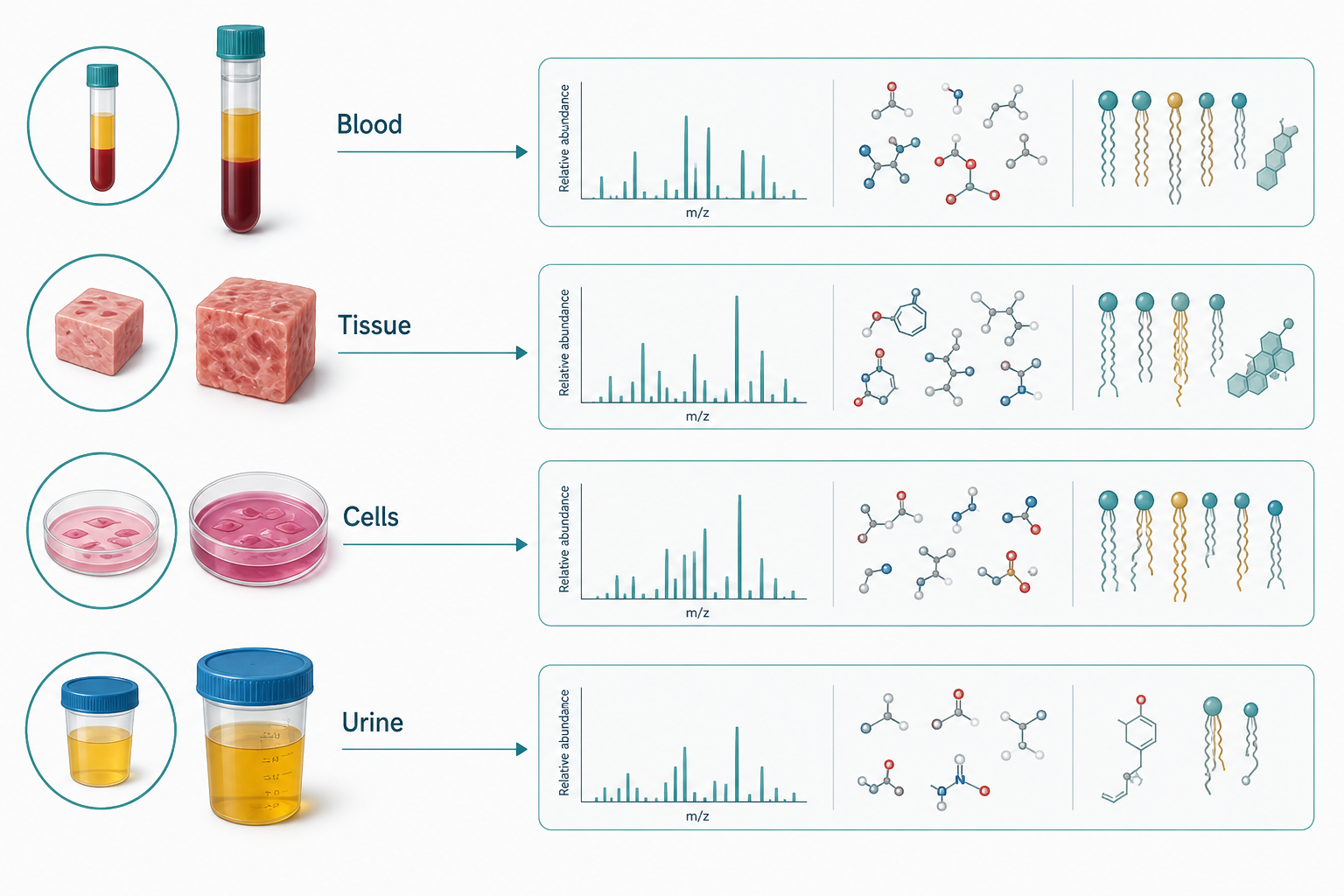
Figure 1. Each matrix carries its own metabolite and lipid content, background, and handling needs, which together shape the result.
Matrix-by-Matrix Considerations
It helps to think about the common sample types in terms of what they offer and what to watch for.
Blood-derived samples (serum and plasma) are among the most widely used matrices for both metabolomics and lipidomics. They are rich sources of circulating small molecules and lipids, which makes them powerful for profiling, but that same richness means abundant lipids and proteins form a strong background. The choice between serum and plasma, and consistency in how they are collected, has a real effect on what you measure, so mixing the two within one comparison is best avoided unless the study is designed to compare them.
Tissue reflects the metabolism of the specific organ or region sampled, which is exactly what makes it valuable for localized questions. The trade-offs are heterogeneity and handling: sampling the same region consistently, and keeping collection and storage uniform across groups, matter a great deal because tissue composition can vary within a single organ.
Cells and culture supernatant provide complementary views of cellular metabolism. Cells capture intracellular metabolites, while culture supernatant reflects molecules released, consumed, or exchanged with the medium. Cell number, culture conditions, medium composition, collection timing, and appropriate medium controls should be kept consistent across groups.
CSF, saliva, plant tissue, and yeast or fungal cells can be considered within standard project planning according to the analytical direction. Exosome lipidomics is available for lipid-focused projects, while other unlisted or uncommon sample types require project-specific feasibility review.
Sample Amount Depends on the Matrix
Sample input requirements vary with matrix composition, metabolite abundance, and analytical direction. Dilute biofluids, cell pellets, tissues, and culture supernatants therefore cannot be planned using the same input criteria.
Within a group comparison, sample input should be kept reasonably consistent across biological replicates. If sample availability is limited or the matrix is unusual, the available amount should be reviewed together with the planned metabolomics or lipidomics workflow before submission.
Keeping the Matrix Consistent Across a Comparison
The single most common way a matrix undermines a study is inconsistency between groups, so it is worth stating plainly.
If disease and control samples are collected, stored, or processed differently, or if one arm uses serum while another uses plasma, observed differences may reflect pre-analytical conditions or sample matrix rather than the intended biological contrast.
A few principles keep comparisons clean:
-
Use one matrix for the main comparison, and label any intentional matrix contrast explicitly.
-
Standardize collection, processing, and storage across all groups.
-
Match sample amount across conditions.
-
For multi-site or multi-batch studies, agree on one handling protocol before collection begins.
None of this changes what the matrix contains, but it ensures that the differences you report are the ones you set out to study.
It also pays to think about the matrix before the first sample is collected rather than at submission. Decisions such as which anticoagulant a plasma study uses, how quickly tissue is frozen, or how cells are quenched all lock in at collection and cannot be corrected later. Settling these handling details together with the choice of matrix before collection helps reduce avoidable pre-analytical variation in the resulting dataset.
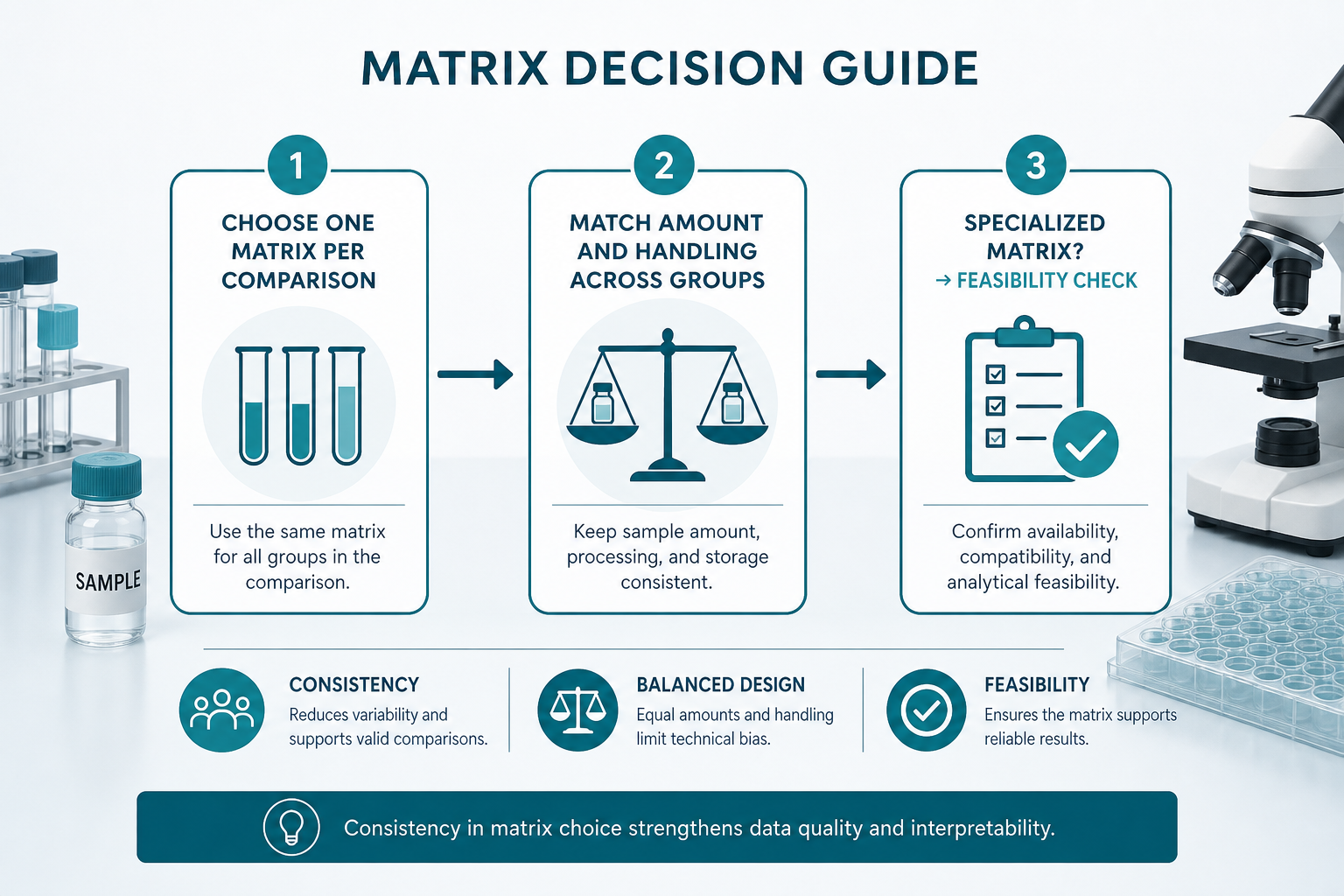
Figure 2. Choose one matrix per comparison, match amount and handling, and confirm feasibility for specialized materials.
How Matrix Interacts With Method Choice
Matrix and method are not independent decisions; they inform each other.
Matrix composition affects extraction recovery, chromatographic behavior, ionization, and the range of compounds that can be measured effectively. Metabolomics workflows are designed to cover broad metabolite classes, whereas lipidomics uses extraction and analytical conditions optimized for lipid species. The same biological matrix can therefore support either direction, but the resulting chemical coverage and interpretation will differ according to the analytical workflow.
Untargeted and targeted analyses are both influenced by sample matrix. Untargeted analysis surveys a broad range of detectable features and is strongly shaped by matrix composition. Targeted analysis focuses on predefined compounds and can use target-specific analytical optimization, but matrix effects and target abundance still influence measurement performance. Deciding matrix, analytical direction, and quantification level together usually produces a more realistic project plan.
Related Services
Metabolomics and Lipidomics Analysis Services
Untargeted Metabolomics Service
Targeted Metabolomics Analysis Service
Untargeted Lipidomics Analysis Service
Targeted Lipidomics Analysis Service
Frequently Asked Questions
1. Does the sample matrix really change what I can detect?
Yes. Each matrix carries a different set of metabolites and lipids at different levels, so the matrix largely decides which part of the metabolome or lipidome is visible.
2. Can I combine different matrices in one study?
Keep one matrix for the main comparison whenever possible. Mixing different matrices, including serum and plasma, can introduce differences that reflect sample type rather than biology.
3. Which matrices are handled routinely?
Basic planning sample types include serum, plasma, urine, feces, tissue, cultured cells, culture supernatant, CSF, saliva, plant tissue, and yeast or fungal cells. Exosome lipidomics is available for lipid-focused projects, while other unlisted sample types require project-specific review.
4. How much sample should I provide?
Sample input depends on the matrix and project scope. For initial planning, reference values include approximately 100 µL for plasma or serum, 100 mg for animal tissue, and 1 × 10⁶ to 1 × 10⁷ cultured cells. These values are planning references rather than fixed minimums or recommended amounts, and final requirements are confirmed during project review.
5. Why is a low-abundance target harder in some matrices?
Because it has to be measured against that matrix's dominant background. A species easily seen in one sample type can be challenging in another where it is scarce or where abundant components compete.
6. Does matrix affect metabolomics and lipidomics differently?
Matrix composition affects both metabolomics and lipidomics, but the analytical workflows are optimized for different chemical spaces. Lipidomics focuses on lipid species, whereas metabolomics provides broader coverage of metabolite classes, so the same matrix can yield different information depending on the analytical direction.
Conclusion
The sample matrix is not a passive container. It determines the biological content, analytical background, and handling requirements that shape what a metabolomics or lipidomics study can measure. Blood, tissue, cells, and specialized materials each open a different window on the metabolome and lipidome.
The reliable path is to pick one matrix per comparison, provide an adequate and consistent amount, keep handling uniform across groups, and confirm feasibility early for anything unusual. Teams weighing how their samples fit a metabolomics or lipidomics plan can talk it through with MtoZ Biolabs to align matrix, method, and expectations before work begins.
How to order?




