






From Mitochondrial Dysfunction to Protein-Level Mechanisms
Mitochondrial dysfunction becomes a protein-level mechanism question when a phenotype is already visible, but the molecular explanation is still missing. Respiration shifts, membrane-potential changes, ROS changes, morphology clues, or other mitochondrial abnormalities can establish that something is wrong. Mitochondrial proteomics then asks which proteins remodeled with that dysfunction and which candidates are worth mechanistic follow-up.
If you already have a dysfunction phenotype and need a molecular layer, write one sentence that connects the phenotype to the protein claim before samples move. Teams translating mitochondrial abnormalities into protein-mechanism plans can share the phenotype summary, sample type, and group design with MtoZ Biolabs before acquisition is scheduled.
Start From the Dysfunction Phenotype, Not From a Protein Wish List
Mechanism exploration works best when the phenotype is defined first.
Useful phenotype anchors include:
- A reproducible functional abnormality across defined groups
- A mitochondrial morphology or integrity clue tied to the same contrast
- A disease, treatment, or stress model that consistently perturbs mitochondrial state
- A clear statement of what “mechanism” would mean for the next experiment
Without that anchor, protein tables are easy to over-read. With the anchor, mitochondrial protein analysis becomes a way to generate ranked molecular hypotheses behind an already observed abnormality.
Keep phenotype and proteomics as linked layers. Functional or imaging evidence reports mitochondrial state. Proteomics reports protein remodeling in mitochondrial or mitochondria-enriched material under a matched contrast. Neither layer deletes the need for the other.
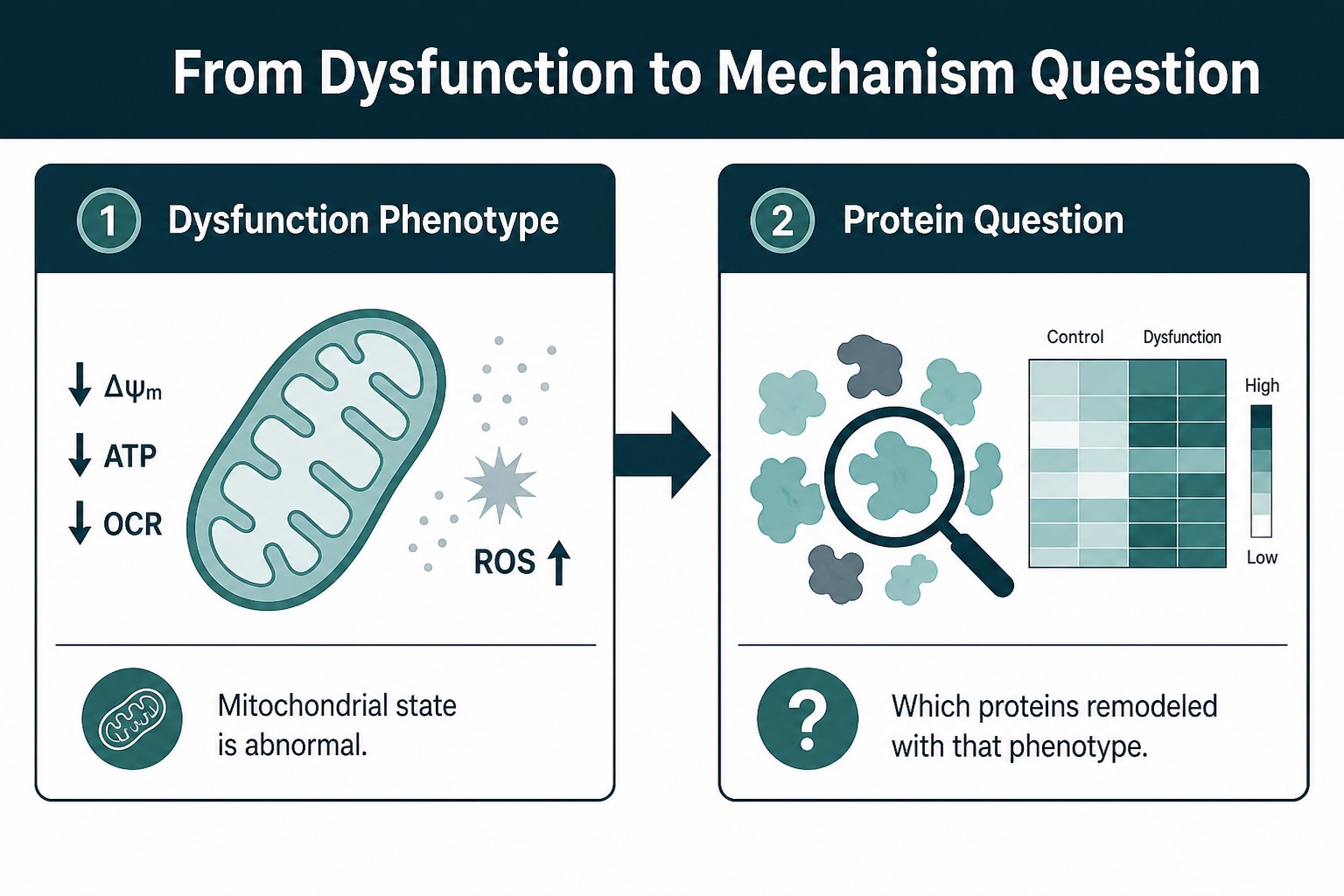
Figure 1. Define the dysfunction phenotype first, then ask which proteins remodeled with that phenotype.
How Mitochondrial Proteomics Builds Protein-Level Mechanism Candidates
Mitochondrial proteomics converts a phenotype-linked cohort into identification and abundance evidence.
In practical terms, the analysis can show:
- Which proteins are detected in the mitochondrial preparation
- Which proteins differ between dysfunctional and control arms when the design supports quantification
- Which candidates cluster around pathways related to the phenotype narrative
Current planning references are about 5×10^7 cells, about 200 mg animal tissue, or extracted mitochondrial protein of at least about 50 µg with about 80-100 µg commonly planned. Platform options include Orbitrap Exploris 480, timsTOF Pro, and Orbitrap Astral. DDA paths are commonly processed with MaxQuant or Proteome Discoverer; DIA paths with Spectronaut or DIA-NN.
Treat the output as candidate generation. A differential protein is a mechanism lead, not proof that it caused the dysfunction. Presence in a mitochondria-enriched preparation supports association with that material; exclusive localization still needs orthogonal evidence when the claim is critical. Pathway or annotation views should be confirmed project by project rather than assumed as a fixed default.
Design the Contrast So Mechanism Claims Stay Interpretable
The contrast that produced the dysfunction should also drive the proteomics design.
Design rules for mechanism exploration:
- Keep the same biological groups that define the phenotype.
- Sample at the state where dysfunction is present and stable enough to interpret.
- Match isolation or extraction handling across arms so technical drift does not imitate mechanism.
- Use biological replicates suited to differential claims.
- Record phenotype severity or readout class for each group so protein ranks can be read against the abnormality.
If one arm is freshly isolated and another is handled differently, protein contrasts may track preparation rather than dysfunction biology. Mechanism exploration depends on matched inputs as much as on instrument choice.
Planning guidance for the mitochondrial proteomics path is about 4 weeks once samples and design are accepted, with timing still dependent on sample condition and complexity.
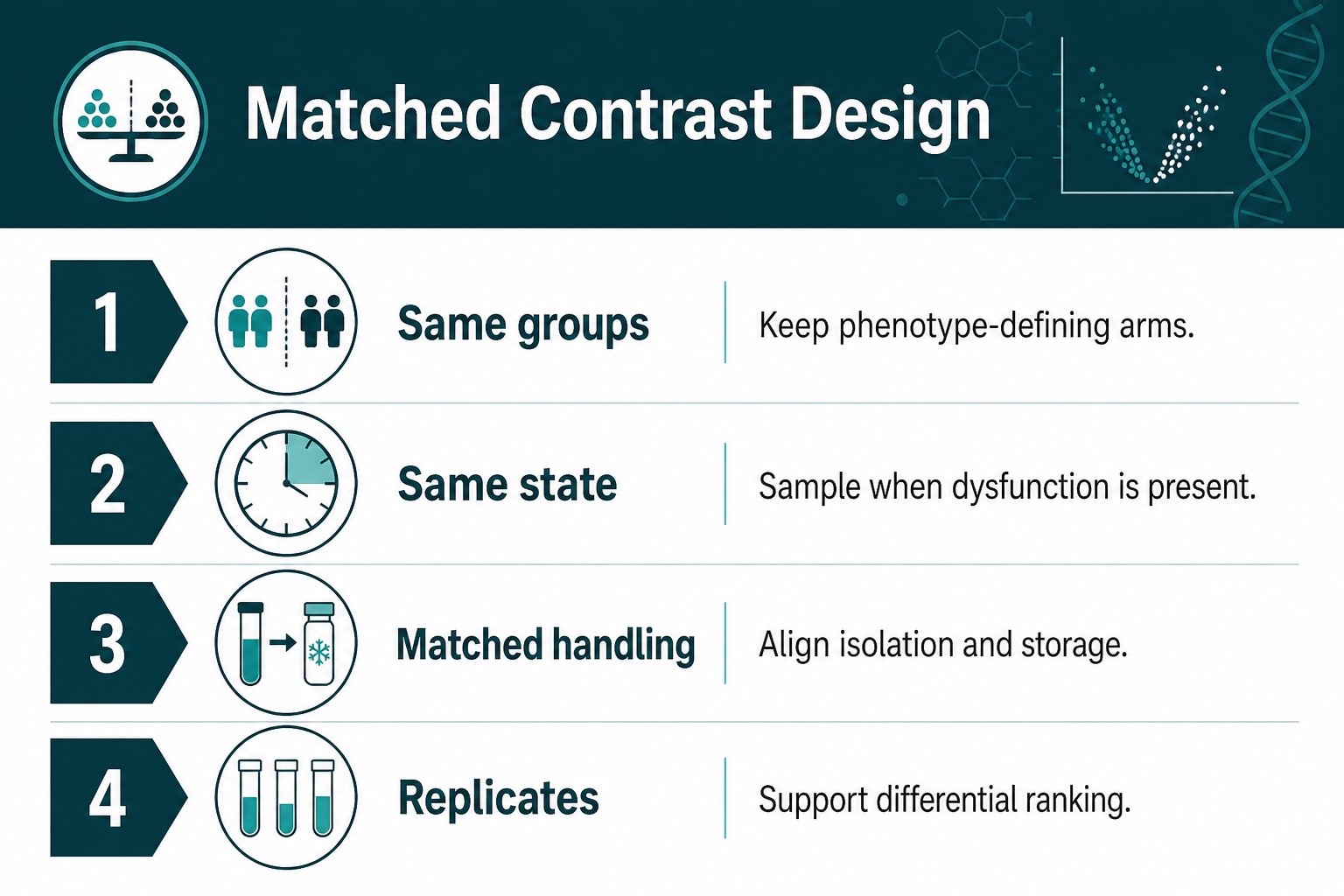
Figure 2. Carry the dysfunction-defining groups, timing, and matched handling into the proteomics cohort.
Read Protein Changes as Mechanism Hypotheses
Interpretation should stay hypothesis-graded.
A practical reading order is:
- Confirm that the phenotype contrast is the same one used for proteomics.
- Inspect differential proteins for biological coherence with the dysfunction narrative.
- Separate strong replicated candidates from weak edge effects.
- Ask whether abundance change is enough, or whether PTM or metabolite layers are still missing.
- Choose orthogonal follow-up for the top candidates instead of declaring mechanism from the table alone.
|
Evidence layer |
What it supports |
What it does not prove alone |
|---|---|---|
|
Dysfunction phenotype |
Mitochondrial state is abnormal |
Which proteins remodeled |
|
Mitochondrial proteomics |
Protein remodeling under the same contrast |
That a protein caused the phenotype |
|
Pathway annotation |
Organizes candidates into themes |
Pathway activity or enzyme function |
|
Orthogonal follow-up |
Tests priority mechanism hypotheses |
Nothing if candidates were never ranked carefully |
Over-interpretation usually happens when a long differential list is rewritten as a finished mechanism story. Under-interpretation happens when a clear phenotype is left without any molecular ranking. Mechanism exploration sits between those extremes.
When to Extend Beyond Abundance Proteomics
Abundance proteomics is often the first molecular step after dysfunction is observed. It is not always the last.
Consider extensions when:
- Protein abundance is mostly stable, but the phenotype remains strong and PTM regulation is plausible
- Enzyme or transporter candidates point to energy-metabolism intermediates that need metabolite support
- Additional functional measurements are still needed to refine the phenotype before more omics layers are added
Those extensions are optional evidence-chain choices. They should be scoped from the claim, not added automatically. Mitochondrial proteomics remains the core route for protein-level candidate discovery after dysfunction is established.
When the mechanism plan is ready, send the phenotype summary, group map, sample type and approximate amounts, whether mitochondria are already extracted, and whether PTM or metabolomics extensions are under review. MtoZ Biolabs can help turn that package into a mitochondrial protein analysis design aimed at mechanism candidates rather than at an open-ended protein dump.
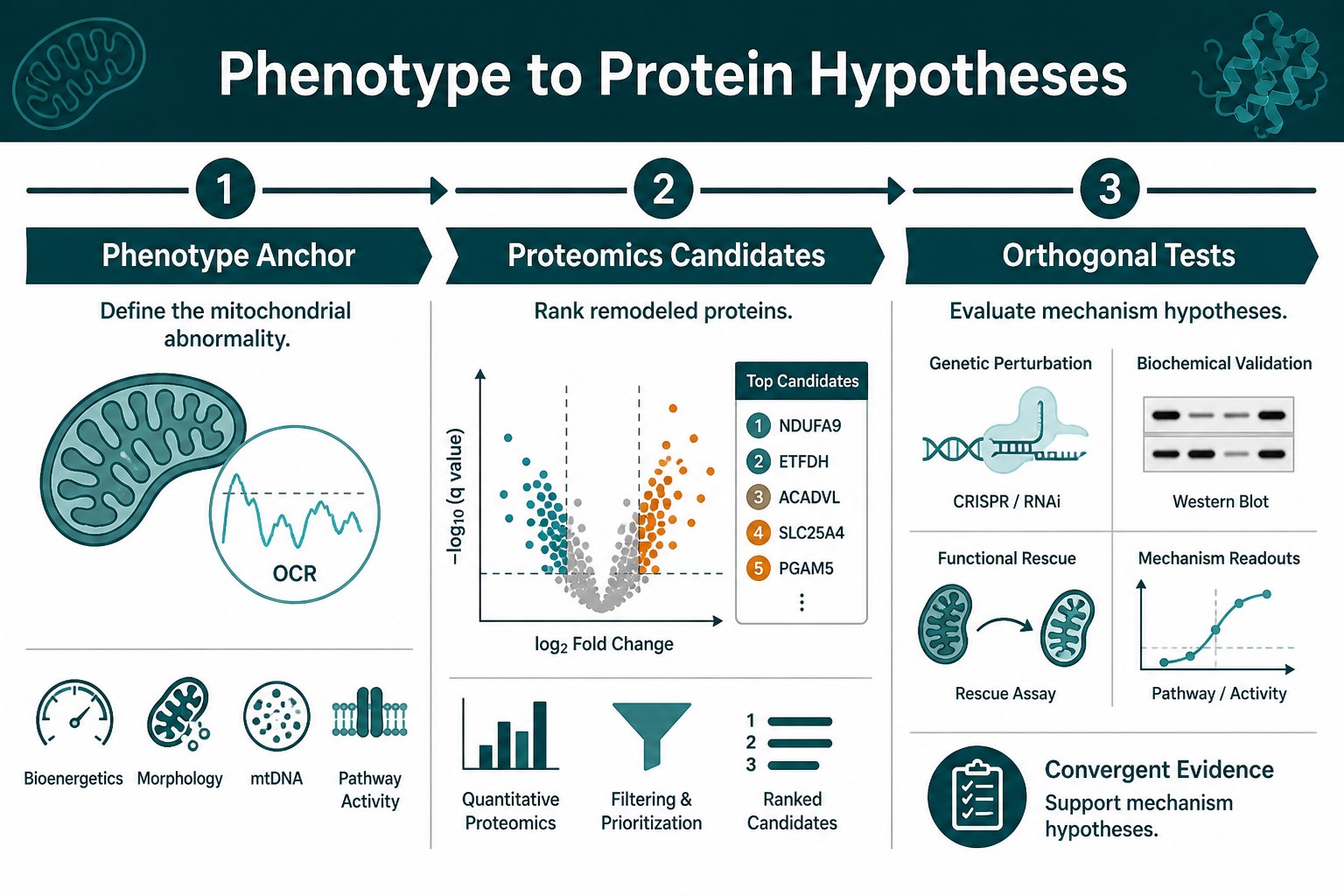
Figure 3. Move from phenotype anchor to proteomics candidates, then to orthogonal tests of mechanism hypotheses.
Related Services
Teams connecting mitochondrial dysfunction phenotypes to protein-level mechanism work can review the services below while the plan is still open.
Mitochondrial Proteomics Service
The main route for mitochondrial proteomics and mitochondrial protein analysis when a dysfunction phenotype needs protein-level candidates.
Subcellular Proteomics Service
A broader option when the dysfunction question extends across multiple subcellular fractions rather than a mitochondria-focused preparation alone.
Frequently Asked Questions
1. How do you move from mitochondrial dysfunction to protein-level mechanisms?
Anchor the phenotype first, then use mitochondrial proteomics to rank proteins that remodeled under the same contrast and select candidates for follow-up.
2. Can proteomics prove what caused the dysfunction?
No. It generates protein-level mechanism hypotheses. Causation still needs orthogonal testing.
3. What sample information matters most?
Sample class, planning amounts, matched group handling, and the phenotype definition that the cohort must represent.
4. Is pathway annotation enough to claim mechanism?
No. Annotation can organize candidates. It does not prove pathway activity or resolve enzyme function by itself.
5. When should PTM or metabolomics be added?
Add them when abundance proteomics cannot explain a strong phenotype and the claim specifically needs modification-site or metabolite evidence.
6. Should functional assays stop once proteomics begins?
No. Phenotype evidence and protein evidence remain complementary layers in a mechanism study.
Conclusion
Observed mitochondrial dysfunction creates the need for explanation. Mitochondrial proteomics supplies protein-level candidates when the phenotype is defined, the contrast is matched, and differentials are read as hypotheses rather than finished mechanisms.
If the project stays anchored to the abnormality you already trust, protein analysis is far more likely to sharpen the next experiment than to produce an unfocused list. Teams ready to convert a dysfunction phenotype into a mechanism-oriented proteomics plan can review the package with MtoZ Biolabs before the study begins.
How to order?




