






Circular Dichroism Based Nucleic Acid Analysis Service
- Advanced Analytical Capabilities: We employ top-of-the-line CD instrumentation that ensures precise, high-quality data, critical for reliable nucleic acid analysis.
- Expert Data Interpretation: Our team of scientists brings years of expertise in both academic and industrial applications, ensuring that your results are not only accurate but also interpreted in the context of your research goals.
- Customized Solutions: Whether you are studying DNA, RNA, or nucleic acid-ligand interactions, we tailor our services to meet your specific needs, ensuring that you receive the most relevant and detailed structural information.
- Comprehensive Support: From initial consultation to final reporting, we offer full technical support throughout the project, including expert guidance on sample preparation, experimental setup, and data analysis.
- One-Time-Charge: Our pricing is transparent, no hidden fees or additional costs.
Circular Dichroism (CD) spectroscopy is a powerful analytical tool widely used for characterizing the secondary structure of macromolecules, particularly proteins and nucleic acids. The Circular Dichroism Based Nucleic Acid Analysis Service at MtoZ Biolabs utilizes this advanced technique to provide in-depth analysis of nucleic acid structures, including their conformation, stability, and interactions with other biomolecules.
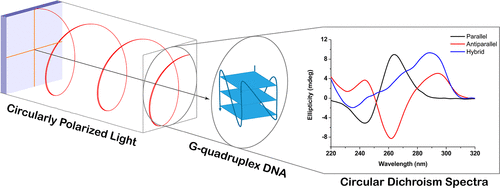
Carvalho, J. et al. J Chem Educ. 2017.
Figure1. Circular Dichroism in DNA Structure Research
Technical Principles
Nucleic acids exhibit characteristic CD spectra that reflect their conformational state, such as A-, B-, or Z-form DNA and various RNA secondary structures. Monitoring these spectra under changing temperature, pH, or ionic conditions reveals folding transitions, melting behavior, and binding-induced structural shifts. This makes CD spectroscopy an essential tool for characterizing native structures and dynamic conformational responses.
Service at MtoZ Biolabs
At MtoZ Biolabs, we offer a comprehensive suite of CD-based nucleic acid analysis services, supported by cutting-edge instrumentation and expert data interpretation. Our services include:
✅1. Structural Analysis of DNA/RNA: We provide detailed structural data on DNA and RNA molecules, including the analysis of double-stranded (dsDNA), single-stranded (ssDNA), and RNA secondary structures.
✅2. Thermal Melting Analysis: Assess the stability and thermal transitions of nucleic acids to understand their stability under different conditions or after modifications.
✅3. Conformational Dynamics: Study the effects of environmental changes such as pH, ionic strength, or temperature on nucleic acid structure.
✅4. Nucleic Acid-Ligand Interactions: Our service can analyze the interaction of nucleic acids with small molecules, peptides, or proteins. Understanding these interactions is crucial for drug development, particularly for nucleic acid-targeting therapeutics.
✅5. Molecular Complexes and Conformational Changes: Investigate changes in nucleic acid structure upon binding with other molecules, providing insights into functional conformations and the molecular mechanisms involved in processes like gene expression regulation and signaling.
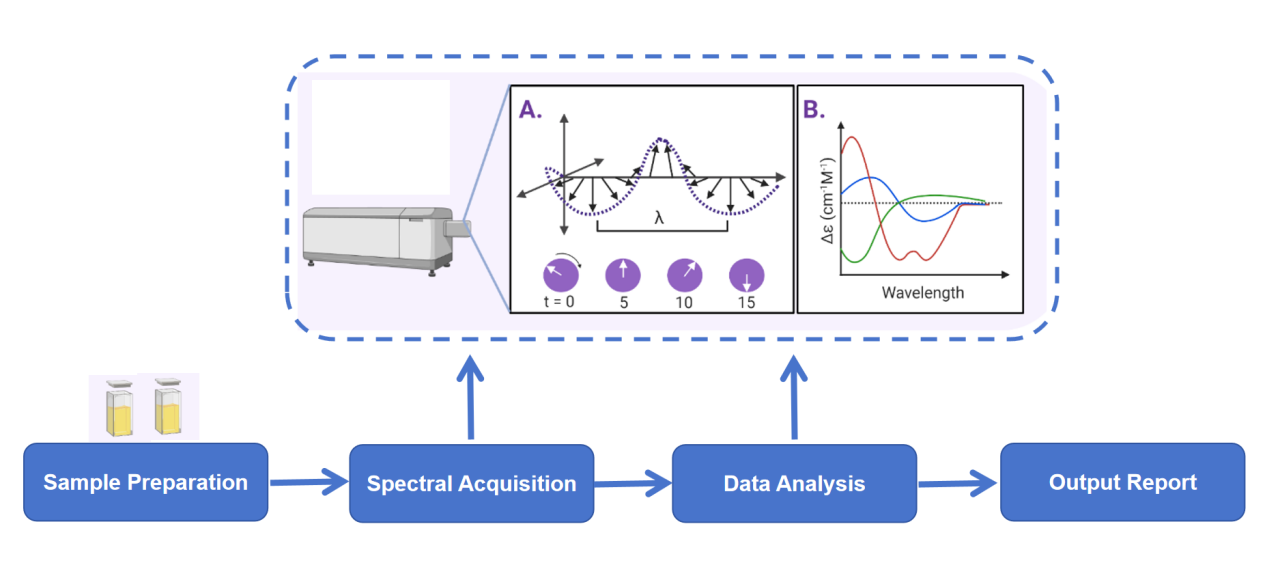
Analysis Workflow
Why Choose MtoZ Biolabs?
Applications
The Circular Dichroism Based Nucleic Acid Analysis Service can be applied in a variety of fields, including:
1.Pharmaceutical Development: Structural studies of oligonucleotides, RNA-based therapeutics, and DNA-targeting drugs.
2. Gene Therapy: Investigating the stability and conformational behavior of gene-editing tools like CRISPR/Cas9 systems.
3. Functional Genomics: Studying how nucleic acids interact with proteins or small molecules in gene regulation and signaling pathways.
4. Molecular Diagnostics: Structural characterization of disease-related nucleic acid modifications or alterations.
5. Biotechnology: Nucleic acid stability and interaction analysis for optimizing synthetic biology and molecular engineering projects.
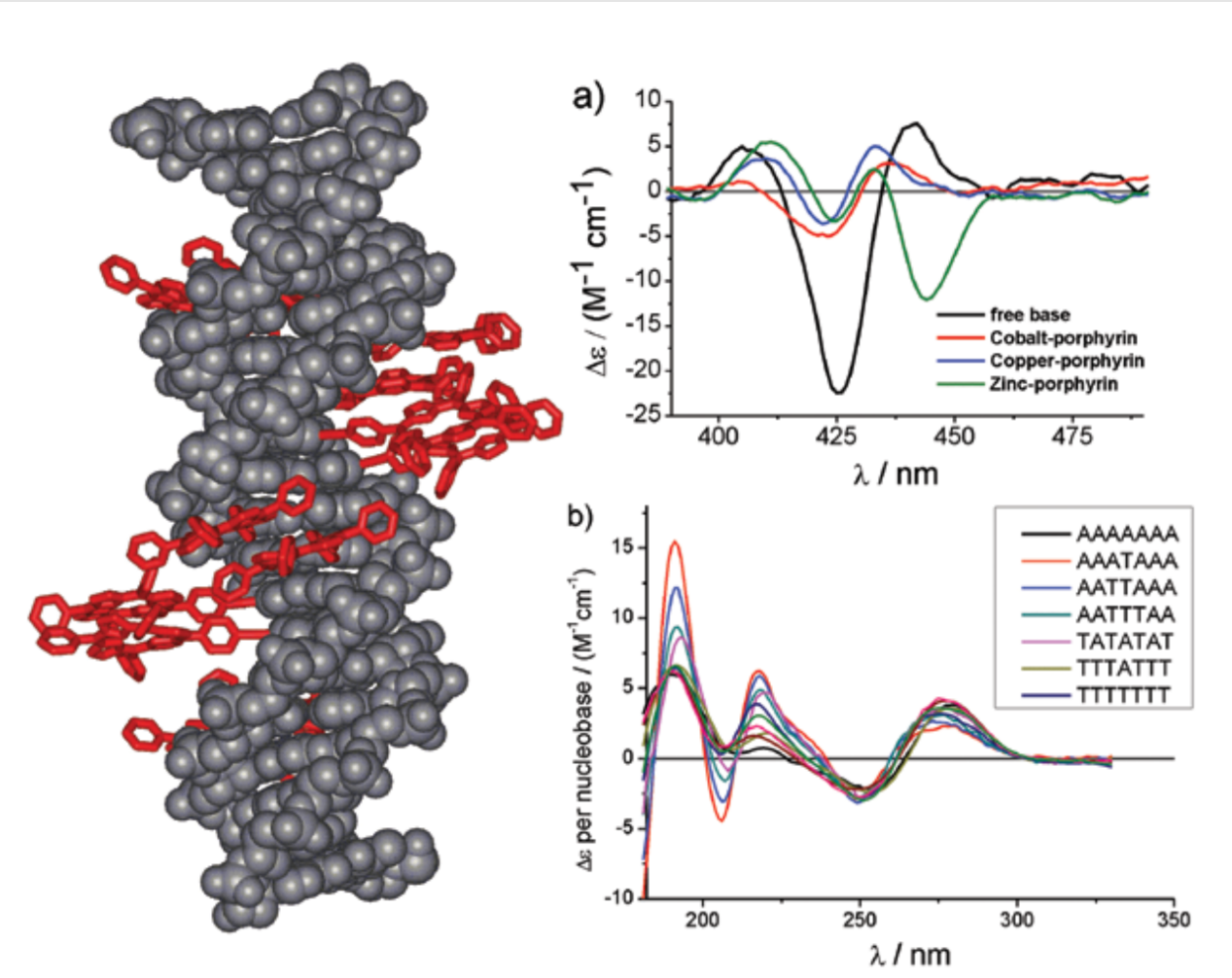
Dr Eugen Stulz, University of Southampton
Figure2. Circular Dichroism (CD) Spectra Revealed the Structures of Different Porphyrin Modified DNA
Sample Submission Suggestions
To ensure the best possible results, we recommend the following guidelines for sample submission:
Sample Types: DNA (double-stranded, single-stranded), RNA, DNA/RNA hybrids, and nucleic acid-ligand/protein complexes.
Sample Quantity: Typically, 10-20 µg of purified nucleic acid in a buffer suitable for CD analysis.
Sample Purity: High-quality, purified nucleic acids are required for optimal analysis. Contaminants, especially proteins or solvents, can interfere with CD measurements.
*Samples should be in a buffer compatible with CD spectroscopy, such as sodium phosphate or Tris buffers, at a neutral pH.
Deliverables
Raw Data: Original spectral data files (e.g., .txt, .csv, .asc).
Processed Data & Figures: Spectral plots, Tm melting curves, and related visual outputs.
Analysis Report: Comprehensive interpretation of results.
Method Details: Information on experimental methods and conditions.
How to order?




