






Choosing a Quantitative Proteomics Strategy for Plant Research
Quantitative plant proteomics should be selected according to the biological comparison the study is designed to test. DIA, DDA-based label-free quantification, and TMT differ in acquisition strategy, sample coordination, batch structure, and cross-sample quantitative consistency. Their suitability therefore depends on the experimental design rather than on platform preference alone.
Before choosing a workflow, the study should determine whether the objective is protein identification or quantitative comparison, define the biological groups and comparison unit, and specify the evidence expected from the analysis. These elements establish the quantitative question that guides method selection.
Define the Quantitative Question
1. Confirm Whether Quantification Is Necessary
(1) Identification Questions versus Comparative Questions
Protein identification is suitable when the main objective is to determine which proteins are detectable in a tissue, enriched fraction, protein complex, or excised gel band. Quantitative proteomics is required when the project asks whether protein abundance differs among genotypes, treatments, tissues, developmental stages, stress conditions, or time points.
(2) Define What Will Be Compared
The comparison unit should be specified before method selection. Whole tissue, cultured plant cells, organelle-enriched fractions, and membrane preparations represent different biological contexts. A quantitative difference within an enriched fraction, for example, does not necessarily indicate the same change at the whole-tissue level.
2. Specify the Required Evidence
(1) Treat Differential Abundance as Comparative Evidence
A differential protein result indicates that the measured abundance differs between defined groups under the selected statistical criteria. It can support candidate prioritization and pathway-level interpretation, but it does not independently establish that the protein caused the phenotype or treatment response.
(2) Separate Abundance Questions from Other Proteomic Questions
Protein abundance, subcellular localization, post-translational modification, and protein association represent distinct evidence types. A total-proteome comparison should not be expected to resolve compartment-specific redistribution, modification-site regulation, or direct physical interaction without an experimental design tailored to those questions.
Compare the Main Quantitative Strategies
1. Evaluate DIA
(1) Cross-Sample Consistency and Missing Values
DIA acquires fragment-ion data across predefined precursor ranges rather than selecting only a limited set of precursors in each survey scan. This acquisition pattern often supports more consistent measurement across samples and fewer missing quantitative values, although performance still depends on preparation consistency, chromatography, acquisition settings, and data processing.
(2) Multi-Group and Longitudinal Designs
DIA is often a strong fit for studies containing several treatment groups, multiple time points, or repeated comparisons across a coordinated sample set. Its value is greatest when cross-sample consistency is a central analytical requirement, rather than when method selection is based only on sample count.
2. Evaluate DDA-Based Label-Free Quantification
(1) Flexible and Exploratory Sample Designs
In this article, label-free quantification refers primarily to DDA-based workflows. This approach is practical for exploratory studies, independently acquired samples, and projects in which additional specimens may be introduced later. It avoids a fixed multiplex structure, but each sample remains subject to run-to-run analytical variation.
(2) Run-to-Run Variation and Batch Control
Because DDA-based label-free samples are analyzed in separate LC-MS/MS runs, injection order, instrument stability, preparation batches, and stochastic precursor selection can influence data completeness. Balanced run order, consistent preparation, biological replication, and appropriate normalization are central to reliable group comparisons.
3. Evaluate TMT
(1) Multiplexed Comparison within a Planned Design
TMT uses isobaric labels to encode peptides from different samples before they are combined for LC-MS/MS analysis. The workflow suits projects with clearly defined groups and coordinated sample preparation, particularly when several samples need to be compared within the same multiplexed experiment.
(2) Channel Allocation and Cross-Batch Planning
TMT design requires deliberate channel allocation, group balance, and planning for comparisons across multiplexes. A shared reference can support cross-batch alignment when multiple sets are needed. Co-isolation interference and ratio compression may reduce apparent fold changes, so quantitative interpretation should account for the acquisition strategy.
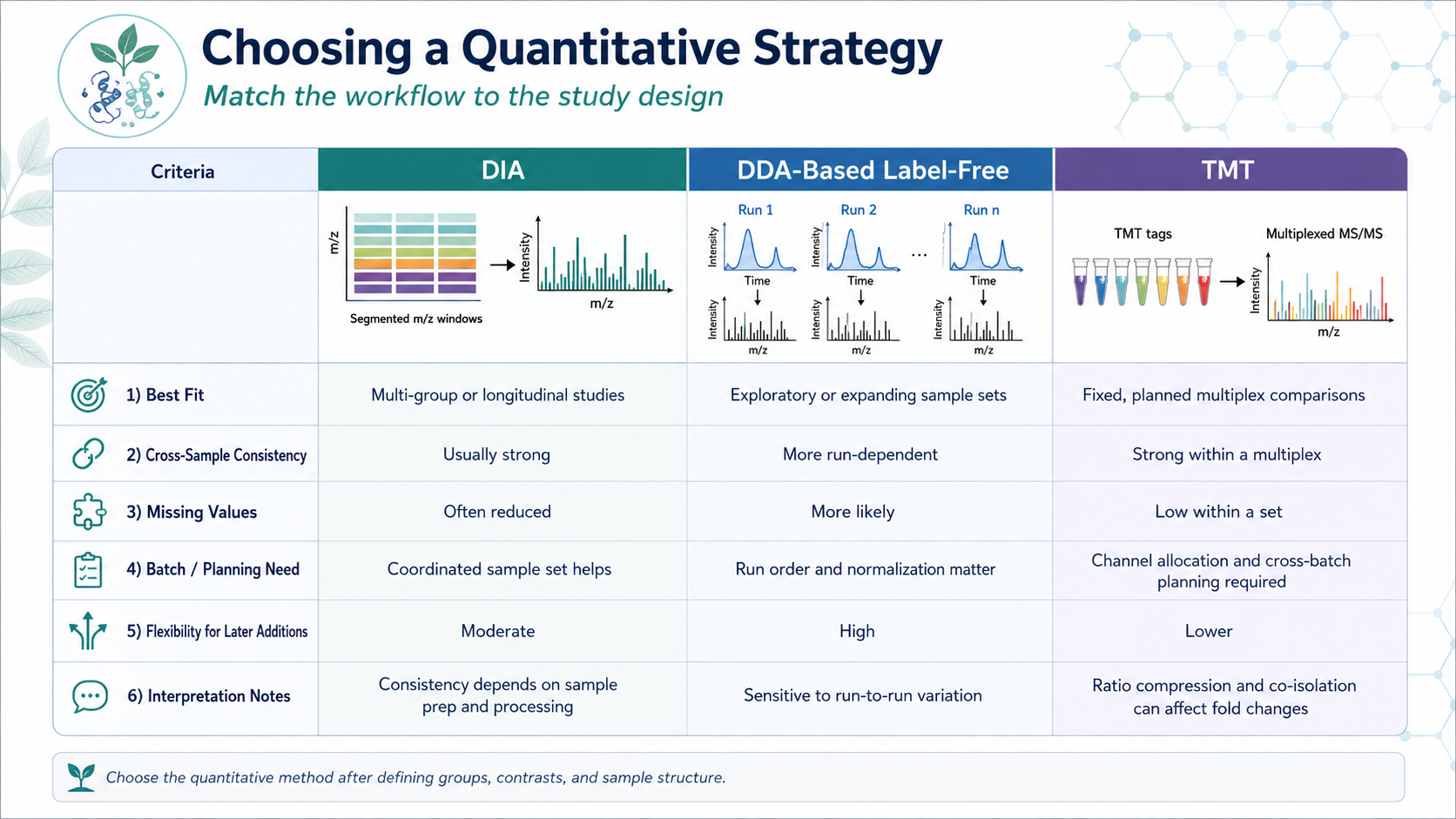
Figure 1. Comparison of DIA, DDA-based label-free quantification, and TMT for quantitative plant proteomics study design.
Match the Method to the Plant Study
1. Assess the Sample and Experimental Design
(1) Biological Variation and Replication
Plant proteomes vary with genotype, tissue composition, developmental state, growth environment, and treatment history. Biological replication should capture the variation relevant to the study while keeping avoidable handling differences under control. Method choice cannot compensate for confounded groups or inadequate replication.
(2) Plant Matrix and Sample Compatibility
Pigments, polyphenols, polysaccharides, lipids, salts, and other matrix components can interfere with protein extraction, digestion, chromatography, or ionization. The available sample amount, tissue characteristics, and expected protein yield should be assessed alongside the quantitative method rather than after the study design is fixed.
2. Consider Project Scale and Future Changes
(1) Fixed versus Expanding Sample Sets
TMT generally benefits from a sample set that can be organized before labeling and channel assignment. DDA-based label-free and DIA analyze samples independently, which can be more adaptable when future additions are likely. Later additions still require careful batch planning and may not be directly equivalent to the original analytical series.
(2) Batch Structure and Statistical Contrasts
Primary comparisons should be defined before samples are assigned to preparation or acquisition batches. Treatment, genotype, time point, or tissue should not be completely confounded with batch. Randomization, balanced allocation, and reference strategies can reduce technical structure that would otherwise complicate biological interpretation.
3. Apply the Selection Criteria
(1) When DIA Is a Stronger Fit
DIA is often preferable when the project prioritizes consistent measurements across many samples, reduced missingness, and coordinated comparisons among several groups or time points. It is not automatically superior for every design, particularly when sample quality or batch structure remains unresolved.
(2) When DDA-Based Label-Free Is More Practical
DDA-based label-free analysis is often practical for exploratory studies, evolving sample sets, or projects that do not require a fixed multiplex. It remains dependent on stable analytical performance and careful control of run order, preparation variation, and missing values.
(3) When TMT Is More Appropriate
TMT is often appropriate when groups are fixed, samples can be processed together, and channel allocation can preserve balanced comparisons. The approach is less suitable when specimens will arrive unpredictably or when the required sample set cannot be organized into a defensible multiplex and cross-batch plan.
Decide Whether Global Quantification Is Sufficient
1. Add Subcellular Proteomics for Compartment-Specific Questions
(1) Whole-Tissue Change versus Fraction-Specific Change
Whole-tissue proteomics averages signals across cell types and intracellular compartments. If the hypothesis concerns chloroplasts, mitochondria, membranes, or another enriched plant fraction, subcellular proteomics can focus the comparison on that compartment and reveal changes that may be diluted in bulk tissue.
(2) Enrichment Quality and Localization Claims
Detection in an enriched fraction supports association with that preparation, not exclusive localization within the target compartment. Marker proteins, enrichment patterns, reproducibility, and expected contaminants should be considered when interpreting fraction-specific abundance. Localization claims usually require evidence beyond a single proteomic dataset.
2. Add PTM Proteomics for Site-Level Regulation
(1) Total Protein Abundance versus Modification Change
A signaling response may alter phosphorylation, acetylation, ubiquitin-remnant modification, glycosylation, or another supported modification without producing a large change in total protein abundance. PTM-focused enrichment and site-level analysis are therefore more appropriate when the primary question concerns regulatory state rather than protein quantity alone.
(2) Candidate Sites and Functional Validation
A changed modified peptide may reflect altered modification occupancy, altered abundance of the corresponding protein, or both. PTM results should be interpreted with total-proteome information when feasible. Differential sites remain regulatory candidates until targeted, biochemical, genetic, or functional experiments assess their biological effect.
3. Add Interaction Proteomics for Association Questions
(1) Abundance Change versus Protein Association
Global quantitative proteomics compares protein abundance across samples. Interaction proteomics instead asks which proteins associate with a bait, complex, membrane environment, or spatial neighborhood. These approaches answer different questions and should not be substituted for one another simply because both use LC-MS/MS.
(2) Candidate Interactors and Control Design
Interaction datasets are influenced by nonspecific binding, abundant background proteins, sample handling, and experimental conditions. Negative controls and biological replication support candidate prioritization. Proteins enriched with a bait or proximity-labeling system remain association candidates and are not automatically validated as direct physical interactors.
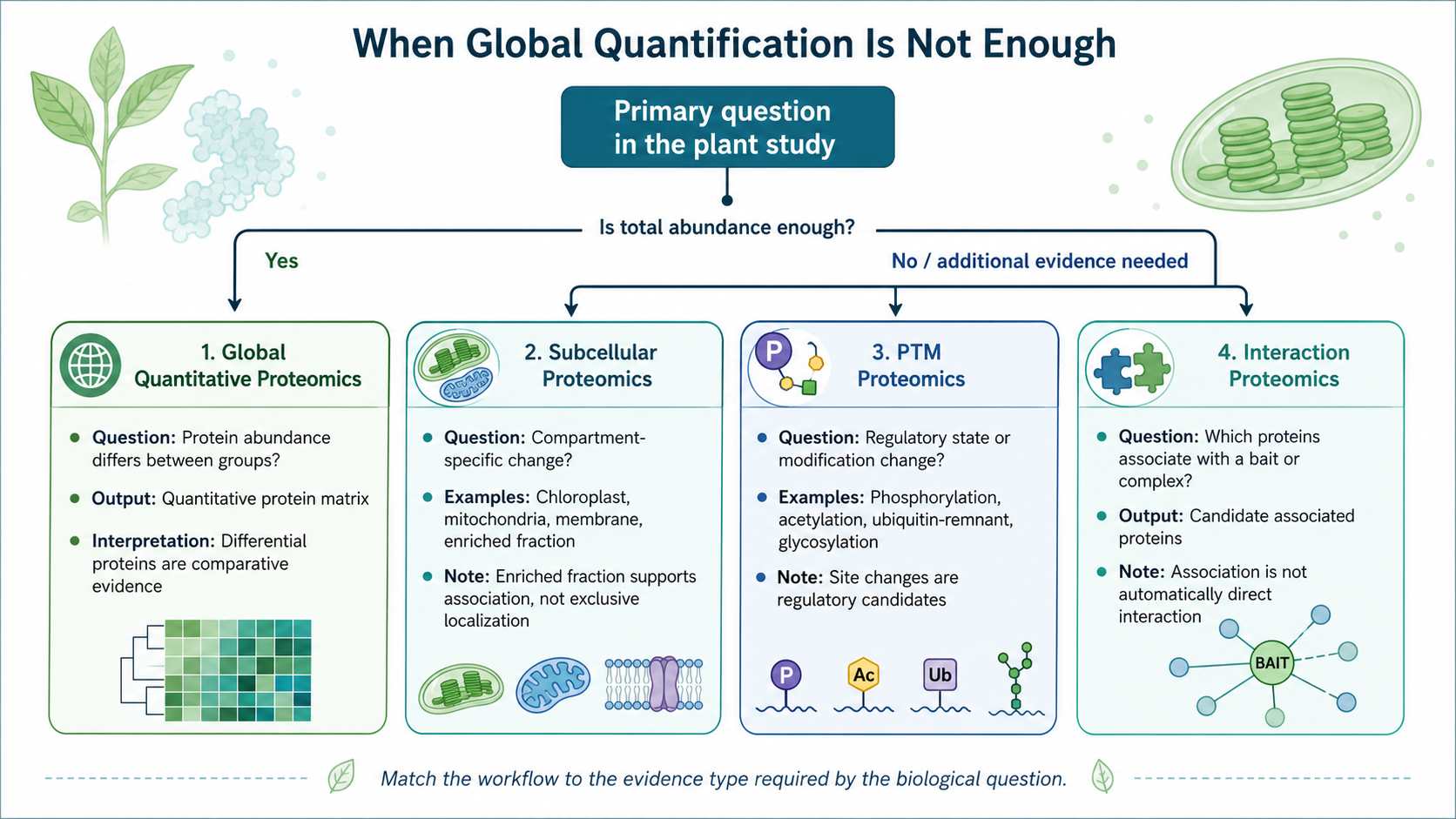
Figure 2. Selection of global, subcellular, PTM, or interaction proteomics according to the biological evidence required.
Finalize the Quantitative Workflow
1. Check Sample and Database Readiness
(1) Sequence Resources for Non-Model Plants
Protein identification and quantification depend on the sequence database used for matching. Non-model plant projects may require a species-specific FASTA file, transcriptome-derived sequences, a curated custom database, or an appropriate homologous reference. Database completeness affects protein inference, quantitative assignment, and downstream annotation.
(2) Consistent Collection and Preparation
Sampling time, treatment duration, developmental stage, storage history, and preparation procedures should be aligned across groups. Technical inconsistency introduced before LC-MS/MS can appear as abundance variation. A suitable acquisition method cannot recover biological comparability that was lost during collection or preparation.
2. Lock the Experimental Design
(1) Groups, Controls, Replicates, and Batches
Before analysis, the project should define sample type, biological groups, controls, replicate structure, acquisition batches, and primary statistical contrasts. The selected method should support these comparisons without placing all members of one biological group into a single technical batch.
(2) Expected Results and Follow-Up Decisions
The workflow should be chosen according to the expected output: a quantitative protein matrix, differential protein candidates, compartment-specific changes, modification-site candidates, or associated proteins. Each result type supports a different level of interpretation and may require distinct follow-up experiments before functional conclusions are drawn.
Choosing among DIA, DDA-based label-free quantification, and TMT requires alignment among the biological question, plant sample characteristics, group design, batch structure, and expected evidence. MtoZ Biolabs supports quantitative plant proteomics project evaluation based on sample type, experimental groups, and research objectives. Submit your inquiry below for project evaluation.
MtoZ Biolabs, an integrated chromatography and mass spectrometry (MS) services provider.
Related Services
How to order?




