






Before Choosing a Protein Mass Spectrometry Service: Sample, Data, and Reporting Questions to Confirm
Introduction
A researcher may receive a service quote for protein mass spectrometry and realize it does not specify which acquisition mode will be used, whether raw files are included, or what happens if sample purity is insufficient. A project manager may approve a proteomics vendor only to learn weeks later that the deliverable format does not match the downstream bioinformatics pipeline. A PI may ship samples without confirming storage conditions compatible with the planned analysis.
These situations are common because protein mass spectrometry services span different analytical goals, and assumptions about scope, output, and reporting often remain unstated until problems arise. Confirming a set of practical questions before committing samples and budget reduces rework, avoids mismatched expectations, and helps the project move from submission to results without unnecessary delays.
This article covers the sample, data, and reporting questions that should be resolved before selecting a protein mass spectrometry service provider.
Why These Questions Matter Before Service Selection
A protein mass spectrometry service can deliver protein identification, relative or absolute quantitation, sequence coverage mapping, post-translational modification analysis, or structural characterization depending on the project scope. Each goal requires different sample input, instrument time, data processing, and report content.
When scope is unclear at submission, the service team must either make assumptions or request clarification after the project begins. Either outcome introduces delays. When deliverable format is not aligned with the client's downstream use, the final report may require reprocessing or additional analysis that was not included in the original agreement.
Asking structured questions before commitment does not slow the project. It confirms that both the client and the analytical team share the same understanding of what goes in, what comes out, and how the results should be used.
Sample Questions to Confirm
What Is the Sample Form and Matrix?
Protein mass spectrometry services accept various sample forms: purified protein solutions, gel bands, cell lysates, tissue homogenates, immunoprecipitation eluates, biofluids, or FFPE sections. Each form requires a different preparation path, and not all service workflows accommodate all matrices.
Confirm the sample form before requesting a quote so the provider can match the appropriate digestion, cleanup, and LC-MS/MS strategy to the material.
How Much Sample Is Available?
Different analytical goals require different protein input amounts. Identification from a single gel band may need microgram-level material. Quantitative proteomics across replicate groups may require higher total protein per condition. Intact mass measurement on a purified biologic may require a defined concentration and volume.
If sample is limited, the service provider must know this upfront to select methods that work within the available amount rather than discovering a shortfall after submission.
What Is the Sample Purity and Composition?
Detergents, high salt concentrations, reducing agents, and carrier proteins can interfere with LC-MS/MS performance. Some contaminants can be removed during preparation; others require the client to reprepare the sample before submission.
Confirm buffer composition and known additives so the service team can assess compatibility before scheduling instrument time.
How Has the Sample Been Stored and Shipped?
Protein degradation during storage or shipping affects data quality. Freeze-thaw cycles, prolonged room temperature exposure, and incompatible containers can reduce sequence coverage or introduce artifacts.
Agree on shipping conditions and confirm that the sample history is documented before the material leaves the lab.
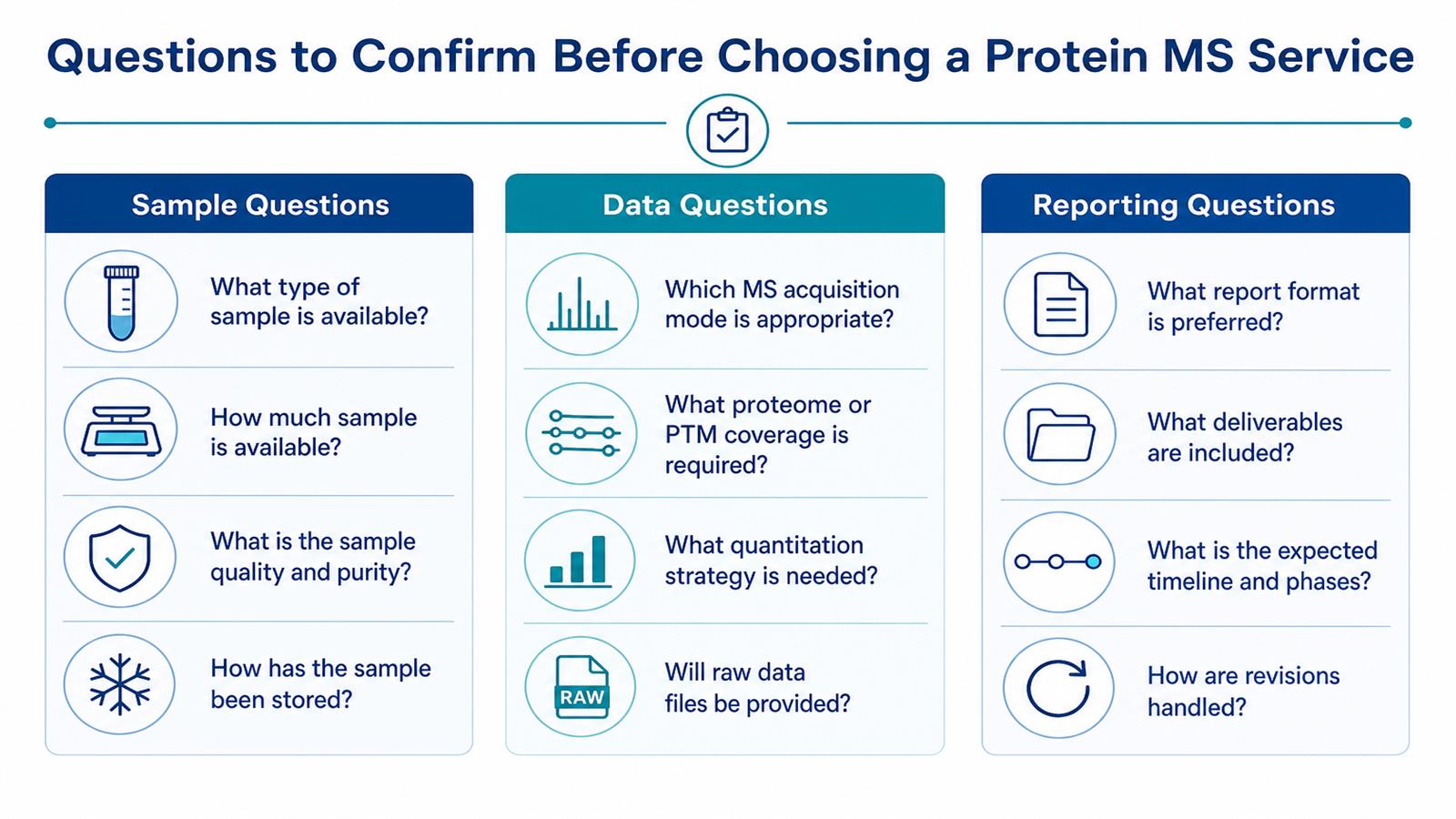
Figure 1. Three categories of questions to confirm before committing samples to a protein mass spectrometry service.
Data Questions to Confirm
Which Analytical Goal Drives the Project?
Protein identification, quantitative comparison, PTM mapping, sequence confirmation, and intact mass analysis are different analytical scopes. A service quote should state which goal is being addressed because instrument time, database searching, and reporting all change depending on scope.
If the project requires more than one goal, confirm whether these are handled in a single workflow or require separate submissions.
What Acquisition Mode Will Be Used?
Data-dependent acquisition supports broad identification but produces variable precursor coverage across runs. Data-independent acquisition supports more reproducible quantitation in larger sample sets. Targeted MRM or PRM measures a predefined panel with high selectivity.
The acquisition mode should match the study question. Confirm that the quoted method supports the comparison or identification depth the project requires.
What Quantitation Strategy Applies?
Label-free intensity comparison, isobaric labeling, stable isotope labeling, and spectral counting each produce different types of quantitative output. Some strategies require the client to supply labeled material; others are handled entirely by the service lab.
Confirm which quantitation approach is proposed, what normalization will be applied, and what statistical framework will be used to report fold changes or significance.
Will Raw Data Files Be Provided?
Some clients need raw instrument files for independent reprocessing or regulatory documentation. Others need only processed result tables. Not all services include raw file delivery by default.
Confirm whether raw data access is included, what file format is used, and how data will be transferred.
Related Services
Protein Identification Service
Quantitative Proteomics Service
MtoZ Biolabs provides method consultation before sample submission to align analytical scope, sample preparation, and reporting format with the project goal.
Reporting Questions to Confirm
What Deliverables Are Included in the Standard Report?
A protein mass spectrometry report may include protein lists, peptide evidence tables, sequence coverage maps, modification annotations, quantitative comparison summaries, or quality control metrics. The specific content depends on the analytical scope.
Confirm which report elements are included as standard deliverables and which require additional processing or fees.
What Report Format Will Be Used?
Some clients require structured spreadsheets for bioinformatics pipelines. Others need PDF summaries for internal review or publication support. Regulatory-facing projects may require specific documentation structure.
Confirm format preferences before the project starts so the service team builds the output in the correct structure from the beginning.
How Are Revisions or Follow-Up Questions Handled?
Data interpretation may raise follow-up questions after the initial report is delivered. Some services include a defined revision window or consultation session; others treat post-report questions as additional scope.
Confirm how questions, reanalysis requests, and data clarifications are managed so neither party is surprised after delivery.
What Is the Expected Project Timeline?
Project timelines depend on sample complexity, queue position, and the scope of data analysis required. A provider that specifies timeline in defined phases rather than fixed calendar guarantees can adjust more transparently when sample quality or scope changes occur.
Confirm phase structure and communication checkpoints rather than relying on a single delivery date.
Common Misalignment Scenarios and How to Prevent Them
|
Scenario |
Root Cause |
Prevention |
|---|---|---|
|
Report lacks quantitative comparison |
Quantitation not included in quoted scope |
Confirm analytical goal and quantitation method before approval |
|
Low sequence coverage on target protein |
Sample purity or amount below method requirement |
Confirm sample specifications and provide buffer composition |
|
Raw files not available for reprocessing |
Raw data delivery not included by default |
Confirm data access policy during quote review |
|
Timeline extends beyond expected window |
Sample required reprepare after initial QC failure |
Provide accurate sample history and composition upfront |
|
Report format incompatible with downstream pipeline |
Format preference not discussed before project start |
Align deliverable format at quote stage |
Most misalignment comes from unstated assumptions on either side. Structured pre-project communication addresses these gaps without adding significant time.
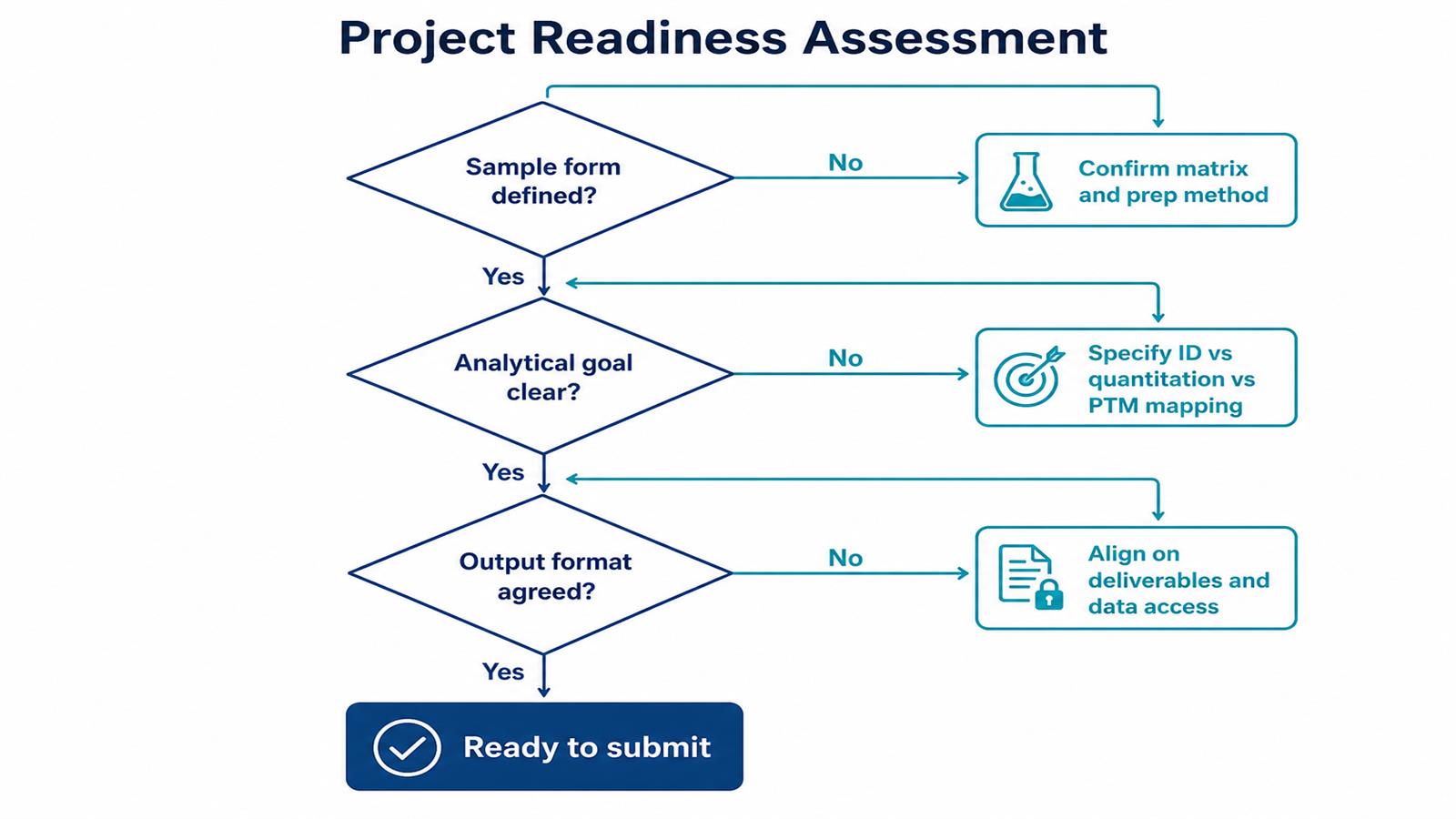
Figure 2. A readiness assessment confirms sample form, analytical goal, and output format before project submission.
Red Flags When Evaluating a Service Provider
A provider that cannot specify the acquisition mode, database search strategy, or false discovery rate filter in the proposal may lack depth in the specific analytical area the project requires.
A quote that bundles unrelated services without clear per-scope pricing may obscure what is actually included in the deliverable.
A provider that does not ask about sample matrix, buffer composition, or storage history before accepting the project may not perform sample-specific preparation optimization.
A timeline guarantee without stated assumptions about sample quality and scope changes may reflect sales language rather than operational planning.
These signals do not necessarily disqualify a vendor, but they indicate areas where additional clarification is warranted before commitment.
Pre-Submission Information Checklist
Before requesting a quote or shipping samples, prepare the following information:
- Sample type, form, and matrix
- Total protein amount or concentration per sample
- Buffer composition and known additives
- Storage history and shipping plan
- Analytical goal: identification, quantitation, PTM mapping, or structural confirmation
- Number of samples, groups, and replicates
- Preferred acquisition mode if known
- Required deliverables and report format
- Whether raw data files are needed
- Downstream use of results: publication, internal decision, regulatory support, or assay development input
This information allows the service provider to return an accurate scope, method recommendation, and timeline without post-submission rework.
Frequently Asked Questions
Should I choose a provider before or after confirming these questions internally?
Confirm sample-side questions internally first. Analytical goal, sample form, available amount, and intended use of results should be clear before engaging a provider. Data and reporting questions are best discussed with the provider during the quote conversation.
What if my sample does not meet the stated requirements?
Many protein mass spectrometry services can adjust preparation methods for non-standard matrices, but this must be discussed before submission. Limited sample, unusual buffers, or degraded material may require method adaptation that affects scope, timeline, or cost.
Is it normal to receive method consultation before committing to a service?
Yes. Specialized providers typically offer pre-project consultation to match the analytical approach to the sample and research question. This consultation reduces rework and helps both parties confirm that the quoted scope addresses the actual need.
How do I know if the report will support publication?
Confirm that the report includes peptide-level evidence, database search parameters, false discovery rate thresholds, and quantitative statistics in a format consistent with journal supplementary data requirements. Ask whether the provider has experience supporting publication-quality deliverables for your analytical type.
Closing Summary
Selecting a protein mass spectrometry service is more effective when sample specifications, analytical scope, and reporting expectations are confirmed before samples leave the lab. The questions in this article provide a structured framework for pre-project communication that reduces misalignment and supports a cleaner path from submission to usable results.
For researchers preparing to submit samples, MtoZ Biolabs offers pre-project scope review covering sample compatibility, method selection, deliverable format, and timeline structure. Share your sample type, analytical goal, and reporting needs through the inquiry form to begin the consultation.
How to order?




