






Application of Proteomics in Plant Research
In plant research, proteomics is most useful when the question is about protein abundance, pathway-associated protein changes, or candidate proteins linked to a treatment, genotype, or developmental stage. Proteomics may be sufficient as the primary analytical layer when the main endpoint is protein identification or relative protein abundance. However, additional PTM, interaction, activity, localization, or validation experiments may still be needed when the intended conclusion extends to protein regulation or biological function. Add metabolomics, or plan plant multiomics, when the same question also depends on metabolite shifts that proteins cannot report directly, such as osmoprotectants, secondary metabolites, or hormone-related metabolic changes.
A practical rule is simple. If the claim you want to make ends at protein identification, abundance changes, and pathway-associated candidates, start with plant proteomics. If the claim needs both protein changes and chemical phenotype changes, design matched plant proteomics and metabolomics on the same biological contrast. Parallel sampling is usually cleaner than trying to infer metabolites from proteins after the fact. When a staged analysis is planned, collect and preserve matched aliquots for both omics layers during the initial harvest whenever possible, even if only one layer will be analyzed first.
If you are choosing between one omics layer and a combined plan, share with MtoZ Biolabs the plant system, tissue, biological contrast, and the sentence you want the data to support. That is often enough to decide whether proteomics alone or plant multiomics is the better first step.
Where Proteomics Fits in Plant Research
Proteomics is used across many plant questions because proteins sit close to function, although protein abundance is not a direct measurement of enzyme activity, pathway flux, or biological function. Common application settings include abiotic stress comparisons, pathogen challenge studies, genotype or cultivar contrasts, developmental transitions, and treatment or nutrient response experiments.
In those settings, proteomics can:
- Identify proteins present in a defined tissue or preparation
- Quantify abundance differences between matched groups
- Organize differential proteins into pathway-associated candidate maps
What it cannot do is replace metabolite measurements. A rise in an enzyme protein does not prove that the related metabolite pool changed. Likewise, metabolomics alone cannot show which proteins moved. Neither layer alone usually establishes causal regulation, enzyme activity, or pathway flux. That is why method choice should follow the claim, not a preference for running every assay available.
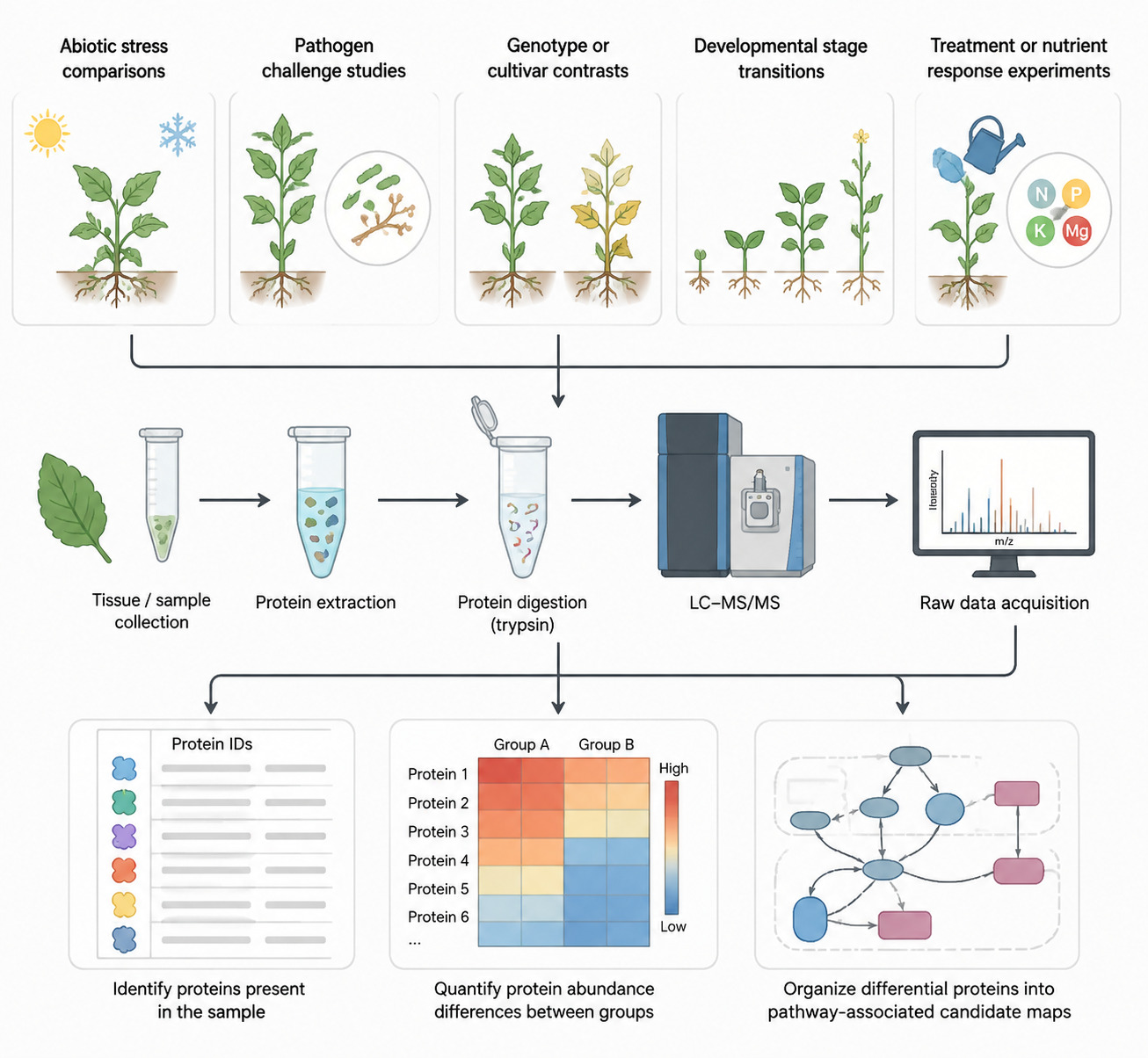
Figure 1. Application of Proteomics in Plant Research.
Proteomics Alone, Metabolomics Alone, or a Combined Plan
Use the comparison below to choose the first analytical layer. This is a method-selection step, not a ranking of which technology is generally better.
|
Research claim |
Better first choice |
Why |
|
Which proteins differ between groups? |
Plant proteomics |
Direct abundance comparison |
|
Which metabolites differ between groups? |
Plant metabolomics |
Direct chemical readout |
|
Do protein and metabolite changes show coordinated patterns within the same biological pathway? |
Plant proteomics and metabolomics |
Same contrast, two complementary layers |
|
Is an enzyme protein change accompanied by a change in related metabolites? |
Combined proteomics and metabolomics |
Protein data alone cannot measure the metabolite response |
|
Early screen with limited sample and budget |
One primary layer first |
Expand only after the contrast is clean |
Combined proteomics and metabolomics can support cross-layer association, pathway interpretation, and candidate prioritization. However, concordant protein and metabolite changes do not by themselves prove causality, enzyme activity, or increased or decreased metabolic flux.
A combined design is most helpful when both layers are collected from the same biological units, or at least from matched harvests of the same contrast. Running unrelated proteomics and metabolomics projects on different plants and then forcing a joint story usually weakens interpretation.
A common and efficient sequence is Phase 1 proteomics on a clean two-group contrast, then Phase 2 metabolomics using aliquots preserved from the same initial harvest once the protein candidates point to metabolic questions. If new plant material must be collected for Phase 2, growth conditions, developmental stage, tissue position, harvest time, and treatment conditions should be reproduced as closely as possible, although the datasets will not be fully paired. Parallel plant proteomics and metabolomics makes more sense when the hypothesis already names both protein and metabolite endpoints.
Application Scenarios and the Decision They Imply
Different plant applications push the decision in different directions.
Abiotic stress studies often start with proteomics when the goal is to map stress-responsive proteins. Add metabolomics when osmotic adjustment, energy metabolites, or specialized metabolites are part of the phenotype you will discuss.
Pathogen or resistance studies often need proteomics to rank defense-associated proteins. Metabolomics becomes important when phytoalexins, signaling-related metabolites, or broader metabolic reprogramming are central to the claim.
Genotype or cultivar comparisons can stay proteomics-focused when the deliverable is a differential protein set. A two-layer design is stronger when you want to connect protein candidates with metabolic traits used in phenotyping.
Developmental or nutrient studies follow the same logic. Proteomics identifies changes in proteins associated with biological processes, whereas metabolomics measures changes in chemical pools. Use both only when the manuscript or project report needs that joint evidence.
In all of these applications, keep tissue identity, growth stage, and harvest timing matched across arms. Recommended collection amounts depend on tissue type, protein yield, extraction difficulty, analytical workflow, and whether multiple analyses will be performed from the same material. Fibrous, lignified, low-protein, or metabolite-rich tissues may require more starting material than soft tissues. Limited samples should therefore undergo an individual feasibility review rather than being evaluated against one universal mass requirement. Metabolomics input requirements should be confirmed separately for the selected assay. Degraded, contaminated, or repeatedly freeze-thawed material is not recommended. Plant tissues collected from pathogen-challenge experiments require a biosafety and sample-handling review before submission. Samples containing viable infectious agents or presenting an unresolved biological hazard are not accepted.
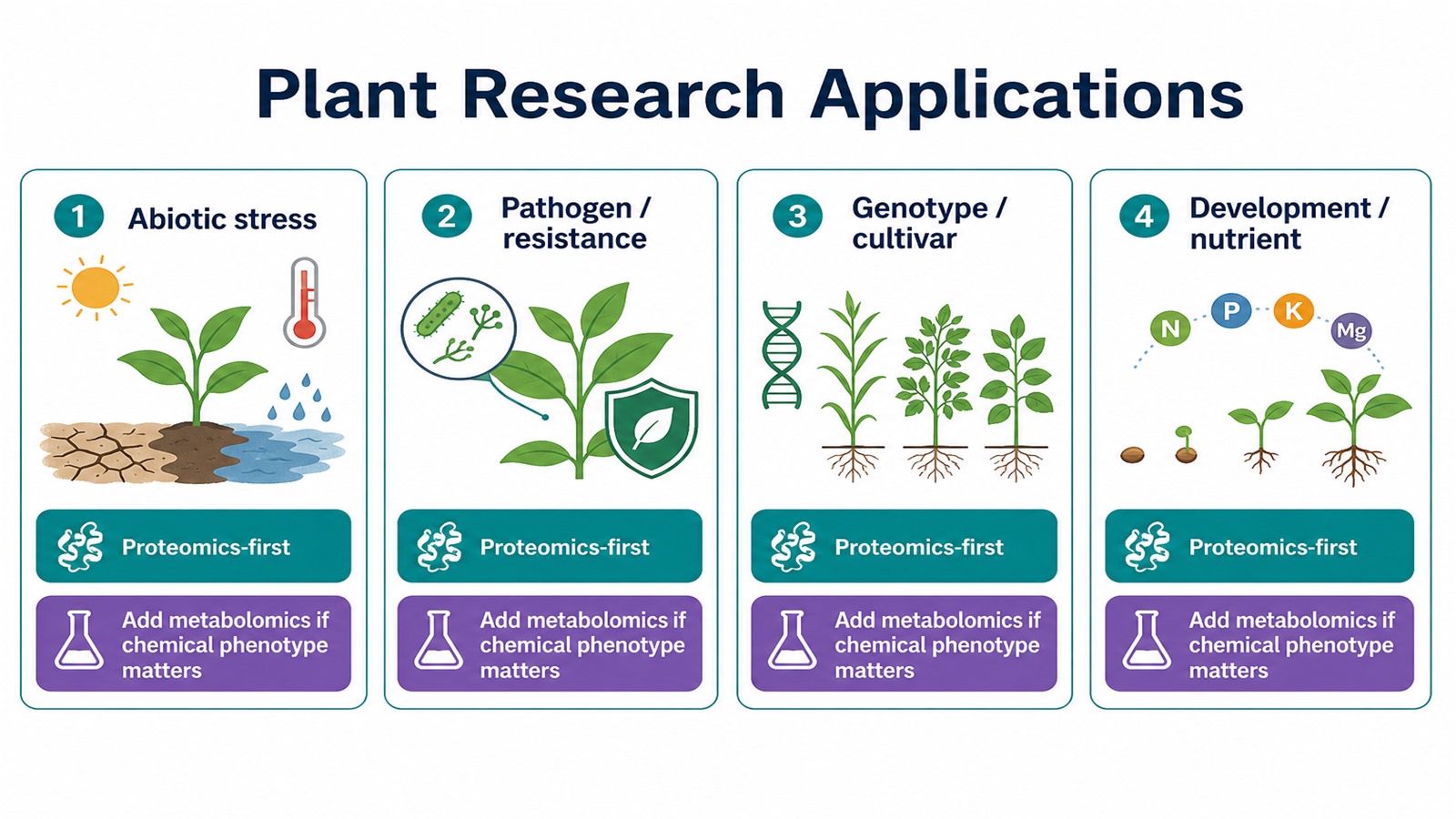
Figure 2. Stress, infection, genotype, and development studies can stay proteomics-focused or expand to multiomics depending on the claim.
How to Plan the Analytical Route Once the Method Is Chosen
If proteomics is the primary layer, decide whether you need identification or quantitative comparison. Quantitative work is required for group contrasts. Both DDA and DIA can support pilot studies and larger comparative projects. Method selection should consider sample complexity, required proteome depth, quantitative completeness, cohort design, instrument platform, and downstream analysis goals. DIA is often considered when consistent quantification across multiple samples and reduced missing values are priorities, whereas DDA may remain appropriate for discovery, library generation, or workflows requiring specific acquisition strategies.
Software and instrument selection should follow the acquisition mode, sample characteristics, and project objective rather than cohort size alone. Common processing options may include MaxQuant or Proteome Discoverer for DDA datasets and Spectronaut or DIA-NN for DIA datasets, depending on the validated workflow.
If plant proteomics and metabolomics will be combined, lock one shared biological contrast first: the same genotype, tissue, treatment, and harvest window. Label samples so protein and metabolite aliquots can be traced to the same biological unit whenever possible. Analyze each layer with its own validated workflow, then integrate at the interpretation stage around shared pathways and candidate lists. Do not treat a pathway hit from one layer as proof for the other. Likewise, a shared pathway annotation or correlated change across two omics layers should be treated as supporting evidence for a biological hypothesis, not as confirmation of direct regulation or metabolic flux.
Service work for plant proteomics can include protein extraction, digestion, and LC-MS/MS. Gel imaging and related standalone gel modules are not offered as separate services here. Typical proteomics report content can include differential analysis, functional annotation, GO and KEGG views, database-derived protein association network analysis, and Reactome analysis where species support is available. Database-derived association networks provide functional context and candidate relationships; they do not constitute project-specific evidence of direct physical protein interaction. Keep those outputs in the candidate lane until validation is done.
Related Services
Integrative Proteomics-Metabolomics Analysis Service
Frequently Asked Questions
Is proteomics enough for most plant stress or genotype studies?
It may be sufficient when the primary endpoint is protein identification or abundance comparison and the intended conclusion does not require direct evidence of protein activity, PTM regulation, physical interaction, metabolite change, or pathway flux. Add metabolomics when the discussion depends on metabolite phenotype as well.
When should plant proteomics and metabolomics be run in parallel?
Run them in parallel when both endpoints are already part of the hypothesis and matched samples can be collected from the same contrast. Otherwise, a proteomics-first sequence is often cleaner, provided that matched metabolomics aliquots are collected and preserved during the initial harvest whenever possible.
Does a multiomics plan always improve the study?
No. Extra layers help only when they answer a defined part of the claim. Unmatched or loosely related datasets can add noise without improving interpretation. Multiomics integration can reveal coordinated patterns, but it does not automatically establish causal relationships between proteins, metabolites, and phenotypes.
How much plant tissue should be planned for proteomics?
The appropriate amount depends on tissue type, protein content, extraction difficulty, sample quality, and the selected analytical workflow. Fibrous or low-protein tissues may require more starting material, while limited samples may be evaluated through an individual feasibility assessment. Confirm the recommended and minimum acceptable input before collection rather than applying one universal amount to all plant tissues.
What should be shared before choosing the method?
Share the plant system, tissue, biological contrast, and the exact claim you want the data to support. It is also helpful to provide the expected number of groups and biological replicates, available sample amount, collection plan, and whether matched material can be reserved for metabolomics or validation. MtoZ Biolabs can then help judge whether proteomics alone or plant multiomics is the better starting plan.
Conclusion
The application of proteomics in plant research is broad, but the method decision is narrow: use proteomics when the question is primarily about protein identification or abundance, and add metabolomics when the same question also needs direct chemical phenotype evidence. Proteomics can identify pathway-associated protein changes, while combined proteomics and metabolomics can reveal coordinated cross-layer patterns. Neither approach alone should be interpreted as automatic proof of protein activity, causal regulation, or metabolic flux.
A combined design is most valuable when both layers are built on one matched biological contrast. Choose the smallest omics set that can support the claim, preserve matched aliquots when later expansion is possible, and add further analytical or validation layers only when the first results point to a clearly defined next question.
Researchers weighing this choice can review the system, tissue, contrast, sample-collection plan, and intended claim with MtoZ Biolabs before sampling begins.
How to order?




