






acRIP-seq Service
MtoZ Biolabs provides an end-to-end acRIP-seq Service for transcriptome-wide profiling of RNA acetylation, enabling enrichment and sequencing of N4-acetylcytidine (ac4C) enriched RNA regions with robust comparative analysis across biological conditions. This service supports epitranscriptomics research involving ac4C regulation, RNA fate control, stress and disease-associated epitranscriptomic modifications dynamics, and mechanism studies connecting RNA modification changes to gene expression outcomes.
What Is acRIP-seq?
RNA function is shaped not only by sequence but also by chemical modifications that influence RNA processing, stability, translation, and turnover. N4-acetylcytidine (ac4C) is an RNA acetylation mark reported in multiple RNA contexts, such as tRNA, rRNA, and mRNA. Because RNA acetylation can vary across cell states, treatments, and disease models, profiling its distribution helps reveal an additional layer of gene regulation that is not captured by standard RNA abundance measurements alone.
acRIP-seq (short for ac4C-RNA immunoprecipitation sequencing) is an antibody enrichment sequencing strategy designed to map RNA regions enriched for ac4C across the transcriptome. Instead of sequencing total RNA alone, acRIP-seq enriches acetylated RNA fragments using an ac4C-specific antibody, sequences both the enriched fraction and a matched input fraction, and applies computational analysis to identify acetylation-enriched regions and compare patterns between experimental groups.
acRIP-seq Service at MtoZ Biolabs
MtoZ Biolabs offers an integrated acRIP-seq Service for transcriptome-wide mapping of ac4C-enriched RNA regions using ac4C-specific immunoprecipitation coupled with high-throughput sequencing. Leveraging robust library preparation workflows, reliable NGS output, and bioinformatics expertise, we deliver an end-to-end solution that supports experimental design, data processing, peak identification, and result interpretation, enabling efficient interpretation of RNA acetylation patterns from sample submission to final results.
Workflow of acRIP-seq Service
1. Project planning and experimental design support, including replicate strategy and controls
2. RNA extraction or acceptance of client provided RNA, followed by RNA quality assessment
3. RNA fragmentation and optimization for enrichment performance
4. ac4C immunoprecipitation with matched input processing
5. Library construction for IP and input fractions
6. Next generation sequencing
7. Bioinformatic processing including QC, mapping, peak calling, annotation, and differential analysis
8. Final report generation and delivery of raw and processed data
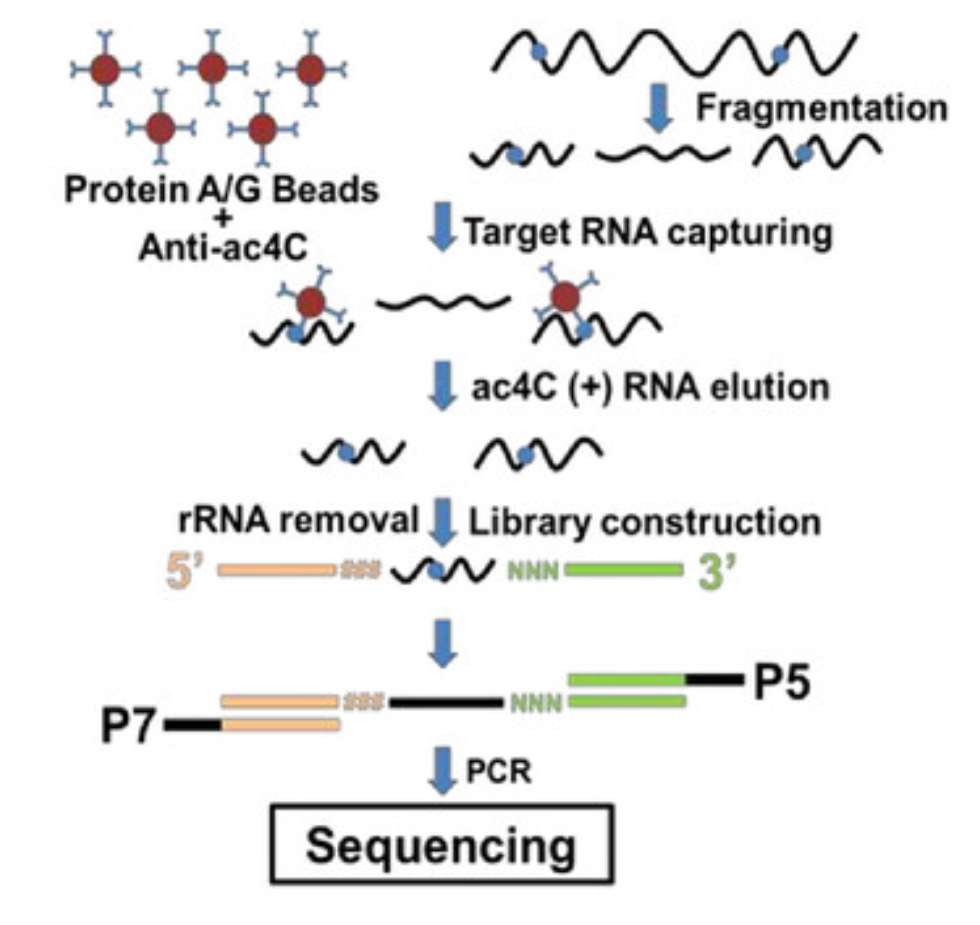
Wang, G. et al. Clin Transl Med. 2022.
Figure 1. Schematic of acRIP-seq
Applications of acRIP-seq Service
1. Epitranscriptomics mechanism studies linking acetylation changes to RNA stability, translation, and RNA metabolism
2. Disease research investigating acetylation landscape shifts in cancer, neurological disease models, immune dysregulation, infection, and metabolic conditions
3. Drug discovery and target validation programs exploring acetylation-dependent regulation, pathway response, and candidate transcript selection
FAQ
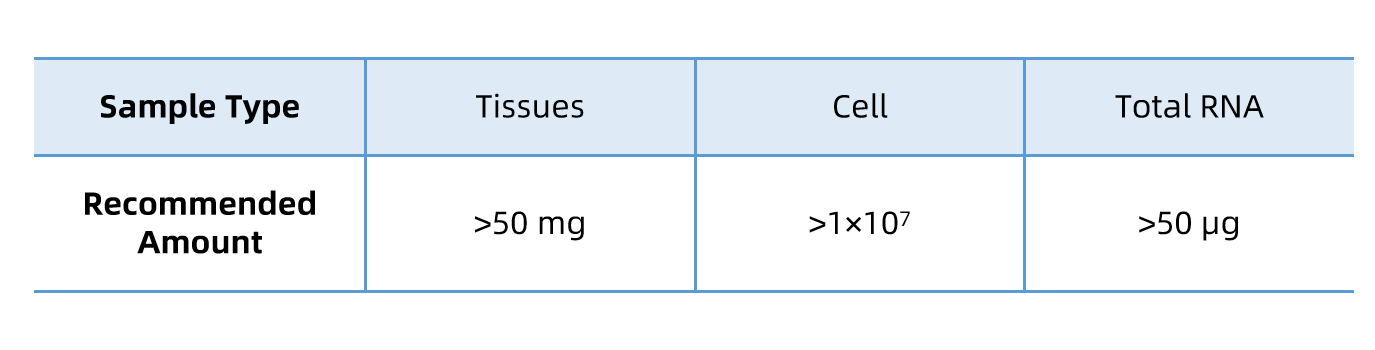
Q1: What types of samples are suitable?
We accept various sample types, including but not limited to:
Q2: How should I prepare my samples?
1. Keep collection and processing consistent across groups and minimize RNA degradation risk
2. Use RNase-free consumables and reagents, keep samples cold during handling, and avoid repeated freeze-thaw cycles
3. Snap-freeze samples promptly, store at -80°C, and ship on dry ice with secure packaging
4. Label samples clearly with ID, group, and replicate, and include a sample sheet with organism, sample type, and your research objective
For special sample types or low-yield materials, please contact MtoZ Biolabs in advance for customized preparation guidance.
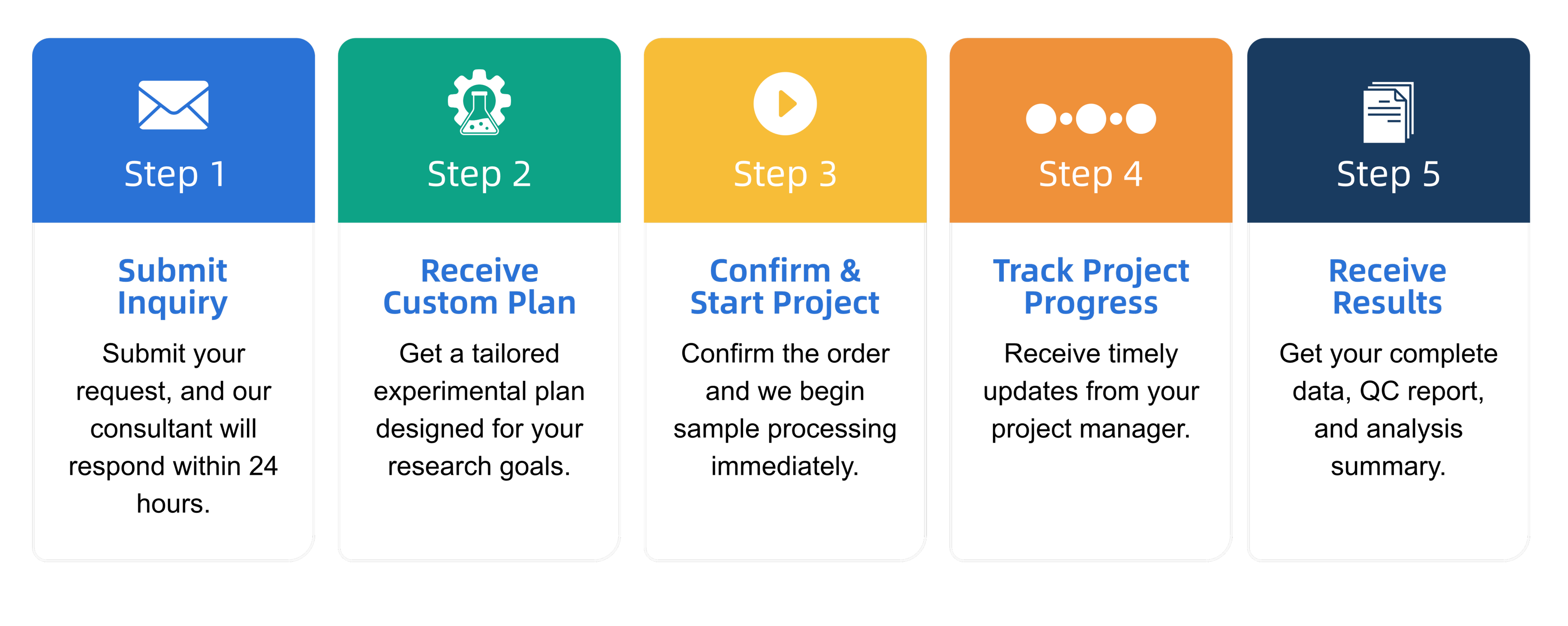
Q3: What is the service general workflow?
Q4: What data formats are provided?
1. Raw sequencing data: FASTQ
2. Alignments and tracks: BAM plus index files, BigWig genome browser tracks
3. Peak outputs: BED files and tab-delimited peak tables
4. Processed tables: XLSX or CSV for annotated peaks and differential results
5. QC and figures: PDF plus PNG or TIFF
6. Report and methods: a concise PDF summarizing design, key parameters, and interpretation
Additional formats can be provided upon request to meet specific analysis or publication requirements.
Start Your Project with MtoZ Biolabs
Contact us to discuss your experimental design or request a quote. Our technical specialists are available to provide a free business assessment.
How to order?




