






Resources
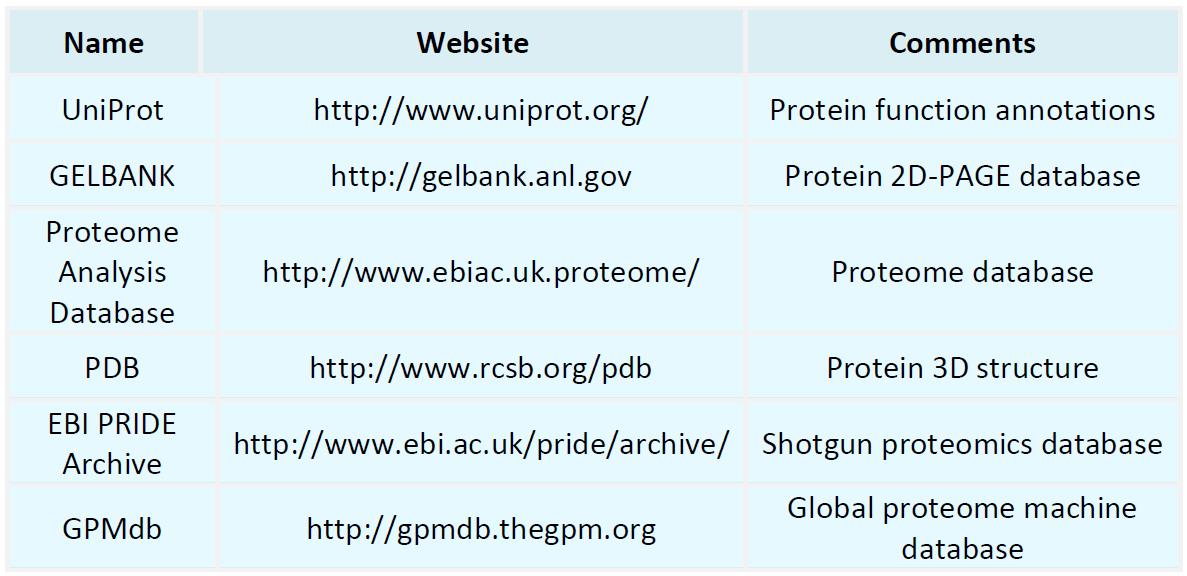
Proteomics Databases
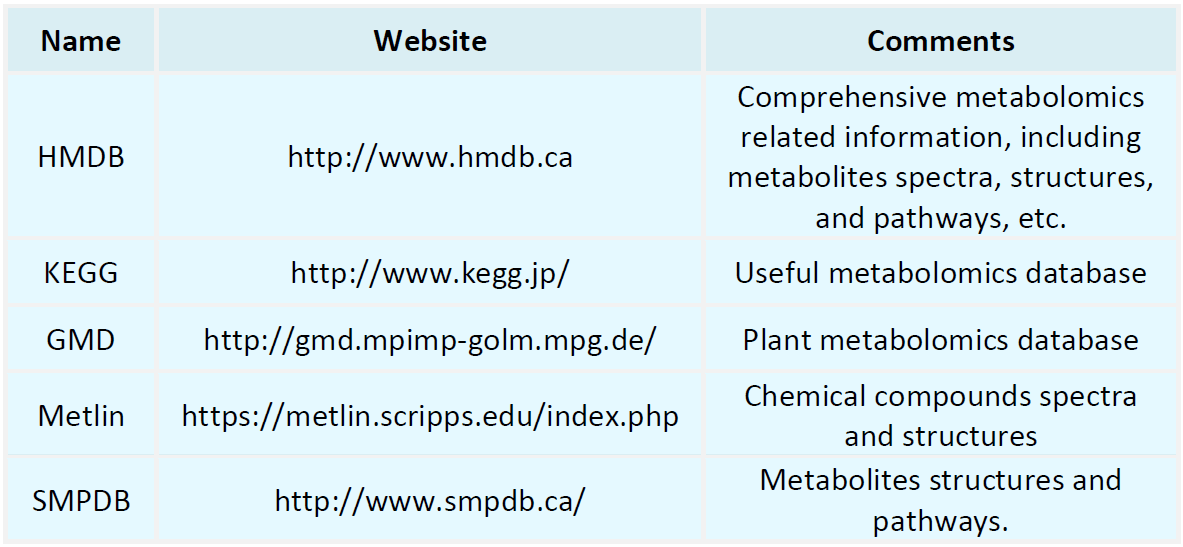
Metabolomics Databases
-
• DIA Quantitative Proteomics: Exploring Advantages of Diverse Techniques
Introduction Proteomics is a discipline that studies the types, quantities, structures, functions, and interactions of proteins within organisms. In the field of biopharmaceuticals, proteomics techniques are widely used in the research, quality control, and preclinical and clinical evaluations of biopharmaceuticals.
-
• DIA Proteomics: Unveiling the Mysteries of Proteomics
Introduction Proteomics is the scientific field that studies the composition, structure, and function of all proteins in organisms. With the continuous development of technology, proteomics plays an increasingly important role in biomedical research. One widely used technique in proteomics is quantitative mass spectrometry, and one of its methods is data-independent acquisition (DIA) technology, also known as dia proteomics.
-
• DIA Proteomics: Comprehensive Analysis of Proteomics Research
Proteomics is an essential field for understanding the function and mechanisms of diseases in biological organisms, as proteins are involved in almost all biological processes. In recent years, with the development of mass spectrometry technology, proteomics research has made significant progress. One widely used technique in targeted proteomics is data-independent acquisition (DIA) proteomics.
-
• 4D Proteomics: Unveiling Powerful Tools and Methods in Proteomics
Proteomics is the scientific field that studies the composition, structure, and function of all proteins in an organism. With the continuous advancement of technology, the field of proteomics is also constantly developing. Among them, 4D proteomics, as an emerging technology, provides powerful tools and methods for deciphering proteomics.
-
• Co-IP MS: Decoding the Construction of Protein Interaction Networks
Protein is the most fundamental functional molecule in living organisms. They form complex protein interaction networks through interactions with each other, participating in the regulation of cellular physiological processes. Analyzing protein interaction networks is important for understanding cell function and disease mechanisms.
-
• Co-IP Immunoprecipitation: Unveiling the Composition of Protein Complexes
Co-immunoprecipitation (Co-IP) is a commonly used biochemical technique for studying protein-protein interactions and the composition of protein complexes. Through this technique, we can understand the interaction between proteins inside cells and reveal the mechanisms of important biological processes such as cell signaling and metabolic regulation. The principle of Co-IP is based on the specific binding of antibodies.
-
• Expansion of CD Spectroscopy Applications: Exploring Non-Protein Macromolecules
Circular dichroism spectroscopy analysis is an important biophysical technique widely used in protein structure research. However, with the continuous development of scientific technology, the application scope of circular dichroism spectroscopy analysis is expanding.
-
• Unveiling Protein Conformation: In-Depth Analysis of Circular Dichroism
Introduction Proteins are important functional molecules in living organisms, and their conformation determines their function and interaction. Circular dichroism spectroscopy is a commonly used technique that can reveal the conformational information of proteins. In this article, we will delve into the analysis of circular dichroism spectroscopy, exploring the secrets of protein conformation.
-
• Secrets to Precision Circular Dichroism Spectrum Preparation
Introduction Circular dichroism spectroscopy is a commonly used analytical technique for studying the structure and conformational changes of biomolecules. Mastering key techniques for preparing accurate circular dichroism spectra can improve the accuracy and reproducibility of experiments.
-
• CD Spectroscopy and Proteins: Unveiling Conformational Diversity
Proteins are essential molecules in living organisms, playing important roles in the regulation of cellular functions, signal transduction, and structural maintenance. In order to gain a deeper understanding of protein function and properties, scientists continuously explore various techniques. Among them, circular dichroism spectroscopy is a powerful biophysical technique that reveals the secrets of protein conformational diversity by studying the structure of protein molecules.
How to order?




