






Resources
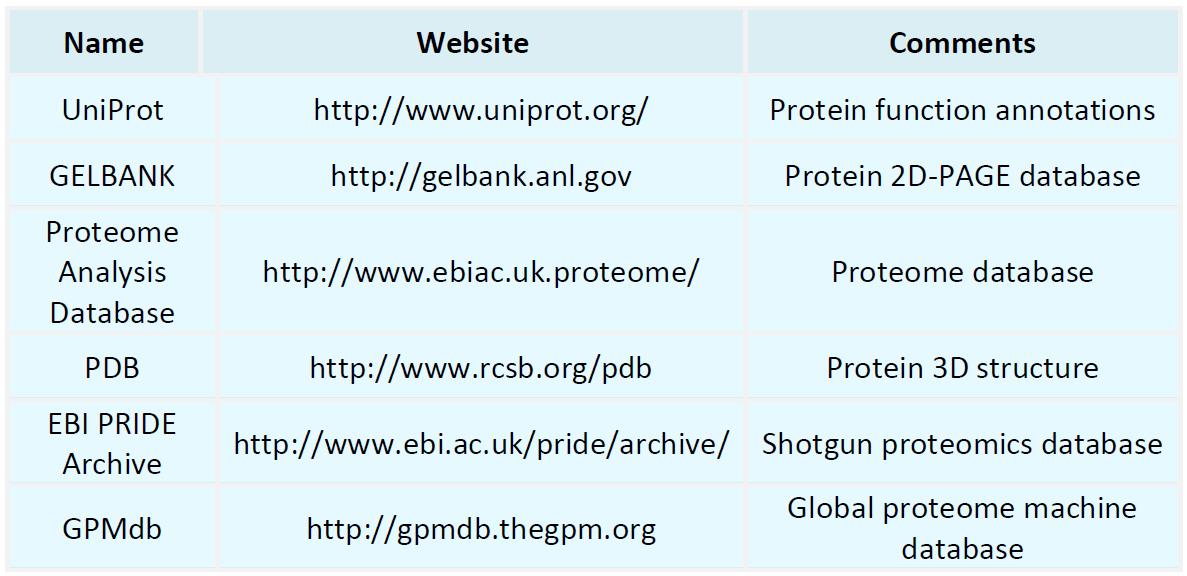
Proteomics Databases
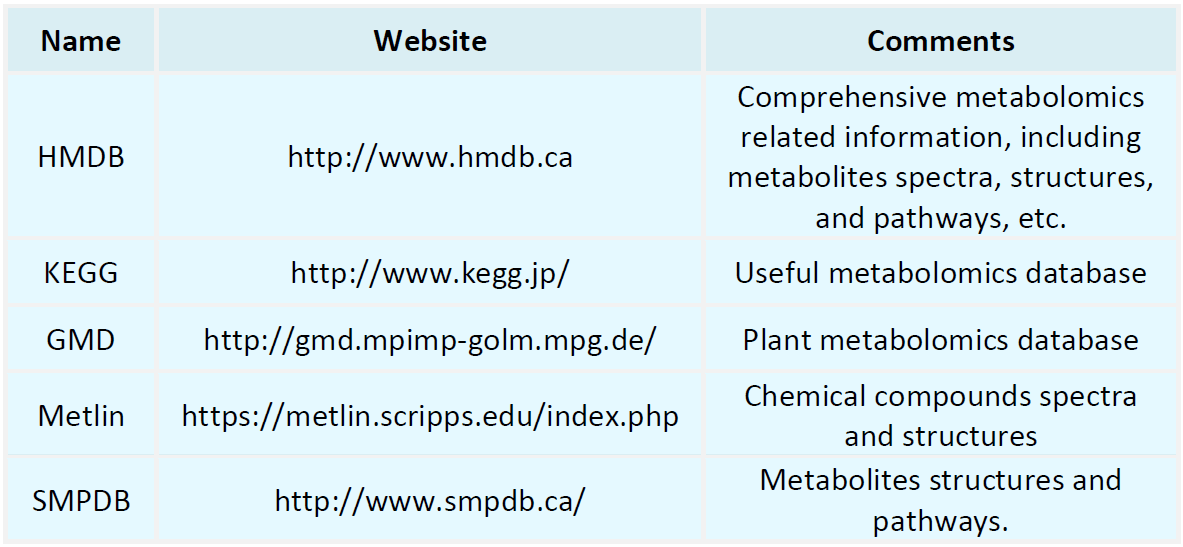
Metabolomics Databases
-
• Quantitative Analysis of Acetylation Sites Using LC-MS/MS Coupled with iTRAQ/TMT Labeling
Acetylation is a pivotal post-translational modification (PTM) that significantly influences protein function and cellular signaling pathways. The advancement of mass spectrometry techniques, particularly liquid chromatography-tandem mass spectrometry (LC-MS/MS), has enabled more precise and high-throughput investigations of protein acetylation.
-
• Analysis of Acetylated Proteins Using CST Antibody Enrichment and LC-MS/MS
Protein acetylation is a critical post-translational modification (PTM) involved in cellular regulation, including gene expression, metabolic control, and cell signaling. Accurate detection and quantification of acetylated proteins are essential for understanding these biological processes. Recently, combining CST (Cell Signaling Technology) antibody enrichment with LC-MS/MS (liquid chromatography-tandem mass spectrometry) has emerged as a powerful approach in the study of acetylomics.
-
• Detection of Acetylated Peptides Using Antibody-Based Enrichment and Mass Spectrometry
Protein acetylation is a critical post-translational modification involved in regulating various biological processes, including gene expression, cell cycle, and metabolism. Accurate detection and quantification of acetylpeptides are essential for elucidating the functional roles of protein acetylation. However, the low abundance and complex biological background of acetylpeptides pose significant challenges.
-
• Procedure for Quantitative Methylation Analysis Using NanoLC-MS/MS
Methylation is a crucial epigenetic modification that plays a significant role in gene expression, cellular differentiation, cancer, and other biological processes. To gain a deeper understanding of the mechanisms of methylation and its role in various biological states, accurate quantitative methylation analysis is essential.
-
• Mechanism of MRM/PRM in Protein Quantification
In biomedical research, the quantitative analysis of proteins is crucial for understanding biological processes and disease mechanisms. Multiple Reaction Monitoring (MRM) and Parallel Reaction Monitoring (PRM) are two high-sensitivity mass spectrometry techniques widely used in proteomics research.
-
• Application of MRM/PRM in Proteomics
In proteomic research, quantitative analysis is essential for understanding complex biochemical processes within biological systems. Multiple Reaction Monitoring (MRM) and Parallel Reaction Monitoring (PRM) are highly sensitive and specific mass spectrometry techniques widely employed in quantitative proteomics.
-
• Workflow of MRM/PRM Quantitative Analysis
MRM (Multiple Reaction Monitoring) and PRM (Parallel Reaction Monitoring) are widely used quantitative analysis techniques in modern mass spectrometry, applied extensively in biomedical research, drug development, and clinical diagnostics. They enable quantitative analysis of specific target molecules with high sensitivity and selectivity, providing researchers with powerful analytical tools.
-
• Principle of MRM/PRM Quantitative Proteomics
Quantitative proteomics is a critical component of modern biological research, primarily used to understand the functions of proteins within organisms, their interactions, and the changes they undergo in various diseases and physiological states. Multiple Reaction Monitoring (MRM) and Parallel Reaction Monitoring (PRM) are two essential quantitative analysis methods that efficiently and accurately detect and quantify proteins.
-
• Advantages and Disadvantages of MRM/PRM Techniques
In the fields of biology and medicine, mass spectrometry (MS) technologies play a crucial role in proteomics, metabolomics, and various other domains. Multiple Reaction Monitoring (MRM) and Parallel Reaction Monitoring (PRM) are two commonly used mass spectrometry analysis techniques.
-
• Mechanism of Targeted Proteomics
The core of targeted proteomics lies in the selective detection of specific proteins. Unlike global proteomics, targeted proteomics focuses only on known target proteins, typically based on prior biological research or clinical data. This approach often combines high-throughput mass spectrometry (MS) with specific antibodies, forming a "mass spectrometry-antibody" detection strategy.
How to order?




