






Resources
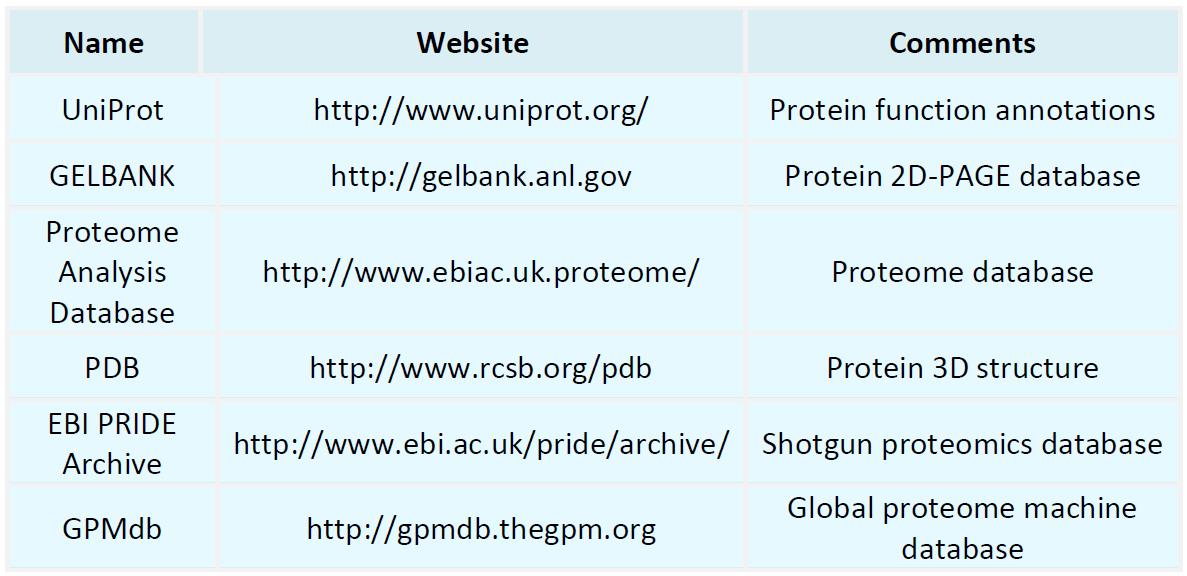
Proteomics Databases
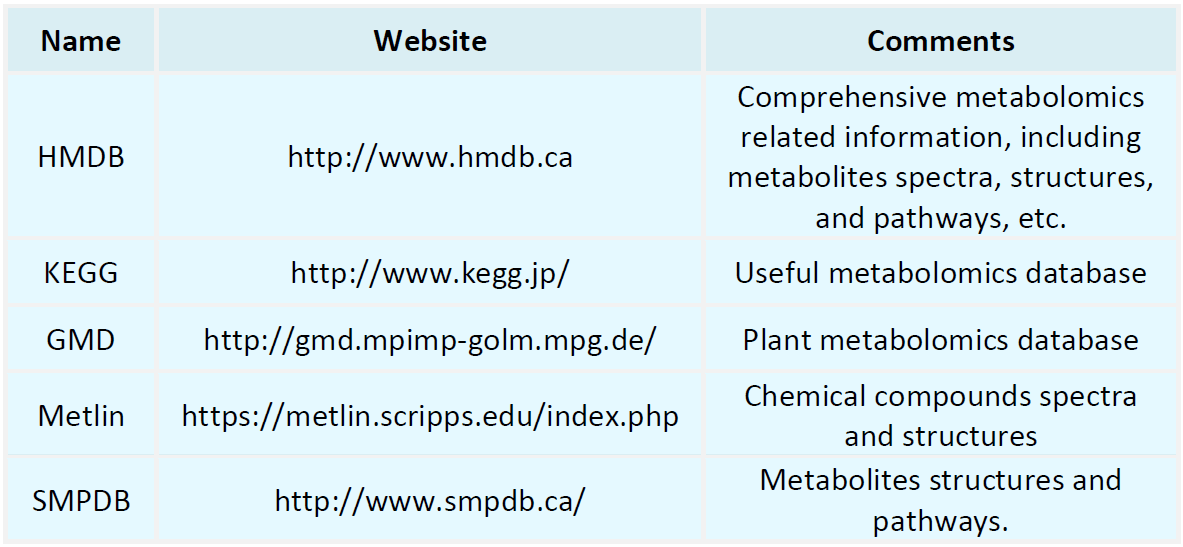
Metabolomics Databases
-
Proteins mass refers to the overall quality of proteins, including aspects such as structure, function, and purity. It is one of the key standards for evaluating the effectiveness of proteins in research and application. Proteins are essential biomolecules in living organisms, involved in virtually all biological processes, including the formation of cell structures, catalysis of metabolic processes, signal transduction, and immune responses. Thus, evaluating proteins mass is crucial in both biologica......
-
• Differential Protein Expression Analysis
Differential protein expression analysis is a proteomics technique designed to uncover the molecular mechanisms of biological processes or pathological changes by comparing protein expression levels across different samples, such as healthy vs. diseased states, treated vs. untreated conditions, or various developmental stages. As proteins are directly responsible for carrying out biological activities, changes in their expression often reflect the organism's response to external stimuli, internal regu......
-
• Quantitative Western Blot Analysis
Quantitative Western Blot Analysis is a technique employed to detect and quantify specific proteins, merging traditional Western Blotting with advanced quantitative methodologies. This integration provides researchers with a highly accurate and reliable tool to assess protein expression levels and functional states. Traditional Western Blotting involves separating proteins via electrophoresis, transferring them to a membrane, and detecting them using antibodies. However, it falls short in quantitative......
-
Protein network analysis is a method used to investigate the interactions between different proteins within biological systems and their functional relationships. This approach enables researchers to uncover protein functions, identify potential biomarkers, and understand dynamic changes in complex biological processes. Protein network analysis plays an essential role in modern biomedical research, particularly in disease diagnosis, therapeutic target discovery, and drug development. For example, the ......
-
• Protein Identification Service in Proteomics
Protein identification service refers to the provision of protein identification and analysis services for researchers, which forms a crucial component of modern life sciences. This service utilizes advanced technologies to identify and analyze proteins in complex biological samples. Proteins play pivotal roles in life activities, performing functions such as catalyzing chemical reactions, mediating cellular signaling, providing structural support, and defending against infections. Understanding prote......
-
• Protein-Ligand Binding Assay
Protein-ligand binding assays are critical techniques used to investigate the interactions between proteins and their ligands, which can include small molecules, ions, nucleic acids, or other proteins. These assays are widely applied across diverse fields, including drug development, functional protein studies, and biomarker identification. In pharmaceutical development, understanding the binding characteristics between drug molecules and target proteins can guide optimization of drug potency and sele......
-
The maldi technique is a revolutionary mass spectrometry method with wide-ranging applications in modern scientific research. Initially developed for protein mass spectrometry, the technique’s main advantage is its ability to efficiently analyze large biomolecules such as proteins, peptides, and carbohydrates. As technology has advanced, the maldi technique has progressively extended its applications into fields like microorganism identification, drug development, clinical diagnostics, and environment......
-
iTRAQ LC-MS/MS is an analytical technique primarily used for the quantitative and qualitative analysis of proteins in complex biological samples. iTRAQ is an isotope labeling technology that chemically labels peptide segments from proteins in different samples. Liquid chromatography-tandem mass spectrometry (LC-MS/MS) combines the separation power of liquid chromatography and the analytical capability of mass spectrometry to precisely separate and detect peptide fragments from complex mixtures. The ap......
-
• Protein Characterization by Mass Spectrometry
Protein Characterization by Mass Spectrometry is a technique used to analyze and identify proteins by measuring their molecular mass and the mass-to-charge ratio (m/z) of their fragmentation products. In proteomics research, this method is essential for revealing the composition, modification states, and interaction networks of proteins in complex biological samples. A primary application of protein characterization by mass spectrometry is identifying the types and abundance of proteins in complex bio......
-
• Isobaric Tag for Relative and Absolute Quantitation
Isobaric Tag for Relative and Absolute Quantitation is an advanced mass spectrometry technique used in proteomics research, enabling the relative or absolute quantification of proteins in various samples through isotope labeling. Isobaric tag for relative and absolute quantitation allows researchers to measure protein expression changes under different experimental conditions, facilitating the exploration of biological processes such as cell signaling, disease mechanisms, and drug responses. Additiona......
How to order?




