



Protein-protein interaction (PPI) analysis investigates whether proteins associate, under what conditions these associations occur, and what evidence supports the relationship. Studies may aim to discover unknown interaction partners, investigate a candidate protein pair, capture weak or transient molecular neighborhoods, or characterize binding properties and structural constraints. The appropriate approach depends on the research objective, available starting material, biological context, and the type of evidence needed. This guide covers the main PPI research approaches, experimental design considerations, result interpretation, and related resources.
Researchers planning a protein-protein interaction study can use the MtoZ Biolabs Protein-Protein Interaction Analysis Service to discuss bait, sample context, controls, and the intended evidence level.
What Is Protein-Protein Interaction Analysis?
Protein-protein interaction analysis is the experimental investigation of associations between proteins. The study may focus on a defined protein pair, a bait-centered complex, a local molecular neighborhood, or a broader interaction network.
The term interaction can describe several distinct types of evidence:
- Direct binding: Two proteins physically bind in a defined molecular system.
- Co-complex association: Two proteins are recovered together as members of the same molecular complex, without necessarily contacting each other directly.
- Spatial proximity: A protein is detected near a bait during a labeling or cross-linking interval, which does not necessarily establish direct binding.
- Network association: Experimental observations or computational evidence are organized into a network of candidate relationships.
These distinctions determine how experimental results should be interpreted. A protein recovered with a bait may associate indirectly through another complex member, while a protein detected by proximity labeling may occupy the same molecular neighborhood without directly binding the bait. Likewise, measured binding affinity describes a molecular interaction under defined assay conditions and does not automatically establish its biological function.
PPI analysis therefore connects experimental observations with specific research claims. Discovering candidate partners, investigating a candidate pair, characterizing binding, and establishing biological function are related but distinct objectives.
For a broader overview of other interaction types, see Protein Interaction Analysis: What It Reveals, Key Methods, and Applications.
What Can PPI Experiments Establish?
Partner Discovery
When the partner is unknown, the first useful output is a ranked candidate list. Affinity capture followed by mass spectrometry, including Co-IP-MS, IP-MS, AP-MS, and Pull-Down-MS, can identify proteins recovered with a bait. Proximity labeling can identify proteins in the bait neighborhood, including associations that are difficult to preserve after lysis. These lists are hypotheses. Enrichment over matched controls and reproducibility across independent samples increase confidence, but they do not convert every recovered protein into a confirmed interactor.
Interaction Confirmation
When a candidate pair is already named, the experiment can test whether the two proteins co-enrich, co-purify, or bind under a chosen context. Reciprocal capture, orthogonal capture chemistry, or a defined pairwise assay can support confirmation. A single positive result still needs to be read against antibody specificity, tag effects, bait recovery, and the possibility of indirect co-recovery.
Proximity Evidence
Proximity labeling records proteins that were close enough to be marked during a labeling interval in living cells. The method can retain weak or transient neighborhoods that affinity capture may lose, but the result remains spatial proximity rather than direct contact (Roux et al. 2012). For experimental design and control considerations, see Proximity Labeling Proteomics: Experimental Design and Controls.
Binding and Structural Evidence
A known pair may next require affinity, kinetic, or structural evidence. Surface plasmon resonance and biolayer interferometry can report association and dissociation behavior. Microscale thermophoresis can estimate solution-phase affinity. Differential scanning fluorimetry can report ligand-associated stability changes.
XL-MS identifies cross-linked peptide pairs that can constrain protein interaction interfaces and complex architecture. See Cross-Linking Mass Spectrometry (XL-MS) for Protein Interaction Mapping.
HDX-MS detects peptide-level changes in deuterium uptake associated with altered solvent accessibility and protein dynamics. These results can help identify candidate binding-related regions, although a protected peptide does not necessarily represent the direct contact surface. See HDX-MS for Protein-Protein Binding Interfaces and Conformational Changes.
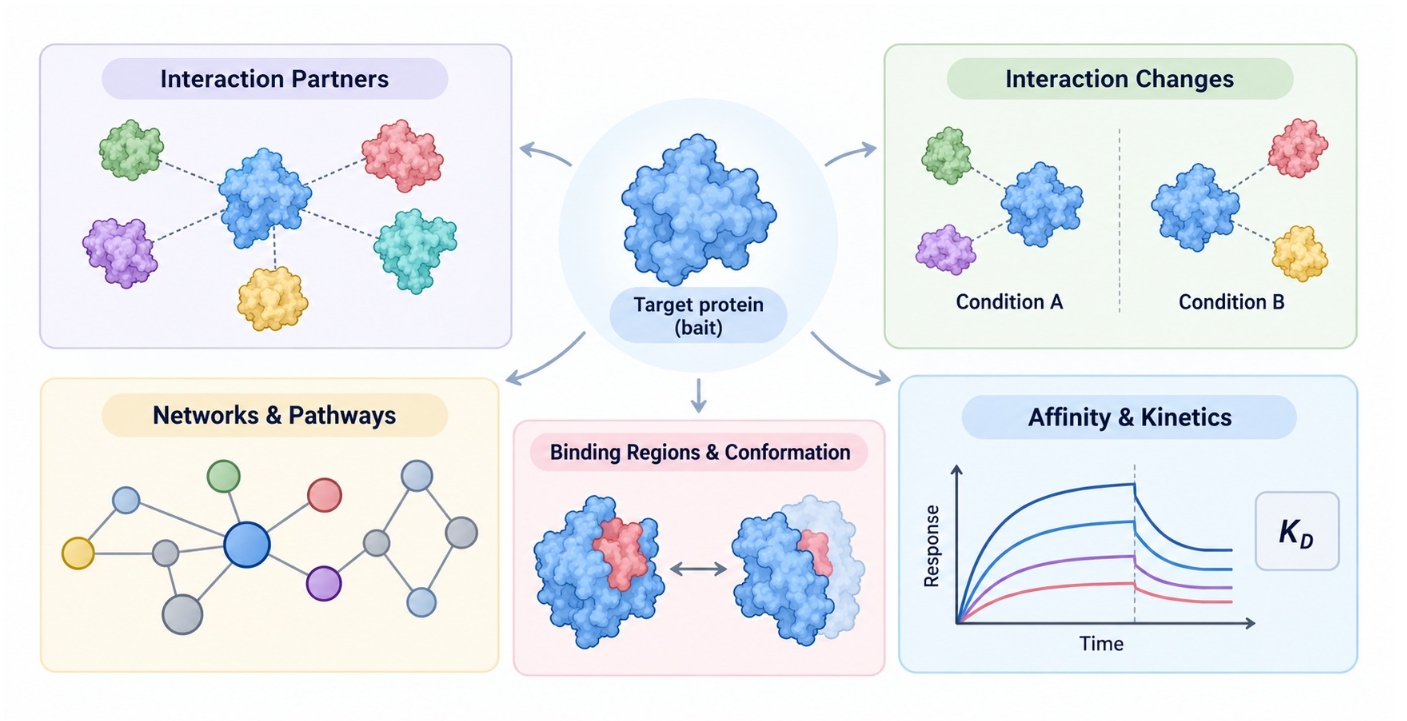
Figure 1. Key Research Outcomes of Protein-Protein Interaction Analysis
Methods for PPI Discovery and Validation
Co-IP and Co-IP-MS use an antibody to recover a bait and proteins retained in the same complex from a native cellular or tissue context. They are most informative when an IP-grade antibody is available and the extraction conditions preserve the assembly of interest. Recovery still indicates co-complex membership rather than binary contact. Researchers with a suitable antibody can consider the Co Immunoprecipitation (Co-IP) Service.
Immunoprecipitation-mass spectrometry (IP-MS) and affinity purification-mass spectrometry (AP-MS) characterize proteins recovered with a bait using antibody-based or affinity-based capture. AP-MS may use a tagged bait, such as FLAG-, GFP-, or Strep-tagged protein, while IP-MS can use an antibody against an endogenous target. These approaches can support discovery of bait-associated proteins and comparisons of complex composition across experimental conditions. The capture strategy should be matched to the biological system and experimental objective. Appropriate controls remain important because tags, beads, overexpression, and nonspecific binding can contribute background signals.
Pull-Down and Pull-Down-MS use an immobilized recombinant bait, often through GST, His, MBP, or related tags, to recover associated proteins from lysate or a reconstituted system. The method can test a candidate or generate an in vitro partner list, but in vitro recovery does not automatically reproduce a cellular interaction. Projects with a suitable purified bait can review the Pull-Down Assay Service.
Proximity labeling marks proteins near a bait in living cells and can retain weak, transient, or poorly soluble neighborhoods. Because the output is a local proteome, candidates still require orthogonal tests before they are described as direct binders. MtoZ Biolabs offers this route as a Proximity Labeling Mass Spectrometry Service.
Yeast two-hybrid can test binary association in a yeast reporter system or screen a library for candidate partners. It is useful for soluble nuclear-compatible pairs, but membrane proteins, modification-dependent interactions, and false-positive reporter activity limit interpretation. Positive Y2H results generally need independent confirmation in the native system.
Method choice depends on the starting material and the claim. Native co-complex discovery more often starts with Co-IP-MS or AP-MS. A purified bait more often starts with Pull-Down-MS. Weak or extraction-sensitive neighborhoods more often start with proximity labeling. Detailed comparison of Co-IP, Pull-Down, and proximity labeling is covered in Co-IP vs Pull-Down vs Proximity Labeling: Choosing a Protein Interaction Method.
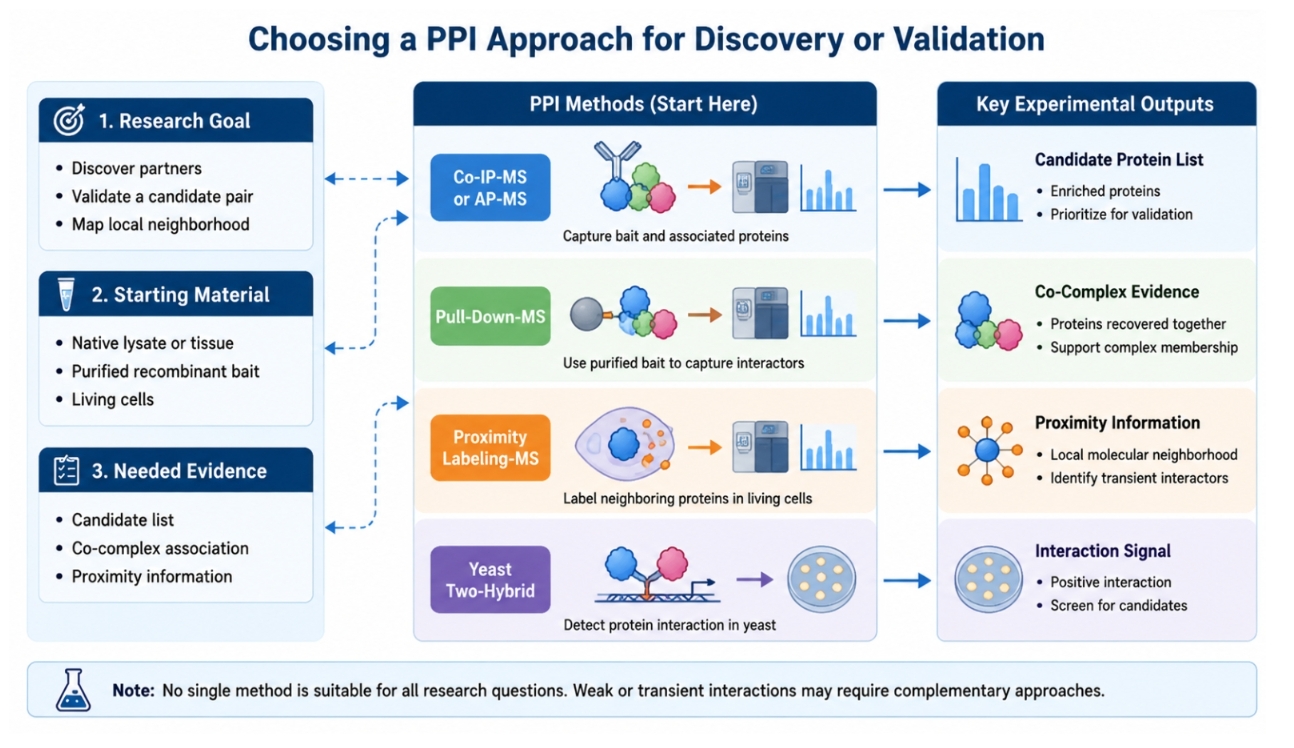
Figure 2. Starting method selection depends on the research goal, available bait chemistry, biological context, and the evidence the study must support.
Biophysical Characterization of Known Protein-Protein Binding
When both proteins are already defined and available in a measurement-ready form, biophysical assays can test pairwise association. Surface plasmon resonance immobilizes one partner and follows association and dissociation of the other. Biolayer interferometry also provides real-time binding traces from a sensor surface and can support affinity, kinetic, and competition measurements (Abdiche et al. 2008). These methods are useful when the claim concerns whether two defined molecules bind and how quickly the complex forms or dissociates.
Microscale thermophoresis measures changes in molecular movement within a microscopic temperature gradient and can estimate solution-phase affinity when a fluorescent readout is compatible (Wienken et al. 2010). MST does not provide kinetic rate constants as a routine output. Differential scanning fluorimetry reports a melting temperature and can detect binding-associated stability changes, but a thermal shift is not an absolute KD and is not proof of a biologically functional contact (Pantoliano et al. 2001).
These techniques complement discovery proteomics rather than replace it. A measured affinity describes the tested molecular system and assay conditions; it does not automatically establish the same binding behavior or biological significance in cells.
Designing Reliable PPI Studies
Bait and Starting Material
Bait choice determines what can be recovered. An endogenous protein captured with an IP-grade antibody preserves native expression, but antibody availability and epitope accessibility become limiting. A tagged bait can enable capture when no suitable antibody exists, yet the tag and expression level can alter localization, complex composition, or background. A recombinant bait used for Pull-Down must be active in the chosen buffer and may miss interactions that require cellular modifications.
Starting material should match the biological claim. Cultured cells, tissues, purified complexes, and reconstituted pairs support different conclusions. The same protein name in an overexpression lysate, an endogenous immunoprecipitate, and a purified binary mixture is not the same experimental object.
Controls and Replicates
Negative controls define what enrichment means. IgG, empty-vector, tag-only, beads-only, knockout, or localization-matched controls are useful when they remove the biological feature being tested while preserving as much of the workflow as possible. Independent biological replicates show whether a candidate is recurrent rather than batch-specific. Technical reanalysis of one digest cannot replace independently prepared biological material.
Co-IP-MS control, replicate, and grouping decisions are developed in Co-IP-MS Experimental Design: IgG and Empty-Vector Controls, Replicates and Grouping. Proximity labeling requires its own bait-localization and background-labeling logic, which is covered in Proximity Labeling Proteomics: Experimental Design and Controls.
Challenging Interactions
Weak, transient, and complex-dependent interactions may be lost during extraction or washing. Conversely, a long candidate list should not be interpreted as a direct-contact map. Cross-linking can help preserve selected spatial relationships, while proximity labeling can capture local molecular neighborhoods. Gentler capture conditions may help retain labile complexes, and pairwise binding assays can investigate direct binding between defined partners.
PPI Analysis Workflow from Samples to Candidates
A typical PPI study progresses through research-goal definition, bait and sample assessment, capture or labeling, quality checks, data acquisition, and candidate interpretation. Discovery, interaction assessment, and binding characterization follow different experimental paths.
1. Define the research objective: Establish whether the study aims to discover candidate partners, investigate a known pair, profile a molecular neighborhood, or characterize binding.
2. Assess the bait and starting material: Confirm target identity, sample context, capture strategy, and available controls.
3. Perform capture or labeling: Use an approach appropriate to the biological system and intended evidence.
4. Check sample quality and acquire data: Review bait recovery, sample integrity, control behavior, and reference database availability before interpreting the results.
5. Analyze and interpret candidates: Apply an analysis strategy appropriate to the method, such as candidate ranking for IP-MS, proximity analysis for labeling experiments, residue-pair mapping for XL-MS, or peptide-level uptake comparison for HDX-MS.
For affinity-capture projects, the material submitted for mass spectrometry may be bead-bound material, an eluate, or a gel band. Sample format, buffer compatibility, bait recovery, and accompanying controls influence whether LC-MS/MS can address the intended research question. For guidance on preparing enriched material, see Beads, Eluate or Gel Band? How to Submit IP and Pull-Down Samples for Mass Spectrometry
Interpreting PPI Results and Interaction Confidence
A protein identification list is the first evidence layer, not the final claim. Candidates become more credible when they are enriched over matched controls, recovered across independent replicates, consistent with bait localization or complex context, and supported by an orthogonal method matched to the intended claim. Background proteins, antibody contaminants, bead binders, and abundant carryover can populate an unfiltered list.
Fold change, missing values, and control contrast should be interpreted together. A large ratio in one comparison can still be driven by stochastic detection, incomplete bait recovery, or unmatched sample handling. Filtering logic for IP-MS candidate ranking is covered in How to Filter True Interactors from IP-MS Data: Fold Change, Background and Controls. Network visualization can help organize candidates, but a database edge or a drawn connection is not independent experimental proof.
Orthogonal validation should match the next claim. Reciprocal Co-IP can test co-complex membership. A purified pairwise assay can test direct binding. XL-MS or HDX-MS can constrain spatial or conformational hypotheses. Functional perturbation is required if the claim concerns signaling or phenotype rather than physical association.
Applications of PPI Analysis
Protein Function and Signaling
PPI analysis can identify candidate proteins associated with signaling events, stress responses, or genotype-dependent pathways. Comparing protein associations across conditions can help investigate changes in molecular relationships, while functional studies can determine whether those changes contribute to a biological outcome.
Protein Complexes
Bait-centered capture and complementary experiments can characterize candidate members of protein complexes. Comparisons involving different conditions or bait variants can reveal changes in complex composition and help prioritize relationships for further investigation.
Molecular Recognition
Antibody-antigen pairs, defined protein receptor-ligand pairs, and engineered binding proteins can be studied to characterize molecular recognition. Depending on the research objective, relevant evidence may include pairwise binding, competition, epitope or interface mapping, and biological effects.
Frequently Asked Questions
If the bait is not recovered, can the candidate list still be interpreted?
Usually not as an interaction result. Failed bait recovery can indicate antibody or tag failure, over-stringent washing, degradation, or insufficient input. The first action is to inspect bait detection, sample integrity, and matched controls rather than ranking co-identified proteins.
Does a negative PPI result exclude an interaction?
No. Weak affinity, extraction loss, inaccessible epitopes, low abundance, unmatched conditions, or an unsuitable assay readout can all produce a negative result. A method with a different physical principle may be needed when the biological hypothesis remains strong.
Do candidate interactors require further validation?
Yes, if the intended claim is stronger than co-enrichment or proximity. A ranked list supports prioritization. Reciprocal capture, pairwise binding, spatial restraints, or functional tests are chosen according to the next claim, not as a fixed sequence.
Can a change in interaction prove a change in protein function?
No. An association change can accompany, follow, or be unrelated to a functional change. Function is established by perturbing the protein or the interaction and measuring a biologically relevant outcome with appropriate controls.
What information is needed before project assessment?
Provide the research goal, bait identity, antibody or tag status, biological system, sample state, available controls, reference proteome, and the evidence the study must support. These details determine whether discovery, confirmation, proximity, structural, or pairwise binding routes are appropriate.
Conclusion
Protein-protein interaction analysis is a decision sequence from research claim to evidence type, method, controls, and interpretation. Co-enrichment, proximity, residue-pair restraints, pairwise binding, and function answer different questions. Researchers with a defined bait, candidate pair, or prepared sample can consult the MtoZ Biolabs Protein-Protein Interaction Analysis Service for project-specific feasibility and workflow planning.
Reference
- K.J. Roux, D.I. Kim, M. Raida, B. Burke (2012). A promiscuous biotin ligase fusion protein identifies proximal and interacting proteins in mammalian cells. Journal of Cell Biology, 196, 801-810. https://doi.org/10.1083/jcb.201112098
- Y.N. Abdiche, D.S. Malashock, J. Pinkerton, J. Pons (2008). Determining kinetics and affinities of protein interactions using a parallel real-time label-free biosensor, the Octet. Analytical Biochemistry, 377, 209-217. https://doi.org/10.1016/j.ab.2008.03.035
- C.J. Wienken, P. Baaske, U. Rothbauer, D. Braun, S. Duhr (2010). Protein-binding assays in biological liquids using microscale thermophoresis. Nature Communications, 1, 100. https://doi.org/10.1038/ncomms1093
- M.W. Pantoliano, E.C. Petrella, J.D. Kwasnoski, V.S. Lobanov, J. Myslik, E. Graf, T. Carver, E. Asel, B.A. Springer, P. Lane, F.R. Salemme (2001). High-density miniaturized thermal shift assays as a general strategy for drug discovery. Journal of Biomolecular Screening, 6, 429-440. https://doi.org/10.1177/108705710100600609
