



Anthers carry the reproductive program that forms and releases pollen, and that program is executed through coordinated protein networks across developmental stages. Plant anther DIA quantitative proteomics applies data-independent acquisition (DIA) on unlabeled anther digests to measure relative protein change across stages, genotypes, or stress conditions after liquid chromatography-tandem mass spectrometry (LC-MS/MS). The useful claim is relative abundance of the same protein inside one matched harvest and extraction plan. Ordinary DIA intensities are not molar concentrations, and a differential matrix is not a breeding certificate or a field-performance guarantee.
Researchers planning anther stage contrasts or stress panels can review the MtoZ Biolabs Plant Proteomics Service for tissue-specific feasibility and DIA scoping before harvest scale-up.
Why DIA Fits Plant Anther Proteome Questions
Anther projects often need open relative discovery rather than a pre-locked peptide panel. DIA fragments scheduled precursor windows in every cycle and recovers peptide quantities from fragment chromatograms, which supports more consistent measurement across independent injections than stochastic data-dependent selection alone for many comparative cohorts. That consistency matters when developmental windows are narrow and biological replicates must remain comparable after separate LC-MS/MS runs.
DIA does not remove plant-matrix interference. Cell walls, secondary metabolites, pigments, and limited anther mass still determine whether peptides survive extraction and cleanup equally across arms. Acquisition and extraction framing for DIA discovery is covered in DIA Proteomics Workflow: Acquisition, Library Strategy and Data Analysis.
Anther DIA answers relative proteome change under a frozen stage or treatment contrast; it does not convert windowed acquisition into absolute pollen biology proof.
Anther-Specific Design Before Acquisition
Anther work fails early when stage and prep are underspecified. Developmental stage must be fixed in the contrast map because mixing immature and mature anthers inside one arm creates false regulation lists. Dissection rules, flash-freeze timing, and storage should match across genotypes or treatments. Input matching by fresh weight or total protein should be declared before digestion, especially when anther yields are low.
Plant-compatible extraction and metabolite-aware cleanup protect digestion and chromatography. Phenolics and polysaccharides that survive unequally by arm can suppress ionization and mimic stress or stage biology. Species database version and gene-model provenance belong with the protein table, particularly for non-model crops where annotation depth limits functional wording but does not remove quantitative QC requirements.
Broader plant unlabeled discovery practice is discussed in SWATH-MS Enables Plant Proteomics Research: from Experiment to Data Analysis.
From Matched Anther Digests to a DIA Matrix
A practical plant anther DIA spine usually runs as follows.
- Freeze species, anther stage, contrast arms, and relative claim before scaling harvest.
- Harvest with matched clock time and environment block; dissect anthers under one protocol.
- Extract proteins with one plant-compatible route and equal cleanup across all arms.
- Digest, desalt, and normalize peptide load from a pilot when the matrix or stage is new.
- Acquire DIA windows under one locked LC-MS/MS plan with interleaved run order when possible.
- Extract peptides under false-discovery and interference rules; normalize; review missingness.
- Test only the predefined stage, genotype, or stress contrast; archive prep and software versions with deliverables.
- Optional targeted remeasurement of a short peptide list after discovery QC when confirmation is required.
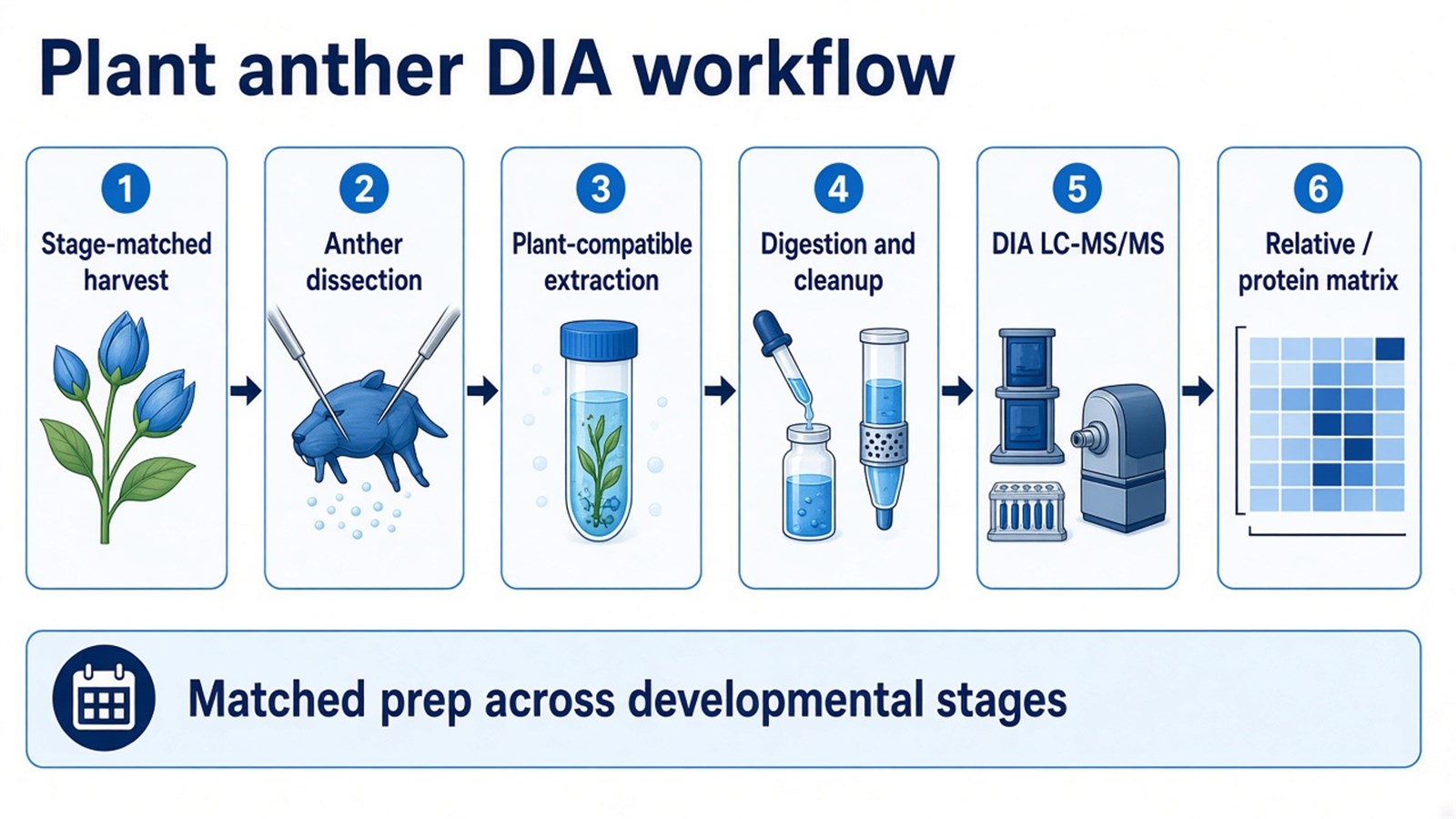
Figure 1. Plant anther DIA depends on stage-matched harvest and equal plant-compatible prep before windowed acquisition supports a relative protein matrix.
Research Applications
1. Anther Development and Pollen Formation
Stage-series projects compare protein abundance across defined anther developmental windows to nominate regulators linked to pollen formation, maturation, or release. Stage labels must stay frozen before statistical thresholds are explored.
2. Reproductive Interaction Hypotheses
When pollen-stigma or male-female interaction questions are in scope, anther DIA can supply the male-side proteome layer under matched harvest. Interaction claims still need an explicit contrast design; an anther matrix alone does not prove cross-talk mechanisms.
3. Environmental Stress on Reproductive Tissues
Temperature, drought, or other stress blocks can be profiled when environment, harvest timing, and anther stage remain matched. Candidate stress-responsive proteins may inform later genetics or breeding hypotheses, but the DIA table itself does not certify variety release.
Project need |
Anther DIA often fits |
Reassess before scaling |
|---|---|---|
Inventory |
Open relative discovery across stages or treatments |
Peptide list already closed for targeted-only work |
Tissue logistics |
Enough anthers for matched replicates and pilots |
Extremely low-input designs without pilot recovery |
Claim |
Relative change inside one prep and DIA plan |
Absolute amount without standards |
Enrollment |
Separate unlabeled injections as harvests continue |
All arms must share one isobaric plex the same day |
Follow-up |
Shortlist for later PRM confirmation |
Pathway map treated as technical proof |
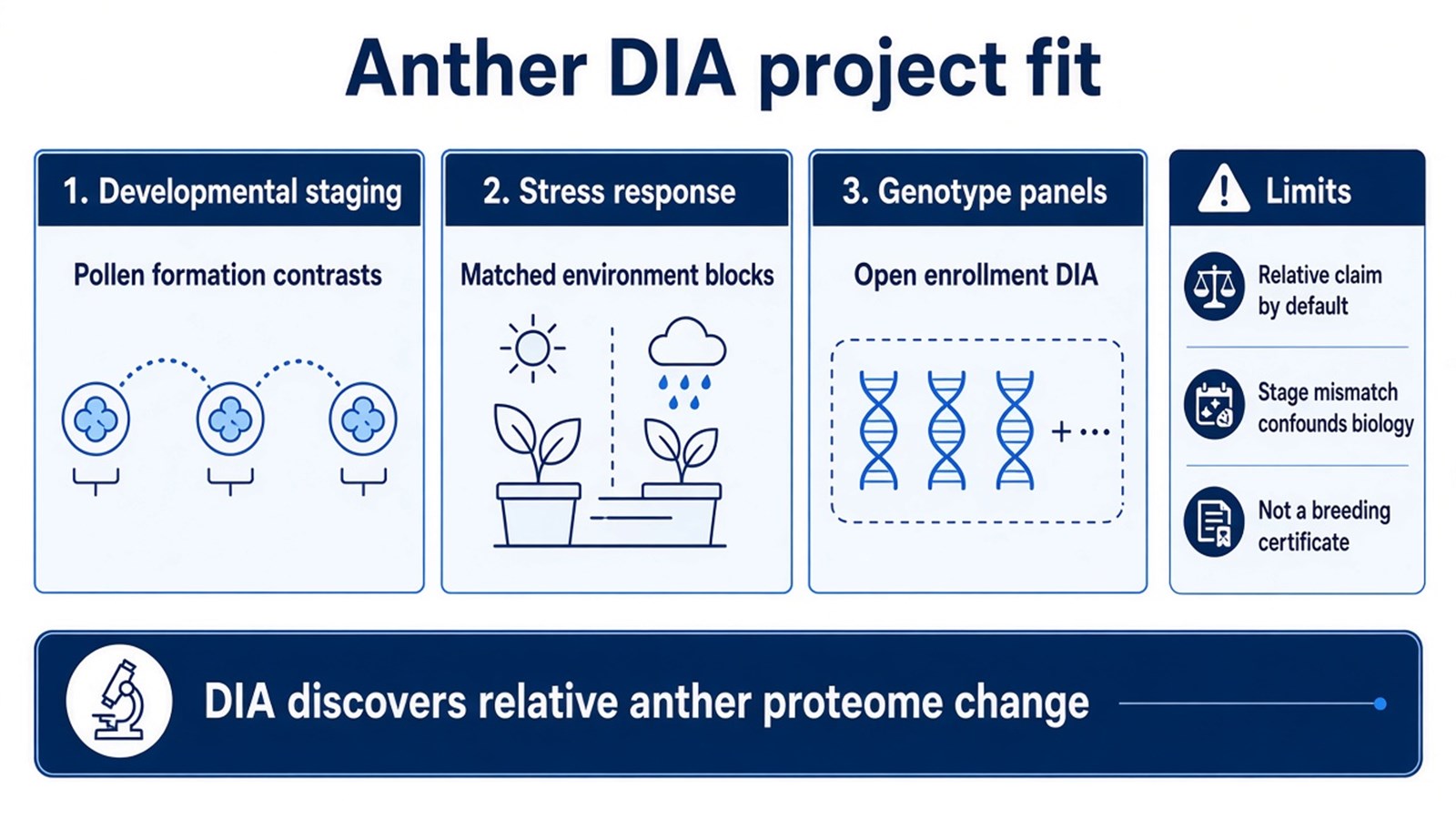
Figure 2. Anther DIA fits stage, stress, and genotype contrasts when prep and environment blocks match; it remains a relative discovery claim, not a breeding certificate.
Limits That Shape Interpretation
Stage mismatch, unequal cleanup, and harvest-batch confounding remain the main failure modes. Abundant structural or metabolic proteins can dominate spectra while low-abundance regulators stay sparse. Missing values often track abundance and prep loss, not only acquisition chance. Pathway enrichment shows overrepresentation within the quantified background; it does not prove pathway activity. Diagnostic or agronomic decision cutoffs sit outside ordinary research DIA reporting unless a separately validated assay framework is declared.
Conclusion
Plant anther DIA quantitative proteomics supports relative proteome comparison for pollen-related developmental, interaction, and stress questions when stage labels, plant-compatible extraction, and DIA acquisition stay matched across arms. Reliable outcomes come from freezing the contrast early, piloting low-yield anther prep, and keeping discovery claims distinct from breeding or absolute-amount conclusions. Researchers planning anther DIA projects can contact MtoZ Biolabs to review species, stage definition, and sample amount before harvest, and can also consult the MtoZ Biolabs Plant Proteomics Service for tissue-specific feasibility and DIA workflow planning.
