



Data-independent acquisition (DIA) protein quantification at MtoZ Biolabs is offered as label-free relative proteomics on unlabeled digests acquired with windowed MS/MS schedules on separate liquid chromatography-tandem mass spectrometry (LC-MS/MS) injections, followed by library or library-free extraction under false discovery rate (FDR) control (Gillet et al. 2012). Sequential window acquisition of all theoretical fragment ion spectra (SWATH) is one common DIA window plan on compatible platforms. The guide below describes how DIA quantitative projects are scoped, what samples must satisfy before acquisition, and where service boundaries sit. It is not a price sheet, not an instrument brochure, and not a substitute for a project-specific methods appendix.
Relative quantification remains the default claim unless a separate targeted or stable isotope-labeled internal standard (SIS) design is declared (Gerber et al. 2003). DIA does not remove the need for matched pretreatment, a frozen contrast, and documented missing-value policy before group comparisons are interpreted (Rosenberger et al. 2017).
In MtoZ Biolabs offerings, DIA and SWATH-style discovery is commonly evaluated under label-free quantitative proteomics when open contrasts and separate injections fit the cohort. Named peptides may move to parallel reaction monitoring (PRM) after discovery when remeasurement is required.
How DIA Quantification Fits a MtoZ Project Record
Three scopes are often bundled in inquiries and should be separated in the project brief.
Sample and pretreatment scope covers matrix, matched lysis, digestion, cleanup, and injection-ready loads. Unequal prep across arms cannot be repaired at extraction.
Acquisition scope covers gradient family, DIA or SWATH window plan, and run-order interleaving across the cohort. Mid-study window changes break comparability with earlier files.
Analysis scope covers extractor choice, FDR model, normalization, protein rollup, and contrast testing on predefined groups only (Demichev et al. 2020).
DIA service value is a documented relative matrix for a declared contrast, not open-ended protein listing without replicate structure.
Integrated SWATH framing appears in SWATH Proteomics. Route selection across labeling and acquisition appears in Protein Quantification Method.
Information to Prepare Before DIA Service Starts
Feasibility review is most useful when the following fields are explicit.
Sample matrix and storage history for cells, tissues, biofluids, or other inputs.
Biological contrast map with inclusion rules, replicates, and whether enrollment may continue after the first injection week.
Pretreatment constraints such as required depletion, fractionation, or client-side prep that must stay matched across arms.
Intended claim unit as relative discovery contrast, candidate list for follow-up, or amount on named peptides through a targeted design.
Prior lists or publications when the project is confirmation-first instead of open discovery.
Matrix-specific prep expectations appear in SWATH MS Analysis, DIA-MS Quantitative Proteomics Solutions for Mouse Tissue Samples, and SWATH-MS Label-Free Protein Quantification Technology Analysis. Sample readiness checks appear in Exploring Quantitative Analysis in Proteomics.
Service Workflow From Sample Intake to Contrast-Tested Matrix
A typical MtoZ DIA quantitative spine aligns with the following stages.
- Feasibility review of matrix, contrast, and claim unit.
- Matched protein extraction, digestion, and peptide cleanup to LC-ready loads (Wisniewski et al. 2009).
- Pilot LC-MS when the matrix or prep route is new.
- DIA or SWATH-style acquisition under a locked plan with QC inserts as agreed in the project record.
- Peptide extraction under declared FDR and interference rules.
- Normalization, missing-value handling, protein rollup, and testing of the predefined contrast only.
- Deliverables agreed in scope, commonly including quantitative tables and methods metadata; interpretation layers stay within the declared claim.
- Optional PRM or SIS stage on a short list when confirmation or amount is in scope.
Steps 2 through 4 are where cohort comparability is won or lost. Step 5 onward belongs with the analysis conventions in DIA Data Analysis Methods in Proteomics. Library-based extraction handoff context appears in Quantitative Analysis of SWATH Proteomics Using OpenSWATH: A Complete Workflow Overview.
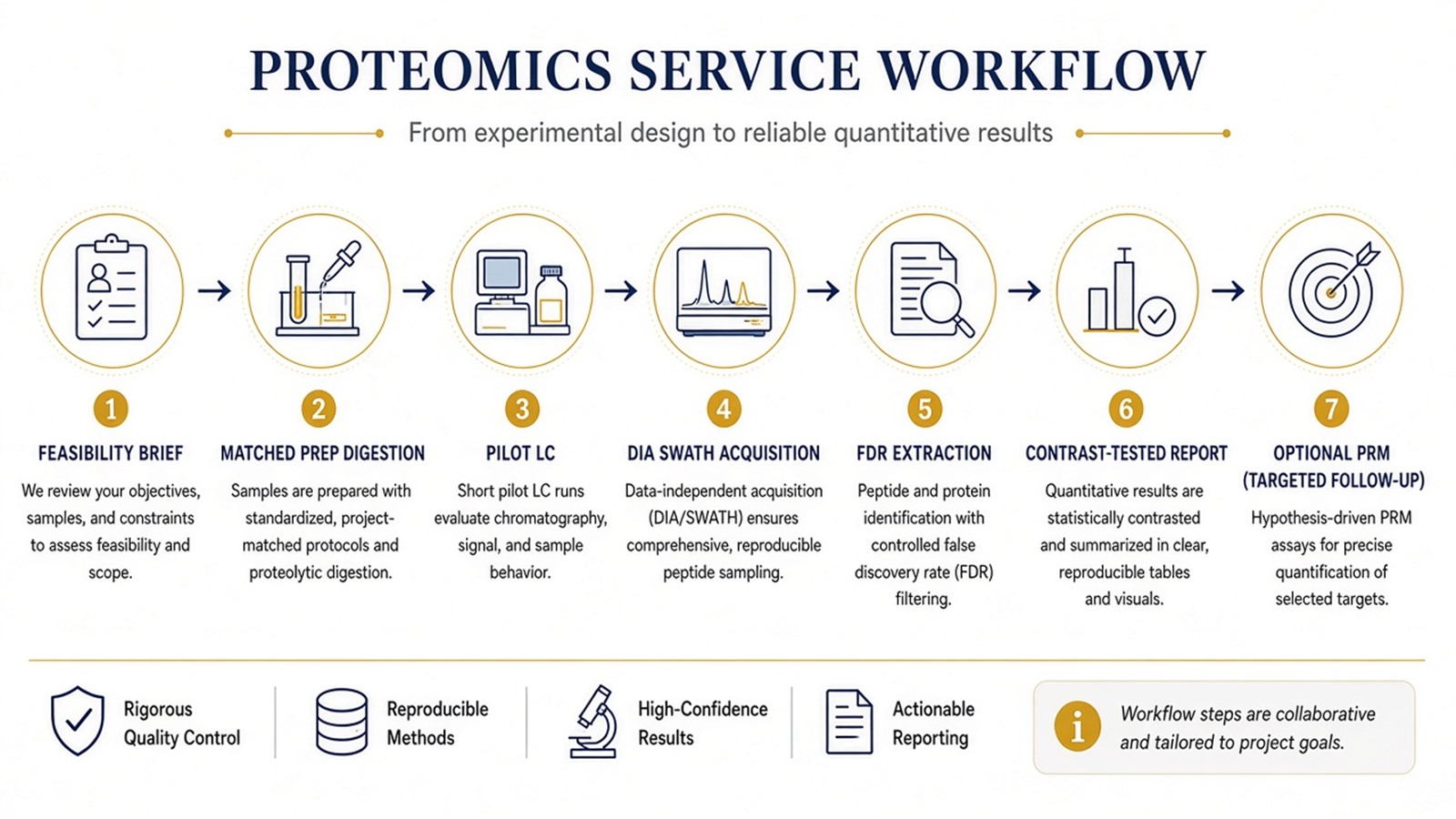
Figure 1. MtoZ DIA quantitative projects depend on matched prep and a frozen contrast before acquisition and extraction.
Parameters, Limits, and Service Boundaries
Topic |
What the project record should state |
Common limit or boundary |
|---|---|---|
Chemistry |
Label-free separate injections versus isobaric multiplex |
Mixed chemistries in one contrast |
Contrast |
Frozen arms before FDR tuning |
Post hoc relabeling after acquisition |
Prep |
Matched across groups |
Arm-specific cleanup |
Acquisition |
Locked window plan and gradient family |
Mid-cohort method changes |
Extraction |
One declared extractor version |
Mixed pipelines on one contrast |
FDR |
Unified model across files |
Ad hoc per-run thresholds |
Missing values |
Documented policy |
Imputation without declaration |
Follow-up |
PRM or SIS when required |
Discovery intensities as clinical test |
Limits follow the same table. DIA service does not by itself certify diagnostic assays, breeding markers, or drug approval claims. Application examples in biomarker, clinical, cancer, or agricultural research are planning contexts covered in High-throughput SWATH-MS Quantitative Proteomics for Biomarker Discovery, Typical Applications of DIA-Based Quantitative Proteomics in Clinical Research, DIA Proteomics Services for Cancer Biomarker Discovery, and Applications and Breakthroughs of SWATH Proteomics in Agricultural Research. Each new cohort still needs its own prep and contrast QC.
Low-abundance dropout and batch effects can persist in DIA matrices (Lazar et al. 2016). Instrument brand names do not replace declared windows, FDR, and contrast in the methods record.
How to Choose DIA Quantitative Service Scope
Use list status, enrollment, and follow-up goal together.
Project need |
DIA service scope that often fits |
Recheck before intake |
|---|---|---|
Open discovery, relative contrast |
Label-free DIA with locked extractor |
Undefined groups |
Staggered sample arrival |
Separate injections, interleaved order |
Same-day TMT assumption |
Plasma or serum cohort |
Matched depletion plus DIA |
Depletion on one arm only |
Short list after prior discovery |
PRM add-on or standalone targeted |
Open DIA restated as validation |
Mobility-enhanced platform |
4D-DIA label-free when available |
Labeling assumed required |
Client-performed prep only |
Upstream QC criteria agreed in writing |
Unequal client prep across arms |
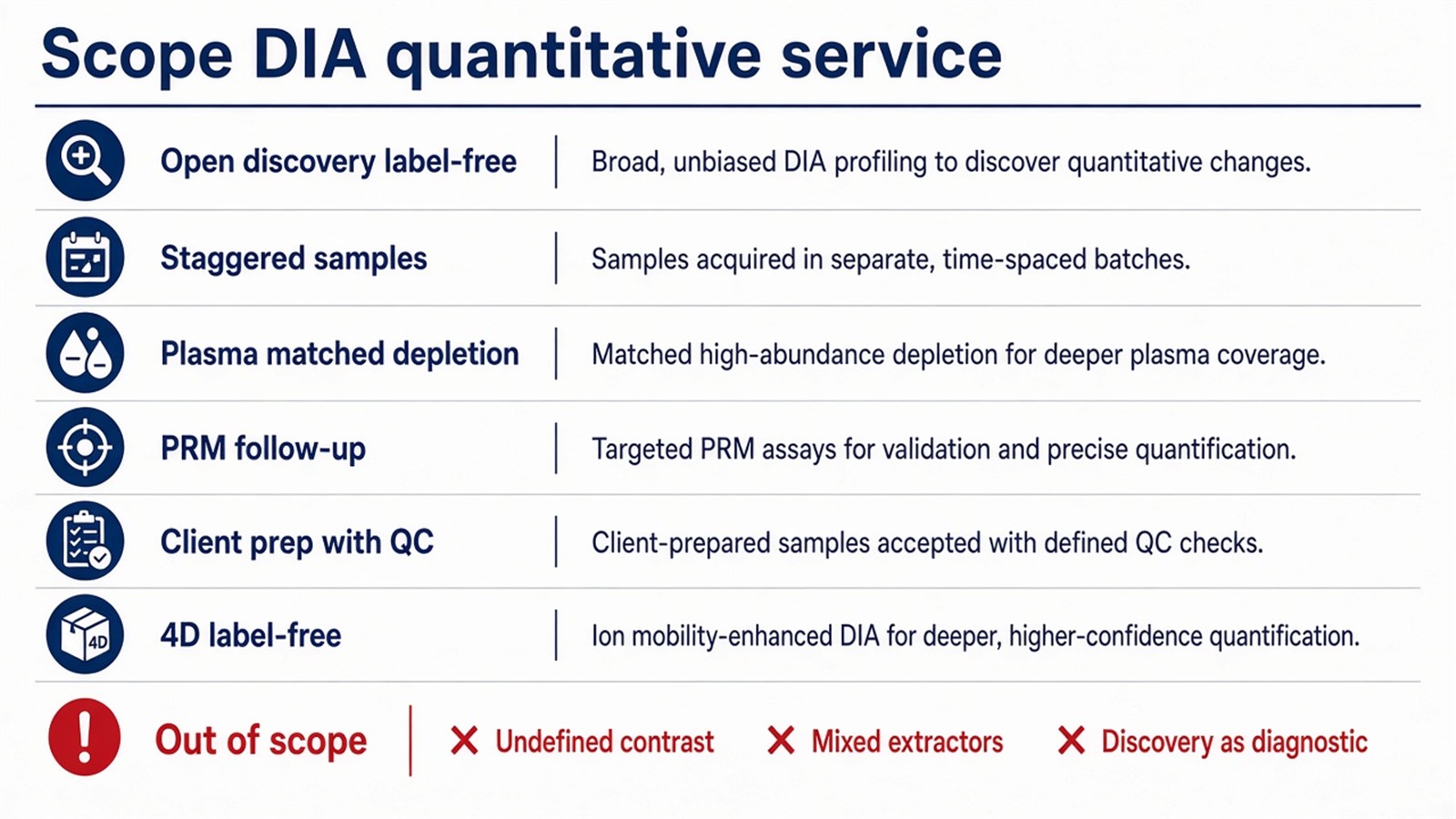
Figure 2. Scope DIA service around a frozen contrast and matched prep; confirmation, amount claims, and diagnostic wording need separate designs.
Mobility and labeling questions for 4D schedules appear in Is Labeling Required for 4D-DIA Quantitative Proteomics. Closed-list confirmation compares with 4D-DIA vs 4D-PRM: Which 4D Quantitative Approach Suits Your Project Better.
Teams ready to align matrix, contrast, and deliverables can review the MtoZ Biolabs Label-Free Quantitative Proteomics Service as the primary service entry for DIA discovery discussions.
Frequently Asked Questions
1. Is SWATH required for MtoZ DIA quantification?
No. SWATH is a windowed DIA schedule. Projects may use other DIA window plans on the platform agreed in the record.
2. Can DIA service proceed without a feasibility brief?
A brief contrast and matrix summary is needed so prep, acquisition, and analysis stay aligned. Generic keyword requests still require scoping.
3. Are protein counts or turnaround times fixed in public service copy?
Specific counts, coverage, and timelines belong in the signed project quote and methods appendix, not in open web copy.
4. Can client-prepared peptides be acquired only?
Often yes when cleanup QC criteria are met. Prep mismatches across arms remain a client or joint responsibility per agreement.
5. Does DIA plus phosphoproteomics change the contrast rules?
Phosphoenrichment adds a layer but still requires matched enrichment across arms and a frozen contrast map.
MtoZ Biolabs can scope DIA quantitative proteomics when sample type, contrast design, intended claim unit, and follow-up intent are documented.
Project details can be submitted for feasibility review when pretreatment responsibility, window locking, extractor choice, or discovery-to-targeted staging needs alignment before work starts.
Reference
- S.A. Gerber, J. Rush, O. Stemman, M.W. Kirschner, S.P. Gygi (2003). Absolute quantification of proteins and phosphoproteins from cell lysates by tandem MS. Proc. Natl. Acad. Sci. U.S.A., 100, 6940-6945. https://doi.org/10.1073/pnas.0832254100
- L.C. Gillet, P. Navarro, S. Tate, H. Rost, N. Selevsek, L. Reiter, R. Bonner, R. Aebersold (2012). Targeted data extraction of the MS/MS spectra generated by data-independent acquisition: a new concept for consistent and accurate proteome analysis. Mol. Cell. Proteomics, 11, O111.016717. https://doi.org/10.1074/mcp.O111.016717
- V. Demichev, C. Messner, S. Vernardis, K.S. Lilley, M. Ralser (2020). DIA-NN: neural networks and interference correction enable deep proteome coverage in high throughput. Nat. Methods, 17, 41-44. https://doi.org/10.1038/s41592-019-0638-x
- C. Lazar, L. Gatto, M. Ferro, C. Bruley, T. Burger (2016). Accounting for the multiple natures of missing values in label-free quantitative proteomics data sets to compare imputation strategies. J. Proteome Res., 15, 1116-1125. https://doi.org/10.1021/acs.jproteome.5b00981
- G. Rosenberger, S. Liu, J. Röst, H.L. Ludwig, C. Buil, B. Borchers, R. Aebersold, L. Collins (2017). Statistical control of peptide and protein error rates in large-scale targeted data-independent acquisition analyses. Nat. Commun., 8, 14224. https://doi.org/10.1038/ncomms14224
- J.R. Wisniewski, A. Zougman, N. Nagaraj, M. Mann (2009). Universal sample preparation method for proteome analysis. Nat. Methods, 6, 359-362. https://doi.org/10.1038/nmeth.1322
