Chemical Crosslinking-Mass Spectrometry (CXMS) Analysis Service
MtoZ Biolabs provides Chemical Crosslinking-Mass Spectrometry (CXMS) Analysis Service to investigate protein spatial contacts, interaction interfaces, and complex structures through crosslinked peptide identification and high-resolution LC-MS/MS analysis.
Our service supports purified proteins, protein complexes, and cell-based crosslinking studies, combining tailored crosslinking strategies, Orbitrap mass spectrometry, and specialized data analysis for residue-level contact mapping and structural interpretation.
- High-Resolution Orbitrap LC-MS/MS
- Crosslinked Peptide & Site Identification
- Weak and Transient Protein Interaction Analysis
- Customized Chemical Crosslinking Strategies
What Is Chemical Crosslinking Mass Spectrometry?
Chemical Crosslinking-Mass Spectrometry (CX-MS) uses chemical crosslinkers to covalently connect spatially proximal reactive groups within or between proteins. Following enzymatic digestion and LC-MS/MS analysis, specialized software identifies crosslinked peptides and their corresponding amino acid residue positions.
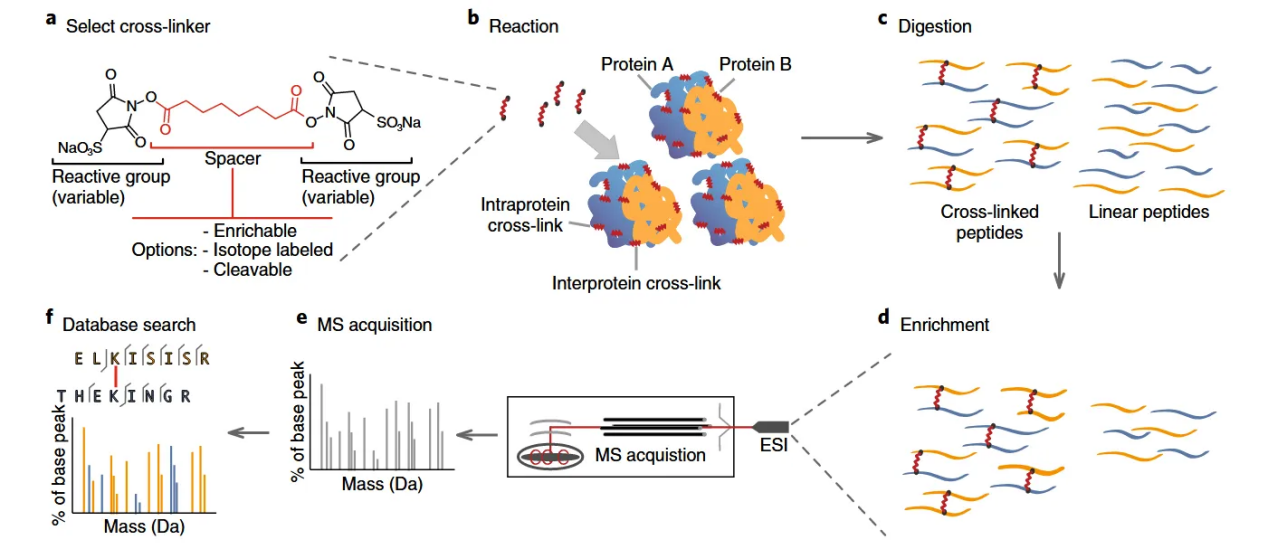
O'Reilly, F. J. et al. Nat Struct Mol Biol. 2018.
Figure 1. General Workflow of Chemical Crosslinking-Mass Spectrometry
Depending on where crosslinks occur, they are classified as intramolecular or intermolecular crosslinks. These provide information about protein conformation and spatial contacts between proteins, respectively.
CX-MS provides experimental evidence of spatial proximity, supporting the investigation of protein interaction interfaces and structural organization. However, it cannot independently determine complete atomic-resolution three-dimensional structures.
Chemical Crosslinking Mass Spectrometry Service at MtoZ Biolabs
MtoZ Biolabs provides CX-MS analysis using high-resolution Orbitrap mass spectrometry, supporting studies involving purified proteins, protein complexes, and cell-based crosslinking. Crosslinking and mass spectrometry strategies are tailored to the target proteins, sample types, and research objectives.
Our service covers:
|
Service Area |
Research Objective |
Analysis |
|
Spatial Contact Analysis of Known Proteins |
Determine whether two known proteins are in spatial proximity. |
Perform chemical crosslinking and LC-MS/MS analysis of purified proteins to identify interprotein crosslinked peptides and residue positions. |
|
Protein Interaction Interface Mapping |
Investigate contact regions between subunits within protein complexes. |
Identify intermolecular crosslinked peptides to map potential protein interaction interfaces. |
|
Weak and Transient Protein Interaction Analysis |
Capture protein interactions that may be lost during conventional AP-MS analysis. |
Perform cell-based crosslinking followed by IP-MS to identify proteins associated with the target. |
|
Protein Structure and Conformational Analysis |
Investigate protein conformations and the spatial organization of protein complexes. |
Analyze intra- and intermolecular crosslinks to obtain structural restraints, with 3D structural mapping when applicable. |
For projects involving low crosslinking efficiency, limited accessible lysine residues at interaction interfaces, or specific transient interactions, photocrosslinking strategies may be considered.
Analysis Workflow
1. Crosslinking Strategy Design
Evaluate protein sequences, sample characteristics, and research objectives to select suitable crosslinkers (DSS, BS3, or DSSO) and optimize reaction conditions.
2. Chemical Crosslinking
Covalently link spatially proximal residues under controlled conditions, followed by reaction quenching to preserve crosslinked protein structures.
3. Protein Digestion and Peptide Preparation
Digest crosslinked proteins and perform peptide cleanup or enrichment as needed to prepare samples for LC-MS/MS analysis.
4. High-Resolution LC-MS/MS Analysis
Analyze peptides using high-resolution Orbitrap mass spectrometry, primarily with DDA acquisition. DIA may be considered upon request.
5. Crosslinked Peptide Identification
Use specialized software such as pLink 2 to identify crosslinked peptides, assign residue positions, and evaluate identification confidence.
6. Structural Interpretation and Reporting
Analyze intra- and intermolecular crosslinks, perform 3D structural mapping where applicable, and deliver identification results, raw data, and a PDF report.
Service Advantages
1. High-Resolution Analysis
Orbitrap high-resolution mass spectrometry with mass accuracy better than 5 ppm provides high-quality data for crosslinked peptide identification.
2. Flexible Crosslinking Strategies
DSS, BS3, DSSO, and other suitable crosslinkers are selected according to research objectives and sample characteristics to support different protein structural and interaction studies.
3. Crosslinking Site Analysis
Specialized software enables crosslinked peptide identification and residue-site mapping, with 3D structural mapping available for selected proteins.
4. One-Time Charge
Our pricing is transparent, with no hidden fees or additional costs.
Sample Submission Requirements
|
Item |
Requirements |
|
Sample Types |
Crosslinked gel bands, protein solutions, or cell samples. Two uncrosslinked recombinant proteins may also be submitted separately. |
|
Recommended Sample Amount |
Purified proteins: 100–150 μg with ≥90% purity; cells: ≥1–2 × 10⁷ per condition. |
|
Minimum Sample Amount |
20 μg of purified protein for projects with limited sample availability, subject to feasibility assessment. |
|
Buffer Requirements |
HEPES or PBS and other compatible buffers without reactive primary amines are recommended. Avoid Tris and glycine before crosslinking. |
|
Storage and Shipping |
Protein solutions and cell samples should be flash-frozen in liquid nitrogen according to the confirmed protocol and shipped on dry ice. |
|
Required Information |
Provide target protein sequences or an appropriate protein sequence database for the relevant species. |
For projects aimed at capturing protein interactions in living cells, the cellular crosslinking and subsequent freezing procedures should be confirmed in advance to minimize changes in the original interaction states during sample handling.
Applications
1. Protein-Protein Interaction Interface Analysis
Identify interprotein crosslinking sites to obtain spatial-proximity evidence for investigating potential contact regions and protein interaction interfaces.
2. Protein Complex Structural Analysis
Use intra- and intermolecular crosslinking information to obtain structural restraints that support the investigation of protein complex organization and subunit arrangements.
3. Weak and Transient Protein Interaction Analysis
Stabilize selected protein interactions that may be lost during conventional protein enrichment, supporting subsequent identification of interacting proteins.
Deliverables
1. Raw MS Data
Raw data files generated from LC-MS/MS analysis.
2. Crosslinked Peptide Identification
Identified crosslinked peptides, corresponding proteins, and crosslinking site information.
3. Analysis Report
A PDF report containing experimental methods, data analysis, and result descriptions.
4. 3D Structural Mapping
Crosslinking sites may be mapped onto available three-dimensional structural models for selected proteins with suitable structural information.
FAQs
Q1. Can chemical crosslinking mass spectrometry confirm direct binding between two proteins?
CX-MS can identify interprotein crosslinked residue pairs that provide evidence of spatial proximity. However, crosslinking signals alone do not conclusively establish direct binding. Additional experimental validation may be required.
Q2. Why are crosslinking sites sometimes not detected?
Crosslinking sites may remain undetected due to insufficient crosslinking efficiency, limited accessibility of reactive residues, low crosslinked peptide abundance, or mass spectrometric detection limitations. Photocrosslinking may be considered for interaction interfaces lacking suitable accessible lysine residues.
Q3. Can chemical crosslinking mass spectrometry determine protein three-dimensional structures?
CX-MS provides crosslinked residue positions and spatial restraints rather than complete 3D structures. For proteins with suitable structural models, crosslinking sites can be mapped onto these models. CX-MS does not independently provide atomic-resolution structure determination.
Case Study
Researchers applied live-cell chemical crosslinking mass spectrometry (XL-MS), combining a cleavable crosslinker, click-chemistry-based enrichment, and high-resolution mass spectrometry to systematically investigate protein interactions in HEK293 cells.
The study identified 13,904 unique crosslinks and constructed an interaction network comprising 2,484 proteins and 6,439 connections. Mapping crosslinking sites onto protein complex structures supported the spatial plausibility of the identified crosslinks, demonstrating the potential of XL-MS for large-scale protein interaction analysis and structural characterization of protein complexes.
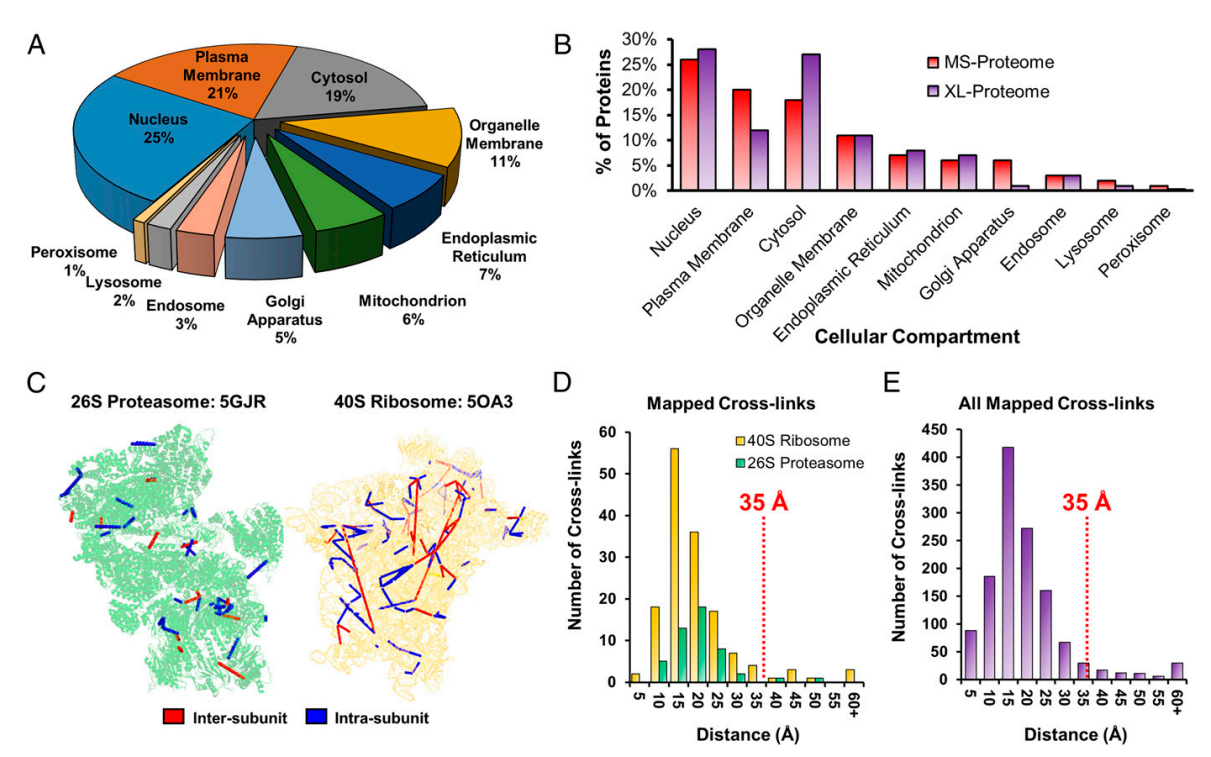
Wheat, A. et al. Proc Natl Acad Sci U S A. 2021.
Figure 2. Annotation of the XL Proteome and Validation of Identified Cross-links
Contact Us
For chemical crosslinking mass spectrometry analysis, please provide your target protein information, sample type, available sample amount, and research objectives. The MtoZ Biolabs technical team will evaluate suitable crosslinking and mass spectrometry strategies based on your project requirements.
MtoZ Biolabs, an integrated chromatography and mass spectrometry (MS) services provider.
Related Services
Protein-Protein Interaction Analysis Service
Crosslinking Mass Spectrometry Service
Demo for Chemical Crosslinking-Mass Spectrometry (CXMS) Analysis
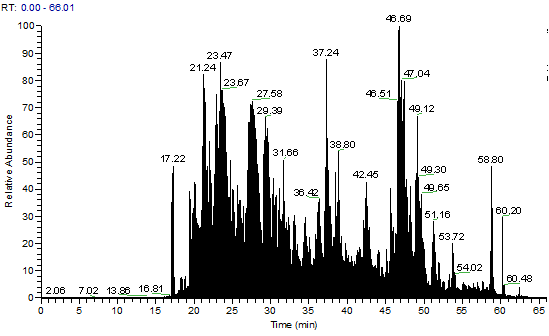
Total Ion Chromatogram