


Proteomics data-independent acquisition (DIA) is a label-free LC-MS/MS mode that fragments precursors inside scheduled m/z isolation windows each cycle, instead of stochastically selecting top ions as in data-dependent acquisition (DDA) (Gillet et al. 2012). Quantification usually extracts consistent fragment chromatograms (peak groups) per peptide, with a spectral library or a library-free search under false discovery rate (FDR) control (Demichev et al. 2020). SWATH-MS is a widely used sequential-window DIA implementation built on this principle. The default defended output is relative same-protein change across matched injections, not absolute concentration. DIA improves systematic peptide coverage but still faces co-fragmentation inside windows, chromatographic batch effects, and library or scoring dependence.
Researchers who already have defined samples, comparison groups, or a specific project objective can also review the MtoZ Biolabs Deep DIA Proteomics Service, Label-Free DIA Quantitative Proteomics, and DIA Quantitative Proteomics Analysis Service for project-specific feasibility and analysis planning.
How DIA Works and Where SWATH-MS Fits
DDA triggers MS/MS on a subset of precursors ranked in real time. DIA schedules fixed or stepped isolation windows across the precursor m/z range and records MS/MS for all ions entering each window. Because many co-eluting peptides can share a window, spectra are chimeric; usable quantities come from targeted extraction of expected fragment traces, not from treating each MS/MS as a single clean precursor event (Gillet et al. 2012).
SWATH-MS historically refers to sequential window acquisition of all theoretical fragment ion spectra paired with library-guided peak-group extraction. It is an implementation inside the DIA family, not a separate class beside DIA and DDA. Other DIA window plans and library-free extractors analyze the same conceptual data type under FDR control (Demichev et al. 2020).
Concept |
DDA (typical LFQ) |
DIA / SWATH-style |
|---|---|---|
MS/MS trigger |
Stochastic top precursors |
Scheduled windows |
Primary quant feature |
MS1 areas or counts from picked precursors |
Fragment chromatograms from windows |
Missingness pattern |
Stochastic across runs |
Often lower for scheduled peptides |
Main interference |
Under-sampling |
Co-fragmentation inside windows |
Typical claim |
Relative discovery |
Relative discovery with extraction QC |
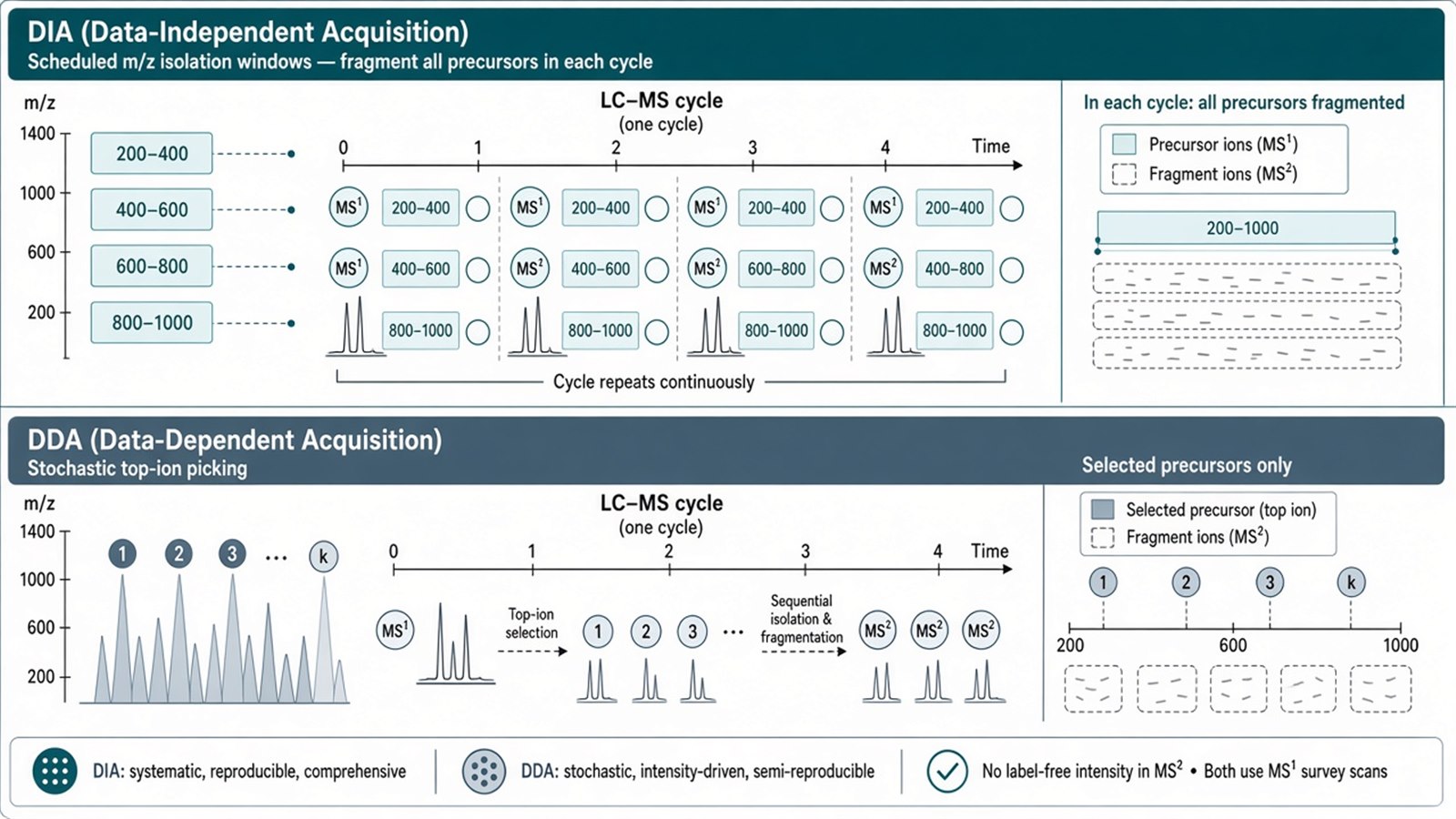
Figure 1. DIA defines acquisition by windows and later extraction; DDA defines acquisition by real-time precursor ranking.
Calling DIA comprehensive detection of all fragments in every window overstates acquisition; quantified peptides still depend on extraction, FDR, and interference filters.
For naming clarity, see What Is DIA and SWATH? Understanding Data-Independent Acquisition in Proteomics and What Is SWATH Mass Spectrometry?. For DDA contrast, see SWATH-MS vs DDA-MS: Which Technique Is Suitable for Your Research?.
From Windowed Files to Applications
Applied DIA and SWATH projects share a spine after matched sample prep:
- Digest proteins and inject unlabeled peptides with a locked LC gradient plan.
- Acquire DIA or SWATH windows with documented width and cycle time.
- Extract peptides with a sample-matched library, a project library, or a defended library-free route under peptide and protein FDR control (Rosenberger et al. 2017).
- Filter interfered peak groups, normalize across runs, and test predefined contrasts.
- Nominate candidates for optional PRM, MRM, or AQUA confirmation when tighter ion control or amount units are needed.
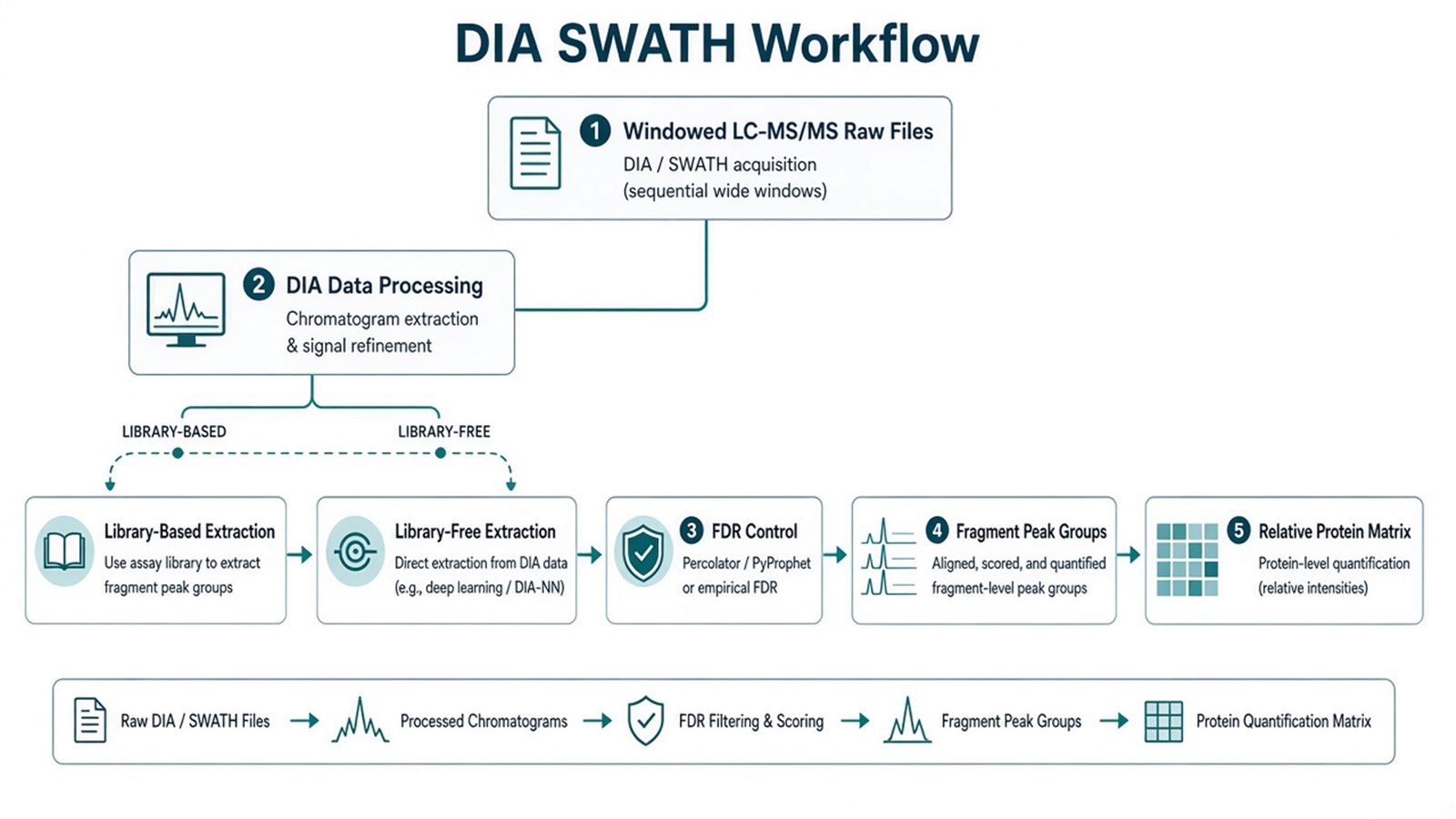
Figure 2. DIA applications rest on extraction and QC; windowed raw files alone do not equal a protein matrix.
For analysis detail, see DIA Data Analysis Methods in Proteomics and How Can DIA Mass Spectrometry Data Be Analyzed to Obtain the Peak Trace of a Specific Peptide?. For library-free routes, see Direct DIA: High-Efficiency Proteomics Without a Spectral Library. For mobility-enhanced DIA, see Application of 4D-DIA Quantitative Proteomics.
Judgment Criteria: When DIA or SWATH Fits
Study need |
DIA or SWATH often fits |
Reassess |
|---|---|---|
Claim |
Relative unlabeled discovery across many runs |
Absolute concentration or diagnostic cutoff |
Coverage |
Lower stochastic missingness than DDA is required |
Clean single-precursor MS2 for novel ID dominates |
Library or extractor |
Matrix-matched library or defended library-free capacity |
No FDR-controlled extraction path |
Enrollment |
Independent injections; samples may arrive over time |
All contrasts must share one TMT plex |
Follow-up |
Discovery list may move to PRM or AQUA |
Closed shortlist already needs amount units now |
Prefer DIA or SWATH-style acquisition when unlabeled cohort completeness and fragment chromatograms fit the relative claim. Prefer DDA when identification-centric spectra or library building from picked precursors comes first. Prefer TMT when same-run multiplex ratios fit a frozen kit. Prefer PRM, MRM, or AQUA when a closed peptide list needs tighter confirmation or calibrated amount.
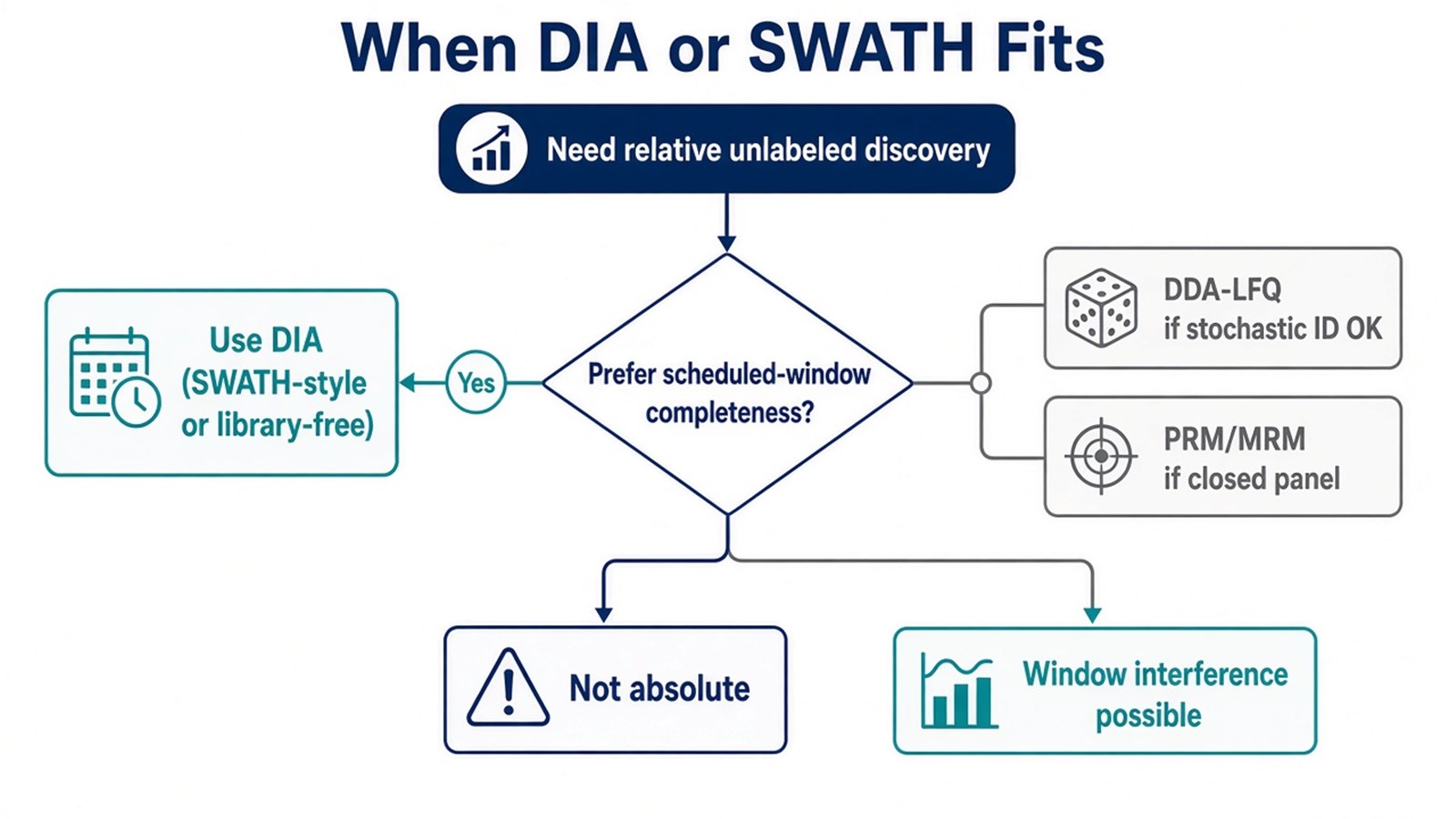
Figure 3. Choose DIA or SWATH from the relative unlabeled claim and extraction readiness; change family when multiplex labeling or absolute panels dominate.
For advantage trade-offs, see Advantages and Disadvantages of DIA in Protein Quantification and Advantages and Disadvantages of SWATH-MS. For strategy context, see DDA vs. DIA vs. TMT in LC-MS/MS Proteomics: How to Choose the Right Strategy and Label-Free Quantification Methods: Mass Spectrometry-Based Protein Quantification Strategies.
Limits and Application Boundaries
DIA does not remove batch effects without matched prep and run-order control. High sensitivity marketing language does not guarantee accurate ratios if windows, libraries, or normalization drift. Completeness is not accuracy. Co-isolation inside windows can distort peak groups when FDR and shape filters are weak. Ordinary DIA intensities remain relative unless matched standards and calibration are added. Pathway enrichment from a differential list shows overrepresentation relative to the quantified background; it does not prove pathway activity or drug mechanism by itself.
Typical applications that match these principles and limits:
- Disease or treatment screens needing relative protein change with flexible unlabeled enrollment.
- Biofluid or tissue cohorts where DDA missing values would dominate discovery.
- Biopharmaceutical or preclinical mechanism studies that nominate candidates for targeted follow-up.
- Retrospective inspection of stored window data for nominated peptides under FDR.
- Discovery shortlists later confirmed by PRM, MRM, or AQUA when amount or tighter ion control is required.
Diagnostic cutoffs, companion-diagnostic claims, and absolute pharmacokinetic certificates sit outside ordinary research DIA reporting unless a separately validated assay framework is in place.
Once window scheme, extraction route, and the relative claim are defined, the project can be scoped as a DIA or SWATH study. Researchers can review the MtoZ Biolabs Deep DIA Proteomics Service for sample evaluation and workflow planning.
Frequently Asked Questions
1. What is DIA in proteomics?
DIA acquires MS/MS in scheduled precursor windows each cycle and quantifies peptides by extracting fragment chromatograms under FDR control, usually without isobaric tags.
2. Is SWATH-MS the same as all DIA methods?
No. SWATH-MS is a sequential-window DIA implementation, often library-guided. Other window schedules and library-free DIA pipelines exist in the same family.
3. How is DIA different from DDA for quantification?
DDA quantifies from stochastically selected precursors; DIA quantifies from windowed fragment traces with extraction QC and often lower stochastic missingness.
4. Can DIA data support absolute protein concentration?
Not by default. Absolute amount needs matched stable isotope standards and calibration on a closed panel.
5. When should a project leave DIA for TMT or PRM?
Choose TMT when a frozen plex and same-run multiplex ratios fit better. Choose PRM or AQUA when a closed shortlist needs tighter confirmation or amount units.
Reference
- L.C. Gillet, P. Navarro, S. Tate, et al. (2012). Targeted data extraction of the MS/MS spectra generated by data-independent acquisition: a new concept for consistent and accurate proteome analysis. Mol. Cell. Proteomics, 11, O111.016717. https://doi.org/10.1074/mcp.M111.016717
- V. Demichev, C.B. Messner, S.I. Vernardis, K.S. Lilley, M. Ralser (2020). DIA-NN: neural networks and interference correction enable deep proteome coverage in high throughput. Nat. Methods, 17, 41-44. https://doi.org/10.1038/s41592-019-0638-x
- G. Rosenberger, S. Liu, J. Röst, et al. (2017). Statistical control of peptide and protein error rates in large-scale targeted data-independent acquisition analyses. Nat. Commun., 8, 14224. https://doi.org/10.1038/ncomms14224
