



How Many Proteins Can Label-Free Detect
Label-free quantification (LFQ) projects often ask how many proteins label-free liquid chromatography-tandem mass spectrometry (LC-MS/MS) can detect. In project language, the honest answer is a range tied to matrix, prep, load, acquisition mode, and analysis rules, not one universal headline count (Bantscheff et al. 2012). Identification depth counts proteins passing declared false discovery rate (FDR) filters in a run or cohort summary. Quantifiable depth counts proteins with usable intensities for the frozen contrast after alignment and missing-value policy (Cox et al. 2014). The guide below integrates those definitions with workflow, parameters that move depth, limits, and project fit. It is not a fixed identification quota, not a vendor leaderboard, and not a substitute for a signed methods appendix with pilot data.
Label-free chemistry does not change how many gene products exist in a lysate. It changes whether discovery runs without tags on separate injections. A higher identification list does not by itself prove contrast quality, prep parity, or statistical power (Lazar et al. 2016).
In MtoZ Biolabs offerings, depth expectations are set after matrix documentation and short pilots when the brief ties enrollment to identification or quantifiable protein counts.
LFQ scope and workflow spine appear in LFQ. Label-free definition appears in What Is Label-Free Analysis?.
What Detected Proteins Mean in Label-Free LFQ Projects
Three count types belong in the brief.
Identified proteins are inferred groups with at least one peptide sequence passing search and FDR rules in a given run or merged search.
Quantified proteins for LFQ carry extracted MS1 or fragment intensities aligned across injections after normalization scope is applied.
Contrast-ready proteins meet replicate and missing-value rules for the predefined groups before testing.
Headline protein totals from a single run differ from proteins quantified across a full LFQ cohort block.
Identification depth alone does not answer whether a low-abundance protein will be quantifiable in every replicate arm.
Quality framing for depth versus comparability appears in How to Improve Data Quality and Reproducibility in Label-Free Proteomics?.
Drivers of Label-Free Identification and Quantifiable Depth
Depth moves with experimental and informatics choices together.
Sample matrix sets starting complexity. Cell lysates, tissues, biofluids, and enrichment fractions differ in dynamic range and interfering background.
Prep and fractionation decide which proteome slice reaches the column. Depletion, ultracentrifugation, or offline fractionation can raise depth for a subproteome but must match across contrast arms.
Chromatography and load trade identification breadth against saturation and ion suppression on label-free LC-MS/MS (Label-Free LC-MS/MS).
Data-dependent acquisition (DDA) LFQ identifies proteins stochastically from dependent MS/MS. Depth per run can be high while low-abundance proteins drop out of quantification in many replicates.
Unlabeled data-independent acquisition (DIA) or SWATH-style acquisition can raise peptide and protein tallies in some matrices after pilot tuning under unified FDR (Gillet et al. 2012). Chemistry remains label-free; acquisition is a separate lever.
Search space, database completeness, modification rules, and FDR stringency change both identification totals and quantifiable overlap between runs.
DIA depth context appears in Label-Free DIA Quantitative Proteomics. SWATH-style integration appears in Label-Free Quantitative Proteomics Service Based on SWATH Technology.
End-to-End Workflow When Depth Targets Matter
A practical label-free depth planning spine usually runs as follows.
- State whether the brief needs identification depth, quantifiable depth, or contrast power on named pathways.
- Document matrix, storage, and any depletion or fractionation applied equally to all arms.
- Run a short pilot with locked gradient and acquisition template on representative samples.
- Record identified proteins per run and overlap across replicates before scaling cohort size.
- Record quantifiable proteins after alignment, normalization, and missing-value filters used in production.
- Compare DDA LFQ pilot depth with unlabeled DIA pilot when missingness is high.
- Lock prep, LC-MS/MS methods, and one processing pipeline for the cohort block.
- Acquire interleaved injections when cohort size allows.
- Deliver tables with identification counts, quantifiable counts, and QC plots tied to methods versions.
Steps 1 through 3 set expectations. Steps 4 through 6 turn expectations into evidence. Steps 7 through 9 preserve comparability.
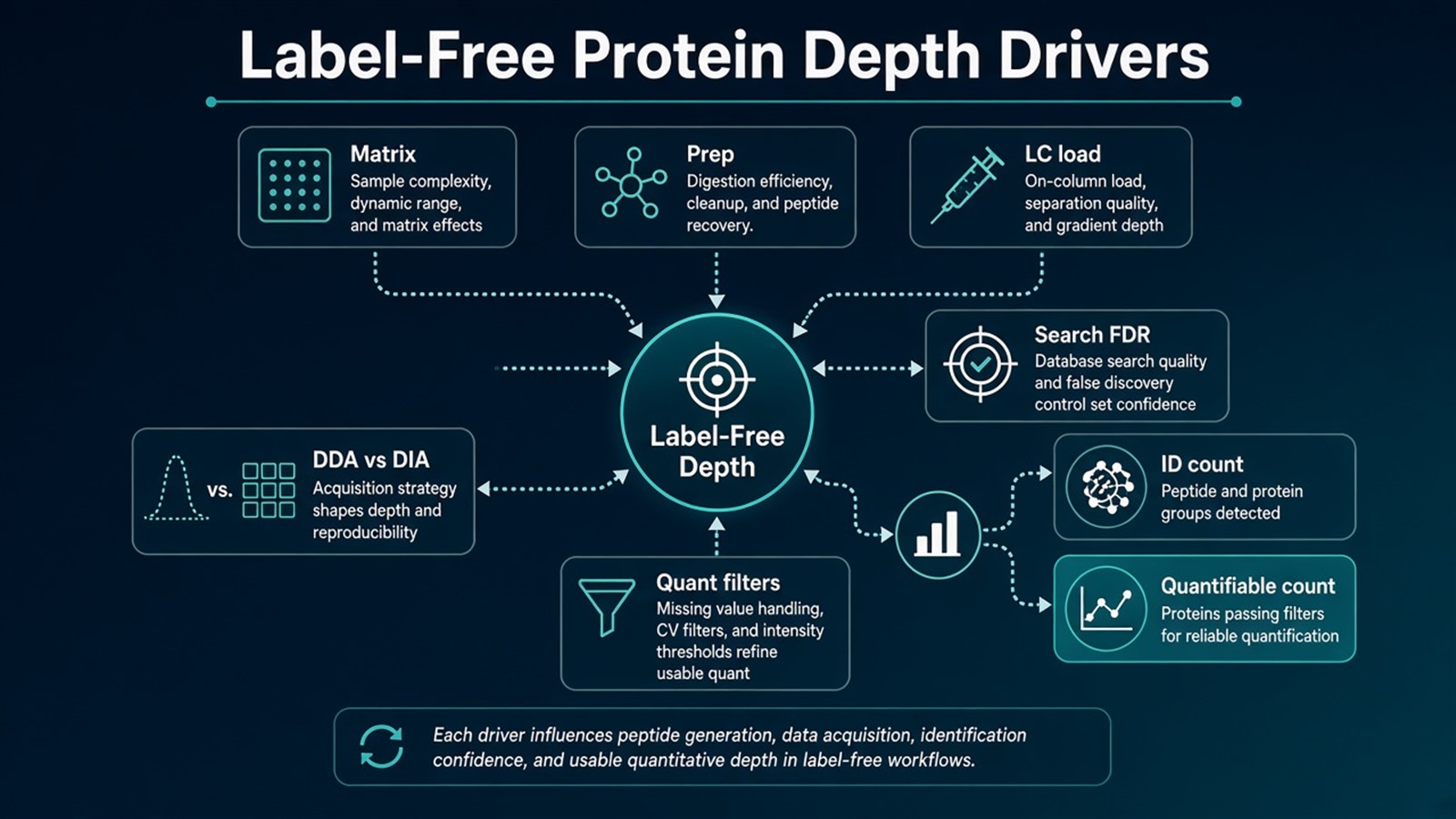
Figure 1. Depth questions need pilot tallies on identification and quantifiable proteins before full cohort scaling.
Prep discipline appears in Quantitative Protein Analysis. Processing layers appear in Tools for Label-free Peptide Quantification.
Parameters That Most Affect How Many Proteins Label-Free Reports
Layer |
Parameter that must be declared |
Effect on reported protein counts |
|---|---|---|
Matrix |
Tissue, fluid, organelle, or enriched slice |
Baseline complexity and dynamic range |
Prep |
Depletion, cleanup, digestion protocol |
Which proteins enter search |
Load |
Mass on column per injection |
Breadth versus saturation |
Chromatography |
Gradient length and column chemistry |
Peptides delivered per run |
Acquisition |
DDA versus DIA window plan |
Stochastic ID versus window coverage |
MS/MS load |
Cycle time and isolation width |
IDs per unit time in DIA |
Search |
Database, FDR, modifications |
Inflation or loss in ID lists |
Merge rule |
Run-wise versus experiment merge |
Single-run versus cohort ID totals |
Quant filter |
Minimum valid values per group |
Quantifiable count below ID count |
Contrast |
Replicate count and missing policy |
Proteins entering statistics |
Limits follow the same table. Published whole-proteome studies may report large identification lists under specialized fractionation and long gradients. A standard single-shot discovery run on complex lysate typically reports fewer proteins than multi-fraction deep maps. Neither total substitutes for contrast design on the proteins that matter to the hypothesis.
Replicate overlap issues appear in How to Overcoming Reproducibility Issues in Label-Free Proteomics?.
How to Choose Label-Free Routes When Depth Is the Priority
Use depth goal, matrix pilot, enrollment size, and follow-up unit together.
Project need |
Label-free plan that often fits |
Recheck before committing |
|---|---|---|
Broad discovery list for pathway screening |
DDA LFQ with documented ID and quant filters |
ID count alone as success metric |
High missingness at target abundance |
Unlabeled DIA or SWATH-style pilot |
DDA when pilot shows no gain |
Low-abundance membrane or secretome slice |
Matched enrichment then LFQ |
Enrichment on one arm only |
Very deep catalog, not primary contrast |
Offline fractionation plus LFQ |
Fractionation breaks simple contrast timing |
Open cohort relative change |
Separate injections with quantifiable depth QC |
Chasing ID records without replicates |
Named proteins after discovery |
LFQ then PRM on shortened list |
Open LFQ depth as final panel proof |
Amount on peptides |
Targeted SIS outside discovery depth |
Discovery totals as concentration |
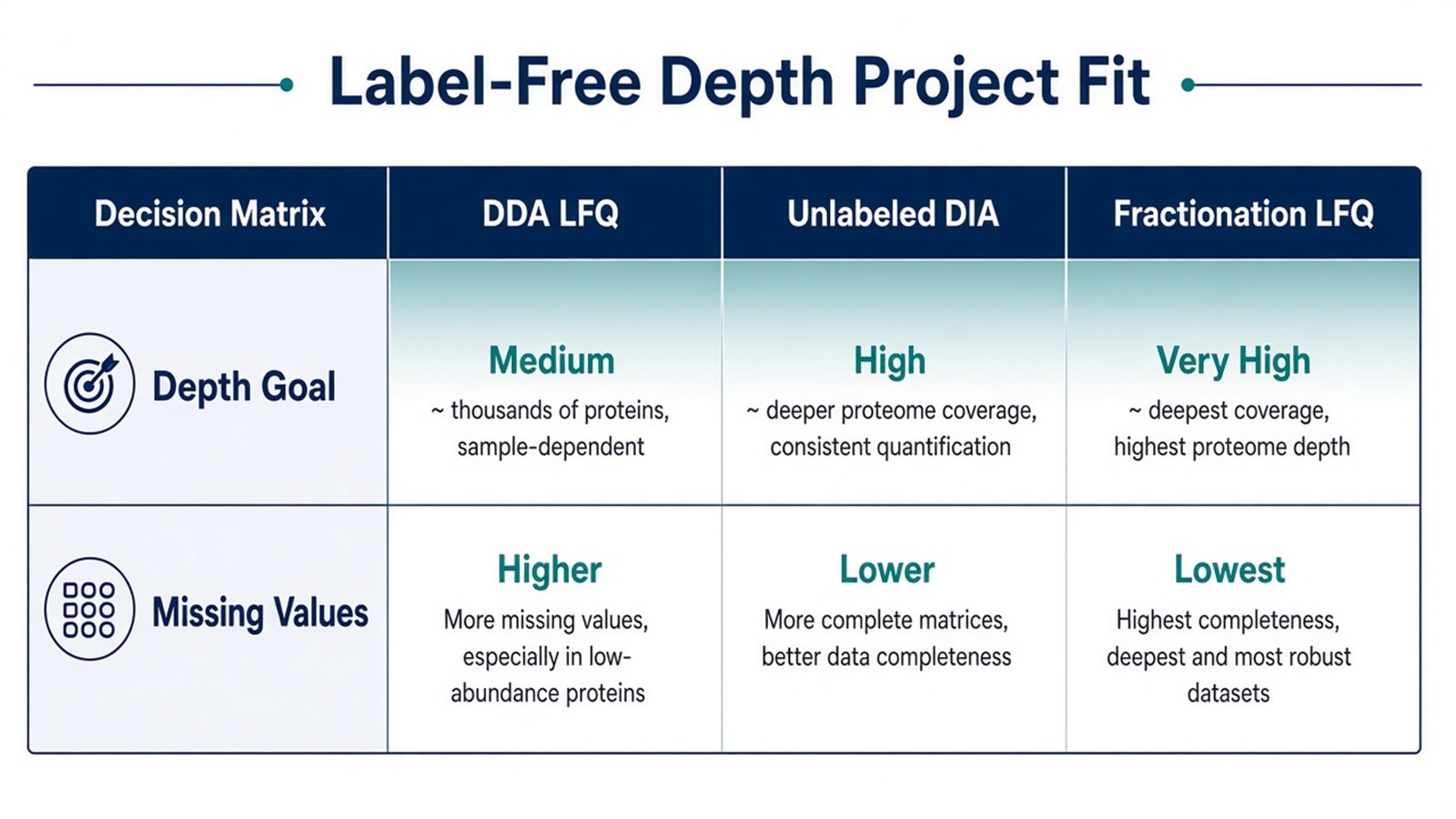
Figure 2. Depth targets should follow pilot quantifiable counts and contrast needs, not generic proteome size claims.
Route selection appears in Protein Quantification Method. Enrollment checks appear in Exploring Quantitative Analysis in Proteomics.
Teams with matrix documentation, pilot tallies, and depth goals can review the MtoZ Biolabs Label-Free Quantitative Proteomics Service for label-free depth planning when declared in the project record.
Frequently Asked Questions
1. How many proteins can label-free detect in one project?
There is no fixed number. Complex mammalian lysates on a typical single-shot DDA LFQ run often yield hundreds to a few thousand protein groups at common FDR rules, while multi-fraction or long-gradient studies can report higher identification totals. Quantifiable proteins for a contrast are usually fewer after replicate and missing-value filters. Pilot data on the same matrix should set the brief.
2. Does label-free detect more proteins than TMT or SILAC?
Not as a rule. Label-free avoids tagging loss but uses separate injections. Multiplex tagging can increase per-run comparisons yet adds chemistry constraints. Depth follows matrix and methods, not chemistry name alone.
3. Will a newer mass spectrometer double protein counts automatically?
Instrument upgrades can raise scan speed and sensitivity, but prep, load, gradient, acquisition template, and search rules still dominate cohort totals. Compare pilots on locked methods.
4. Is overlap between replicates supposed to match identification counts?
Overlap of identified proteins between replicates is a QC readout. Low overlap with stable prep and methods signals processing or search inconsistency and should be reviewed before interpreting depth claims.
5. When should depth goals move from DDA LFQ to unlabeled DIA?
When pilots show acceptable identification but poor quantifiable coverage on proteins near the contrast decision threshold, unlabeled DIA pilots are a common next step if window schedules fit the matrix.
MtoZ Biolabs can discuss label-free depth planning when matrix pilots, acquisition templates, and contrast goals are documented.
If further evaluation of DDA versus unlabeled DIA pilots, fractionation scope, or discovery-to-targeted staging is needed, project details can be submitted for a feasibility review.
Reference
- M. Bantscheff, S. Lemeer, H.U. Haab, B. Kuster (2012). Quantitative mass spectrometry in proteomics: a critical review. Anal. Bioanal. Chem., 404, 939-965. https://doi.org/10.1007/s00216-012-5892-4
- J. Cox, M.Y. Hein, C.A. Luber, I. Paron, M. Mann (2014). Accurate proteome-wide label-free quantification by delayed normalization and maximal peptide ratio extraction, termed MaxLFQ. Mol. Cell. Proteomics, 13, 2513-2526. https://doi.org/10.1074/mcp.M113.031031
- L.C. Gillet, P. Navarro, S. Tate, H. Rost, N. Selevsek, L. Reiter, R. Bonner, R. Aebersold (2012). Targeted data extraction of the MS/MS spectra generated by data-independent acquisition: a new concept for consistent and accurate proteome analysis. Mol. Cell. Proteomics, 11, O111.016717. https://doi.org/10.1074/mcp.O111.016717
- C. Lazar, L. Gatto, M. Ferro, C. Bruley, T. Burger (2016). Accounting for the multiple natures of missing values in label-free quantitative proteomics data sets to compare imputation strategies. J. Proteome Res., 15, 1116-1125. https://doi.org/10.1021/acs.jproteome.5b00981
- S.A. Gerber, J. Rush, O. Stemman, M.W. Kirschner, S.P. Gygi (2003). Absolute quantification of proteins and phosphoproteins from cell lysates by tandem MS. Proc. Natl. Acad. Sci. U.S.A., 100, 6940-6945. https://doi.org/10.1073/pnas.0832254100
Support Documents
Quantitative Proteomics: Label-Based and Label-Free Strategies
Compare label-based and label-free quantitative proteomics strategies and explore their applications to help identify a suitable approach for your research.
