



When quantitative proteomics results look wrong, troubleshoot sample preparation before blaming the mass spectrometer: unmatched lysis or digestion, unequal protein load, residual detergents or amine buffers, incomplete labeling or spike timing errors, and confounded run order create ratio or intensity artifacts that software cannot fully repair (Wisniewski et al. 2009; Thompson et al. 2003). Check whether the claim is relative or absolute, whether prep was matched across groups, and whether labeling or SIS entered after critical losses. Prefer rematching prep and QC when drift tracks handling; keep acquisition changes only after chemistry is stable; redesign the claim if scarce input cannot support tags or calibrators.
Researchers who already have defined samples, comparison groups, or a specific project objective can also review the MtoZ Biolabs Label-Free Quantitative Proteomics Service, TMT Quantitative Proteomics Analysis Service, and Absolute Quantitative Analysis (AQUA) Service for project-specific feasibility and sample planning.
Troubleshooting Map: Symptom to Prep Cause
Observed quantitative problem |
Likely prep-related cause |
First check |
|---|---|---|
One group globally high or low |
Unequal protein load or volume-based loading |
Re-assay protein and reload by amount |
High missingness or unstable LFQ/DIA areas |
Digestion drift, detergent carryover, confounded run order |
Match digest recipe; randomize injections |
TMT or iTRAQ channel distortion |
Residual amines, incomplete labeling, swapped map |
Cleanup amines; verify labeling; audit channel map |
Compressed or noisy isobaric ratios |
Prep OK but co-isolation later; or unmatched loads first |
Fix load first; then consider fractionation or MS3 |
Absolute amounts disagree with biology |
SIS spiked after loss; curve not matrix-matched |
Record spike timing; rebuild calibrators |
Pilot standards fine; study samples fail |
Matrix prep differs from calibrator prep |
Pilot in authentic matrix digests |
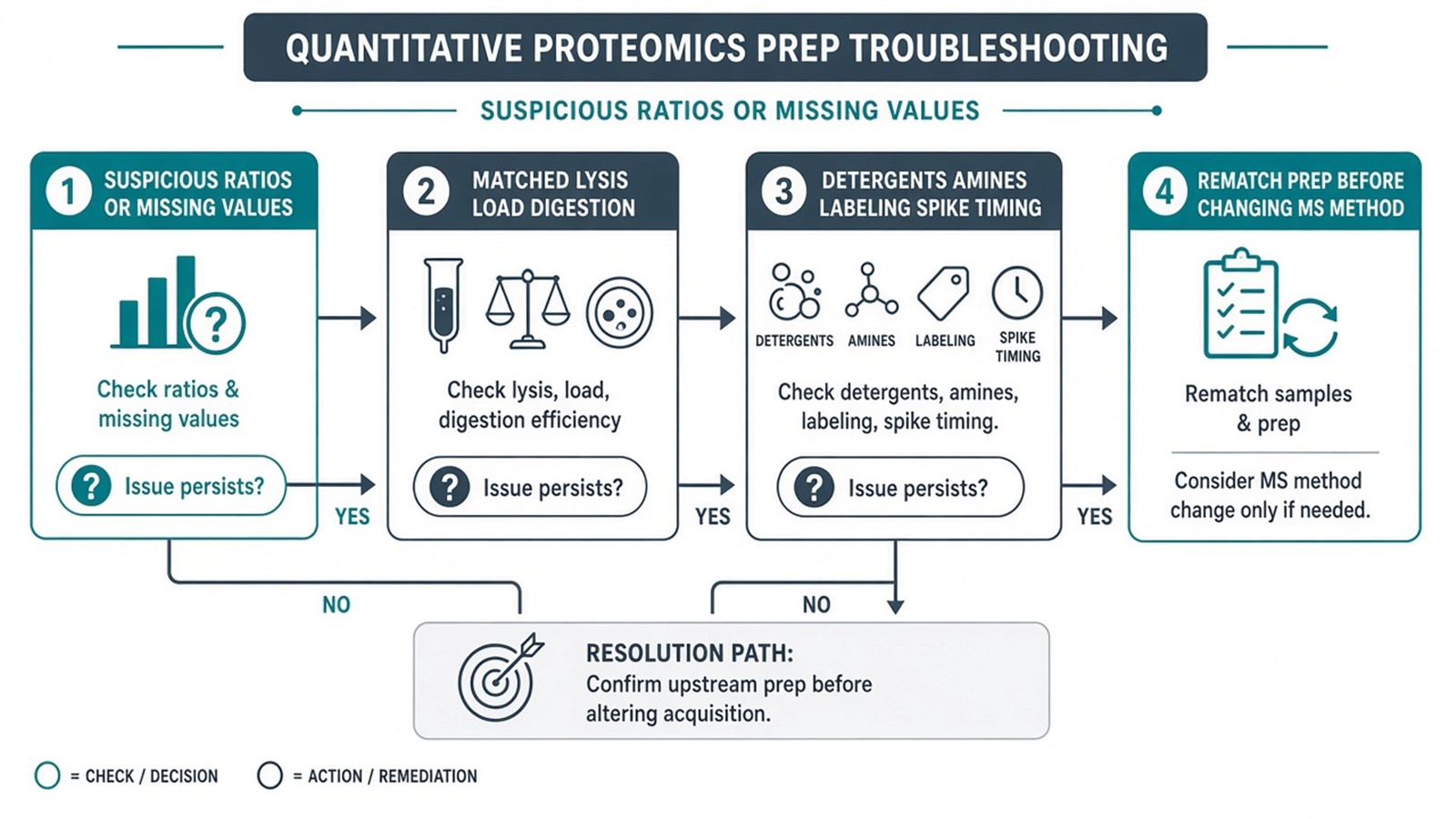
Figure 1. Troubleshoot quantitative outliers from sample preparation first: unmatched chemistry becomes permanent signal bias.
Software normalization cannot reconstruct protein that was lost, mislabeled, or unequally loaded before acquisition.
How Prep Steps Change Quantitative Results
Bottom-up projects share an early path. Each step can move the final matrix even when the instrument method is unchanged.
Prep step |
Impact when controlled |
Impact when uncontrolled |
|---|---|---|
Extraction / lysis |
Comparable proteome slice across groups |
Method-specific recovery looks like biology |
Protein assay and load |
Relative ratios reflect input biology |
Channel or run bias tracks total protein error |
Digestion and cleanup |
Stable peptide yield for LC-MS/MS |
Incomplete digests and detergent kill chromatography |
Labeling (TMT/iTRAQ) |
Same-run relative ratios inside a plex |
Incomplete tags become irreversible after pooling |
SIS spike (AQUA) |
Amount claim from the spike point onward |
Late spikes miss earlier losses |
Aliquoting and batching |
QC pools and bridges stay interpretable |
Confounded batches mimic treatment effects |
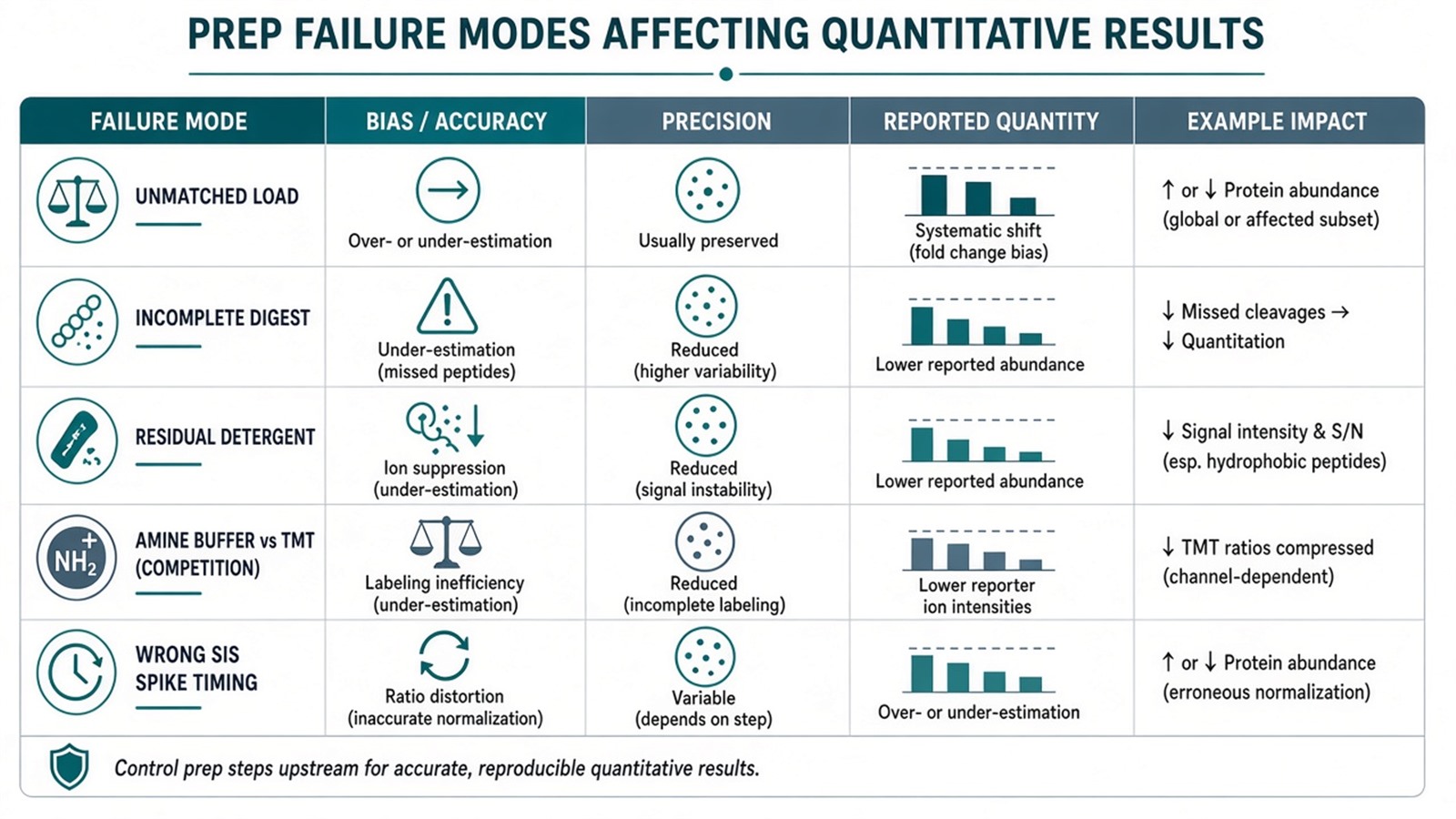
Figure 2. Quantitative results inherit prep decisions: load, digestion, labeling, and spike timing set the ceiling for later LC-MS/MS accuracy.
For absolute versus relative prep gates, see Absolute and Relative Quantitative Proteomics Analysis. For TMT-specific prep controls, see How to Optimize Proteomics TMT Experimental Design and Sample Prep. For isotopic-labeling sample gates, see Quantitative Analysis of Proteomics Using Isotopic Labeling Methods. For AQUA spike timing, see AQUA Peptides vs External Standards for Quantification and Mechanism of AQUA in Protein Detection.
Judgment Criteria: When Prep Can Still Support the Claim
Prep question |
Relative LFQ / DIA often still open |
TMT / iTRAQ often still open |
Absolute AQUA often still open |
Reassess |
|---|---|---|---|---|
Can every sample share one lysis and digest recipe? |
Yes |
Yes |
Yes, plus calibrators |
Protocol still drifting |
Is protein load matched by assay? |
Required |
Required before labeling |
Required |
Volume-only loading |
Are amines and detergents controlled? |
Detergents for chromatography |
Amines critical for NHS tags |
Clean digest for SIS |
Buffer exchange incomplete |
Is enrollment or spike timing locked? |
Independent runs OK |
Plex must freeze before pool |
Spike step recorded |
Late samples or late spikes |
Is input enough for QC and repeats? |
Helpful |
Needed for labeling QC |
Needed for curve and brackets |
Only one scarce aliquot |
Prefer rematching prep when quantitative failure tracks handling. Prefer unlabeled routes when labeling chemistry fails. Prefer redesigning absolute claims when no matrix-matched calibrators or correct spike timing can be afforded. Prefer pausing cohort acquisition until pilot digests pass QC.
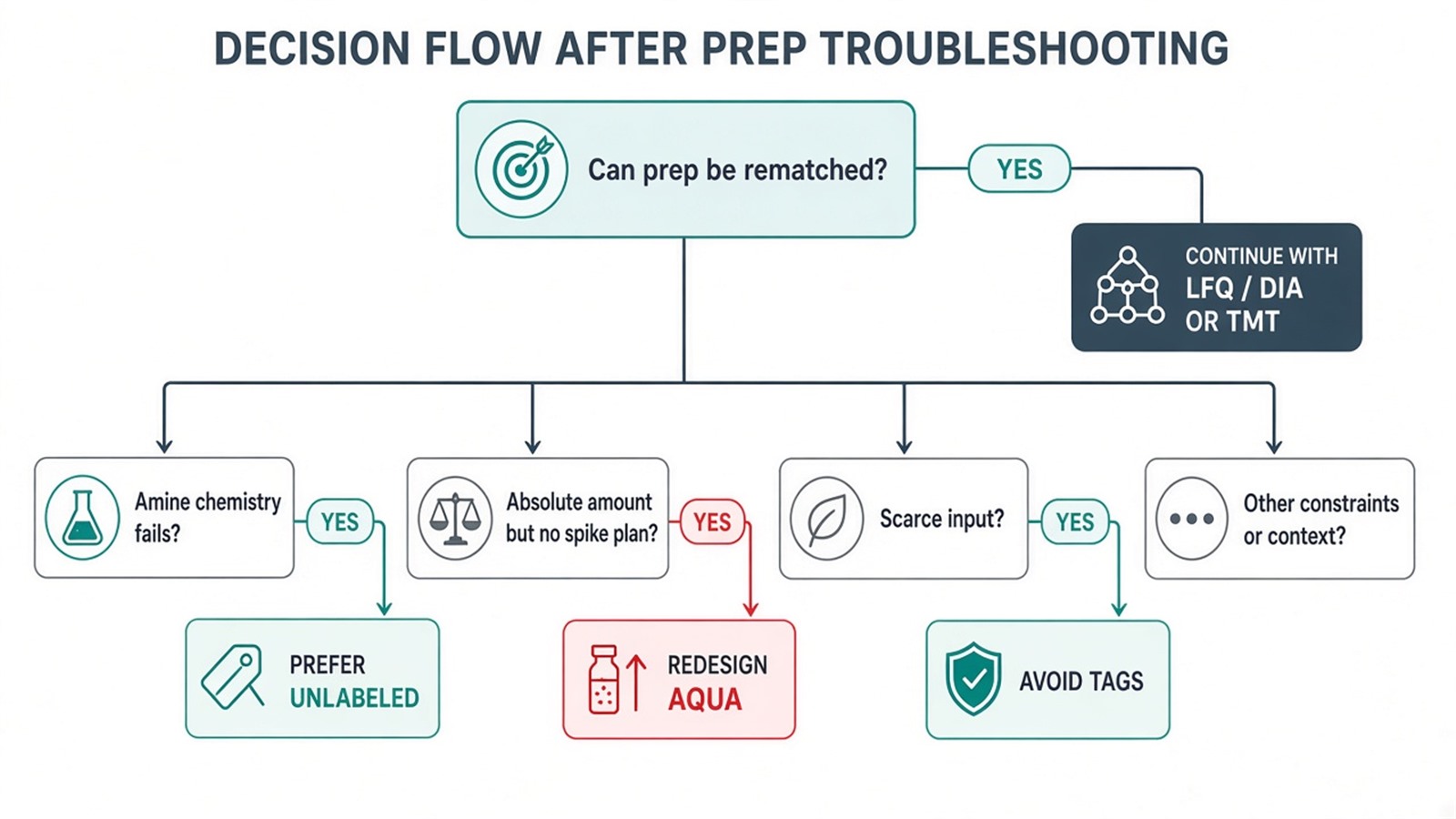
Figure 3. If prep cannot be rematched to the claim, change the quantitative plan rather than forcing acquisition on broken chemistry.
For LFQ strategy context, see Label-Free Quantification Methods: Mass Spectrometry-Based Protein Quantification Strategies. For TMT overview, see Tandem Mass Tag Quantitative Proteomics. For normalization after prep is sound, see How to Normalize Data in Label-Free Quantitative Proteomics?.
Limits and Application Boundaries
Perfect prep does not convert relative intensities into concentration. It does not erase DIA window interference or TMT co-isolation by itself. Pathway enrichment still reflects overrepresentation relative to the quantified background. Diagnostic cutoffs sit outside ordinary research reporting unless a separately validated assay framework is in place.
Typical applications of prep-aware troubleshooting:
- Re-running treatment screens after unmatched loads are corrected.
- Recovering TMT studies by amine cleanup and locked channel maps before re-pooling.
- Moving scarce biopsies from failed labeling attempts to unlabeled LFQ or DIA.
- Rebuilding AQUA panels when spike timing and matrix-matched curves were missing.
- Separating true biological change from digestion or batch-handling artifacts.
Once extraction, load, digestion, labeling or spike rules, and QC reserves are defined, the project can be re-scoped with a defended prep plan. Researchers can review the MtoZ Biolabs Label-Free Quantitative Proteomics Service and TMT Quantitative Proteomics Analysis Service for sample evaluation and workflow planning.
Frequently Asked Questions
1. Why troubleshoot prep before changing MS methods?
Most quantitative artifacts start in extraction, load, digestion, labeling, or spike timing. Acquisition changes cannot restore lost or mislabeled protein.
2. What prep failure most often breaks TMT results?
Unmatched protein loads and residual amine buffers. Both become channel artifacts after pooling.
3. Can normalization fix unmatched digestion?
Only partly. Normalization adjusts scale; it does not create peptides that were never recovered equally.
4. Does a good AQUA peptide fix bad prep?
No. If the SIS is spiked after uncontrolled losses, the amount claim starts too late.
5. When should I abandon labeling because of prep limits?
When input is too scarce for tags and QC, or amine cleanup cannot be completed without exhausting the only aliquot. Prefer unlabeled relative discovery instead.
Reference
- J.R. Wisniewski, A. Zougman, N. Nagaraj, M. Mann (2009). Universal sample preparation method for proteome analysis. Nat. Methods, 6, 359-362. https://doi.org/10.1038/nmeth.1322
- A. Thompson, J. Schafer, K. Kuhn, et al. (2003). Tandem mass tags: a novel quantification strategy for comparative analysis of complex protein mixtures by MS/MS. Anal. Chem., 75, 1895-1904. https://doi.org/10.1021/ac0262560
