



Protein interaction analysis helps researchers investigate how proteins associate with other proteins, DNA, RNA, peptides, and small molecules. Whether the goal is to discover unknown interaction partners, investigate a candidate interaction, map protein-associated DNA or RNA, or characterize binding affinity and conformational changes, the right approach depends on which molecular partner is known, what needs to be discovered, and what evidence the study requires. This guide connects these research questions with relevant methods and topic-specific resources to help researchers identify a suitable direction for their studies. If you need professional support for your study, explore MtoZ Biolabs' Protein Interaction Analysis Service.
What Is Protein Interaction Analysis?
Protein interaction analysis encompasses the experimental investigation of physical interactions and molecular associations involving proteins. Research questions may focus on protein-protein interactions (PPIs), protein-DNA interactions, protein-RNA interactions, or protein-ligand binding.
These studies address different types of molecular relationships. Direct binding involves physical contact between molecules, whereas co-enrichment can indicate that molecules occur in the same complex without establishing direct contact. Proximity labeling identifies proteins within a molecular neighborhood, while cross-linking mass spectrometry (XL-MS) and hydrogen-deuterium exchange mass spectrometry (HDX-MS) provide complementary information about spatial constraints and conformational changes. Protein interaction networks can also describe functional relationships supported by experimental or computational evidence.
The central distinction is the evidence required for the research question. Identifying candidate partners, confirming a defined molecular interaction, mapping interaction-associated regions, and measuring binding affinity are different objectives and may require different analytical approaches.
Types of Protein Interactions and Their Research Questions
Protein-Protein Interactions
Protein-protein interactions (PPIs) support the formation of functional protein complexes, intracellular signal transduction, enzyme regulation, and cellular responses. Studying these interactions helps researchers investigate how proteins work together and how their associations change under different biological conditions.
Typical research questions include:
- Which proteins interact with my protein of interest?
- Does my candidate protein interact with the target protein?
- Do these interactions change between experimental conditions?
For a more detailed guide to discovering candidate partners and investigating proposed interactions, see Protein-Protein Interaction Analysis: From Partner Discovery to Interaction Validation.
Protein-DNA Interactions
Protein-DNA interactions are involved in a wide range of biological processes, including transcriptional regulation, chromatin organization, DNA replication, DNA repair, and recombination. Transcription factors bind specific DNA sequences and can activate or repress gene expression, while other DNA-binding proteins participate in diverse processes such as chromatin remodeling, DNA replication and repair, and the maintenance of genome stability.
Typical research questions include:
- Which proteins associate with my DNA sequence of interest?
- Where does my transcription factor bind across the genome?
- Does its genomic binding pattern change between conditions?
To explore how to identify DNA-associated proteins or map genomic regions associated with a known target, see Protein-DNA Interaction Analysis: Identifying Binding Proteins and DNA Targets.
Protein-RNA Interactions
Protein-RNA interactions regulate RNA processing, alternative splicing, transport, stability, and translation. RNA-associated proteins can influence RNA fate, while regulatory RNAs, including long non-coding RNAs (lncRNAs), can interact with proteins to affect transcription and chromatin regulation.
Typical research questions include:
- Which proteins associate with my RNA of interest?
- Which RNAs are associated with my protein of interest?
- How do these associations relate to RNA regulation or gene expression?
For guidance on selecting an approach, planning experiments, and interpreting protein-RNA interaction results, see Protein-RNA Interaction Analysis: Methods, Design, and Interpretation.
Protein-Ligand Interactions
Protein-ligand interactions are central to molecular recognition and the regulation of protein function. Small-molecule ligands can alter enzyme activity, receptor signaling, and protein conformation. Characterizing these interactions helps researchers investigate compound binding, compare binding properties, and study potential drug candidates.
Typical research questions include:
- Does my protein bind the compound of interest?
- How strongly does the compound bind, and how quickly does it associate or dissociate? Learn Protein-Ligand Interaction Analysis: How to Assess Binding and Interpret Results.
- Does compound binding alter protein stability or conformation?
- If the compound's targets are unknown, which proteins might it act on? See Identifying Protein Targets of Small Molecules: Study Strategies and Validation.
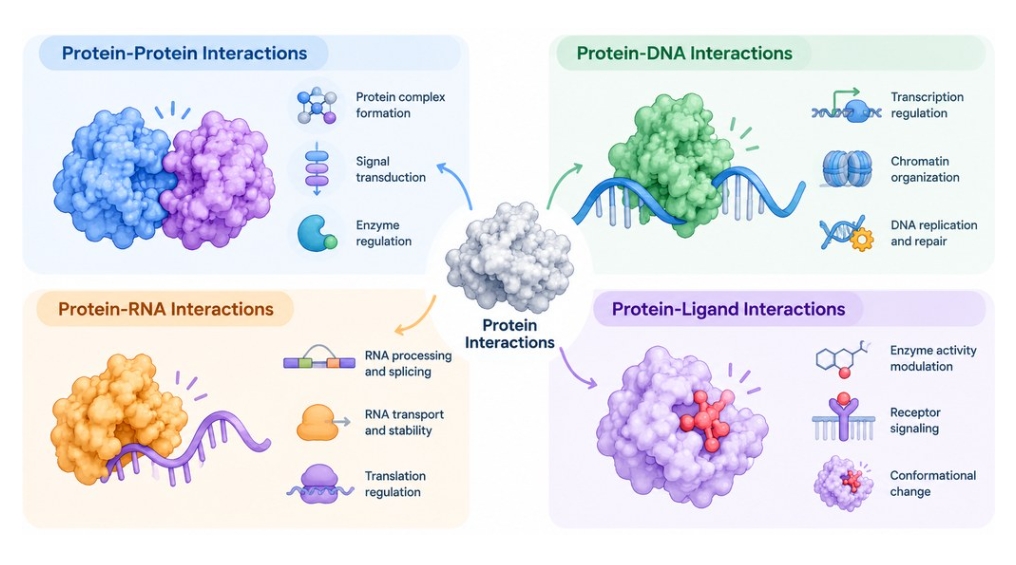
Figure 1. Protein interactions in signaling, gene regulation, and molecular recognition.
What Can Protein Interaction Analysis Reveal?
Protein interaction analysis helps researchers identify molecular partners, investigate changes in interactions, characterize interaction networks, and understand molecular binding properties.
Discovery of Interaction Partners
Identify candidate proteins associated with a target of interest to explore its potential functions and molecular relationships.
Changes in Protein Interactions
Compare interactions across treatments, genetic modifications, or biological conditions to investigate changes in molecular associations and cellular responses.
Interaction Networks and Biological Pathways
Characterize relationships among proteins to investigate functional complexes, signaling pathways, and coordinated cellular processes.
Binding Regions and Conformational Changes
Investigate regions associated with molecular binding and structural changes that may provide insights into molecular recognition and protein regulation.
Binding Affinity and Kinetics
Characterize the strength and dynamics of binding between defined molecular partners to better understand their binding properties and compare candidate molecules.
Methods for Studying Protein Interactions
Protein interaction studies use different methods to characterize molecular associations, identify interaction partners, map binding-associated regions, and measure binding properties. The main methods and their research applications are summarized below.
1. Protein-Protein Interaction Analysis
Co-IP and Co-IP-MS: Enrich a target protein and associated complex members; mass spectrometry can identify candidate interacting proteins.
Pull-Down and Pull-Down-MS: Capture proteins associated with a bait protein and identify recovered proteins by mass spectrometry.
AP-MS and IP-MS: Combine affinity purification or immunoprecipitation with mass spectrometry to characterize protein-associated complexes.
Yeast Two-Hybrid (Y2H): Investigate candidate protein-protein interactions using a yeast-based assay.
Far-Western Blotting: Examine potential protein binding using a probe protein and immobilized protein samples.
Proximity Labeling: Identify proteins within a target’s local molecular environment, including proteins involved in weak or transient molecular associations (Roux et al., 2012).
Cross-Linking Mass Spectrometry (XL-MS): Identify cross-linked peptides that provide spatial constraints on protein interactions and molecular assemblies.
2. Protein-DNA Interaction Analysis
DNA Pull-Down: Capture proteins associated with a defined DNA sequence for subsequent identification.
ChIP-Seq: Map genomic regions enriched with a target protein or chromatin feature. For experimental principles, design, and result interpretation, see ChIP-Seq for Protein-DNA Interaction Analysis: Principles, Design, and Interpretation.
CUT&Tag: Profile genomic regions associated with an antibody-recognized chromatin target (Kaya-Okur et al. 2019). Learn more about CUT&Tag for Protein-DNA and Chromatin Binding Analysis.
3. Protein-RNA Interaction Analysis
RNA Immunoprecipitation (RIP): Enrich RNAs associated with a target RNA-binding protein or protein-containing complex. For more details, see RNA Immunoprecipitation (RIP): Principles, Experimental Design, and Results.
RNA Pull-Down: Capture proteins associated with a defined RNA molecule. For a practical guide, see RNA Pull-Down Assay: Protein Identification, Controls, and Interpretation.
ChIRP-Seq: Map genomic regions associated with a target RNA.
ChIRP-MS: Identify proteins associated with a target RNA.
RNA Proximity Labeling: Profile proteins within the local molecular environment of a target RNA.
4. Binding Affinity, Kinetics, and Stability Analysis
Surface Plasmon Resonance (SPR): Measure binding affinity and, when supported by appropriate data, association and dissociation rate constants.
Biolayer Interferometry (BLI): Characterize binding affinity and kinetics through real-time binding measurements.
Microscale Thermophoresis (MST): Measure binding affinity in solution without directly determining association and dissociation rate constants.
Differential Scanning Fluorimetry (DSF): Measure protein melting temperature and ligand-associated thermal shifts.
5. Binding-Related Conformational Analysis
Hydrogen-Deuterium Exchange Mass Spectrometry (HDX-MS): Detect peptide-level changes in deuterium uptake to investigate binding-associated changes in solvent accessibility and protein conformational dynamics.
6. Small-Molecule Target Identification
- MS-based thermal stability profiling measures compound-dependent shifts in protein thermal stability or solubility across a proteome.
- NSP-MS examines peptide-level changes associated with limited protease digestion.
- Drug Affinity Responsive Target Stability evaluates compound-dependent protection from proteolysis.
These strategies prioritize candidate targets through different response mechanisms. They should not be treated as interchangeable or as automatic proof of direct binding.
How to Choose a Protein Interaction Method
Start with the Known and Unknown Molecular Partners
- Known protein, unknown protein partners: Consider affinity capture or immunoprecipitation coupled with mass spectrometry when the goal is to identify candidate associated proteins.
- Known DNA sequence, unknown associated proteins: Consider DNA Pull-Down followed by protein identification.
- Known RNA, unknown associated proteins: Consider RNA Pull-Down and downstream protein identification.
- Known RNA-binding protein, unknown associated RNAs: Consider RIP.
- Known chromatin target, unknown genomic regions: Consider ChIP-Seq or CUT&Tag.
- Known compound, unknown protein targets: Consider a suitable small-molecule target identification strategy.
- Known molecular pair, binding properties unknown: Consider a biophysical binding assay selected according to the required readout.
Define the Required Evidence
The method should match the conclusion the study needs to support. If the goal is to identify candidate partners, discovery-oriented capture and mass spectrometry may be appropriate. If the goal is to quantify binding affinity, SPR, BLI, or MST may be considered. If association and dissociation rates are required, SPR or BLI is generally more suitable than MST or DSF. If the study investigates binding-associated conformational changes, HDX-MS may provide complementary information.
Consider Biological Context and Experimental Feasibility
The biological system can change both method suitability and result interpretation. A purified molecular pair provides a controlled system for studying binding but does not preserve the full cellular environment. Cell-based enrichment can retain biologically relevant complexes but may also recover indirect associations. Weak or transient interactions may require approaches that capture molecular neighborhoods or stabilize suitable interaction features. Sample availability, target abundance, antibody specificity, bait properties, molecular stability, and control design should also be considered before selecting a workflow.
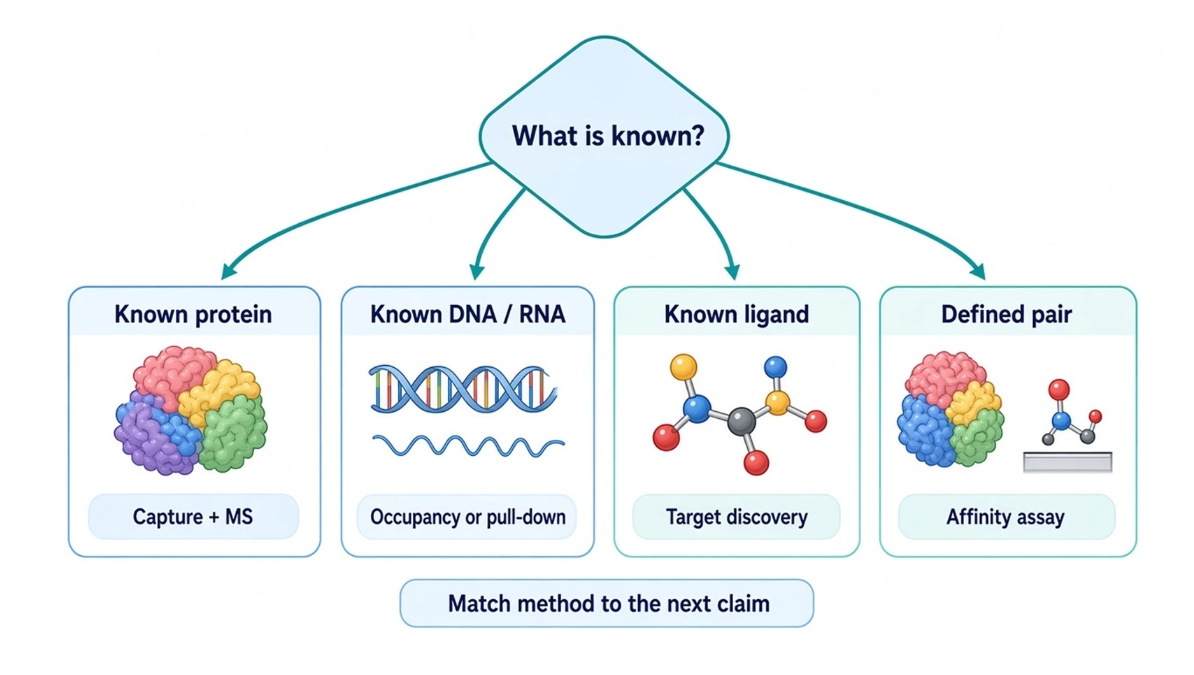
Figure 2. Method selection begins with the known molecule, the unknown variable, the required evidence, and the biological context that must be preserved.
How to Interpret Protein Interaction Evidence
Protein interaction results provide different levels of evidence, from identifying candidate molecular partners to characterizing direct binding and investigating biological function. Understanding what each result can and cannot show helps researchers draw appropriate conclusions.
What Does the Evidence Support?
| Result Type | What It Can Show | What It Cannot Directly Show |
| Affinity Enrichment-MS | Identify candidate proteins associated with a target | Which proteins directly bind the target |
| Proximity Labeling | Identify proteins near a target | Whether these proteins directly contact the target |
| ChIP-Seq / CUT&Tag | Identify genomic regions associated with a target protein or chromatin feature | Whether the target directly regulates gene expression in those regions |
| RIP / RNA Pull-Down | Identify RNAs or proteins associated with a target | Whether the molecules bind directly or what functions the association serves |
| SPR / BLI / MST | Characterize binding properties between defined molecular partners | Whether the binding has the same significance in a cellular context |
| DSF | Detect changes in protein thermal stability | Whether a compound directly binds the protein |
| XL-MS / HDX-MS | Provide spatial constraints or clues about conformational changes | The exact binding site or complete interaction structure |
Association, Direct Binding, and Biological Function
These three concepts represent different levels of evidence:
- Association: Two molecules are found in the same complex, molecular neighborhood, or experimental enrichment.
- Direct binding: Evidence supports physical binding between two defined molecular partners.
- Biological function: Additional evidence supports a role for the interaction in a specific biological process.
Evidence of association does not automatically establish direct binding, and direct binding does not necessarily demonstrate a biological function. The appropriate conclusion depends on the experimental design and the evidence obtained.
What Makes Interaction Evidence More Reliable?
Several factors help researchers assess the reliability of interaction results:
- Appropriate controls: Distinguish specific signals from nonspecific background.
- Reproducibility: Determine whether the observed results are consistent across biological or technical replicates, as appropriate.
- Complementary evidence: Use an additional method when the initial results do not adequately support the intended conclusion.
- Functional validation: When the research question concerns biological function, conduct appropriate experiments to investigate whether the interaction contributes to the process of interest.
Applications of Protein Interaction Analysis
Protein interaction analysis supports a range of research objectives across molecular and cellular biology.
- Cell signaling and protein complexes: Investigate candidate complex members and condition-dependent changes in protein associations.
- Transcriptional regulation and chromatin biology: Examine protein-associated genomic regions and investigate candidate regulatory mechanisms.
- RNA processing and metabolism: Identify RNA-associated proteins and study molecular relationships involved in RNA processing, localization, translation, and stability.
- Small-molecule target discovery: Prioritize candidate proteins that respond to compound treatment and support subsequent target investigation.
- Molecular recognition and binding characterization: Measure affinity or kinetics between defined molecular partners and compare their binding properties.
- Protein structure and conformational dynamics: Investigate candidate binding-associated regions and structural changes that may help explain molecular recognition.
Frequently Asked Questions
1. Can a negative result exclude an interaction?
No. A negative result may reflect weak association, incompatible extraction, inaccessible epitopes, low abundance, or an unresponsive assay readout. A method with a different physical principle may be appropriate when the hypothesis remains strong.
2. Does an observed interaction mean that the relationship is functional?
No. Association, proximity, occupancy, affinity, and function are separate evidence layers. Functional relevance generally requires perturbing one partner or the interaction and measuring a biologically relevant outcome while controlling for indirect effects.
If you have a protein interaction research need, contact MtoZ Biolabs for a free consultation. Share your research goals and sample details, and our team will help you explore suitable protein interaction analysis options for your project.
Reference
- K.J. Roux, D.I. Kim, M. Raida, B. Burke (2012). A promiscuous biotin ligase fusion protein identifies proximal and interacting proteins in mammalian cells. Journal of Cell Biology, 196, 801-810. https://doi.org/10.1083/jcb.201112098
- H.S. Kaya-Okur, S.J. Wu, C.A. Codomo, E.S. Pledger, T.D. Bryson, J.G. Henikoff, K. Ahmad, S. Henikoff (2019). CUT&Tag for efficient epigenomic profiling of small samples and single cells. Nature Communications, 10, 1930. https://doi.org/10.1038/s41467-019-09982-5
- M.M. Savitski, F.B.M. Reinhard, H. Franken, T. Werner, M.F. Savitski, D. Eberhard, D. Martinez Molina, R. Jafari, R.B. Dovega, S. Klaeger, B. Kuster, P. Nordlund, M. Bantscheff, G. Drewes (2014). Tracking cancer drugs in living cells by thermal profiling of the proteome. Science, 346, 1255784. https://doi.org/10.1126/science.1255784
- B. Lomenick, R. Hao, N. Jonai, R.M. Chin, M. Aghajan, S. Warburton, J. Wang, R.P. Wu, F. Gomez, J.A. Loo, J.A. Wohlschlegel, T.M. Vondriska, J. Pelletier, H.R. Herschman, J. Clardy, C.F. Clarke, J. Huang (2009). Target identification using drug affinity responsive target stability. Proceedings of the National Academy of Sciences of the United States of America, 106, 21984-21989. https://doi.org/10.1073/pnas.0910040106
