



Data-independent acquisition (DIA) followed by parallel reaction monitoring (PRM) is a two-stage quantitative proteomics pattern: open DIA or SWATH-style discovery yields a contrast-tested protein list, then PRM remeasures a closed peptide panel on the same or new samples under a scheduled targeted method (Gillet et al. 2012; Peterson et al. 2012). DIA supplies breadth on unlabeled separate injections. PRM supplies scheduled remeasurement when names freeze. The guide below maps DIA-PRM application choices from cohort design through panel handoff. It is not a drug approval promise, not a diagnostic panel product page, and not a generic DDA versus DIA theory article.
Discovery intensities from DIA remain relative matrix outputs until a separate PRM or stable isotope-labeled internal standard (SIS) design supports confirmation or amount claims (Gerber et al. 2003). Matched pretreatment across discovery and follow-up stages still gates comparability when aliquots are split or re-collected.
In MtoZ Biolabs offerings, label-free DIA or SWATH-style discovery is commonly run first for open contrasts, with PRM staged when a short peptide list must be remeasured under a locked schedule.
Application Contexts Where DIA-PRM Staging Fits
Four application patterns commonly trigger DIA then PRM planning.
Biomarker candidate narrowing after a predefined case-control or stage contrast. DIA fits open discovery; PRM fits remeasurement on tens of peptides, not hundreds, once priorities are set.
Treatment or dose-response studies that need a wide first pass then focused tracking of selected proteins across batches or sites.
Multi-site cohorts where discovery runs centrally and PRM carries a minimal panel to satellite labs with method transfer constraints.
Mechanism-oriented research that needs orthogonal remeasurement of regulators highlighted by DIA statistics, without treating discovery p-values as final proof.
DIA-PRM application value is discovery on an open list plus confirmation on a closed list, not one acquisition mode that replaces both design steps.
High-file discovery rules appear in High-throughput SWATH-MS Quantitative Proteomics for Biomarker Discovery. Clinical and oncology cohort framing appears in Typical Applications of DIA-Based Quantitative Proteomics in Clinical Research and DIA Proteomics Services for Cancer Biomarker Discovery.
Study Designs for DIA Then PRM Cohorts
Application quality follows staging discipline.
Contrast frozen at DIA analysis. Arms should not be relabeled after discovery thresholds are explored. PRM panels should map to peptides declared from that contrast, not from post hoc regrouping.
Matched prep across stages. Discovery and PRM batches should share lysis, digestion, and cleanup rules when material comes from the same study. Matrix changes between stages need explicit bridging design.
Panel size versus duty cycle. PRM schedules accommodate only a finite peptide count per injection. Long panels need narrowed priorities or split runs.
Library or library-free DIA declared upfront. Extraction under unified FDR rules precedes peptide picking for PRM (Rosenberger et al. 2017; Demichev et al. 2020).
Reserve aliquots or plan re-collection before discovery ends when PRM is likely. Starting PRM without stored material forces rediscovery under new prep batches.
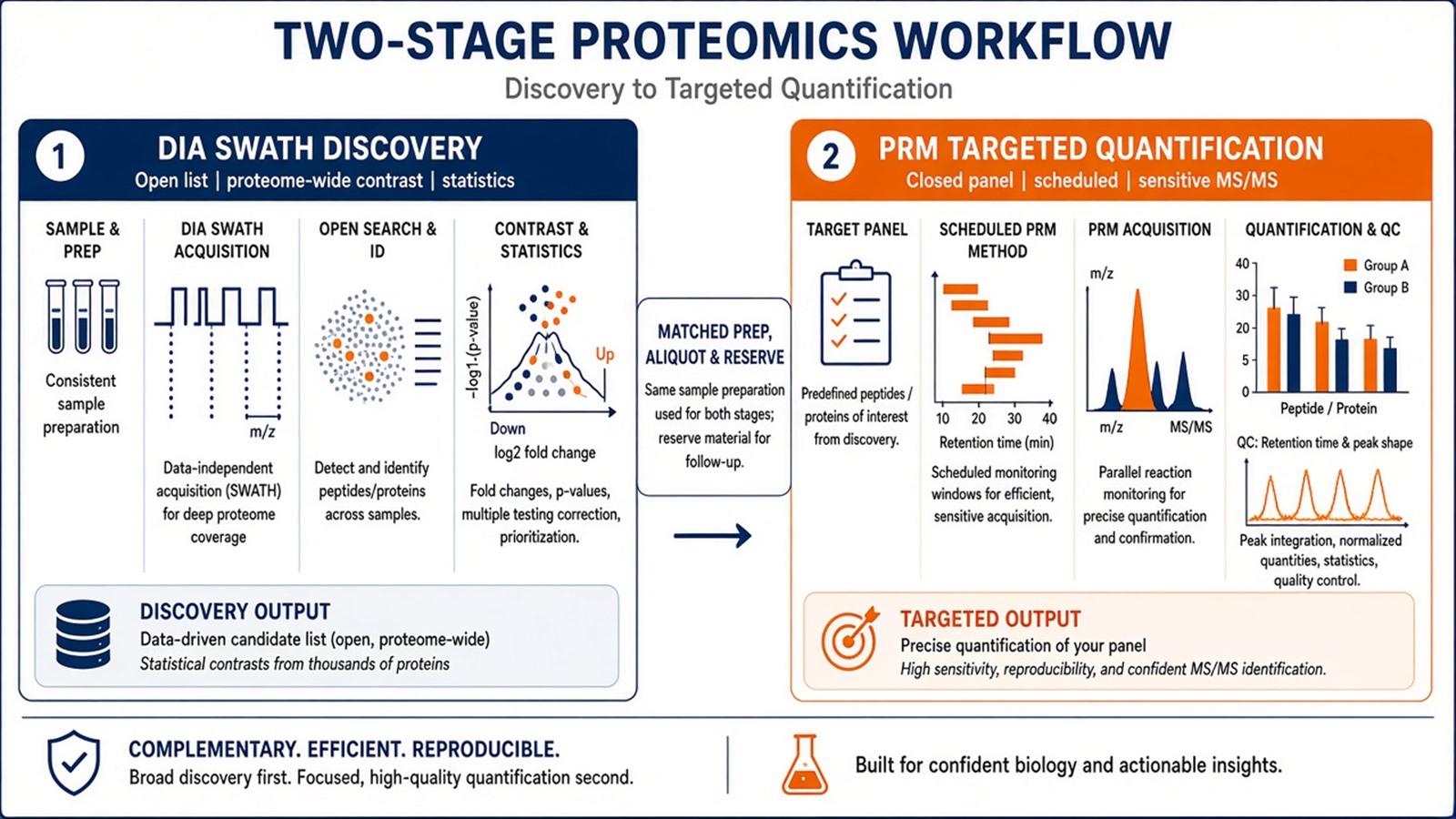
Figure 1. DIA-PRM applications stage open discovery and closed PRM remeasurement with matched prep and a frozen contrast.
Open versus closed list logic for mobility platforms compares with 4D-DIA vs 4D-PRM: Which 4D Quantitative Approach Suits Your Project Better. Targeted trade-offs appear in Advantages and Disadvantages of Targeted Proteomics.
Shared Workflow From DIA Discovery to PRM Confirmation
A practical DIA-PRM spine usually runs as follows.
- Confirm matrix, contrast, relative discovery claim, and whether PRM is planned.
- Prepare matched digests; acquire label-free DIA or SWATH-style windows under a locked plan.
- Extract peptides under FDR control; test predefined contrast; shortlist proteins or peptides with documented rules.
- Select proteotypic peptides; check interference and schedule feasibility in the study matrix.
- Build and pilot PRM method with qualifiers; lock transitions and cycle time.
- Acquire PRM on discovery samples, bridge samples, or an independent validation set as declared.
- Integrate PRM traces; apply SIS only when amount is the claim unit.
- Report discovery and confirmation layers separately in interpretation.
Steps 1 through 3 are DIA discovery. Steps 4 through 7 are PRM confirmation. Step 8 keeps discovery lists distinct from validated panel readouts.
DIA extraction conventions appear in DIA Data Analysis Methods in Proteomics. Pretreatment before DIA appears in SWATH MS Analysis.
Parameters and Limits in DIA-PRM Applications
Parameter |
DIA discovery stage |
PRM confirmation stage |
|---|---|---|
Protein list |
Open inventory |
Closed peptide panel |
Typical claim |
Relative contrast matrix |
Relative remeasurement; SIS for amount |
Prep |
Matched across discovery arms |
Same rules or declared bridge |
Throughput |
Many proteins per file |
Limited peptides per cycle |
QC focus |
FDR, missing values, interference |
Schedule stability, qualifiers |
Failure if ignored |
Post hoc arm merges |
Panel longer than duty cycle |
Limits follow the same table. DIA-PRM staging does not certify clinical diagnostics or drug labels. PRM cannot quantify proteins absent from the panel. DIA cannot defend a locked panel without the PRM method record. Missing values in discovery often track abundance and prep, not only acquisition (Lazar et al. 2016).
Drug mechanism, pathway enrichment, or multi-omic overlay interpret lists. They do not replace staged confirmation when decisions depend on remeasurement.
Researchers who need three-axis route selection can refer to Protein Quantification Method.
How to Choose DIA-PRM Staging for the Next Project
Use list status, sample availability, and claim unit together.
Project need |
DIA-PRM plan that often fits |
Recheck before committing |
|---|---|---|
Open cohort, later narrow list |
DIA discovery then PRM panel |
PRM planned without aliquot reserve |
Candidate proteins already ranked |
Shortened DIA plus PRM |
Full DIA when list already closed |
Multi-batch monitoring |
PRM on frozen panel after pilot DIA |
Redesign panel every batch |
Amount on named peptides |
PRM with matched SIS |
DIA intensities as concentration |
Only three to five known targets |
PRM or MRM without DIA |
Full DIA when list never open |
Regulatory-style locked method |
PRM validation cohort |
Open DIA p-values as final decision |
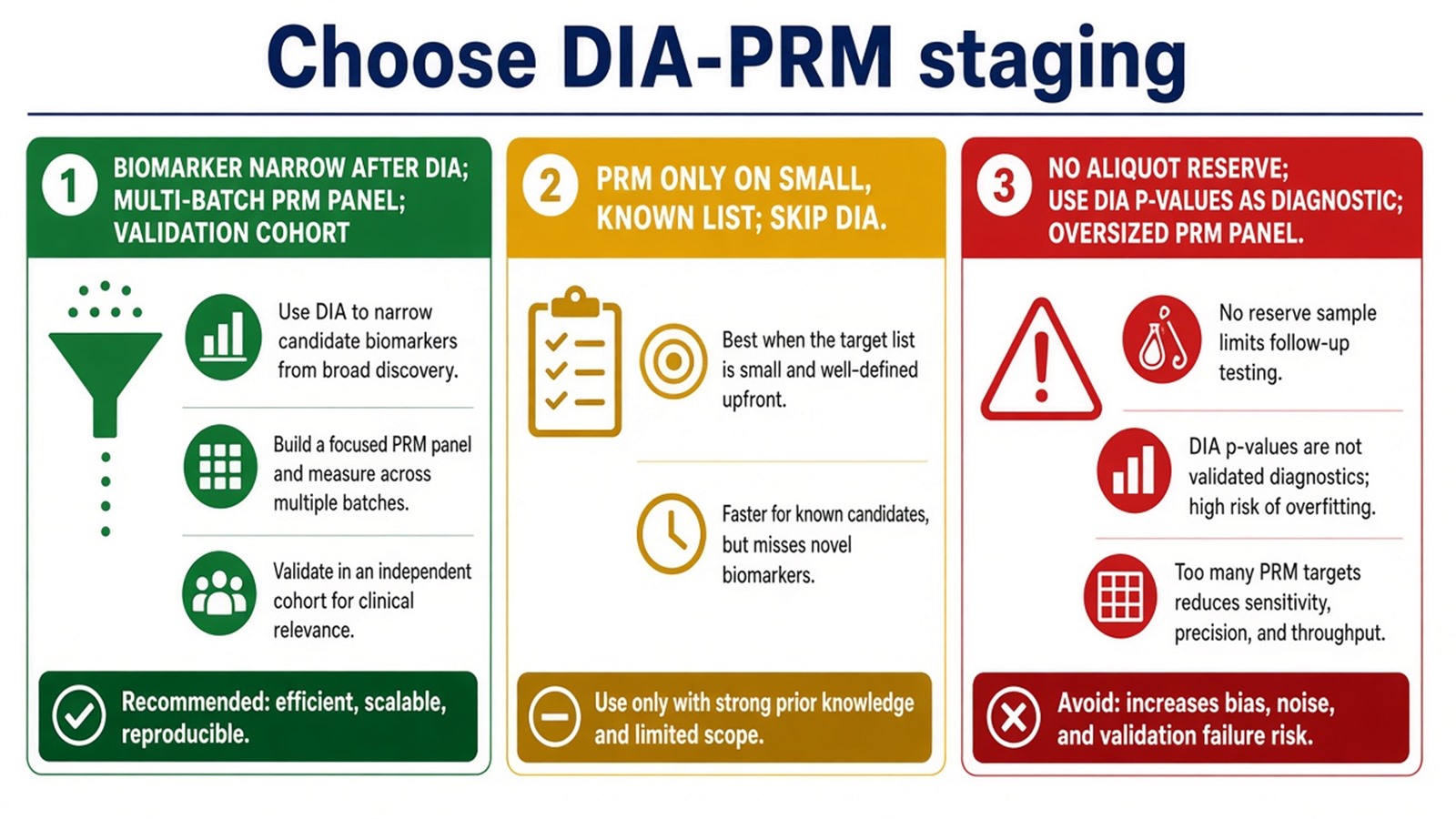
Figure 2. Choose DIA-PRM when open discovery and closed remeasurement are both declared; single-stage DIA or PRM alone may fit simpler list status.
Teams that already have contrast, discovery scope, panel intent, and follow-up claim can review the MtoZ Biolabs Label-Free Quantitative Proteomics Service for DIA discovery planning and coordinate targeted follow-up when PRM is in scope.
Frequently Asked Questions
1. Is DIA-PRM one combined acquisition run?
No. It is a staged design: DIA discovery data and PRM targeted data are separate acquisitions with linked interpretation rules.
2. Must PRM peptides come from the same DIA project?
Usually from the same contrast and matrix context. External lists need explicit peptide suitability checks in the study matrix.
3. Can PRM validate every DIA hit?
Not in one panel. PRM confirms scheduled peptides. Prioritization rules should be declared before panel build.
4. Does DIA-PRM replace replication?
No. Biological replicates and independent validation sets remain separate design choices.
5. When is DIA alone enough?
When no closed remeasurement decision is pending and relative discovery satisfies the study goal.
MtoZ Biolabs can support DIA-PRM application planning when matrix, contrast, discovery goal, and intended PRM scope are documented.
If further evaluation of discovery shortlisting, panel size, SIS need, or validation cohort design is required, project details can be submitted for a feasibility review.
Reference
- S.A. Gerber, J. Rush, O. Stemman, M.W. Kirschner, S.P. Gygi (2003). Absolute quantification of proteins and phosphoproteins from cell lysates by tandem MS. Proc. Natl. Acad. Sci. U.S.A., 100, 6940-6945. https://doi.org/10.1073/pnas.0832254100
- L.C. Gillet, P. Navarro, S. Tate, H. Rost, N. Selevsek, L. Reiter, R. Bonner, R. Aebersold (2012). Targeted data extraction of the MS/MS spectra generated by data-independent acquisition: a new concept for consistent and accurate proteome analysis. Mol. Cell. Proteomics, 11, O111.016717. https://doi.org/10.1074/mcp.O111.016717
- V. Demichev, C. Messner, S. Vernardis, K.S. Lilley, M. Ralser (2020). DIA-NN: neural networks and interference correction enable deep proteome coverage in high throughput. Nat. Methods, 17, 41-44. https://doi.org/10.1038/s41592-019-0638-x
- C. Lazar, L. Gatto, M. Ferro, C. Bruley, T. Burger (2016). Accounting for the multiple natures of missing values in label-free quantitative proteomics data sets to compare imputation strategies. J. Proteome Res., 15, 1116-1125. https://doi.org/10.1021/acs.jproteome.5b00981
- A.C. Peterson, J.D. Russell, D.J. Bailey, M.S. Westphall, J.J. Coon (2012). Parallel reaction monitoring for high resolution and high mass accuracy quantitative, targeted proteomics. Mol. Cell. Proteomics, 11, 1475-1488. https://doi.org/10.1074/mcp.O112.020271
- G. Rosenberger, S. Liu, J. Röst, H.L. Ludwig, C. Buil, B. Borchers, R. Aebersold, L. Collins (2017). Statistical control of peptide and protein error rates in large-scale targeted data-independent acquisition analyses. Nat. Commun., 8, 14224. https://doi.org/10.1038/ncomms14224
