



TMT quantitative proteomics analysis is applied when relative protein discovery must compare many conditions in one isobaric plex after matched amine-compatible sample prep and a frozen channel map (Thompson et al. 2003). Typical research applications include multi-arm disease or treatment screens, mechanism panels, and biomarker-candidate nomination before targeted confirmation. The defended output is relative same-protein ratios inside that plex or bridged plexes, not absolute concentration and not a clinical cutoff (Ting et al. 2011). Prefer TMT when enrollment can close before pooling; keep LFQ or DIA when samples keep arriving; move shortlists to PRM, MRM, or AQUA when confirmation or amount units are required.
Researchers who already have defined samples, comparison groups, or a specific project objective can also review the MtoZ Biolabs TMT Quantitative Proteomics Analysis Service for project-specific feasibility, sample evaluation, and workflow planning.
Research Applications Supported by TMT Analysis
A TMT service supports cutting-edge relative discovery only when the scientific claim matches multiplex labeling limits.
Research application |
What TMT analysis contributes |
What the service report is not |
|---|---|---|
Disease mechanism screens |
Relative proteome changes across frozen disease and control channels |
Proof of pathway activity from enrichment alone |
Drug-response or target panels |
Same-run multi-arm ratios after treatment |
Absolute target occupancy without standards |
Biomarker-candidate nomination |
Ranked differential proteins for later confirmation |
Validated diagnostic biomarkers or cutoffs |
Genotype or multi-condition biology |
Multiplex comparison inside one kit or bridged plexes |
Open enrollment after pooling |
Discovery-to-validation handoff |
Candidate lists ready for PRM, MRM, or AQUA |
Confirmation without a closed peptide panel |
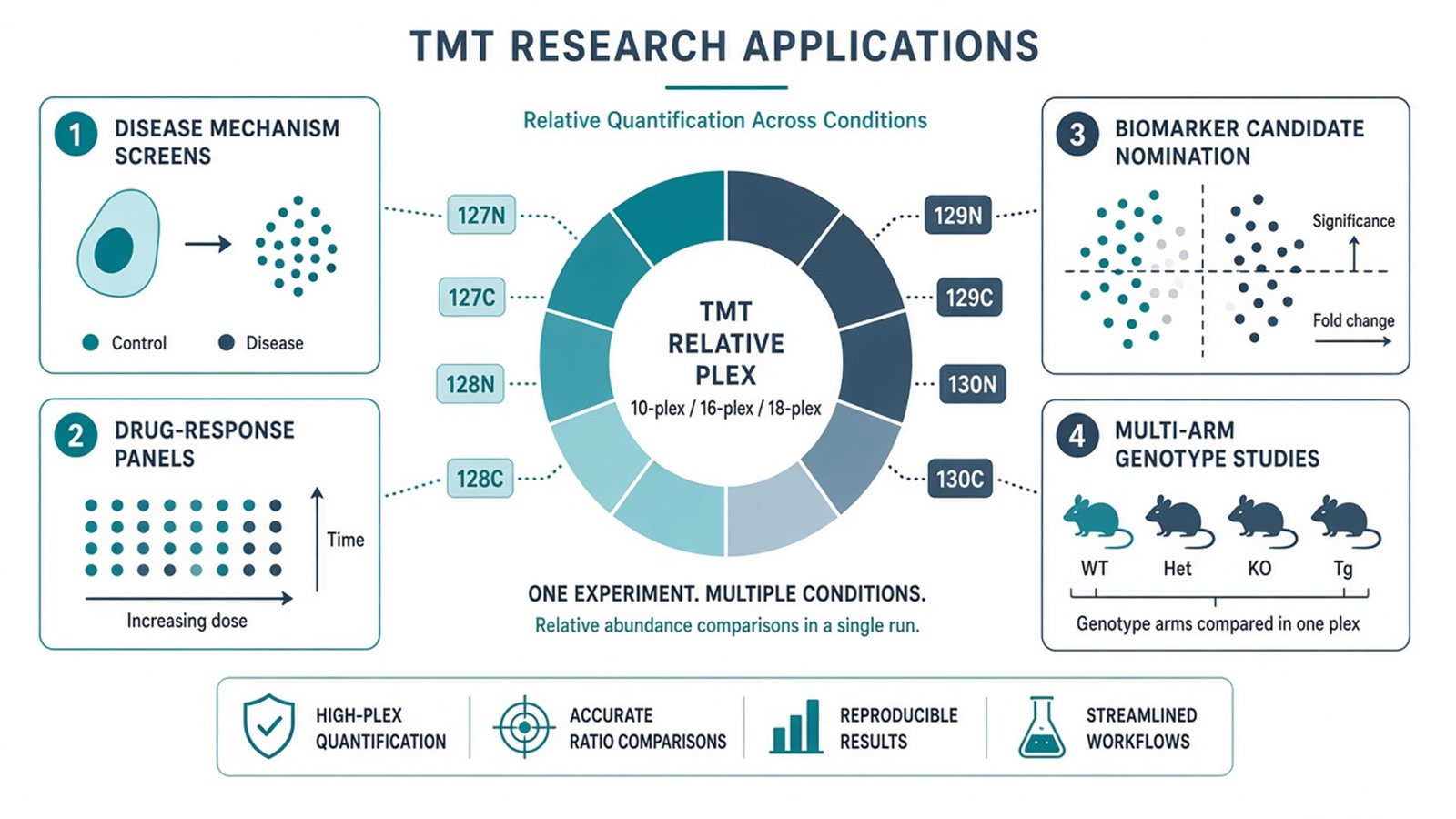
Figure 1. TMT analysis applications advance relative multiplex discovery; they do not automatically create absolute or diagnostic claims.
Instrument platform names do not replace plex closure, labeling QC, and a declared relative claim.
Application Workflow Inside a TMT Study
- Confirm groups, replicates, and whether one plex or bridging is required.
- Match lysis, digestion, and protein load; remove residual amines.
- Label channels, quench, and pool under a written map.
- Optionally fractionate to improve depth in complex digests.
- Acquire by LC-MS/MS and extract reporter ratios with QC filters.
- Rank differential proteins and reserve material for targeted follow-up when needed.
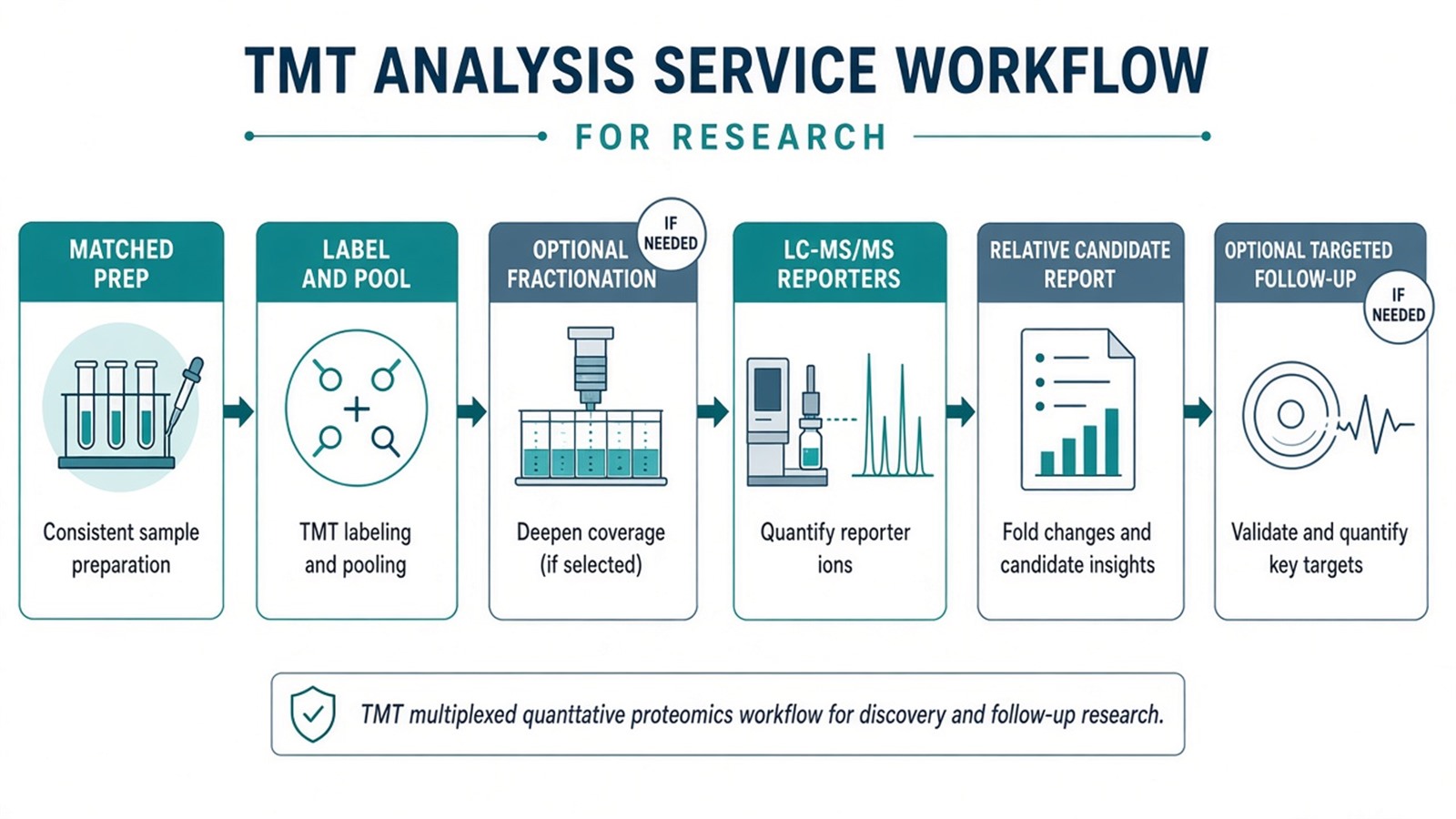
Figure 2. Research-ready TMT applications follow chemistry and design controls before reporter readout and candidate ranking.
For method principle and broader TMT framing, see TMT Protein Quantification and Tandem Mass Tag Quantitative Proteomics. For biomarker-focused applications, see Application of TMT-Based Quantitative Proteomics in Biomarker Discovery. For prep design, see How to Optimize Proteomics TMT Experimental Design and Sample Prep. For multiplex and MS3 options, see TMT-Based Quantitative Proteomics: Multiplexing, MS3 Accuracy, and Workflow Design.
Judgment Criteria: When a TMT Analysis Application Fits
Study need |
TMT analysis often fits |
Reassess before sample submission |
|---|---|---|
Claim |
Relative multi-arm discovery inside a plex |
Absolute concentration or diagnostic cutoff |
Enrollment |
All planned channels can freeze before pooling |
Samples keep arriving with no bridge plan |
Chemistry |
Equal load and amine cleanup are feasible |
Residual amines or scarce input block tags |
Depth need |
Fractionation or SPS-MS3 can be scoped after prep is sound |
Prep still unmatched |
Follow-up |
Aliquots remain for PRM, MRM, or AQUA |
Only one tube remains after labeling |
Prefer TMT analysis for closed multi-condition research screens. Prefer LFQ or unlabeled DIA for open clinical enrollment. Prefer SPS-MS3 when co-isolation threatens candidate fold changes after prep is controlled. Prefer targeted absolute assays only after peptides are closed.
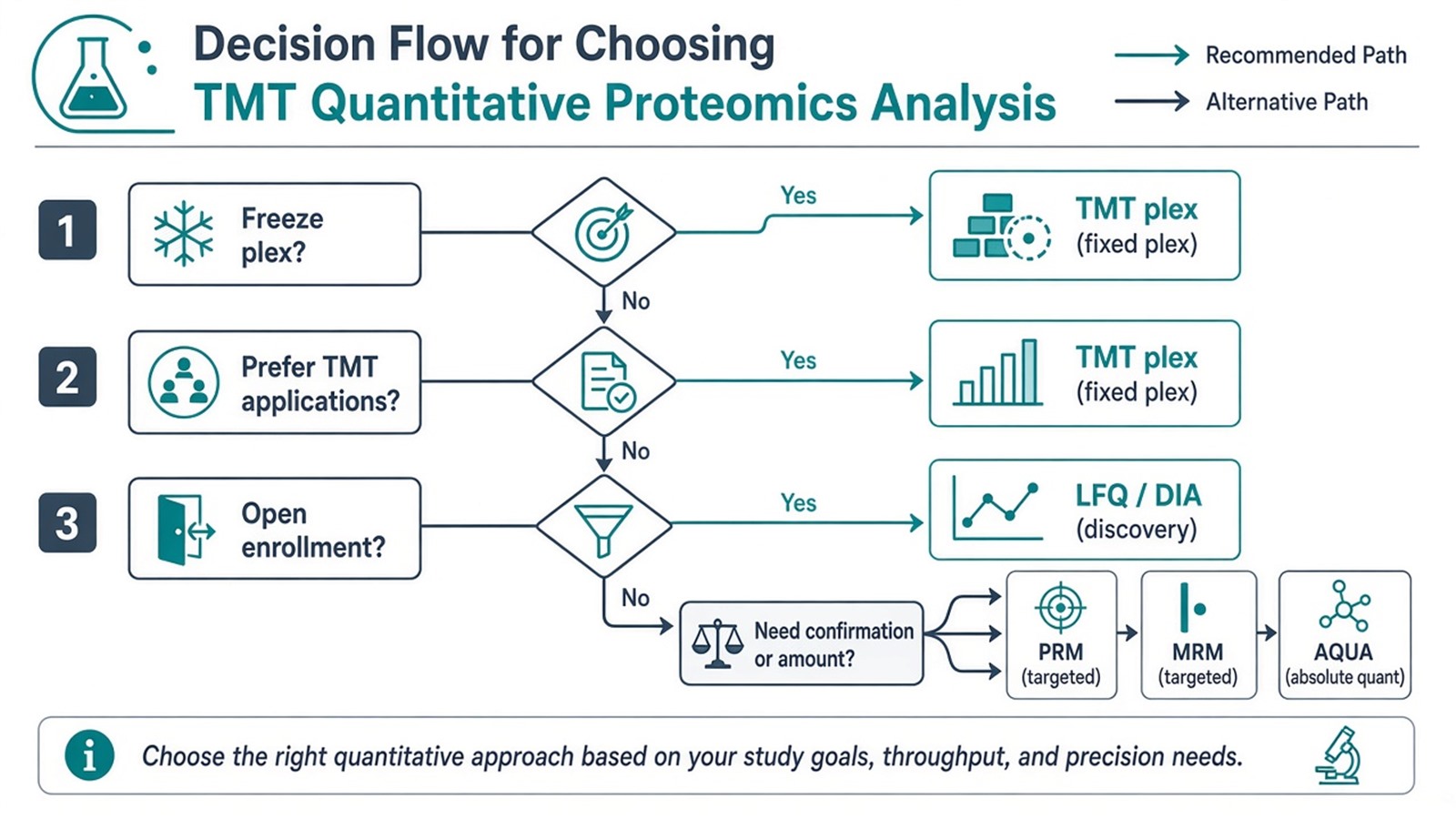
Figure 3. Choose TMT analysis applications from plex readiness and relative claims; change route when enrollment or absolute needs dominate.
For labeling versus unlabeled selection, see TMT vs Label Free Quantitative Proteomics. For compression limits, see How Does Ratio Compression Arise in TMT-Based Quantitative Proteomics and Why Is It Limited to Relative Quantification?. For confirmation planning, see How to Plan a Targeted Proteomics Validation Study.
Limits and Application Boundaries
TMT service outputs remain relative ratios. Incomplete labeling, unmatched loads, and swapped channel maps create false research candidates. Fractionation and high-resolution platforms improve depth; they do not convert reporters into molar concentration. Pathway enrichment reflects overrepresentation relative to the quantified background. Precision-medicine or personalized-treatment language requires separately validated frameworks beyond ordinary research TMT reporting.
Typical defended research application patterns:
- Multi-arm disease or genotype mechanism screens.
- Drug-treatment proteome responses inside one kit.
- Biomarker-candidate nomination with planned targeted follow-up.
- Bridged multi-plex series when reference channels are designed in advance.
- Discovery shortlists later confirmed by PRM, MRM, or AQUA.
Once group design, chemistry feasibility, and claim type are defined, the project can be scoped through the MtoZ Biolabs TMT Quantitative Proteomics Analysis Service. For unlabeled alternatives, see the Label-Free Quantitative Proteomics Service.
Frequently Asked Questions
1. What research applications fit a TMT analysis service?
Relative multiplex discovery across frozen multi-arm disease, drug, or genotype designs, including candidate nomination for later targeting.
2. Does the service provide absolute protein concentration?
Not from TMT reporters alone. Absolute amount needs matched standards on a closed panel after discovery.
3. Can late samples join an ongoing TMT project after pooling?
No. Enrollment closes at mixing. Plan a bridged plex or keep LFQ/DIA if arrival is open-ended.
4. When should research use label-free instead of TMT?
When samples keep arriving, amine chemistry fails, or independent unlabeled injections are safer.
5. Why follow TMT candidates with PRM or MRM?
To confirm a short closed peptide list with tighter targeting after the multiplex screen nominates proteins.
Reference
- A. Thompson, J. Schafer, K. Kuhn, et al. (2003). Tandem mass tags: a novel quantification strategy for comparative analysis of complex protein mixtures by MS/MS. Anal. Chem., 75, 1895-1904. https://doi.org/10.1021/ac0262560
- L. Ting, R. Rad, S.P. Gygi, W. Haas (2011). MS3 eliminates ratio distortion in isobaric multiplexed quantitative proteomics. Nat. Methods, 8, 937-940. https://doi.org/10.1038/nmeth.1714
