



Fecal Proteomics: Sample Preparation, Analysis, and Research Applications
Fecal samples are widely used in gut research. They contain host-derived components, such as intestinal secretions and shed cells, as well as components from gut microorganisms. These materials provide molecular information about the intestinal environment and support studies of inflammation, gut microbial activity, and host–microbe interactions.
Proteins are an important part of this information because their expression changes are linked to cellular activities and biological processes. Systematic analysis enables comparisons across study conditions, adding protein-level evidence to investigations of gut-related changes and helping identify targets for follow-up research.
What Is Fecal Proteomics?
Fecal proteomics, also known as stool proteomics, uses liquid chromatography–tandem mass spectrometry (LC-MS/MS) to identify and relatively quantify proteins extracted from fecal samples. Following enzymatic digestion, peptides are separated by liquid chromatography and analyzed by tandem mass spectrometry. Peptide spectra support protein identification and relative quantification.
Unlike targeted assays that focus on predefined proteins, fecal proteomics enables broad profiling of fecal proteins across samples or experimental groups. Comparative analysis identifies differentially abundant proteins and supports further investigation of associated biological processes through functional analysis.
What Can Fecal Proteomics Reveal?
Fecal proteomics can provide three broad types of information:
- Protein composition: Identifies proteins detectable in a sample and describes its overall protein profile.
- Changes in relative abundance: Compares protein levels across samples, experimental groups, or treatment conditions to identify proteins that warrant further investigation.
- Functional associations: Uses functional annotation and pathway analysis to explore the biological processes and protein associations linked to the detected proteins.
Protein identification and abundance comparisons provide the foundational data. Functional analysis places the findings in a biological context, where they can be considered alongside experimental phenotypes and other research results.
Protein Sources in Fecal Samples
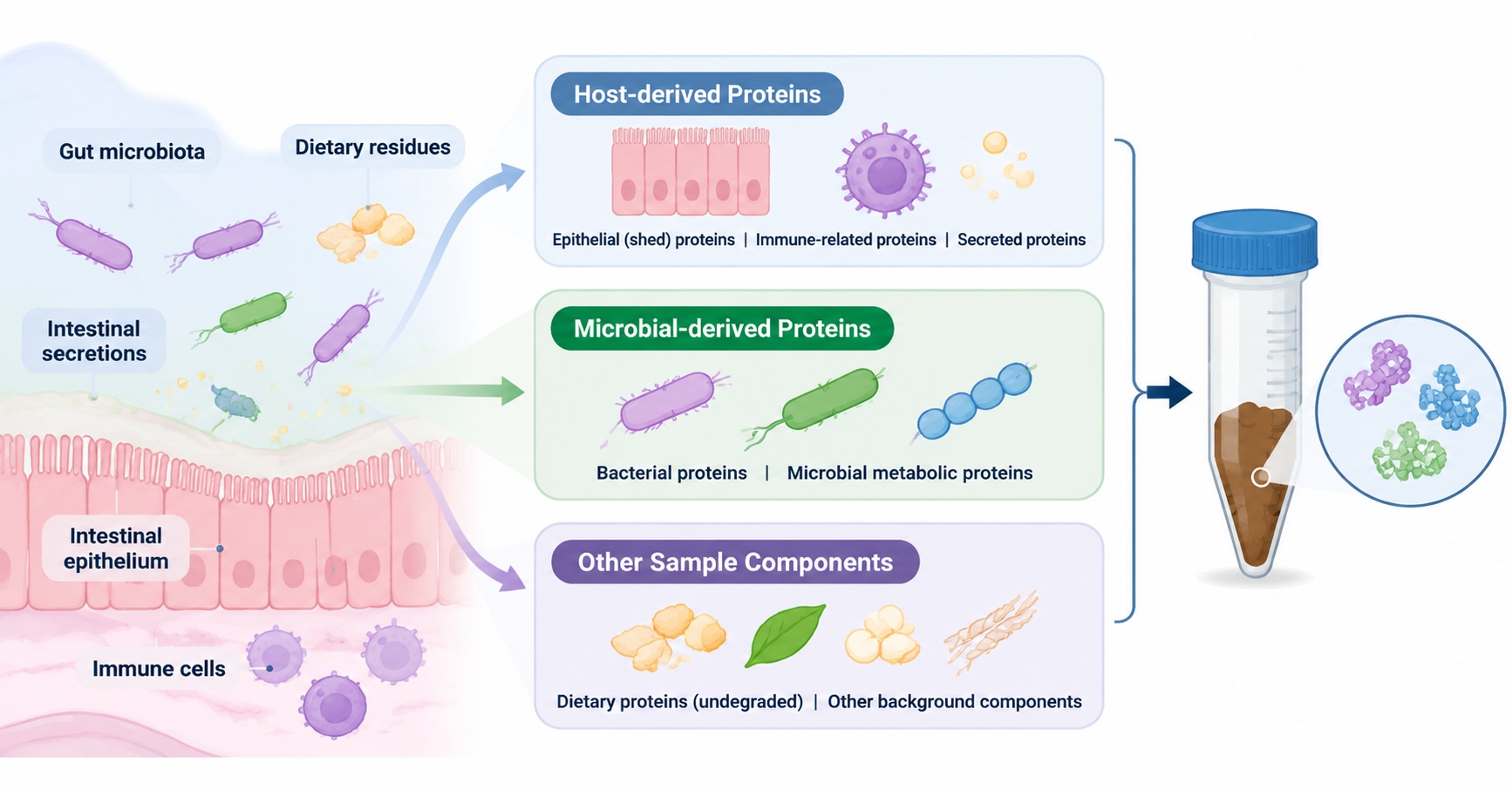
Fecal proteins mainly originate from the host and gut microorganisms, although food residues and other background materials may also be present. The two main protein sources address different research questions.
1. Host-Derived Proteins
Host-derived proteins are associated with intestinal epithelial cells, immune cells, and intestinal secretions. Their profiles can reveal features related to intestinal immunity, inflammation, epithelial barrier function, and tissue responses.
2. Microbial-Derived Proteins
Microbial-derived proteins are produced by gut microorganisms and provide information about microbial protein expression, composition, and functional activity.
3. Other Sample Components
Undigested food residues and other background components add complexity and may affect sample representativeness and interpretation of protein origins.
MtoZ Biolabs supports host protein analysis, microbial protein analysis, and metaproteomics. Defining the primary analytical target helps determine the appropriate database and search strategy.
Fecal Sample Preparation and Analytical Challenges
MtoZ Biolabs accepts human- and animal-derived fecal samples, with no specific species restrictions. Materials include fresh or −80°C-stored feces, fecal supernatant, and extracted proteins. For extracted proteins, provide the solution composition in advance. Sample amounts vary by analysis type:
|
Analysis Type |
Recommended Amount |
Minimum Amount |
|
Routine proteomics |
200 mg feces |
100 mg feces |
|
Metaproteomics |
5 g feces |
2 g feces |
|
Peptidomics |
200 mg feces |
100 mg feces |
|
Extracted proteins |
— |
50 µg |
|
Low-input samples |
Below 100 mg requires case-by-case evaluation |
May affect identification depth and quantitative stability |
1. Sample Collection and Storage
Collect material from the middle portion of the stool, avoiding intestinal tissue and blood. Multi-point sampling and mixing can improve representativeness. Apply consistent collection criteria across samples in the same project.
Collection fluids, preservatives, and stabilizers are not recommended. Additives other than PBS, such as nucleic acid protectants and fixatives, may affect proteomic analysis and must be disclosed. Immediately freeze samples in liquid nitrogen for 10 minutes, store at −80°C, and ship on dry ice. Room-temperature exposure should not exceed 2 hours, and samples should undergo no more than two freeze–thaw cycles.
For detailed requirements on collection, additives, storage, and shipping, see Fecal Proteomics Sample Requirements, Collection, and Handling.
2. Sample-Related Analytical Challenges
Feces is a complex matrix containing lipids, bile acids, polysaccharides, nucleic acids, salts, and pigments that can complicate protein extraction and mass spectrometry. Cleanup can reduce some interference, but severe pigment interference may affect quantitative accuracy, while high polysaccharide or nucleic acid levels may disrupt digestion and detection.
- Host protein proportion: Some samples contain a relatively low proportion of host-derived proteins, which may limit their detection.
- Sample consistency and heterogeneity: Hard, soft, watery, mucous, or bloody stool samples should be disclosed in advance for evaluation. Blood introduces hemoglobin interference, while large amounts of undigested food residues can reduce sampling representativeness.
- Protein degradation: Prolonged exposure to room temperature or repeated freeze–thaw cycles may affect protein quality. Samples showing obvious degradation should be recollected.
For more detail on complex matrices, low-abundance host proteins, sample heterogeneity, and protein degradation, see Sample-Related Challenges in Fecal Proteomics.
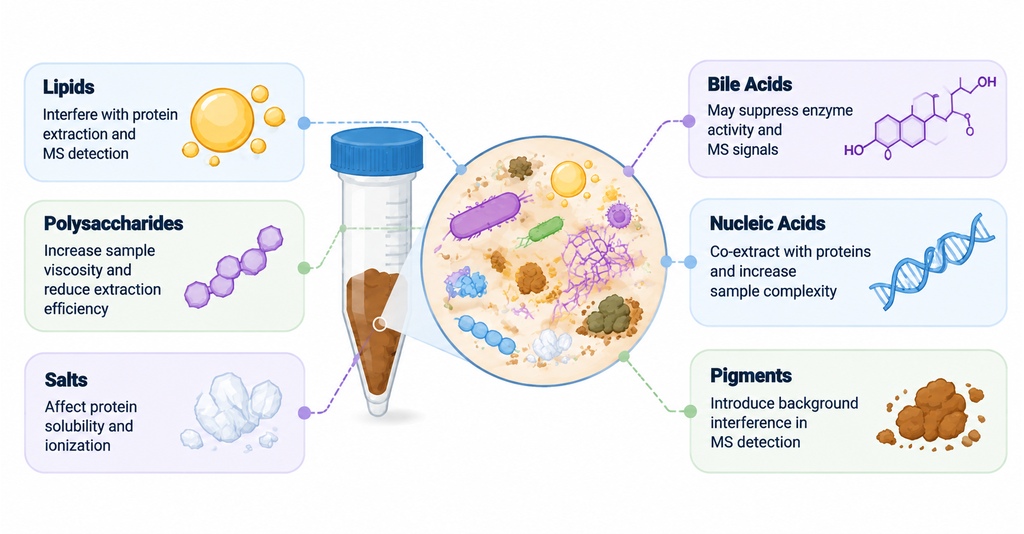
Figure 2. Major Matrix Interferences and Analytical Challenges in Fecal Samples.
How to Plan a Fecal Proteomics Study
Study design should begin with the main research question. Define the comparison groups and relationships among samples before planning group allocation, biological replicates, and analytical batches. Key considerations include:
- Research objective and primary comparisons: Specify the protein changes of interest and the comparisons required between experimental groups.
- Experimental and control groups: Define group structure and controls according to the research question. For studies with multiple groups, establish the intended comparisons in advance.
- Sample relationships: Clarify whether samples come from independent individuals, are paired, or represent longitudinal time points, and preserve the corresponding sample identifiers.
- Biological replicates: Plan independent biological samples based on the research objective, expected sample variability, and planned comparisons.
- Sample comparability and analytical batches: Keep species, collection, and handling procedures as consistent as possible. Distribute samples appropriately across analytical batches and avoid confounding experimental groups completely with batch assignment.
The research question, sample relationships, and primary comparisons should be established before the experiment begins. Paired or longitudinal studies require clear sample matching, while studies with multiple groups need predefined comparisons to support meaningful downstream analysis.
Fecal Proteomics Workflow
Fecal proteomics typically involves sample assessment, protein extraction and cleanup, peptide preparation, mass spectrometry, and data analysis. The exact procedures depend on sample condition and the protein targets of interest.
1. Sample Assessment and Homogenization
Sample source, format, storage condition, and amount are checked before processing. The material is then homogenized according to stool consistency to improve sampling consistency.
2. Protein Extraction and Cleanup
Proteins are extracted from the homogenized sample. Depending on matrix characteristics, interfering components such as lipids, bile acids, salts, and pigments are reduced to obtain a protein preparation suitable for downstream analysis.
3. Digestion and Peptide Preparation
Extracted proteins are enzymatically digested into peptides. The peptide preparation is then cleaned as needed before liquid chromatography–tandem mass spectrometry analysis.
4. LC-MS/MS Data Acquisition
Peptides are separated by liquid chromatography, and mass spectrometry signals are acquired to generate raw data for protein identification and quantification.
5. Database Search and Result Analysis
A suitable reference database is selected according to the analytical target, such as host proteins or microbial proteins. The data are then processed for protein identification, relative quantification, differential analysis, and functional annotation.
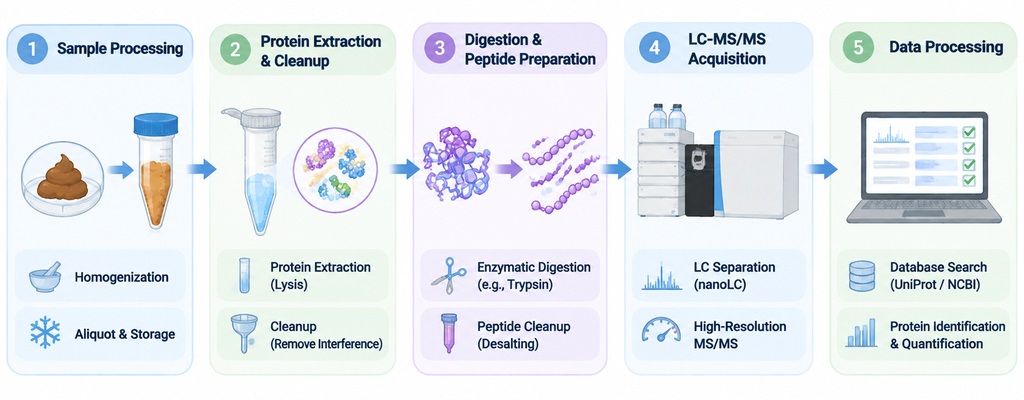
Figure 3. Overall Fecal Proteomics Workflow.
Fecal Proteomics Data Analysis and Interpretation
Following database searching and downstream processing, mass spectrometry data can provide protein identification, relative quantification, group comparisons, and functional associations. Common analysis components include:
- Quality control (QC): Includes SDS-PAGE and protein quantification to assess sample protein quality and processing.
- Protein identification and quantification: Generates a protein identification list and a relative-quantification matrix showing detectable proteins and their relative abundance across samples.
- Differential protein analysis: Identifies proteins with changes in relative abundance in predefined group comparisons.
- Functional and association analysis: Uses GO, KEGG, and PPI analyses to organize functional annotations, pathways, and protein associations related to the differential proteins.
Project deliverables may include protein identification and quantification matrices, differential analysis results, GO/KEGG/PPI bioinformatics analyses, QC reports, raw mass spectrometry (RAW) files, and a project report.
For a closer explanation of QC, protein identification, quantification matrices, differential proteins, and functional analysis results, see Fecal Proteomics Data Analysis and Interpretation.
Applications
1. Intestinal Inflammation and Inflammatory Bowel Disease
Comparing healthy controls with inflammation-related groups can reveal changes in host immune, inflammatory, and intestinal tissue-response proteins, providing protein-level information for inflammatory bowel disease and other intestinal inflammation research.
2. Colorectal Cancer and Adenoma Research
Comparisons across study groups can reveal fecal protein-expression differences and identify candidate proteins associated with colorectal cancer or adenoma for further investigation and validation.
3. Host–Microbe Interaction Research
Host- and microbial-derived protein profiles can characterize local host responses and microbial protein expression, adding protein-level evidence to host–microbe interaction studies.
4. Dietary and Intervention Studies
Comparing profiles before and after dietary changes, probiotic interventions, or other treatments can reveal associated changes in host and microbial proteins and characterize intestinal responses to interventions.
To explore related research questions, application pathways, and candidate protein discovery in greater detail, see Fecal Proteomics in Intestinal Research and Biomarker Discovery.
Frequently Asked Questions
Q1: Can fecal proteomics analyze post-translational modifications?
Fecal PTM proteomics requires separate evaluation. Feasibility depends on the modification type, sample conditions, and research objective. Relevant project details should be provided before the study begins.
Q2: Does metaproteomics provide microbial species classification?
Metaproteomics primarily provides identification and quantification of microbial-derived proteins. It does not provide microbial species classification or species–function association analysis. If information about microbial composition is required, metagenomic data may be considered.
Q3: Can fecal proteomics be combined with metagenomics or metabolomics?
Yes. Fecal proteomics can be combined with metagenomics or metabolomics in a multi-omics study. The project design should define the research question addressed by each omics dataset and establish how samples correspond across analyses.
Q4: Can infectious or pathogen-positive fecal samples be submitted?
Samples associated with infectious diarrhea or pathogen-positive bacteria or viruses require advance biosafety assessment. High-risk samples must generally be inactivated before submission. Non-inactivated high-risk samples are not accepted.
Conclusion
Through protein identification, relative quantification, and functional analysis, fecal proteomics provides protein-level information for gut research. Defining the analytical target, sample conditions, and primary comparisons helps align the workflow with the study objective.
MtoZ Biolabs supports fecal proteomics using human and animal samples, including host protein analysis, microbial protein analysis, and metaproteomics. Sample requirements and analytical plans are confirmed according to project objectives and sample conditions.
