



Sample-Related Challenges in Fecal Proteomics
Fecal proteomics is shaped by the physical and chemical properties of the starting material. Water content, stool consistency, residual solids, lipids, bile acids, polysaccharides, nucleic acids, salts, pigments, and the relative abundance of host and microbial proteins can vary between specimens. These differences may affect protein recovery, digestion, peptide detection, and comparisons across samples.
Different sample characteristics affect different stages of analysis: matrix components may interfere with extraction or digestion, abundant background proteins may limit detection of low-abundance host proteins, uneven stool composition may reduce sample representativeness, and protein degradation may alter the material available for analysis.
Key Characteristics of Fecal Samples for Proteomic Analysis
1. Complex Composition of the Fecal Matrix
Fecal material contains proteins within a chemically heterogeneous matrix that may include lipids, bile acids, polysaccharides, nucleic acids, salts, pigments, intestinal contents, and residual food material. The proportions of these components vary between specimens, so samples with similar total mass may still have different analytical compositions.
A lipid-rich specimen, a highly pigmented specimen, and a sample containing abundant polysaccharides or residual solids present different chemical conditions for protein analysis.
2. Diverse Protein Sources and Uneven Abundance
Host-derived proteins and microbial proteins coexist in fecal samples, but their relative contributions can differ between specimens. In host-focused studies, microbial and other abundant background proteins may dominate the detectable protein pool, while host-derived proteins account for a smaller fraction.
Uneven protein abundance matters in host-focused studies. A target host protein may be present in the specimen but contribute only a small amount of peptide material to the mixture entering LC-MS/MS analysis.
3. Fecal Sample Heterogeneity and Variable Stool Characteristics
Fecal heterogeneity occurs within and between specimens. Different regions of the same stool may vary in water content, mucus, residual food material, and solid content. Samples collected from different individuals or time points may also differ in consistency and composition.
Stool may be watery, mucus-rich, bloody, or hard, and some specimens contain visible undigested food residues. These stool characteristics reflect differences in the physical starting material.
Major Analytical Challenges in Fecal Proteomics
The main analytical challenges arise from matrix interference, low-abundance host proteins, sample heterogeneity, and protein degradation. Each challenge affects a different part of protein processing or detection.
1. Matrix Interference During Proteomic Sample Processing
Fecal matrix interference does not arise from a single compound or a single analytical step. Different components create different problems during protein extraction, cleanup, digestion, and subsequent mass spectrometric analysis.
(1) Extraction and cleanup
Lipids, bile acids, pigments, salts, and other non-protein material can co-extract with proteins or remain in the recovered protein fraction. High matrix loads increase the amount of material that must be removed during cleanup and can make protein recovery less consistent between specimens. Cleanup and purification can reduce these effects, but the required extent of treatment depends on the composition of the individual sample.
(2) Digestion and LC-MS/MS compatibility
High levels of polysaccharides and nucleic acids can produce viscous or poorly clarified preparations and interfere with enzymatic digestion and downstream mass spectrometric detection. Residual salts and pigments can create additional analytical interference; severe pigment contamination may also reduce quantitative accuracy. Fecal sample preparation therefore has to remove sufficient non-protein material without assuming that one cleanup procedure will eliminate every matrix effect.
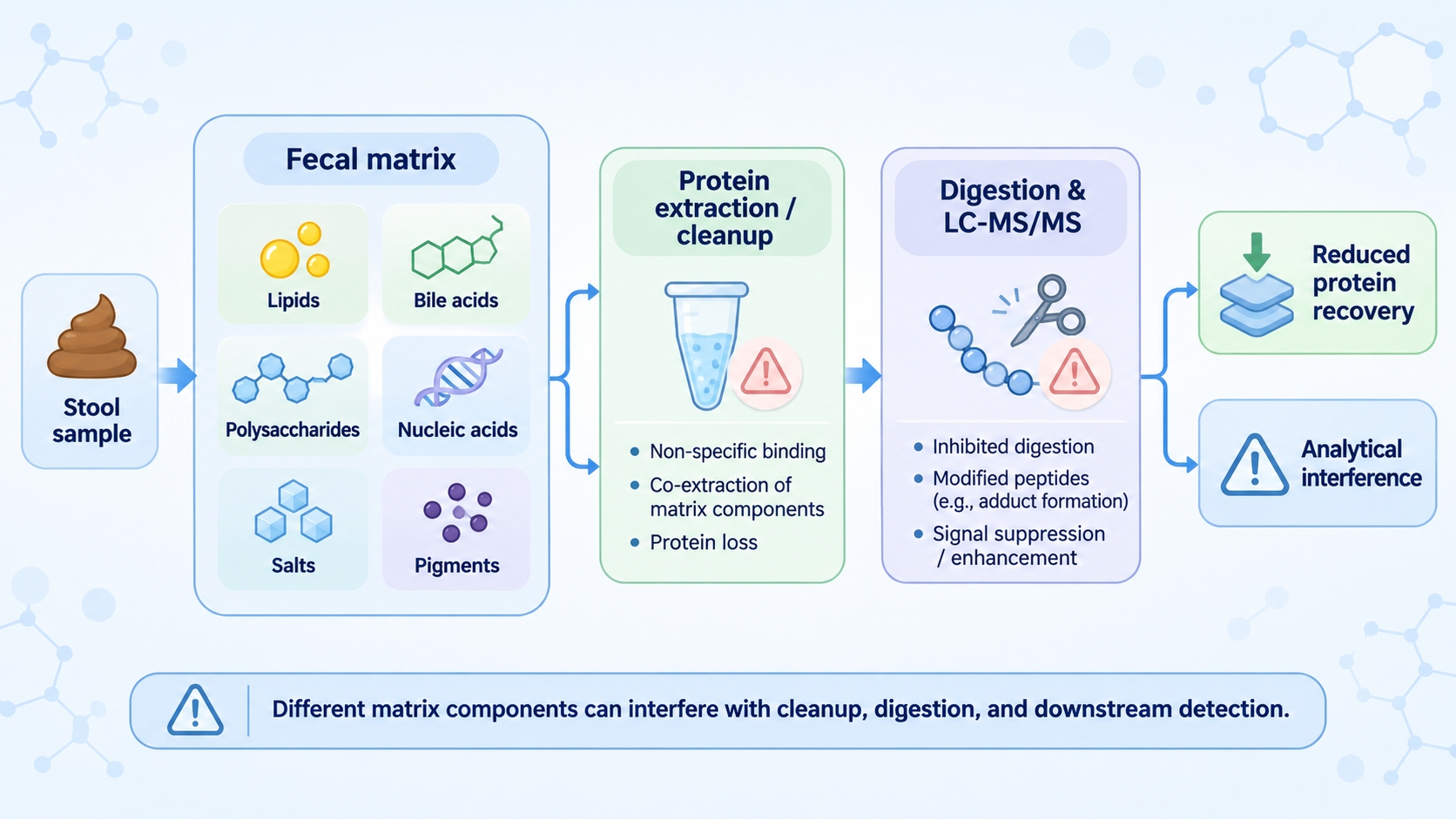
Figure 1. Fecal matrix components can interfere with protein extraction, cleanup, digestion, and downstream LC-MS/MS analysis.
2. Challenges in Detecting Low-Abundance Host Proteins
When microbial proteins and other background proteins dominate the detectable protein pool, peptides from host proteins may represent only a small fraction of the material entering LC-MS/MS. Low-abundance host proteins can therefore be difficult to identify, even when the proteins are present in the sample.
Cleanup or enrichment-oriented optimization may improve access to the host-derived fraction in suitable projects. The degree of improvement depends on the specimen, and extremely low host-protein abundance may still limit detection. The proportion of host-derived protein and the amount of recovered target peptide both influence whether a protein is identified.
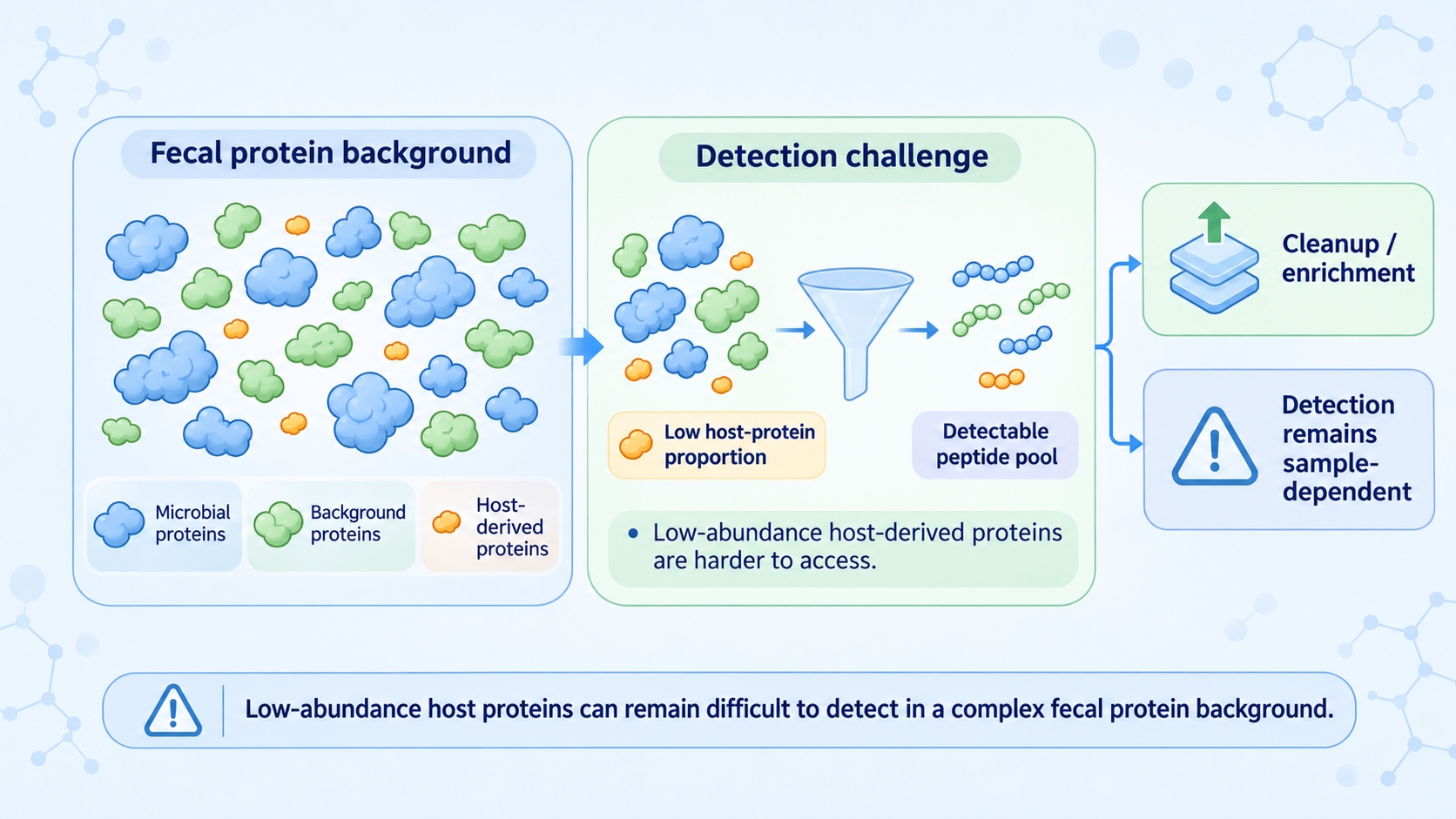
Figure 2. Low-abundance host proteins can be difficult to detect against a complex fecal protein background.
3. Challenges Associated with Sample Heterogeneity and Stool Characteristics
Stool consistency and composition can affect homogenization and protein recovery. Watery stool has lower and more variable solid content; mucus-rich material may be difficult to homogenize uniformly; and hard stool may be more difficult to disperse. Unevenly distributed food residues can also make a small aliquot less representative of the specimen. These differences can change the material represented in an aliquot and reduce consistency between specimens.
|
Stool characteristic |
Main analytical consideration |
|
Watery stool |
Variable solid content changes the amount of fecal material represented by a given volume. |
|
Mucus-rich stool |
Mucus can make homogenization and clarification less uniform. |
|
Bloody stool |
Hemoglobin and other blood-derived proteins add to the protein background. |
|
Hard stool |
Dense material may be difficult to disperse uniformly. |
|
Abundant undigested food residues |
Uneven residues can reduce the representativeness of a small aliquot. |
Watery, mucus-rich, bloody, and hard stool samples can be considered for analysis, but sample condition should be reported. Bloody samples introduce hemoglobin and other blood-derived proteins into the protein background, while visible food residues may affect sample representativeness.
4. Protein Degradation During Sample Handling
Prolonged room-temperature exposure and repeated freeze–thaw cycles may compromise protein integrity, reduce intact-protein recovery, and generate additional peptide fragments. Different proteins may be affected to different degrees, changing the material available for LC-MS/MS analysis. Protein degradation may also change the relative representation of proteins and peptides in the final dataset.
Sample handling history can indicate potential degradation. SDS-PAGE quality-control gels and protein quantification help assess sample condition. Samples showing clear protein degradation should be recollected.
For practical guidance on sample collection, storage, handling, and submission, see Fecal Proteomics Sample Requirements, Collection, and Handling.
How Sample-Related Challenges Affect Proteomic Results
Sample characteristics affect the final dataset when they change the amount, integrity, or composition of protein and peptide material reaching LC-MS/MS. The main effects involve protein recovery and identification coverage, as well as the consistency of relative quantification across specimens.
1. Effects on Protein Recovery and Identification
Protein identification depends on protein recovery, digestion into detectable peptides, and sufficient peptide signal for mass spectrometry. Matrix interference may reduce protein recovery or digestion efficiency, while degradation changes the protein and peptide material available for identification.
Low-abundance proteins are especially sensitive to processing losses. When host-derived peptides already make up a small proportion of the mixture, reduced recovery or digestion efficiency may further limit detection. Differences in matrix composition can also produce different identification coverage across specimens in the same project.
2. Effects on Protein Quantification and Sample Comparability
Relative quantification compares protein signals across specimens. Differences in water content, matrix components, protein recovery, and degradation may contribute to abundance differences that do not arise solely from biological variation.
When sample conditions differ substantially, quantitative profiles may reflect both biological variation and sample-quality differences. Consistent processing can reduce avoidable variation, but it cannot remove differences already present in the starting material. Sample condition should be considered when evaluating comparability. Quantitative comparability is especially sensitive when specimens have visibly different physical characteristics.
For data-quality assessment and interpretation of protein identification and relative quantification, see Fecal Proteomics Data Analysis and Interpretation.
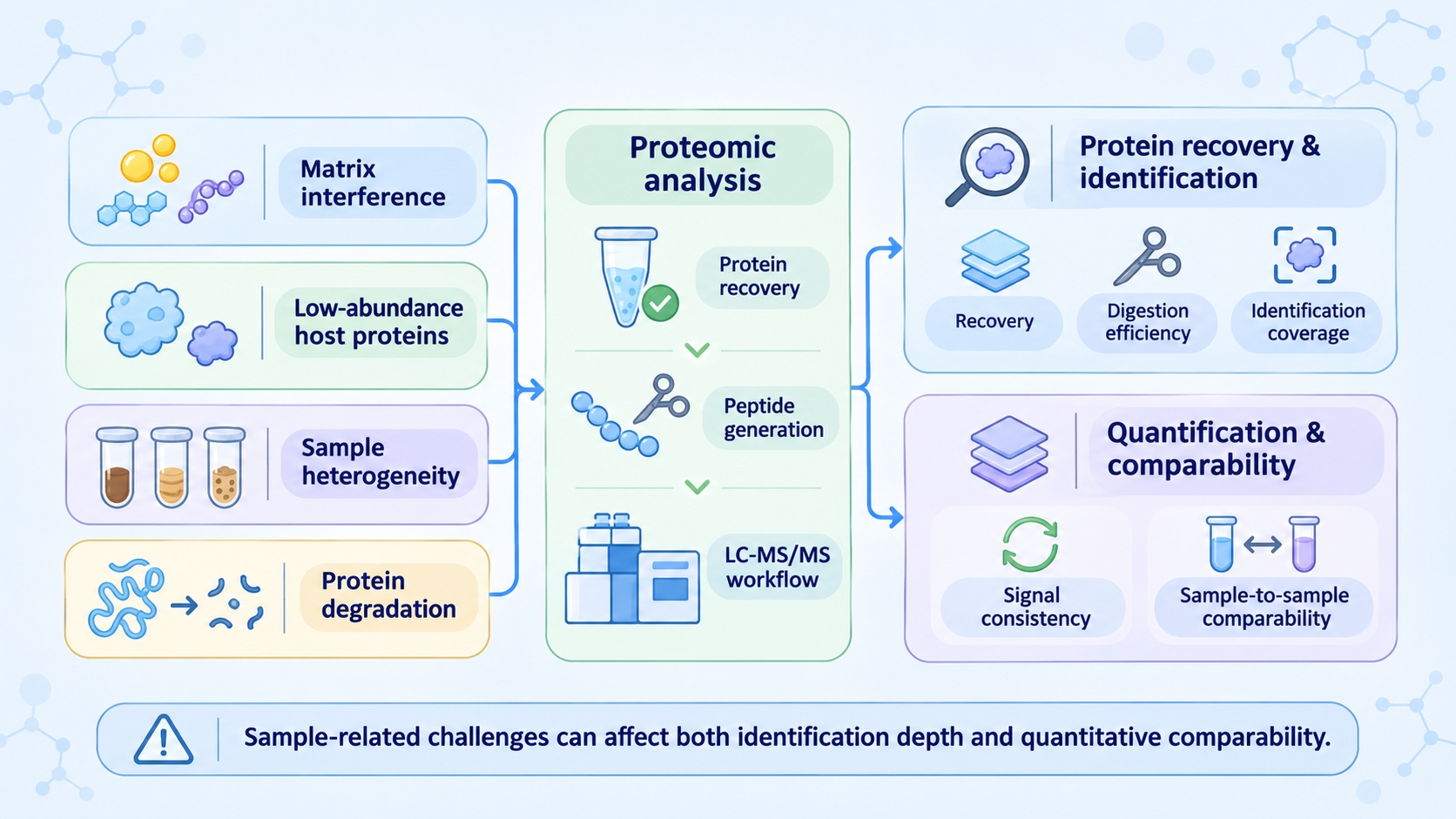
Figure 3. Sample-related challenges can affect protein recovery, identification coverage, relative quantification, and sample comparability.
Frequently Asked Questions
1. Can fecal matrix interference be completely removed?
Not always. Cleanup and purification can reduce interference from lipids, bile acids, polysaccharides, nucleic acids, salts, and pigments, but the effectiveness depends on the composition of the individual specimen. Fecal samples do not contain one uniform interfering component that can be eliminated by a single preparation strategy.
2. Are low-abundance host proteins always detectable in fecal samples?
No. Detection depends on the proportion of host-derived proteins within the total protein background, protein recovery, and the amount of detectable peptide signal. Cleanup or enrichment can improve access to host proteins, but extremely low host-protein abundance can still limit detection.
3. Can watery, mucus-rich, bloody, or hard stool samples be analyzed?
Yes, these sample types can be considered for fecal proteomics, but their condition should be reported before analysis. Watery, mucus-rich, bloody, and hard stools present different homogenization and matrix challenges, and bloody samples introduce hemoglobin and other blood-derived proteins into the protein background.
4. What information does an SDS-PAGE quality-control gel provide for fecal samples?
An SDS-PAGE gel provides a visual check of the protein profile and can help identify signs of protein degradation. Protein quantification provides complementary information about the amount of recovered protein. Both results can support an assessment of sample condition.
Conclusion
Fecal proteomics is affected by matrix composition, protein abundance, sample heterogeneity, and protein integrity. These factors can influence protein recovery, identification coverage, relative quantification, and comparability across specimens. Understanding the source of each challenge helps distinguish sample-related effects from biological differences in the resulting data.
For an overview of sample preparation and sample-related considerations, see the Fecal Proteomics: Sample Preparation, Analysis, and Applications. For projects involving complex fecal matrices, low expected host-protein abundance, watery, mucus-rich, bloody, or hard stool, or suspected protein degradation, MtoZ Biolabs can evaluate the sample characteristics and analytical requirements through Fecal Proteomics Solutions.
