



Planning a Co-IP-MS experiment and unsure which negative controls to use, how to plan biological replicates, or how to group samples? The right design depends on whether the bait is endogenous or tagged and whether the study aims to discover candidate interaction partners or compare conditions. This guide explains when to use IgG, empty-vector, tag-only, and beads-only controls, how to plan biological replicates and experimental groups, and what factors to evaluate to improve Co-IP-MS result reliability.
Researchers planning capture from cells or tissues can use the MtoZ Biolabs Co Immunoprecipitation (Co-IP) Service to discuss antibody availability, bait recovery, and control design. For a broader overview of protein interaction discovery and validation strategies, see Protein-Protein Interaction Analysis: From Partner Discovery to Interaction Validation.
Defining the Research Objective and Bait System
Discovery vs Comparative Studies
A discovery study aims to identify proteins that co-immunoprecipitate with the bait. Comparison with appropriate negative controls helps distinguish candidate interaction partners from nonspecific background proteins. The resulting protein list provides candidates for prioritization based on enrichment, reproducibility, and other supporting evidence.
A comparative study examines whether the bait-associated proteome changes across genotypes, treatments, time points, or cell states. Such studies require matched biological groups and appropriate negative controls to distinguish condition-dependent changes from background binding.
The research objective determines how samples and controls should be organized. For unknown-partner discovery, the design should support systematic comparison between bait captures and negative controls. For condition comparisons, each biological state should be represented by sufficient independent samples, with consistent capture and processing conditions across groups.
Endogenous vs Tagged Bait
An endogenous bait is captured using an antibody against the native protein, preserving its endogenous expression context. Experimental feasibility depends on antibody specificity, epitope accessibility after lysis, and sufficient bait recovery. An antibody validated for Western blotting is not necessarily suitable for immunoprecipitation.
When no validated native antibody exists, a tagged bait such as FLAG-, HA-, or GFP-tagged protein may provide an alternative capture strategy. Tag identity and fusion position can affect protein localization, stability, oligomerization, or access to interaction partners. Overexpression can populate non-native complexes.
The choice between endogenous and tagged bait affects the capture method and the negative controls required. Endogenous immunoprecipitation commonly uses antibody-based background controls, whereas tagged-bait experiments may require empty-vector or tag-only controls, depending on the expression construct and capture system.
Choosing Appropriate Negative Controls for Co-IP-MS
Co-IP-MS can recover proteins associated with the bait as well as proteins that bind nonspecifically to antibodies, affinity tags, or beads. Negative controls help identify these background proteins and support the selection of candidate interaction partners. The appropriate control depends on how the bait is captured.
IgG Controls
IgG controls are commonly used when an antibody is used to capture an endogenous bait protein. In the control sample, the bait-specific antibody is replaced with a non-targeting IgG antibody from the same host species and, preferably, the same isotype. The IgG control and bait-IP samples should use comparable amounts of antibody and the same or equivalent biological material under matched processing conditions. Comparing the recovered proteins helps identify background associated with antibodies and the capture system, rather than the target bait.
Empty-Vector Controls
An empty-vector control uses cells expressing the corresponding vector without the target bait insert. It helps assess background associated with the expression system, transfection, and capture workflow in the absence of the bait construct.
Its value in tagged-bait Co-IP-MS depends on the vector design. If the empty vector does not express the affinity tag, it may help assess baseline recovery but will not reproduce tag-dependent binding. An empty-vector control should therefore be selected according to the actual construct and immunoprecipitation strategy rather than treated as interchangeable with a tag-only control.
Tag-Only Controls
A tag-only control expresses the affinity tag without the target bait protein and helps identify proteins recovered through interactions with the tag or its expression context.
For FLAG-, HA-, GFP-, or other tagged-bait systems, the control should use comparable expression and capture conditions wherever feasible. Tag localization and fusion configuration also matter, since a freely expressed tag may not reproduce the cellular localization or binding environment of the tagged bait. Tag-only controls are particularly useful when proteins associated with the affinity tag could otherwise be mistaken for bait-associated candidates.
Beads-Only Controls
A beads-only control uses the same sample material and capture beads without the bait-specific antibody or tagged-bait capture step. It helps identify proteins that bind directly to the beads rather than being specifically enriched with the bait. Beads-only controls are particularly useful when nonspecific binding to the capture material is a concern. They complement antibody- or tag-related controls but do not evaluate the same background sources.
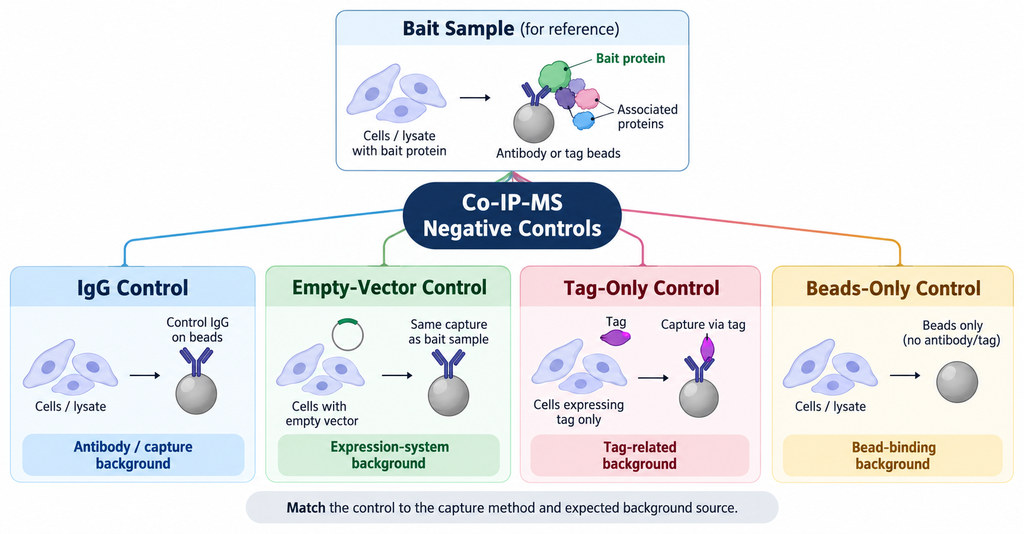
Figure 1. Comparison of Negative Controls for Co-IP-MS Experimental Design.
Planning Biological Replicates and Experimental Groups
Biological Replicates
Biological replicates are independent biological samples, such as separately cultured cell samples, samples from different animals, or independently collected tissue specimens. They help assess biological variability and determine whether candidate interaction partners are consistently recovered. Technical replicates involve repeated processing or measurement of the same biological sample, such as repeated LC-MS/MS injections. They assess technical variability but do not replace biological replicates.
The appropriate number of biological replicates depends on biological variability, expected effect size, sample availability, and planned statistical comparisons. Pilot experiments or variability estimates from related studies can help inform replicate planning.
For discovery studies, biological replicates help assess the reproducibility of candidate protein enrichment. For comparative studies, independent biological replicates within each condition are needed to evaluate changes in bait-associated proteins across experimental groups.
Group Comparability and Batch Effects
Treatment and control groups must differ in the biological variable and remain comparable in lysis, antibody or tag amount, wash stringency, and processing batch. If one condition is prepared days later, batch and biology become difficult to separate. Balanced handling, shared reagents, and preplanned group structure reduce that risk.
Discovery designs still need a negative-control group processed in the same batch as the bait captures. Comparative designs need a negative-control logic in each biological state when background itself may change with treatment. When additional experimental groups are introduced after an initial batch has been processed, their comparability should be evaluated before including them in the same statistical comparison.
Factors Affecting Co-IP-MS Recovery and Result Reliability
Beyond control selection and experimental grouping, bait recovery, antibody specificity, sample background, and complex stability should be evaluated to determine whether the planned capture strategy is suitable for Co-IP-MS analysis.
Bait Abundance and Enrichment Efficiency
Bait abundance and enrichment efficiency affect the amount of bait-associated material available for LC-MS/MS analysis. Low bait abundance or inefficient capture may limit the detection of potential interaction partners, particularly low-abundance proteins. Before large-scale analysis, a small-scale immunoprecipitation followed by Western blotting can help assess bait recovery in the intended sample. If recovery is insufficient, sample input or capture conditions may need adjustment. For comparative studies, differences in bait recovery should also be considered when interpreting changes in co-precipitated protein abundance.
Antibody Cross-Reactivity and Sample Background
Antibody cross-reactivity and nonspecific protein binding can increase background and complicate candidate identification. Highly abundant or adhesive proteins in cell or tissue lysates may also be recovered during immunoprecipitation, making bait-associated proteins more difficult to distinguish. A preliminary capture experiment can help assess whether the antibody efficiently enriches the intended bait without excessive background in the selected sample type. If substantial nonspecific recovery occurs, antibody suitability or capture conditions may require further evaluation before proceeding to LC-MS/MS.
Exact sample-format and buffer-compatibility decisions for already enriched material are covered in Beads, Eluate or Gel Band? How to Submit IP and Pull-Down Samples for Mass Spectrometry.
Complex Stability During Lysis and Washing
Protein complexes must remain sufficiently stable during extraction and immunoprecipitation to be recovered for mass spectrometry. Stringent lysis or washing conditions may disrupt weak or transient interactions, while overly mild conditions can increase nonspecific protein binding.
When studying weak, transient, or condition-dependent interactions, lysis and washing conditions should be evaluated for their ability to preserve relevant complexes while controlling background. Some complexes, including membrane-associated or nucleotide-dependent assemblies, may require specific biochemical conditions. Small-scale testing can help identify suitable capture conditions before committing samples to full-scale analysis.
Projects that already have an IP-grade antibody or tagged cells can request feasibility review through the Co Immunoprecipitation (Co-IP) Service or the IP-MS Protein Interactomics Analysis Service.
Evaluating Whether the Co-IP-MS Design Supports the Research Goal
A Co-IP-MS design should align the research objective with the bait system, appropriate negative controls, biological replicates, and experimental groups. Bait recovery, antibody specificity, sample background, and complex stability should also be considered before sample preparation to assess whether the planned experiment can provide interpretable results.
For discovery studies, these factors support the identification and prioritization of candidate interaction partners. For comparative studies, they help distinguish biological changes from differences in bait recovery or experimental background. Candidate ranking after acquisition is covered in How to Filter True Interactors from IP-MS Data: Fold Change, Background and Controls.
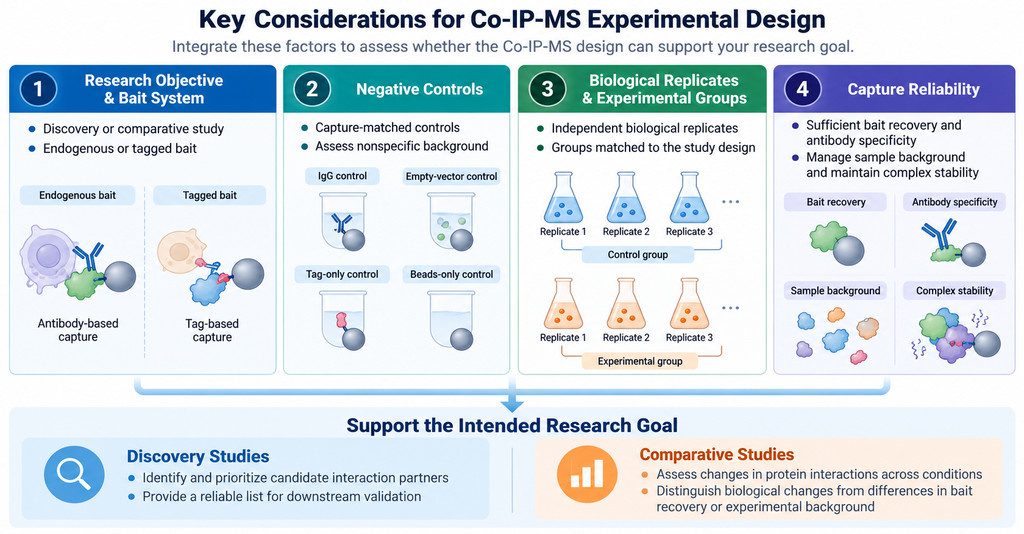
Figure 2. Key Considerations for Co-IP-MS Experimental Design.
Frequently Asked Questions
1. Can knockout cells replace an IgG control?
A knockout or knockdown control can be powerful when it removes the bait from the same genetic background, but it does not automatically replace an IgG or beads control. Residual antibody or resin background can remain. The most informative design often uses both a capture-chemistry control and a biologically depleted bait state when both are available.
2. How should low-abundance baits be handled at the design stage?
Confirm that bait recovery is realistic in the planned input and capture chemistry before expanding the candidate-discovery scope. Increasing input, testing a different antibody or tag, or narrowing the claim to a defined candidate may be more informative than collecting a large unfiltered list from a poorly recovered bait.
3. What information is needed before a Co-IP-MS feasibility discussion?
Provide the research objective, bait identity, antibody or tag evidence, sample type, intended negative controls, biological groups, reference proteome, and whether the output must support discovery or a condition comparison. These details determine whether the current design can answer the intended question.
Conclusion
Co-IP-MS is interpretable when the research claim, bait system, negative controls, replicates, and group structure are designed as one experiment. The capture step creates the contrast that later filtering can rank. Researchers with a defined antibody, tagged bait, or planned comparison can consult the MtoZ Biolabs Co Immunoprecipitation (Co-IP) Service for project-specific feasibility and experimental planning.
