



After an IP or Pull-Down experiment, choosing how to submit the enriched material is an important step in preparing samples for LC-MS/MS. Bead-bound material, eluates, and gel bands differ in processing requirements, reagent compatibility, and the scope of proteins available for analysis. This guide explains how to choose a suitable sample format and what to check about buffer composition, controls, and sample documentation before shipment.
Researchers with enriched IP or Pull-Down material can use the MtoZ Biolabs IP-MS Protein Interactomics Analysis Service or the Pull-Down Assay Service to review sample format before shipment. Capture-design questions belong in Co-IP-MS Experimental Design: IgG and Empty-Vector Controls, Replicates and Grouping. The broader PPI workflow context is summarized in Protein-Protein Interaction Analysis: From Partner Discovery to Interaction Validation.
Beads, Eluate, or Gel Band: Choosing a Sample Format
Bead-Bound Samples
Bead-bound material keeps proteins on the affinity resin after capture and washing. It can reduce elution loss and is often considered when the bait is low in amount or when elution conditions are still uncertain. The trade-off is that bead chemistry, residual wash buffer, storage history, and detergent carried on the resin can affect digestion and later spectra. On-bead processing is not automatically better; it is better only when the resin and remaining buffer are compatible with downstream proteomics.
Eluted Proteins
Eluates can be convenient when proteins have already been released into a known solution and a protein amount can be estimated. Elution, however, can introduce acid, high salt, high urea, glycine, SDS, or other reagents that interfere with digestion or chromatography. If elution was chosen to recover a visible bait band, the same conditions may still be unsuitable for LC-MS/MS until the buffer is described and, when needed, exchanged. An eluate without matched negative-control eluates also makes later background interpretation harder.
Gel Bands
A gel band is useful when a stained region is clearly visible and the researcher wants to identify proteins in that region, including a Co-IP band of interest. Visibility is a practical planning guide: a band that can be seen after staining is more likely to contain enough protein for identification than an unstained smear. Gel pieces should be handled to avoid keratin and stain-related contamination. A gel band also narrows the analysis to proteins that entered that slice, so it is less suitable when the goal is a broad bait-centered interactome from the entire capture.
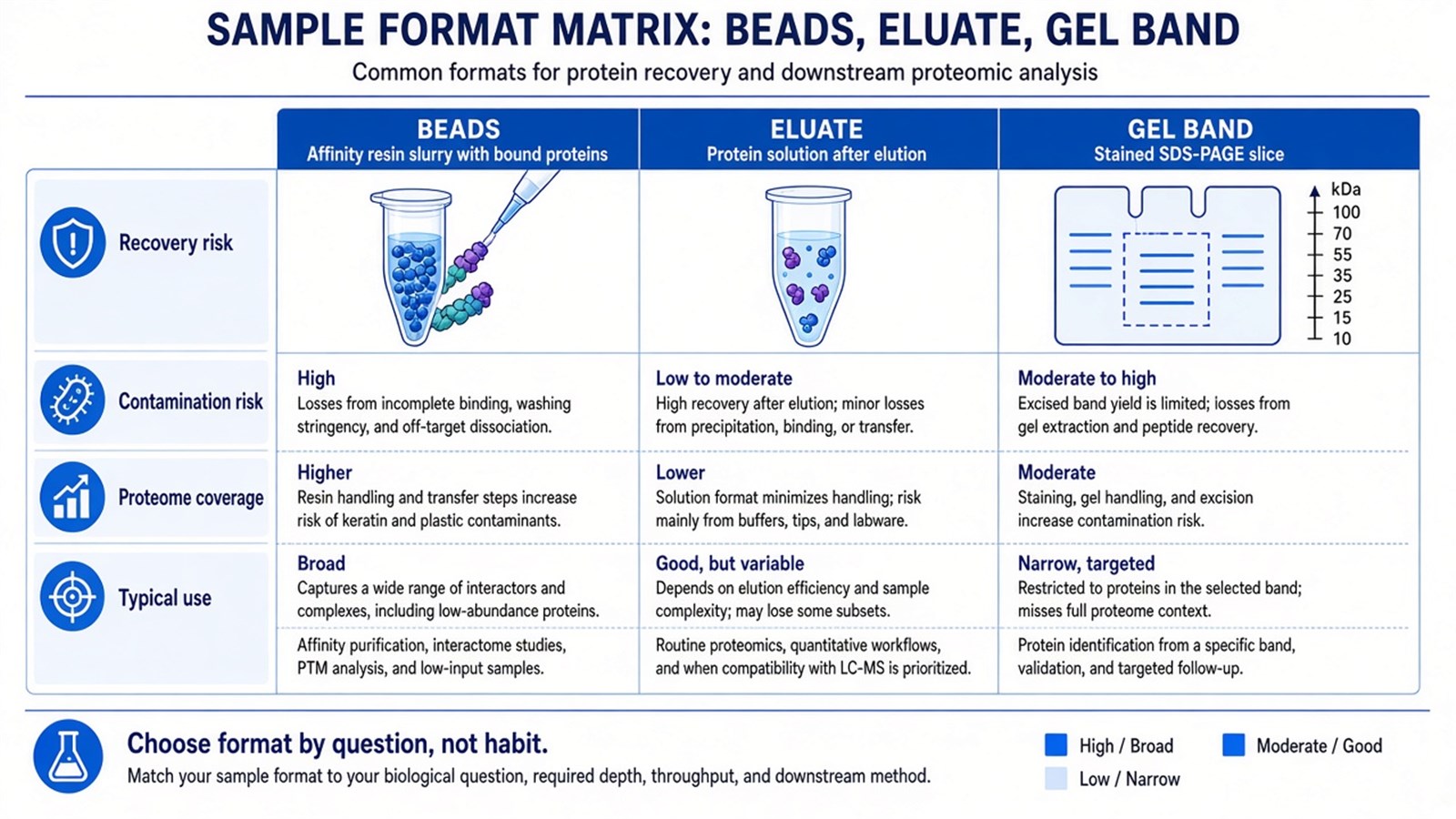
Figure 1. Bead-bound material, eluates, and gel bands differ in recovery risk, contamination risk, and how much of the captured proteome can be analyzed.
Checking Buffer and Reagent Compatibility for LC-MS/MS
Detergents and Salts
Detergents and salts are the most common hidden incompatibilities. Residual SDS, NP-40, Triton, high salt, or incomplete buffer exchange can suppress digestion, impair desalting, or degrade chromatographic performance. As a planning guide, solution samples are more straightforward when total protein is at least about 20 ug and concentration is above about 0.5 ug/uL, and when SDS remains far below 0.1%. These values are planning guides for discussion, not universal acceptance thresholds. Severely degraded samples and high-detergent or high-salt material that has not been processed further are poor starting points.
Affinity Reagents and Other Interferences
Antibody fragments, elution acids, glycine, imidazole, biotin, and residual reducing agents can also affect downstream analysis. Antibody heavy-chain contamination is a common consideration in Co-IP-MS because antibody-derived peptides may contribute to the final dataset and complicate protein identification. Document the antibody and capture conditions so that the sample can be evaluated appropriately. If the sample was boiled in loading buffer, include this information in the submission notes. Residual SDS and tracking dyes can affect processing options. The appropriate preparation method depends on the current sample composition and may involve additional cleanup, buffer exchange, or gel-band processing.
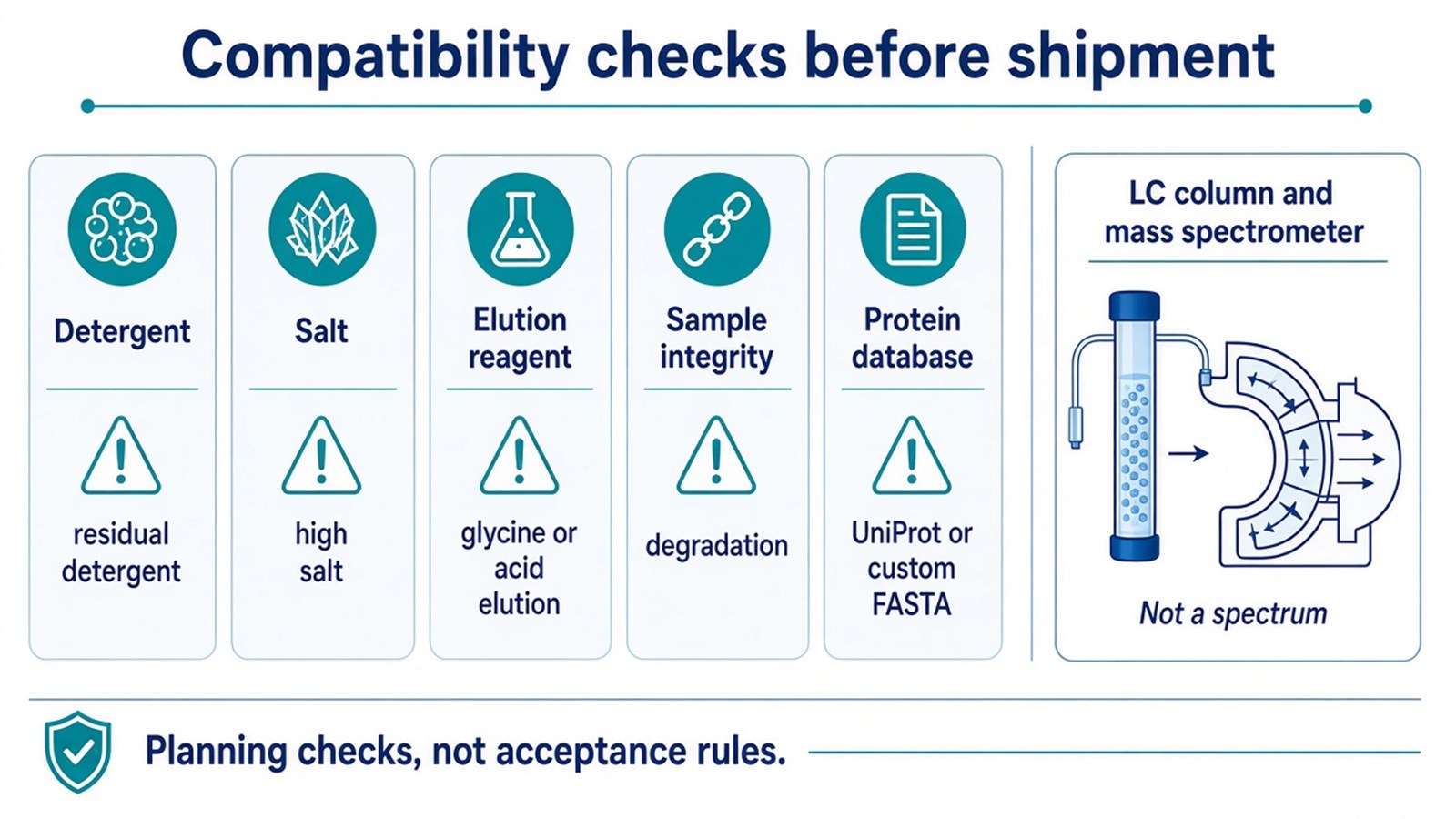
Figure 2. Before shipment, detergent, salt, elution chemistry, sample integrity, and the available protein database should be checked against the intended LC-MS/MS analysis.
Assessing Enrichment Quality and Sample Availability
Protein Yield
The required protein amount depends on the research objective. A clearly visible stained band may provide sufficient material for identifying proteins within that slice. A dilute eluate may also be suitable if bait recovery is documented and enough material remains for digestion. Low protein input increases the risk that the resulting identifications will be dominated by abundant background proteins and may reduce identification depth. When possible, retain an aliquot for repeat processing or for use with an alternative preparation method.
Background and Controls
Adequate total protein does not necessarily ensure interpretable results. If bait recovery is weak, the identified proteins may be dominated by antibody-derived proteins, keratin, or proteins that bind nonspecifically to the beads. Negative-control captures processed in parallel with the bait samples provide data for assessing background enrichment. Input lysate information, wash history, and whether all experimental groups were handled under comparable conditions also support subsequent data filtering and interpretation. Record these details in the submission notes, particularly when the objective is to compare bait and control samples or evaluate differences across experimental conditions.
Preparing Sample Information for Mass Spectrometry Submission
A complete submission note should include sample format, species, the protein reference database, bait identity, capture chemistry, antibody or tag, wash and elution history, current buffer, storage condition, available controls, and group structure. Frozen solutions and bead slurries are commonly transported on dry ice after snap freezing; gel bands are often shipped at ambient temperature or on ice packs. These are handling preferences for discussion, not a substitute for project-specific review.
The same note should state the intended output. Identification of a stained band, comparison of bait versus control captures, and condition-dependent interactome comparison are different requests. In MtoZ LC-MS/MS offerings, standard deliverables typically include raw files, identification tables with peptide and protein intensity, and a report. Relative abundance comparison is possible from those intensity values, but candidate filtering still depends on the controls that were submitted. Filtering after acquisition is covered in How to Filter True Interactors from IP-MS Data: Fold Change, Background and Controls.
Frequently Asked Questions
1. Can FLAG or GFP bead-bound Co-IP samples be sent without elution?
Bead-bound samples can be considered for direct submission when the bead type, volume, buffer composition, bait recovery, and matched controls are documented. The suitability of this format depends on the compatibility of the resin and residual buffer with downstream processing. Elution is not always necessary. The choice between direct bead submission and elution should be based on the sample composition and preparation requirements.
2. What should be done if the eluate is in SDS or glycine?
Do not treat either reagent as automatically compatible. Describe the current composition, protein amount, and whether buffer exchange is still possible. A gel band cut after SDS-PAGE can be an alternative when a stained region is visible and the research question is limited to that region.
3. Is a visible Coomassie band enough protein for identification?
A clearly visible Coomassie-stained band is a useful indication that protein is present and may be suitable for identification. However, identification depends on the amount and composition of the proteins in the band and the overall sample quality. A visible band does not guarantee successful identification or provide a comprehensive interactome-scale profile of the entire capture.
4. Which controls should accompany submitted IP or Pull-Down samples?
Submit the negative-control captures in the same format as the bait samples whenever the result must be interpreted as enrichment. IgG, empty-vector, tag-only, or beads-only controls are chosen according to the original capture chemistry. A later unmatched control is weaker than a parallel control from the same batch.
Conclusion
Submitting IP or Pull-Down samples for mass spectrometry is a compatibility and documentation task. Beads, eluate, and gel band can all be viable when bait recovery, residual reagents, controls, and the intended question are aligned. Researchers with already enriched material can consult MtoZ Biolabs through the IP-MS Protein Interactomics Analysis Service or the Pull-Down Assay Service for format-specific feasibility review.
