



Tandem affinity purification–mass spectrometry (TAP-MS) is a two-handle form of tagged affinity purification followed by liquid chromatography–tandem mass spectrometry (LC-MS/MS). The bait carries two sequential affinity modules. The first resin captures the fusion. A cleavage or elution step releases it onto a second resin. The file still reports proteins that survived both kinetic filters with this bait. That is co-enrichment. It is not a native-state inventory of a complex, and it is not a signaling or disease map.
The original two-step idea remains. Two resins can drop some bead binders that a single handle would keep. They do not eliminate nonspecific proteins, and they add time during which weak or transient neighbors can fall off. Classic TAP chemistry is not “Protein A or FLAG” as interchangeable single tags. For the single-handle definition that TAP extends, What Is the AP-MS Technique? provides a complementary definition page.
Researchers who already have a dual-tag bait and need a ranked co-enrichment table can also review the MtoZ Biolabs Affinity Purification-Mass Spectrometry Service for project-specific feasibility and analysis planning.
What the Two Handles Are Doing
The original sample-preparation sentence stays if it is rewritten as a dual cassette. The Rigaut cassette places Protein A, a TEV site, and a calmodulin-binding peptide on one terminus. IgG-Sepharose binds Protein A. TEV cleavage releases the CBP fusion. Calmodulin-Sepharose then binds in calcium, and EGTA elutes. Later dual-tag formats (FLAG–HA, streptavidin-binding peptide plus FLAG, and related cassettes) keep the same logic: two orthogonal occupancy events, not one tag named twice.
N- or C-terminal placement still has to be checked for localization and function. A tag that misplaces the bait redefines what the second resin can recover. Empty-tag TAP, processed through both resins, remains the control. A two-step protocol does not replace that arm.
Assembly and dynamics of complexes remain contexts in which a TAP bait may be tested. TAP-MS does not capture complexes in a native cellular state. Both steps occur after lysis. Composition change with cell state is a later contrast under matched TAP chemistry. It is not granted by the cassette name.
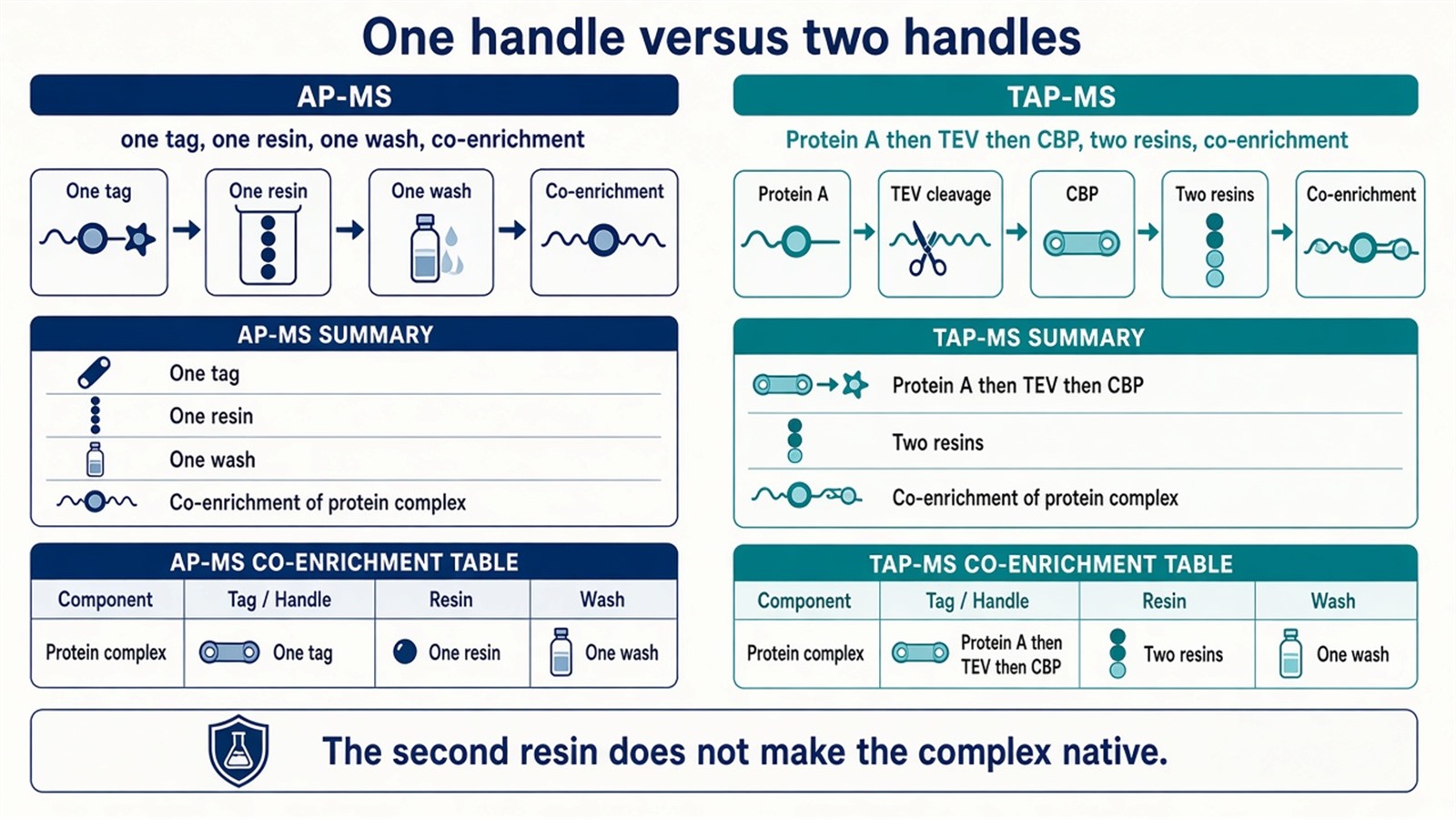
Figure 1. Left: one handle, one wash. Right: two handles and a release step. Both files are co-enrichment tables. The second resin does not make the complex native.
Name the two handles, the release chemistry, and the empty-tag TAP arm before the first lysate is loaded. Two resins are not a substitute for that arm.
Workflow, Recast as a Detection Chain
Sample preparation is cassette design and expression check, not a generic tagging step. Affinity purification is two occupancy events plus one release. Mass spectrometry is peptide identification of what remained, not a precise measurement of intact protein mass or abundance.
The first resin concentrates the bait and whatever survived the first wash. Release must invert the first handle without destroying the second. The second resin concentrates what still travels with the bait. Enzymatic digestion and LC-MS/MS then name peptides. Database search returns accessions. Accessions are not interactors, and search software does not construct a protein-interaction network. For the single-handle chain that this second resin extends, How AP-MS Works provides a complementary mechanism page.
Quantification, when designed, is a contrast against empty-tag TAP or a matched condition. It is not accurate qualitative and quantitative analysis of complexes by default. For the interaction sentence those names can support, AP-MS Protein Interaction provides a complementary claim page.
Signaling-pathway and cancer settings remain allowable as study backgrounds. TAP-MS does not identify key signaling proteins, reveal tumor-progression pathways, or name therapeutic targets. Those sentences need a separately validated assay.
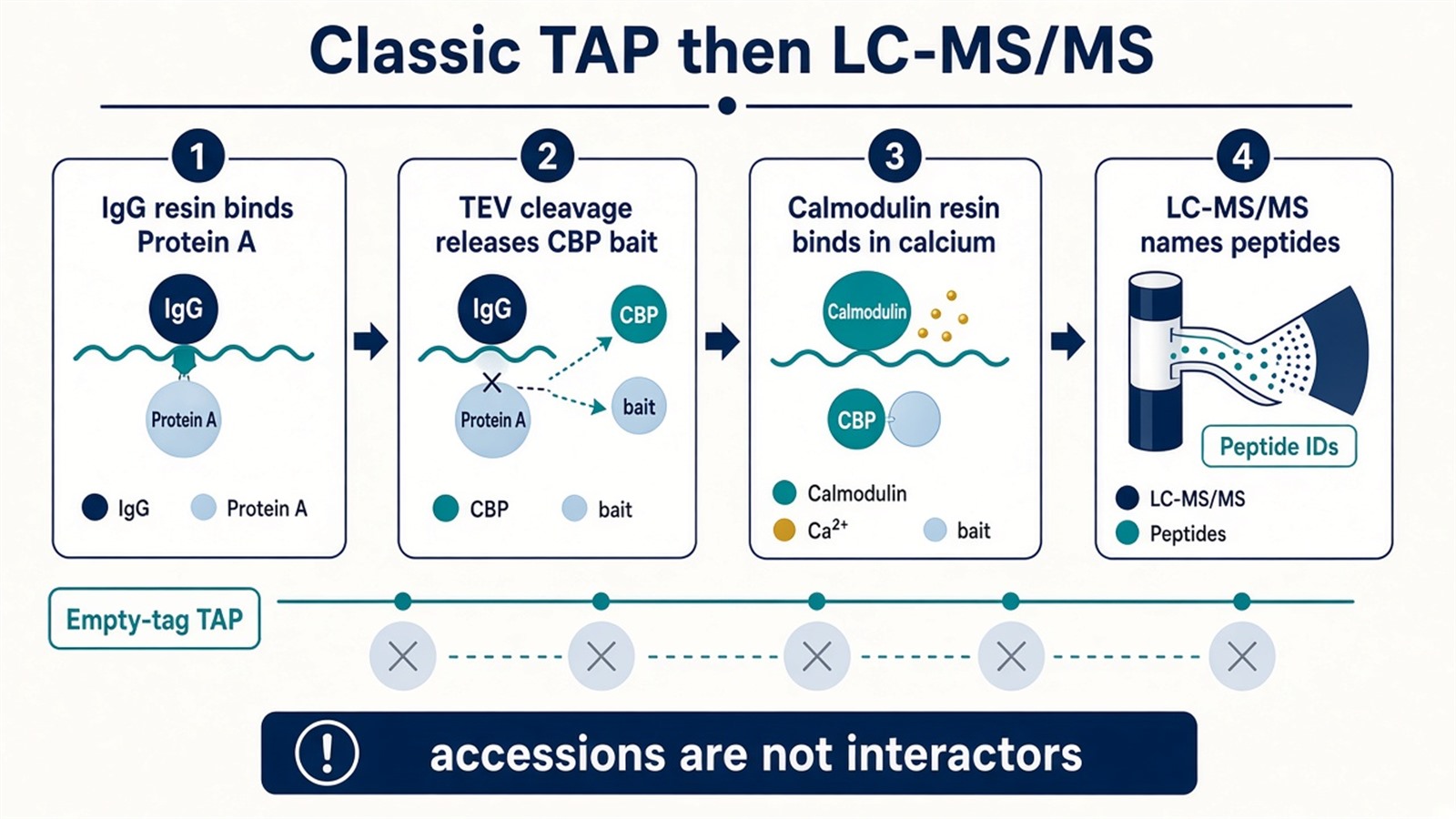
Figure 2. Protein A binds IgG. TEV releases the CBP fusion. Calmodulin binds in calcium. LC-MS/MS names what survived both resins. Empty-tag TAP is processed in parallel.
Advantages and Limits, Recast
The original advantage list overstated what the second resin buys. Two orthogonal handles can reduce some first-resin binders. They do not grant high specificity and purity, and they do not effectively eliminate nonspecific proteins. Mass-spectrometer sensitivity can detect low-abundance peptides in the eluate. That is not detection of low-abundance interactions as a class.
The original limitation list is still true and incomplete. The cassette can alter structure, localization, or function. Two steps take longer and lose material. The scientific cost that belongs on the same list is the second kinetic filter: wash-sensitive neighbors that would have appeared in a single-step AP-MS table can disappear from TAP-MS. Laboratory equipment demand is a logistics note, not the main interpretive limit.
A TAP project therefore has to lock cassette orientation, release chemistry, empty-tag TAP, and the claim level before the first IgG load. For those four decisions in the single-handle case, Planning an Affinity Purification Mass Spectrometry Project provides a complementary planning page. TAP adds a fifth lock: whether the second resin is worth the extra loss.
Experimental Limits
TAP-MS reduces a project to two handles, one release, and one empty-tag TAP arm. Native-complex, pathway-mechanism, biomarker, and therapeutic-target language sits outside ordinary research reporting unless a separately validated assay is already named. A cleaner gel after the second resin does not replace empty-tag TAP.
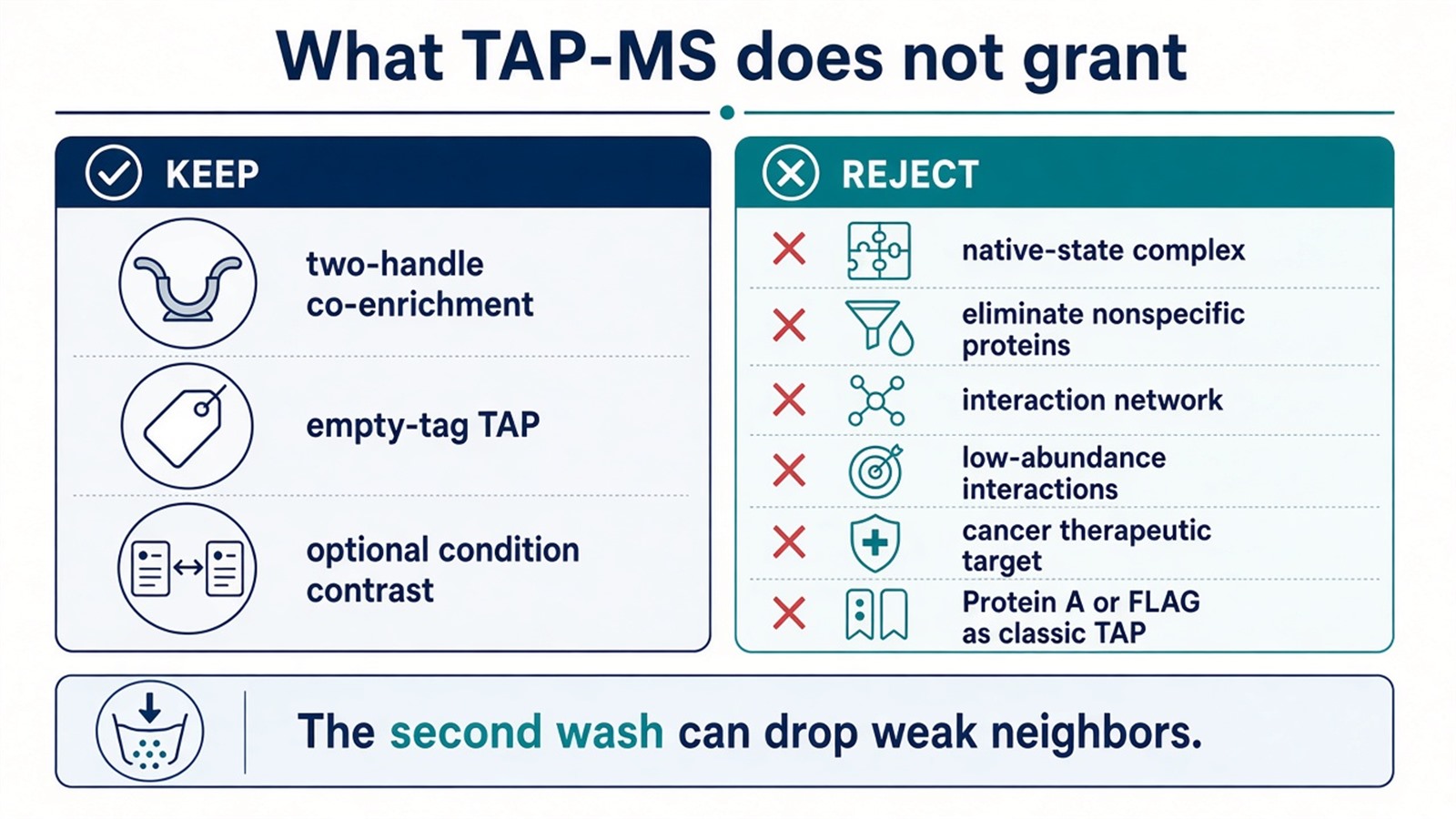
Figure 3. Keep: two-handle co-enrichment and empty-tag TAP. Not granted: native-state complexes, elimination of nonspecific proteins, interaction networks, or therapeutic targets.
Project Planning and Service Scope
A usable request names the cassette, the terminus, the release chemistry, the empty-tag TAP line, and the orthogonal assay that would be required for a binding or mechanism sentence. If a single epitope tag already recovers the bait and a matched empty-tag arm is available, two-step TAP is not required by the heading. MtoZ Biolabs scopes tagged TAP and single-handle AP-MS on Orbitrap-class LC-MS/MS. Interpretability still follows those arms, not a tandem-purification slogan.
Once the next sentence is method matching rather than a two-handle table, this page should hand off. Researchers who need that matching can review the MtoZ Biolabs Protein-Protein Interaction Analysis Service for project-specific sample evaluation, feasibility assessment, and workflow planning.
Frequently Asked Questions
1. Is TAP-MS the same as AP-MS?
TAP-MS is a two-handle tagged format of AP-MS. The file is still co-enrichment after wash. The second resin is the difference.
2. Does the second purification prove a cleaner interactome?
No. It can drop some first-resin binders. It can also drop wash-sensitive neighbors. Empty-tag TAP is still required.
3. Is classic TAP just Protein A or FLAG?
No. Classic TAP is Protein A, a TEV site, and CBP in one cassette. FLAG appears in later dual-tag variants, not as a single-tag substitute.
4. Does TAP-MS analyze complexes in their native state?
No. Both resins are loaded after lysis. Native-state language is a later overlay.
5. Can TAP-MS identify therapeutic targets in cancer?
No. It can rank names that follow a TAP bait in a written line. A therapeutic-target sentence needs a separately validated assay.
Reference
- Rigaut G., Shevchenko A., Rutz B., Wilm M., Mann M., Séraphin B. (1999). A generic protein purification method for protein complex characterization and proteome exploration. Nat. Biotechnol., 17, 1030-1032. https://doi.org/10.1038/13732
- Puig O., Caspary F., Rigaut G., et al. (2001). The tandem affinity purification (TAP) method: a general procedure of protein complex purification. Methods, 24, 218-229. https://doi.org/10.1006/meth.2001.1183
- Gingras A.C., Gstaiger M., Raught B., Aebersold R. (2007). Analysis of protein complexes using mass spectrometry. Nat. Rev. Mol. Cell Biol., 8, 645-654. https://doi.org/10.1038/nrm2208
- Dunham W.H., Mullin M., Gingras A.C. (2012). Affinity-purification coupled to mass spectrometry: basic principles and strategies. Proteomics, 12, 1576-1590. https://doi.org/10.1002/pmic.201100523
- Gavin A.C., Bösche M., Krause R., et al. (2002). Functional organization of the yeast proteome by systematic analysis of protein complexes. Nature, 415, 141-147. https://doi.org/10.1038/415141a
