



Translate Protein Interactions Using IPMax
To translate protein interactions from an immunoprecipitation mass spectrometry experiment, start from the data that actually arrived and from the claim those data can support. IP-MS interaction analysis is antibody or tag capture of a bait, followed by LC-MS/MS identification of proteins that survived the wash. The method name does not convert a peptide list into partners. Inputs are beads, eluates, gel bands, or a planned capture from cells that still have an IP-grade antibody. Controls must travel with the bait tubes. Filtering then keeps names enriched versus those controls after the bait itself is recovered. The interpretable result is a ranked candidate table under a stated wash. It is not a direct-binding proof and not a finished cellular network.
Researchers who already have an IP-grade antibody or an already-run IP product, matched negative IPs, and a written claim can review MtoZ Biolabs IP-Mass Spectrometry Service for feasibility. Pair-level method choice after a shortlist is covered in Measuring Protein-Protein Interactions.
IP, Co-IP, and IP-MS Are Not Interchangeable Terms
IP means an antibody recovered a named bait. The lysis can be native or denaturing. A denaturing IP mainly reports bait recovery plus sticky background. Co-IP means the capture was run under conditions intended to keep partners on the bait. IP-MS means the IP or Co-IP product was digested and searched by LC-MS/MS. The three terms answer different sentences.
AP-MS is a related but separate route. It uses a tagged bait supplied by the client when an IP-grade antibody is absent. Do not rename a tagged capture as IP-MS only because the search output looks similar. Mixed enrichment-MS projects can be reviewed under the MS-Based Protein-Protein Interaction Analysis Service.
Do not treat a generic lysis-to-bioinformatics outline as a method definition. Sample lysis, bead capture, and database search are shared laboratory steps. They do not by themselves translate protein interactions. Branded names attached to those steps are not needed when the geometry is already IP-MS.
If the request is bait recovery and modification status only, the correct label is IP-MS of the bait, not partner discovery. Partner language starts only after native or near-native capture, matched controls, and a filter rule.
IP-MS Data Inputs That Can Be Interpreted
IP-MS interaction analysis can start from two intake classes. The first is an already-run cellular IP product: washed beads, liquid eluate, or a stained gel band. The second is a planned capture from cells or tissue plus a client-supplied commercial IP-grade antibody. Vector construction, overexpression, and knockout are outside this intake.
Every tube needs a written history. State bait identity, antibody catalog information, bead type, native versus denaturing lysis, wash salt and detergent, and elution or on-bead digest chemistry. State which control tubes were processed in parallel. Product-level digest choices for already-run IPs are covered in Cellular IP Product Mass Spectrometry Detection.
Planning amounts for liquid IP products are at least 20 ug total protein at more than 0.5 ug/uL, with SDS kept below 0.1 percent. Gel bands should be visible. High salt, undepleted detergent, and severely degraded material should not be shipped.
The usable MS input after search is an identification table with accessions and intensities, plus the matched control tables. A raw file without bait and control annotation cannot be ranked. Identification depth is typically hundreds to thousands of proteins and depends on the sample. That count is digest inventory, not partner count.
The comparison below keeps submitted IP material and a ranked candidate table on separate tracks.
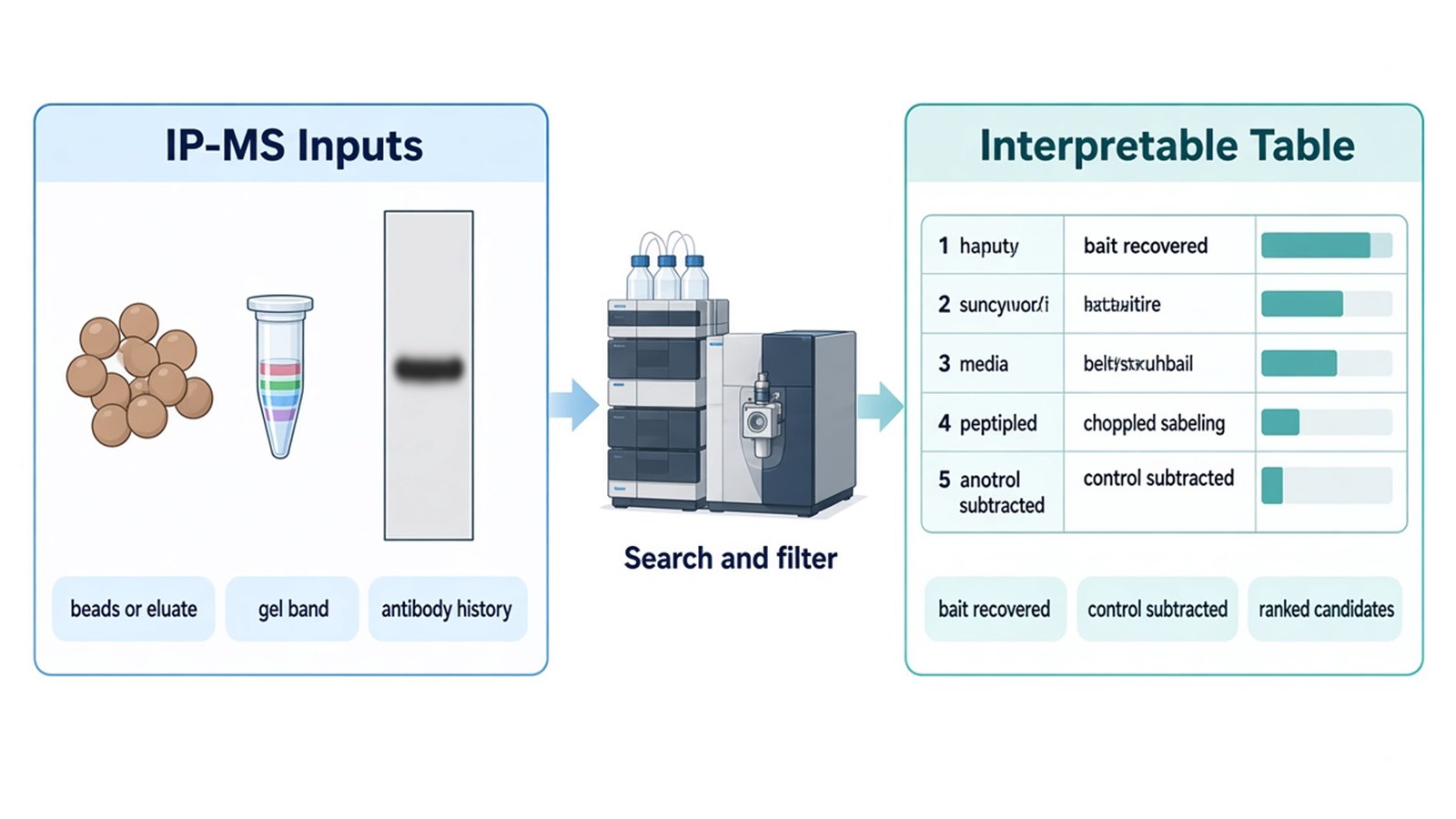
Figure 1. IP-MS Data Inputs vs Interpretable Candidate Table.
Control Design Before Candidate Filtering
Controls are part of the experiment, not a later software option. The negative IP must use the same input amount, bead lot, wash, digest, and LC-MS/MS method. Isotype IgG addresses antibody binding. Bead-only tubes address resin binding. Empty-tag or bait-depleted inputs address construct artifacts when a tag was used.
An untreated lysate MS run does not replace those IP-matched controls. The lysate contains the proteome before capture. The question after IP-MS is who survived this antibody and this wash, not who was present in the starting cells.
If only the bait IP will be shipped, the report can list proteins in that digest. It cannot rank specific co-enriched partners. Write the control set before the capture is opened. Adding an IgG IP after seeing favorite names is not a matched control.
Replicates help ranking when they exist. Biological bait IPs plus matched controls support a consistency rule. A single bait IP can still be identified. It cannot support a stability-filtered partner list.
Filtering Candidate Interacting Proteins
Filtering starts with bait recovery. If the bait is missing from the bait IP table, stop. No partner list should be exported from a capture that did not recover the intended protein.
Names equal in the bait IP and the matched control stay annotated. They are not promoted. Antibody chains, keratins, and trypsin are expected reagent or handling proteins. Label them. Do not list them as novel partners.
Recurrent-contaminant catalogs such as the CRAPome help interpret leftovers after experimental subtraction (Mellacheruvu et al. 2013). They do not replace the matched control. Scoring such as SAINT can rank bait IPs against a control set when replicates exist (Choi et al. 2011). Fold change or intensity ratio versus the control is a simpler alternative when the control design is clean. Do not mix a SAINT probability and an intensity ratio on one unlabeled rank.
Co-enrichment can still be indirect (Hein et al. 2015). A bridging subunit and a true neighbor can occupy the same filtered table. IP-MS interaction analysis reports who was retained with the bait, not who touches the bait.
Write the keep-or-drop rule before search. Changing the cutoff after favorite names appear is not a second experiment. Names that fail the rule stay off the candidate table used to translate protein interactions.
Interpretable Results Versus Over-Read Claims
The interpretable result of IP-MS interaction analysis is a control-aware table. Typical columns are accession, bait-IP intensity, control intensity, a stated enrichment score, and a note for reagent proteins. An optional ranked display can show that table. Network construction from a filtered Co-IP-MS set is a later display step covered in Co-IP MS: Decoding the Construction of Protein Interaction Networks.
Result object |
Sentence it can support |
Sentence it cannot support |
|---|---|---|
Bait peptides in the bait IP |
The capture recovered the intended protein |
Partners are already validated |
Raw ID in the bait digest |
The protein was present after this wash |
The protein binds the bait |
Enrichment vs matched IgG or beads |
Candidate co-enrichment under this wash |
Direct binding |
CRAPome flag after control subtraction |
The leftover is a frequent contaminant elsewhere |
Automatic deletion without looking at this control |
SAINT or intensity rank |
Priority for follow-up |
A finished interactome |
Reciprocal IP or pull-down of a named pair |
A second geometry on that pair |
A replacement for the first IP-MS table |
The table is a reading rule, not a ranking of platforms.
Do not convert a candidate intensity into KD. Affinity belongs on a prepared pair through Surface Plasmon Resonance Technology after the pair is named. Do not convert the same table into a disease-target list.
Ship the bait, antibody or tag plan, control arms, and the sentence the report is allowed to support. Intake for mixed IP and pull-down designs can also be reviewed under Protein-Protein Interaction Analysis.
The diagram below links input format, control arms, filter rule, and the reserved claim to an IP-MS request.
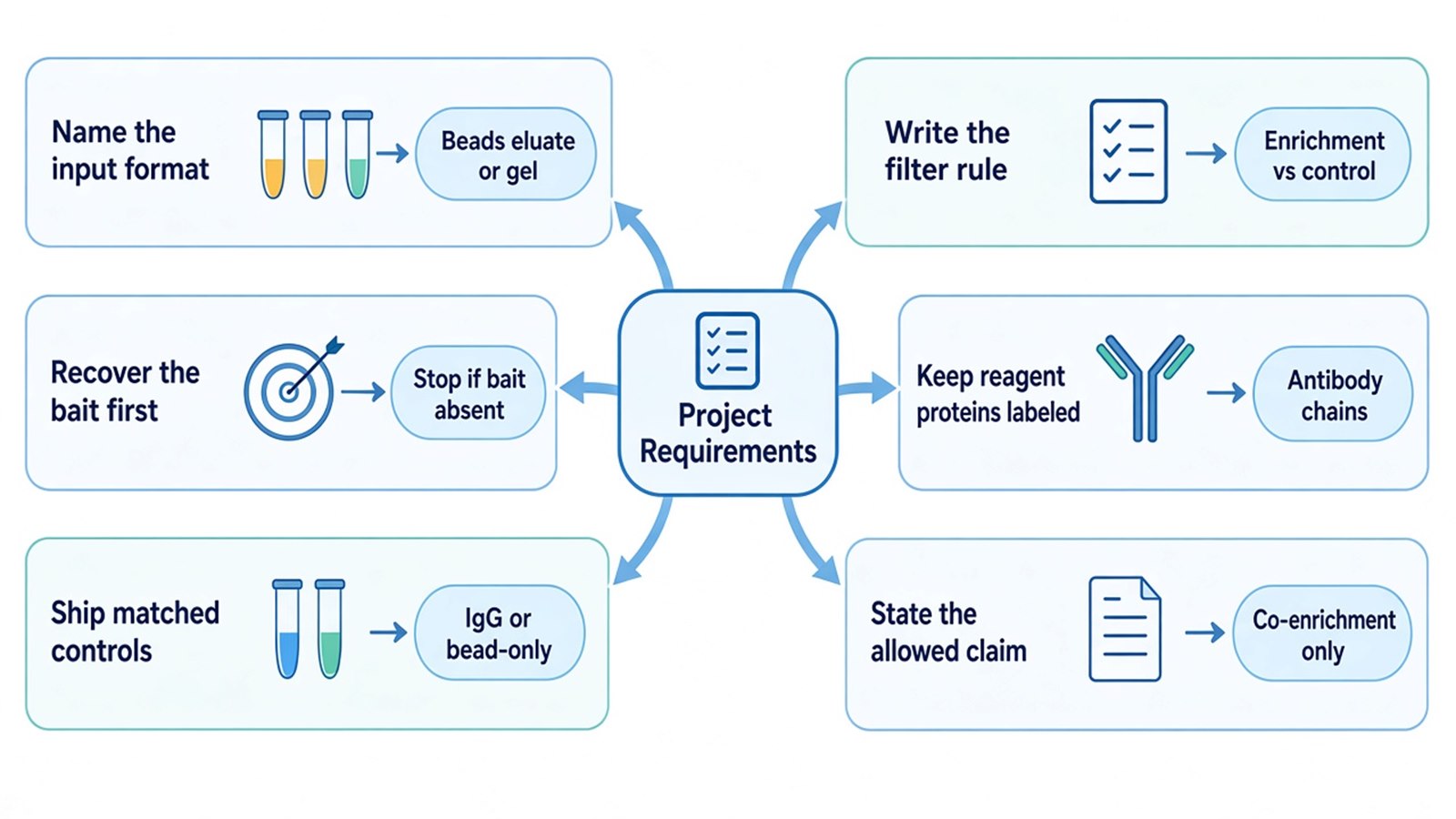
Figure 2. Matching Project Requirements With Interpretable IP-MS Results.
Deliverables typically include identification tables, a control comparison, and the names that passed the stated filter. Deliverables do not include a claim of direct binding, a guaranteed partner count, or a certificate that every remaining accession is a cellular neighbor. To start intake, send the bait, input format, control plan, and reserved claim sentence to info@MtoZ-Biolabs.com or use the site inquiry form so the readable result can be scoped before work starts.
Frequently Asked Questions
1. Can a denaturing IP product be read as a Co-IP partner list?
No. A denaturing IP mainly recovers the bait and proteins that survived a harsh lysis. Partner language needs a native or near-native capture plus matched controls.
2. Does an input-lysate MS run replace the IgG or bead-only IP?
No. The lysate answers what was present before capture. The control IP answers what this antibody and resin bind under the same wash. Only the second comparison ranks IP-MS candidates.
3. What if the bait is absent from the bait IP identification table?
Stop partner ranking. Check antibody compatibility, input amount, and wash. A missing bait means the capture failed, not that the partners are hiding in background.
4. Should antibody heavy and light chains be reported as interactors?
No. Annotate them as reagent proteins. They are expected in an antibody capture. Promoting them as novel partners is a terminology error.
5. What sentence can one IP-MS interaction analysis report support?
It can support co-enrichment of named proteins with the bait versus matched controls under a stated wash. It cannot support direct binding or a finished network. Reciprocal capture or pull-down is the next experiment when a pair must be tested in a second geometry.
Researchers can use IP-MS interaction analysis to translate protein interactions into a control-filtered candidate table, then confirm bait, inputs, and the reserved claim through MtoZ Biolabs IP-Mass Spectrometry Service.
Reference
- D. Mellacheruvu, Z. Wright, A.L. Couzens, J.P. Lambert, N.A. St-Denis, T. Li, Y.V. Miteva, S. Hauri, M.E. Sardiu, T.Y. Low, et al. (2013). The CRAPome: a contaminant repository for affinity purification-mass spectrometry data. Nat. Methods, 10, 730-736. https://doi.org/10.1038/nmeth.2557
- H. Choi, B. Larsen, Z.Y. Lin, A. Breitkreutz, D. Mellacheruvu, D. Fermin, Z.S. Qin, M. Tyers, A.C. Gingras, A.I. Nesvizhskii (2011). SAINT: probabilistic scoring of affinity purification-mass spectrometry data. Nat. Methods, 8, 70-73. https://doi.org/10.1038/nmeth.1541
- M.Y. Hein, N.C. Hubner, I. Poser, J. Cox, N. Nagaraj, Y. Toyoda, I.A. Gak, I. Weisswange, J. Mansfeld, F. Buchholz, et al. (2015). A human interactome in three quantitative dimensions organized by stoichiometries and abundances. Cell, 163, 712-723. https://doi.org/10.1016/j.cell.2015.09.053
