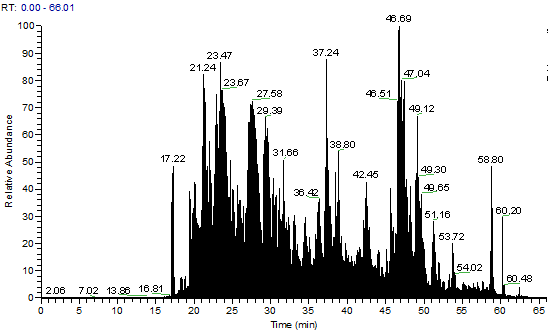
IP-Mass Spectrometry Service
MtoZ Biolabs provides IP-Mass Spectrometry Service for identification and characterization of immunoprecipitated target proteins by high-resolution LC-MS/MS.
Projects can start from biological samples or prepared IP materials, with Orbitrap-based mass spectrometry providing peptide-level evidence for confident target protein identification.
- Go beyond Western blot with peptide-level evidence for target identification
- Submit prepared IP material without repeating completed enrichment work
- Access IP-MS-validated antibodies for selected target proteins
What Is IP-Mass Spectrometry?
Immunoprecipitation mass spectrometry (IP-MS) combines antibody-based enrichment with LC-MS/MS protein identification. A target-specific antibody isolates the protein of interest from a complex biological sample, after which the enriched material is digested into peptides and analyzed by high-resolution mass spectrometry.
Compared with antibody-based detection alone, IP-MS provides peptide-level identification evidence together with sequence coverage, identification scores, and MS intensity information, allowing more detailed characterization of the enriched target protein.
IP-Mass Spectrometry Service at MtoZ Biolabs
MtoZ Biolabs provides IP-MS analysis to identify immunoprecipitated proteins and characterize proteins associated with the target complex.
1. Sample Submission Options
- Full-Process IP-MS: Start with tissues, cells, microorganisms, or suitable body fluids for immunoprecipitation and downstream mass spectrometry.
- Prepared IP Materials: Submit magnetic beads, eluates, gel bands, or compatible protein solutions for downstream LC-MS/MS analysis.
2. Antibody and Target Enrichment
Full-process projects require a suitable IP-grade antibody for target enrichment. IP-MS-validated antibodies are available from MtoZ Biolabs for selected targets upon request.
3. Mass Spectrometry and Data Analysis
- MS Platform: Orbitrap-series high-resolution mass spectrometry.
- Protein Identification: MaxQuant-based data analysis.
- Reference Database: UniProt reference proteome or an appropriate customer-provided protein database.
When IP-MS Is a Good Fit
Choose IP-MS when the target protein itself is the main analytical focus and enrichment is needed before mass spectrometry.
IP-MS is well suited when:
- A known endogenous target protein requires MS-based identification
- The target needs to be enriched from a complex biological sample
- Western blot alone does not provide enough protein-level information
- Peptide coverage, identification scores, or MS intensity data are needed
- Prepared IP material requires downstream LC-MS/MS analysis
- Relative abundance of the enriched target needs to be compared across experimental groups
If broad interaction partner discovery is the main objective rather than characterization of the target protein itself, an interaction-focused co-IP-MS or AP-MS service may be more appropriate.
Analysis Workflow
1. Project Review
Review the target protein, sample type, current sample status, antibody information, and analytical goal.
2. Immunoprecipitation or Sample Intake
Enrich the target protein from the biological sample or receive prepared IP material for downstream MS processing.
3. Protein Digestion
Perform reduction, alkylation, tryptic digestion, and C18 desalting.
4. Nano-LC-MS/MS Analysis
Separate peptides by nano-LC and acquire high-resolution mass spectrometry data.
5. Protein Identification
Search MS data against the appropriate protein database and generate protein- and peptide-level identification results.
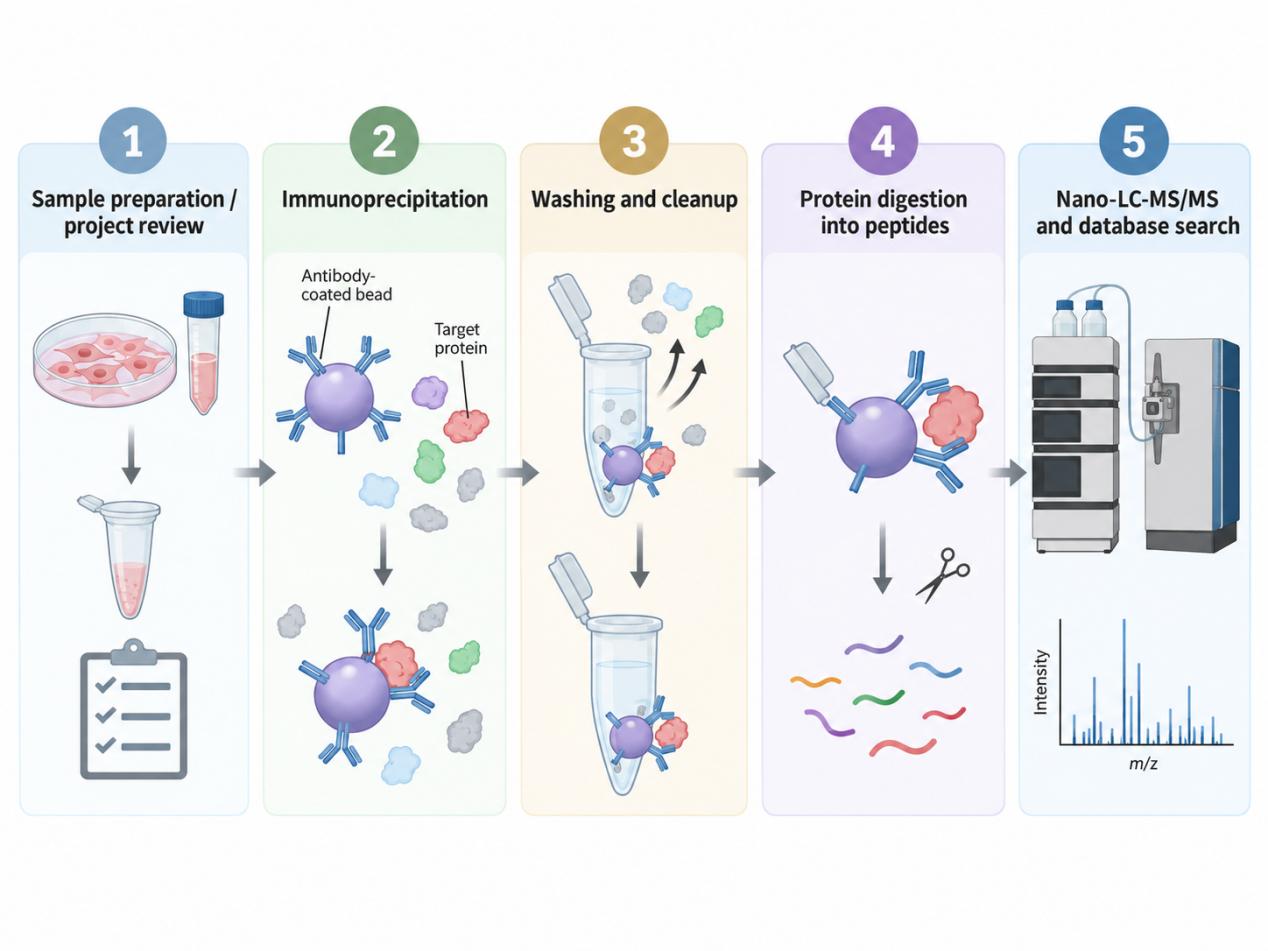
Figure 1. Analysis Workflow of IP-MS
Service Advantages
1. Target-Focused Protein Analysis
Immunoprecipitation enriches the protein of interest before MS analysis, reducing sample complexity and focusing the analysis on the selected target.
2. High-Accuracy Mass Spectrometry
Orbitrap high-resolution mass spectrometry with mass accuracy <5 ppm supports confident peptide and protein identification.
3. Complete IP-to-MS Workflow
Immunoprecipitation, sample preparation, nano-LC-MS/MS, database searching, and analytical reporting can be completed within one service workflow.
4. Flexible Database Support
Protein identification can be performed against UniProt reference proteomes or an appropriate custom protein database supplied by the client.
5. One-Time Charge
Our pricing is transparent, with no hidden fees or additional costs.
Sample Submission Suggestions
1. Original Biological Samples
Animal or plant tissues, cells, microorganisms, and body fluid samples can be evaluated for full-process IP-MS.
2. Prepared IP Materials
We also accept:
IP magnetic beads, protein eluates, loading buffer-treated solutions, visible SDS-PAGE gel bands, protein solutions
For protein solutions, ≥20 μg total protein at >0.5 μg/μL is recommended. Gel bands should be clearly visible by eye.
Protein solutions and magnetic beads should be rapidly frozen and shipped on dry ice, while gel bands may be shipped at room temperature or with cold packs. For downstream MS analysis, SDS should be below 0.1%. Severely degraded samples or samples containing substantial salt or strong-detergent carryover are not suitable for direct analysis.
Please provide the organism or an appropriate protein reference database. Contact us if you are uncertain about sample amount, buffer compatibility, storage, or shipping.
Applications
1. Protein Function Research
Characterize endogenous proteins involved in protein regulation, stability, localization, and other functional processes.
2. Cell Signaling Research
Analyze target proteins involved in signaling pathways and examine changes associated with pathway activation, inhibition, or cellular stimulation.
3. Disease Mechanism Studies
Characterize disease-related target proteins to support studies of altered protein regulation and molecular mechanisms.
4. Drug Response Research
Compare enriched target proteins between treated and control samples to investigate treatment-related changes.
5. Biomarker and Target Research
Apply immunoprecipitation followed by MS to characterize proteins of interest in biomarker studies, target research, and translational projects.
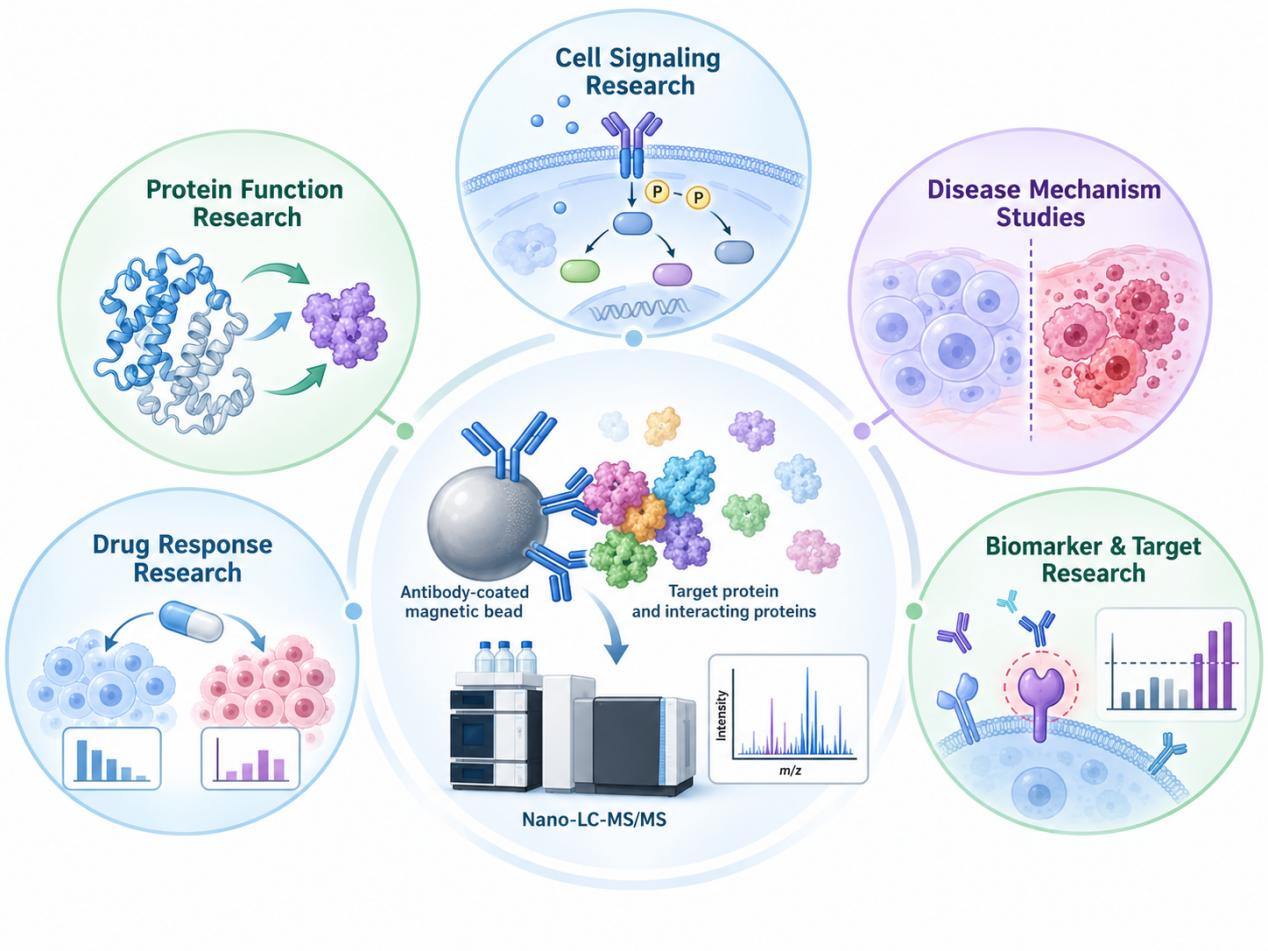
Figure 2. IP-MS Research Applications
Deliverables
Standard project outputs include:
1. Raw MS Data
Original mass spectrometry files
2. Protein Identification Results
Protein IDs, sequence coverage, identification scores, and intensity values
3. Peptide Identification Results
Identified peptide sequences and associated analytical information
4. Comparative Results
Relative abundance comparisons when comparison groups are included
5. Result Tables
Excel-formatted protein and peptide identification results
6. Project Report
PDF report summarizing methods and analytical results
FAQ
Q1: How can non-specific binding in immunoprecipitation be minimized for mass spectrometry analysis?
Non-specific binding can be reduced through appropriate antibody selection, optimized lysis and wash conditions, and suitable negative controls. Careful handling during immunoprecipitation also helps reduce background proteins before LC-MS/MS analysis. For full-process IP-MS projects, MtoZ Biolabs can adjust the enrichment conditions based on the target protein and sample type.
Q2: What information should I provide before starting an IP-MS project?
Please provide the target protein, species, sample type, current sample status, and the main question you want the analysis to answer. For prepared IP samples, sample format and buffer information are also helpful.
Q3: Do you provide antibodies for IP-MS projects?
Yes. MtoZ Biolabs provides IP-MS-validated antibodies for selected targets. Contact us to confirm availability for your protein of interest.
Contact Us
Tell us your target protein, sample type, current IP status, and the information you want to obtain. MtoZ Biolabs can review your project, confirm sample suitability, and recommend an appropriate IP-MS strategy.
MtoZ Biolabs, an integrated chromatography and mass spectrometry (MS) services provider.
Related Services
Protein-Protein Interaction Analysis Service
Co-Immunoprecipitation Protein Interaction Analysis Service
Demo for IP-Mass Spectrometry Service
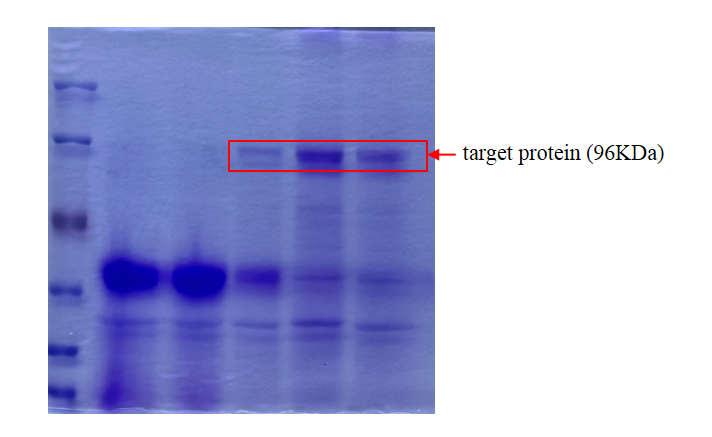
SDS-PAGE Analysis of Enriched Protein Samples
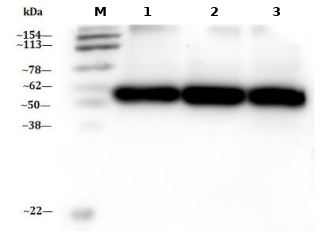
Representative Western Blot Results
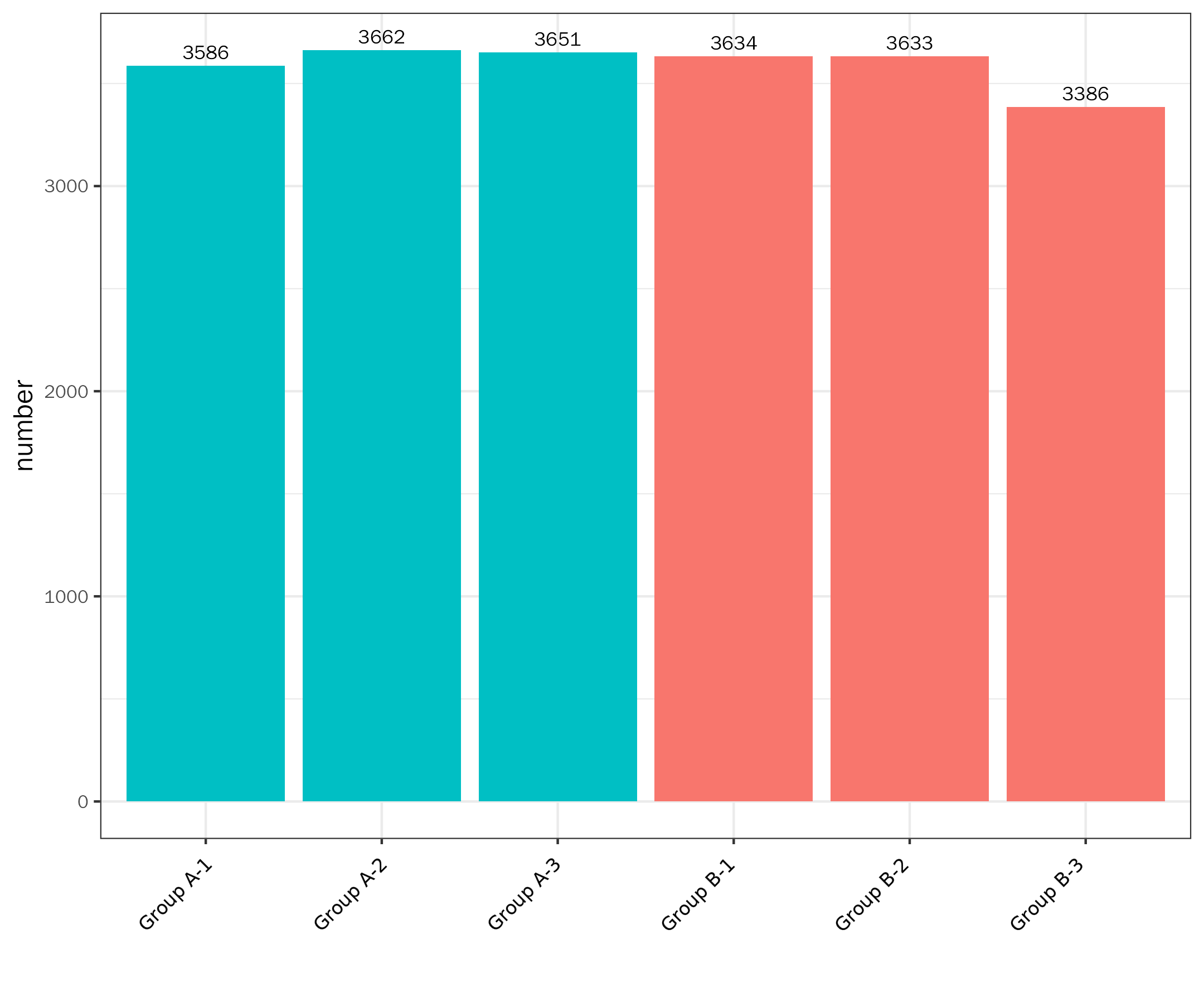
Protein Identification Counts Across Samples
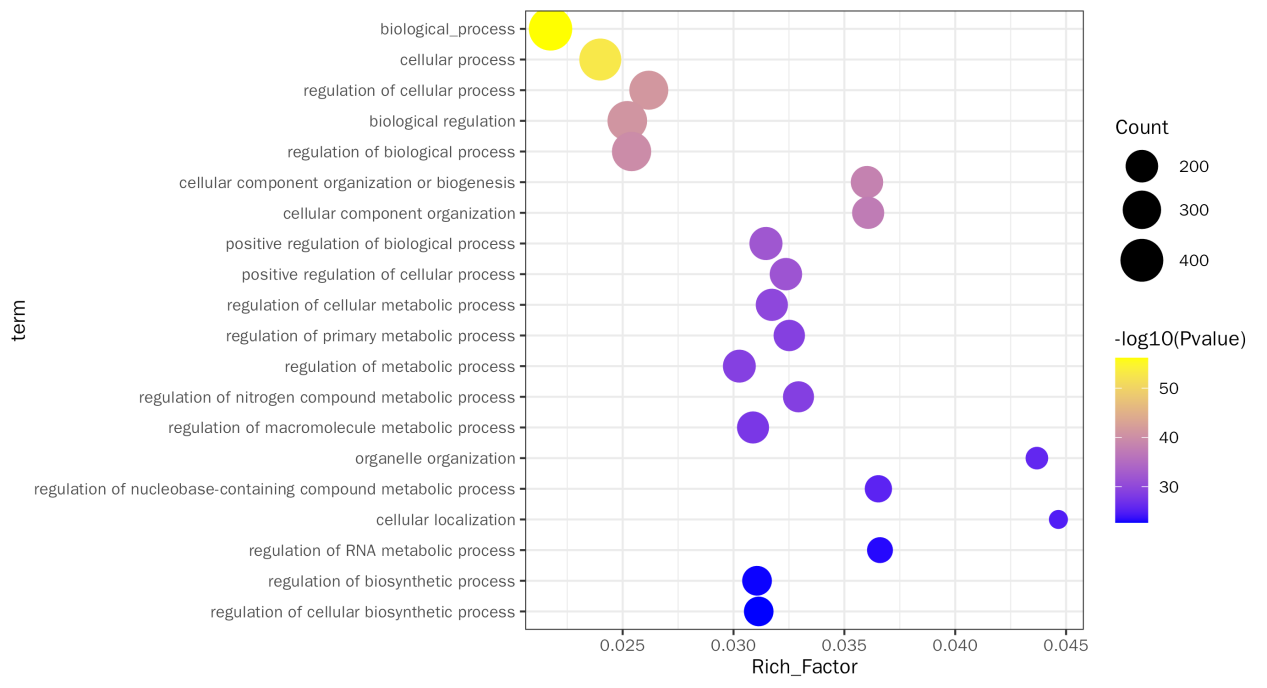
GO Enrichment Bubble Plot

PPI Network Highlighting Hub Proteins