



Protein-protein interaction services are useful only after the evidence goal is fixed. A project may need co-enriched partners from cells, proteins retained on a recombinant bait, or neighbors labeled in live cells before lysis. Co-IP, IP-MS, AP-MS, pull-down, and proximity labeling each produce a different type of record. Service selection should start from that record, then from bait design, controls, and what the report is allowed to claim.
This page is a resource for planning outsourced PPI work, not a catalog of interchangeable assays. Generic platform claims do not replace a written contrast, negative controls, and a clear question about discovery, pair testing, or proximity. Teams with bait sequence, antibody availability, and sample format can review MtoZ Biolabs Protein-Protein Interaction Analysis for feasibility. Broader method comparison appears in Measuring Protein-Protein Interactions.
What Protein-Protein Interaction Services Should Decide First
Protein-protein interaction services should be matched to three planning items before samples ship. The evidence type defines whether co-enrichment, in vitro retention, or live-cell proximity is the primary readout. The bait format defines whether an antibody, tag, or fusion construct is available and validated. The control plan defines what will separate specific recovery from bead binding, tag artifacts, or abundant background.
Co-IP and IP-MS fit when an antibody can recover a target from lysate or tissue and the goal is a partner list under those lysis and wash conditions. AP-MS fits when a tagged bait is expressed or pulled with an epitope tag and enrichment happens after capture on beads or resin. Pull-down fits when a purified or fusion bait is immobilized and retained proteins are identified in vitro. Proximity labeling fits when associations may be weak, fast, or compartment-restricted and labeling must occur before complex dissociation during lysis.
No single route alone proves direct binary binding in cells. Co-purification and proximity maps support follow-up with defined-pair pull-down, SPR, or orthogonal MS, scoped on separate service pages when needed.
Co-IP and IP-MS: Applicable Questions and Reporting Limits
Co-IP uses antibody specificity to recover a bait and associated proteins from a lysate. IP-MS adds LC-MS/MS identification of proteins in the immunoprecipitated material versus control immunoprecipitations. Protein-protein interaction services built on this path answer which proteins co-recover with the bait under the submitted buffer, wash stringency, and antibody lot.
Co-IP and IP-MS are often chosen when the bait exists endogenously or when a validated antibody is already in hand. They are less suited when the interaction dissociates during harsh lysis or extended washing, or when the only readout required is in vitro retention of a recombinant pair. Reports typically contain identified proteins, spectral support, and relative enrichment context when replicate or control samples are included. They do not, by themselves, establish contact surfaces or affinity constants.
Negative controls should be planned with the service intake: isotype or empty bead controls, unrelated antibody controls, or bait-depleted lysates when available. Detergent, salt, and phosphatase inhibitor history must be declared because they change which interactions survive extraction. Intake for antibody-based enrichment and MS identification is scoped through the IP-Mass Spectrometry Service.
AP-MS and Pull-Down: Bait Capture, Sample Format, and MS Fit
AP-MS refers to affinity purification of a tagged or engineered bait followed by MS identification of co-purified proteins. It overlaps with tagged IP workflows but is usually discussed when the bait is recombinant, inducible, or fused to an affinity handle rather than detected with a native antibody. Large-scale AP-MS maps often reflect complex membership and abundance context rather than a complete binary contact list (Hein et al. 2015). Pull-down assays immobilize a bait, incubate with lysate or purified prey, wash, and analyze retained proteins, often with GST or similar fusion systems.
AP-MS and pull-down answer whether proteins remain associated with the bait through capture and wash steps in the submitted experiment. Pull-down in particular reports in vitro retention, not the full in-cell milieu. They fit named-bait discovery, domain mapping with baits, and follow-up on candidates from Co-IP or proximity lists. They fit poorly when the scientific claim requires undisturbed live-cell architecture without fusion tags.
Sample requirements depend on the handoff stage. For MS-only identification of an existing pull-down or Co-IP gel band, stained 1D SDS-PAGE samples are accepted with compatible Coomassie, SYPRO Ruby, or specified silver stains; liquid eluates above roughly 10 ug protein are easier to process than low-microgram samples with high SDS or salt. For fusion pull-down projects, bait purity, blocking strategy, and GST-only controls should be described before capture. AP-MS and mixed enrichment MS projects are reviewed under the MS-Based Protein-Protein Interaction Analysis Service. Pull-down MS identification and fusion pull-down support appear in the Fusion Protein Interaction Analysis Service | Pull-Down and MS and GST Pull Down Assay Service.
Proximity Labeling: Live-Cell Proximity and MS Readout
Proximity labeling records which proteins were near a bait fusion during a short labeling window in living cells. After biotin enrichment, LC-MS/MS lists proximal candidates. Protein-protein interaction services on this route fit weak, transient, or spatially restricted associations that may not survive immunoprecipitation washing. They also fit compartment-restricted baits when fusion placement and labeling time are controlled.
Proximity labeling does not prove that two proteins form a stable complex or direct contact. High background labeling and expression level can dominate lists, so labeling duration, ligase-only controls, and non-fused controls should be included in the project design. Fusion design, cell line stability, and enrichment conditions must be declared at intake because they set the interpretable radius and background.
In MtoZ Biolabs offerings, proximity labeling MS workflows are reviewed through the Proximity Labeling Mass Spectrometry service page. Pair validation after a proximity list still requires a route matched to the claim, such as pull-down or SPR on dedicated service pages.
The routes above differ in where capture or labeling happens and in what survives washing or lysis. Co-IP and IP-MS report co-recovery from lysate, AP-MS and pull-down report retention on a bait, and proximity labeling reports neighbors before complex dissociation. The overview below groups those service paths by evidence type without implying that one panel replaces the others.
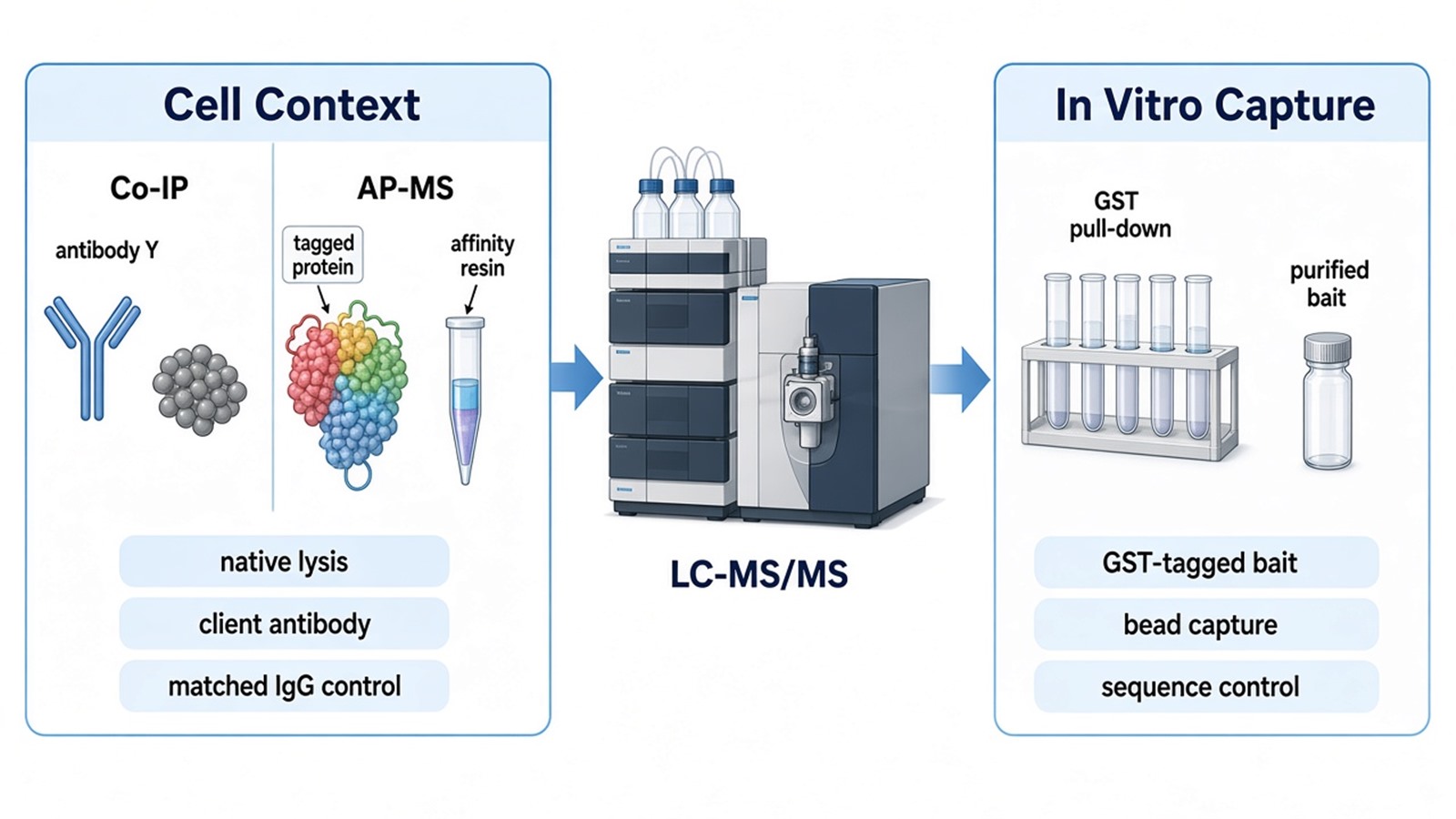
Figure 1. Cell-Context Enrichment vs In Vitro Capture vs Proximity Labeling.
How to Choose Among Co-IP, AP-MS, Pull-Down, and Proximity Labeling
The table below maps common project questions to service routes. It states tendencies, not rules. Sample quality and controls can shift the feasible route.
|
Project question |
Route often scoped first |
Sample or bait needs |
Typical deliverable focus |
What the report does not prove |
|---|---|---|---|---|
|
Who co-recovers with an endogenous bait in lysate? |
Co-IP / IP-MS |
Validated antibody, lysate or tissue, IP controls |
Identified co-enriched proteins vs controls |
Direct binding or complex stoichiometry |
|
Who co-purifies with a tagged bait after capture? |
AP-MS / tagged enrichment MS |
Tag or fusion construct, expression system, empty-tag control |
Co-purified protein list from AP eluate |
In-cell proximity without lysis artifact |
|
Who binds an immobilized bait in vitro? |
Pull-down + MS |
Purified or GST fusion bait, prey source, GST-only control |
Retained proteins identified by MS |
Physiological interaction in intact cells |
|
Who was near the bait in live cells? |
Proximity labeling + MS |
Fusion and labeling plan, ligase-only control, biotin enrichment |
Proximal protein candidates after enrichment |
Direct contact or affinity values |
When two rows look applicable, bait format and controls usually decide which route is scoped first. Proximity labeling followed by pull-down on one candidate is a sequential design, not a single blended line item. If the claim shifts from partner discovery to affinity or interface work, feasibility review should split scopes rather than stretch one report type.
Use the table during intake to confirm that the requested deliverable matches the evidence type. If the team needs co-enrichment from lysate, in vitro retention, and live-cell proximity in one submission, separate sample sets and control arms should be planned before MS work starts.
Samples, Deliverables, and Feasibility Intake
Samples should arrive with a short project brief: evidence goal, bait identity, organism and cell type, lysis or labeling buffer, and control lanes or cultures. For IP and Co-IP material, declare antibody catalog information, bead type, and whether eluates contain high detergent or denaturant. For pull-down gel submissions, note stain type and band location; avoid destaining steps that are incompatible with MS unless the intake team confirms compatibility. For proximity projects, include labeling time, substrate conditions, and control constructs.
Intake moves faster when the project question is mapped to a service line before samples ship. The diagram below links common requirements to Co-IP, AP-MS, pull-down, proximity labeling MS, and follow-up validation routes discussed during feasibility review.
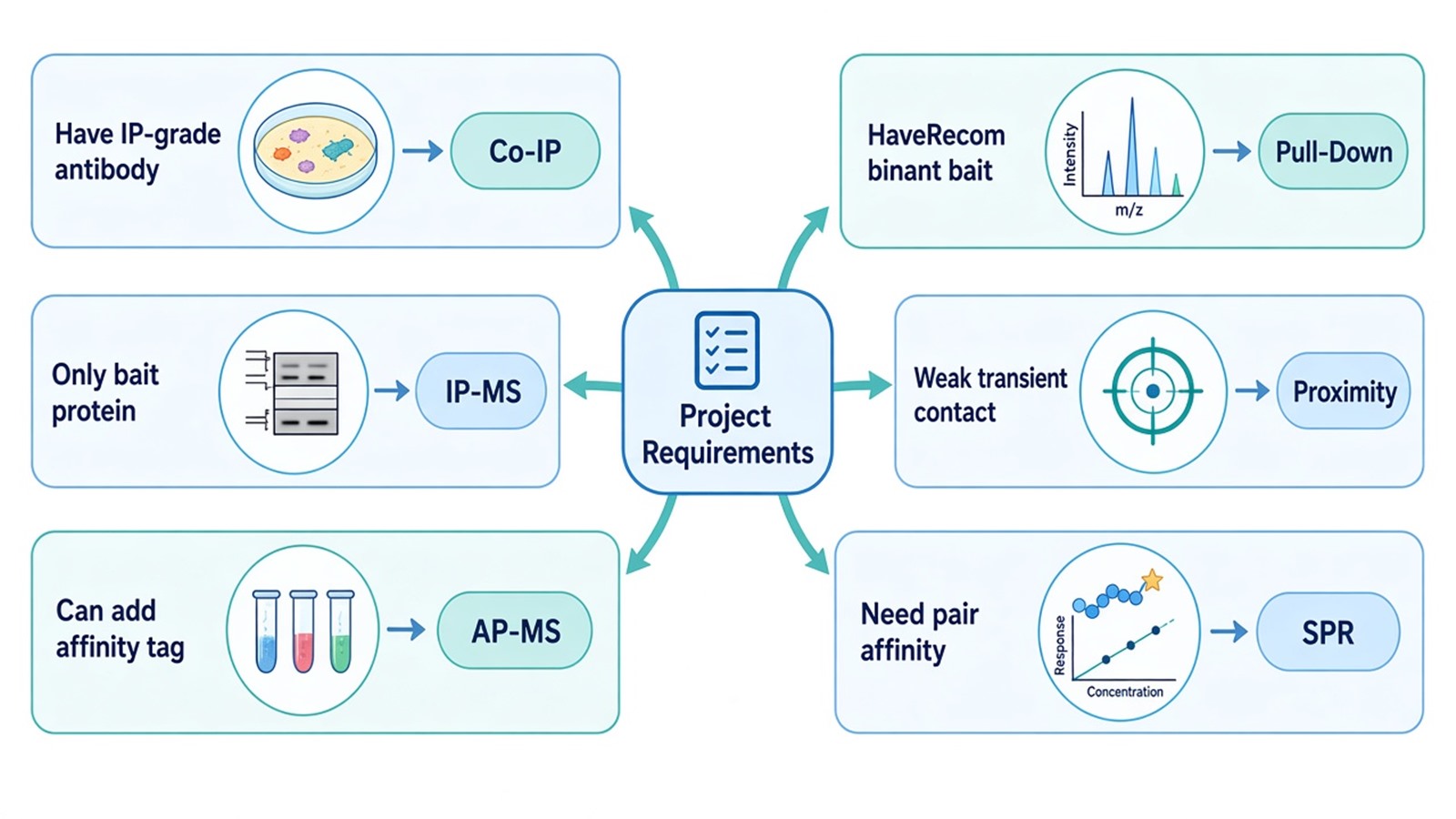
Figure 2. Matching Project Requirements With PPI Services.
Deliverables depend on the scoped workflow but commonly include processed MS data, protein identification tables, and a written summary of identified interaction candidates relative to submitted controls. PTM information may be included when IP-MS scope and data quality support it. Raw data handoff can be discussed at intake when the project requires archive files for publication. Deliverables do not automatically include kinetic constants, structural models, guaranteed hit validation, or clinical target claims.
Feasibility review checks whether the bait, controls, and sample state match the requested route. If the claim requires affinity measurement or interface mapping, the project may be split into discovery on the routes above and follow-up on Surface Plasmon Resonance Technology or crosslinking services when appropriate. To start intake, send the evidence goal, available sample type, and control plan to info@MtoZ-Biolabs.com or use the site inquiry form with the same details so method choice can be confirmed before shipment.
Frequently Asked Questions
1. Can Co-IP or pull-down samples be submitted for MS identification only?
Yes, when the stain or elution buffer is compatible with digestion and LC-MS/MS. Gel bands should use MS-compatible stains where possible, and liquid samples above roughly 10 ug total protein are easier to scope than low-input, high-SDS eluates. Declare buffer components and band count before shipping.
2. When should Co-IP be scoped instead of GST pull-down?
Co-IP is scoped when the bait must be recovered with a native antibody from cell or tissue lysate and the question is co-enrichment under those conditions. Pull-down is scoped when a recombinant or fusion bait can be immobilized and the question is retention in a defined in vitro capture step. Either result still needs controls and may need orthogonal validation for a direct-binding claim.
3. What is the minimum control set for AP-MS or tagged enrichment?
At minimum, include an empty-tag or non-target control capture processed in parallel, plus a bead-only lane when resin binding is a risk. Biological replicates strengthen partner ranking but do not replace negative controls. Control design should be confirmed during feasibility review.
4. Does proximity labeling MS replace Co-IP for weak interactors?
It can surface proteins that were near the bait in live cells when Co-IP washing removes exchangeable partners. It reports proximity during labeling, not stable complex membership after lysis. Many projects use proximity labeling for candidate generation and Co-IP, pull-down, or SPR for follow-up scoped separately.
5. What should be in a feasibility email for protein-protein interaction services?
Include the evidence goal, bait sequence or antibody details, sample type and amount, planned controls, and any prior enrichment results so feasibility review can confirm whether Co-IP, IP-MS, AP-MS, pull-down, or proximity labeling MS matches the claim before sample preparation steps are finalized.
Researchers planning outsourced PPI work can align the evidence goal with Co-IP, AP-MS, pull-down, or proximity labeling routes, then confirm sample format and controls through MtoZ Biolabs Protein-Protein Interaction Analysis intake.
Reference
- M.Y. Hein, N.C. Hubner, I. Poser, J. Cox, N. Nagaraj, Y. Toyoda, I.A. Gak, I. Weisswange, J. Mansfeld, F. Buchholz, et al. (2015). A human interactome in three quantitative dimensions organized by stoichiometries and abundances. Cell, 163, 712-723. https://doi.org/10.1016/j.cell.2015.09.053
- A.C. Gavin, M. Bosche, R. Krause, P. Grandi, M. Marzioch, A. Bauer, J. Schultz, J.M. Rick, A.M. Michon, C.M. Cruciat, et al. (2002). Functional organization of the yeast proteome by systematic analysis of protein complexes. Nature, 415, 141-147. https://doi.org/10.1038/415141a
- D.I. Kim, B. Birendra, W.C. Zhu, K. Motamedchaboki, E.W. Dedecker, K. Zhang, Y. Shu, S.A. Gross, J. Krogan, T. Ideker, et al. (2016). Probing nuclear pore complex architecture with proximity-dependent biotinylation. Proc. Natl. Acad. Sci. U.S.A., 113, E2453-E2461. https://doi.org/10.1073/pnas.1601082113
