



Protein-protein interaction sequencing is not one instrument method and not a single PPI-Seq product. The phrase is used for two different jobs that are often written as if they were the same platform in a methods list. The first is a genetic or display screen in which interacting clones are recovered and their DNA barcodes or prey inserts are read by high-throughput sequencing. The second is a protein-level test that asks whether a named pair co-recovers, binds in vitro, or satisfies a distance constraint. Yeast two-hybrid (Y2H), fluorescent reporters, and next-generation sequencing (NGS) are not interchangeable parts of one unified workflow.
A sequencing count reports which coded constructs survived selection. It does not identify a protein complex from a lysate and does not measure affinity. A reporter that lights up in yeast or a mammalian cell reports reconstitution of a transcription factor or a split tag. It is not a sequencing experiment unless DNA is actually read. Researchers who already have a bait construct, a library plan, and a written claim can review MtoZ Biolabs Protein-Protein Interaction Analysis for the protein-assay arm. Method-level protein choices are covered in Measuring Protein-Protein Interactions.
What Protein-Protein Interaction Sequencing Is Not
The original error is to fold Y2H, fluorescent fusion tags, and genome-wide NGS into one definition called PPI-Seq. Y2H detects whether a bait-DBD fusion and a prey-AD fusion reconstitute transcription in the yeast nucleus (Fields and Song 1989). A fluorescent reporter can score that event without any sequencer. NGS can later count barcodes or insert sequences from selected colonies or pooled DNA. Those are sequential options, not one technology.
Protein-protein interaction sequencing also is not protein-DNA mapping. ChIP-seq and CUT&Tag report occupancy on nucleic acid. They do not sequence a protein-protein contact. Spectrum search of an IP-MS digest identifies peptides. That is mass spectrometry, not NGS of interaction barcodes.
Write the claim before choosing a platform. If the claim is “which preys in this library survive with this bait,” a sequencing readout of selected DNA can fit. If the claim is “this named pair co-recovers from lysate” or “this pair has a measured KD,” sequencing is the wrong first method.
Sequencing-Based Screening and Barcode Readout
Sequencing belongs when the screen generates DNA that encodes the putative partner. In a pooled Y2H or related barcode-fusion design, interacting cells are selected on reporter media or by a selectable marker. Prey inserts or fused barcodes are then amplified and counted by NGS. Deep multiplexed Y2H-seq formats have been used to map large binary networks from selected DNA rather than from one-by-one colony sequencing (Trigg et al. 2017).
The experimental unit is a coded construct, not a purified protein. Output tables list barcode or insert IDs, count or enrichment versus a non-selected pool, and the bait used for that pool. Auto-activators, empty-prey vectors, and reciprocal-swap failures should be filtered before a name is treated as a hit. Library coverage, barcode collision, and PCR jackpotting can inflate counts without any protein contact.
Protein-protein interaction sequencing in this narrow sense is a screen readout. Intake for bait-prey library work is scoped through the Yeast 2 Hybrid Analysis Service. Whether selected clones are Sanger-confirmed, pooled for NGS, or both should be stated at feasibility review. Do not assume that every Y2H project includes genome-wide sequencing.
A mammalian reporter or a split-fluorescent assay can sit beside a Y2H screen. It still reads a reconstituted signal. It becomes a sequencing project only if barcodes or inserts are collected and sequenced. Fluorescence intensity alone is not a sequencing readout.
When a Sequencing Hit Still Needs a Protein Assay
A barcode-enriched prey is a candidate. Direct interaction tests ask whether the proteins, not only the plasmids, support the claim. Reciprocal Y2H with swapped bait and prey reduces one-way auto-activation. It still occurs in the yeast nucleus on fusion proteins. Orthogonal protein assays are required when the publication sentence will say co-recovery, in vitro retention, or affinity.
IP-MS or Co-IP-MS tests whether the pair can be recovered from a cell or tissue lysate with controls. Enrichment lists of that type report complex membership more than a complete binary contact set (Hein et al. 2015). Defined-pair pull-down tests retention on an immobilized bait. SPR tests a prepared pair on a biosensor. XL-MS tests residue proximity if the pair can be produced as a complex. None of those methods is a sequencer.
Hits that fail protein assays are still useful as screen notes. They may reflect nuclear mislocalization, fusion artifacts, or a yeast-only association. Hits that pass a protein assay still do not prove a cellular occupancy or an interface map. Protein follow-up can be scoped through the IP-Mass Spectrometry Service, the GST Pull Down Assay Service, or the Surface Plasmon Resonance Technology service.
Sequencing readouts and protein assays answer different questions. The comparison below keeps barcode counts on one side and pair tests on the other.
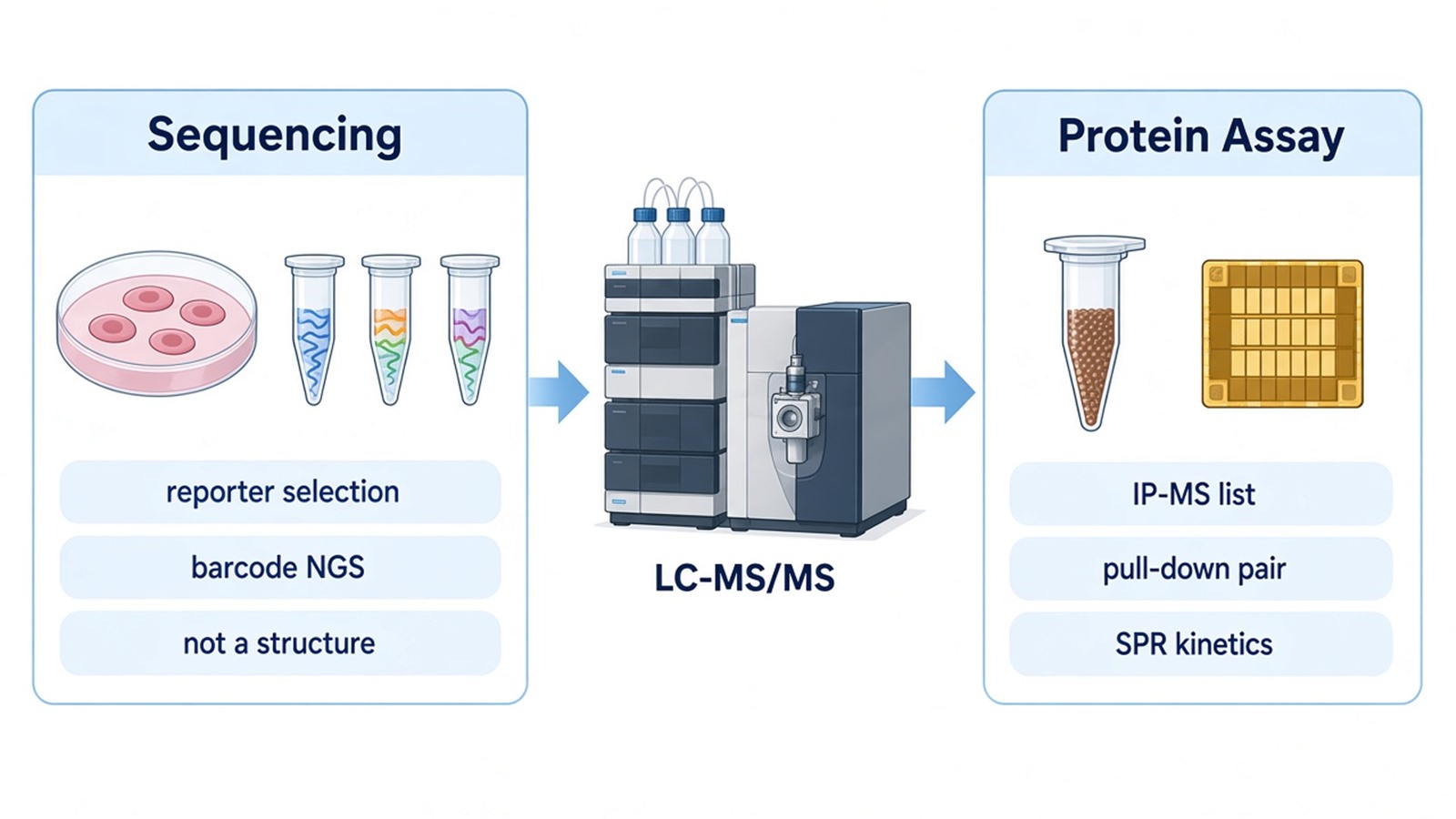
Figure 1. Sequencing Readout vs Protein Assay.
Cases Where a Sequencing Readout Does Not Apply
Do not start with a sequencing screen when no coded library exists. A purified pair with no barcodes has nothing to sequence. A tissue IP that needs partner names should go to IP-MS, not to NGS of an absent prey library.
Do not use NGS to replace affinity measurement. Count ratios from selected DNA are not KD values. They mix growth, plasmid copy, and reporter strength. SPR or a related biosensor is the route when kinetics are the claim.
Do not use this page’s methods for protein-nucleic-acid occupancy, RNA-binding maps, or genome-wide chromatin profiling. Those are sequencing experiments on nucleic acid, not protein-protein screens. Do not treat fluorescent complementation, FRET, or a luciferase reporter as PPI-Seq because a plate reader was used.
Membrane proteins, proteins that cannot enter the yeast nucleus, and baits that auto-activate reporters are poor Y2H-seq substrates. They may still be tractable by AP-MS, pull-down, or proximity-labeling protein workflows after a different design is written.
How to Choose Between a Sequencing Screen and a Protein Assay
Choose from the claim, the available constructs, and the sample that can actually be shipped.
Project question |
Route that often fits |
Required input |
Typical output |
What the output does not prove |
|---|---|---|---|---|
Which preys in a library survive with this bait? |
Y2H screen with clone or NGS readout |
Bait construct, prey library, controls |
Ranked insert or barcode list |
Lysate co-recovery or a KD |
Does this named pair co-recover from cells? |
Co-IP / IP-MS |
Antibody or tag, lysate, IP controls |
Enrichment table versus controls |
A binary contact or a sequence screen |
Can the pair be retained in vitro? |
Pull-down plus MS or blot |
Immobilized bait, prey source |
Retention versus GST-only or tag-only |
A cellular complex |
How tight is the prepared pair? |
SPR or BLI |
Purified ligand and analyte |
Kinetic or equilibrium values |
A library-wide network |
Who occupies DNA with this protein? |
ChIP-seq or CUT&Tag |
Antibody, chromatin workflow |
Genomic peaks |
A protein-protein interaction |
The table is a boundary map, not a ranking of platforms. A library screen can precede protein assays. A protein assay can stand alone when the pair is already named. Combining a barcode table with a STRING edge does not create a sequenced interaction structure.
If both a genome-scale screen and a protein validation set are required, plan them as two scopes. Protein-protein interaction sequencing does not absorb IP-MS, SPR, or XL-MS into one NGS run.
Samples, Deliverables, and Feasibility Intake
Y2H or barcode-screen intake needs bait sequence, fusion orientation, known auto-activation risk, and the prey library source. State whether the requested readout is colony PCR, Sanger of picked clones, or pooled NGS of selected DNA. Send plasmid maps and any existing selection conditions. Protein-assay intake needs the named pair, antibody or tag, lysate or purified protein, and controls. Do not ship only a FASTQ file and ask for a binding constant.
The diagram below maps common goals to sequencing screens versus protein routes used in feasibility review.
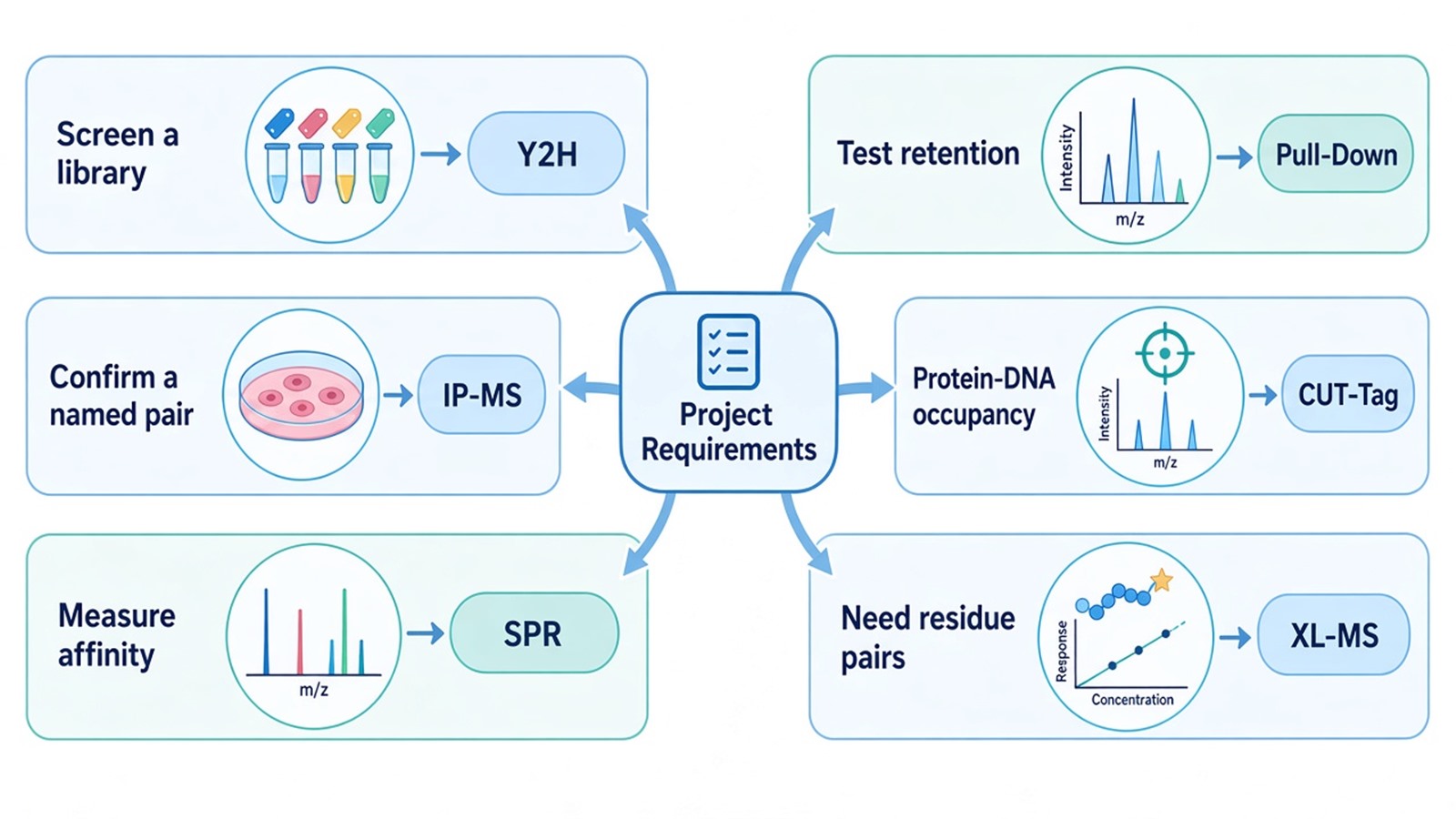
Figure 2. Matching Project Goals With PPI or Sequencing Routes.
Deliverables should keep the method name honest. A sequencing-screen report can include barcode or insert tables, enrichment versus input, and a filtered candidate list. A Y2H pair report can include reciprocal tests and reporter scores. An IP-MS or pull-down report lists proteins recovered versus controls. An SPR report lists sensorgrams and fitted constants. NGS files are not a substitute for those protein tables. To start intake, send the claim, available constructs or proteins, and the preferred readout to info@MtoZ-Biolabs.com or use the site inquiry form so the route can be confirmed before shipment.
Frequently Asked Questions
1. Is yeast two-hybrid the same as protein-protein interaction sequencing?
No. Y2H is a genetic reporter screen. Sequencing is optional and applies only when selected DNA is read. Many Y2H projects stop at colony selection and Sanger confirmation of inserts.
2. Can NGS of a prey library replace IP-MS for unknown partners in tissue?
No. Library sequencing reports which coded constructs passed a reporter or growth filter. IP-MS reports proteins recovered from the submitted tissue or cell lysate. The sample types and the claims are different.
3. Does a high barcode count mean a strong physical interaction?
No. Counts mix selection, growth, and amplification. A high count is a reason to test the pair by reciprocal Y2H and by a protein assay. It is not a KD and not proof of a contact surface.
4. When is protein-protein interaction sequencing the wrong request?
It is the wrong request when there is no barcode or insert library, when the need is affinity or interface mapping, or when the target is protein-DNA occupancy. Those projects should be scoped as SPR, XL-MS or HDX-MS, or chromatin sequencing, not as PPI-Seq.
5. What should a feasibility email include for a sequencing screen plus validation?
State the bait, library, desired DNA readout, and the protein assay planned for the top hits. Include auto-activation history if known. Feasibility review will split the Y2H or NGS arm from IP-MS, pull-down, or SPR rather than merging them into one PPI-Seq line.
Researchers can keep sequencing readouts and protein assays on separate scopes, then confirm bait, library, or protein samples through MtoZ Biolabs Protein-Protein Interaction Analysis intake.
Reference
- S. Fields, O. Song (1989). A novel genetic system to detect protein-protein interactions. Nature, 340, 245-246. https://doi.org/10.1038/340245a0
- S.A. Trigg, R.M. Garza, A. MacWilliams, J.R. Nery, A. Estelle, A. Grunwald, H. Huang, N. Zhang, E. Walcher, J.R. Ecker (2017). CrY2H-seq: a massively multiplexed assay for deep-coverage interactome mapping. Nat. Methods, 14, 819-825. https://doi.org/10.1038/nmeth.4325
- M.Y. Hein, N.C. Hubner, I. Poser, J. Cox, N. Nagaraj, Y. Toyoda, I.A. Gak, I. Weisswange, J. Mansfeld, F. Buchholz, et al. (2015). A human interactome in three quantitative dimensions organized by stoichiometries and abundances. Cell, 163, 712-723. https://doi.org/10.1016/j.cell.2015.09.053
