



A pull-down experiment and a detection service answer different jobs. The experiment asks whether proteins are retained on an immobilized bait after a defined wash. The detection service identifies proteins that arrived in the eluate, on the beads, or in a stained band, and compares them with controls. Bait type, empty-tag design, and the claim sentence stay with the research plan. Gene synthesis, plasmid construction, and overexpression are not part of this handoff. The client supplies an active bait protein. The pull-down-MS path starts after that bait and its tag-only control exist. Sample format and empty-tag tubes belong in the same plan. A catalog slogan cannot replace those two roles.
Researchers who already have a purified bait, a tag-only control, and a written retention claim can review the MtoZ Biolabs Fusion Protein Interaction Analysis Service | Pull-Down and MS for feasibility. Method-level choice among enrichment routes is covered in Measuring Protein-Protein Interactions.
A Pull-Down Question Is Not a Detection Order
A pull-down question names a bait, a prey source, and a wash. Typical questions are whether a purified pair is retained, whether unknown proteins from a lysate stay on the bait, or whether a domain truncation loses that retention. Those questions are designed before tubes are shipped.
A detection order names the material that will be digested and searched. The MS report lists accessions and intensities in that material versus the tag-only and bead-only tubes. It does not redesign the bait. It does not convert an identification table into a cellular interaction network.
Do not treat a one-stop slogan as a substitute for that split. A long protein list is not proof that the bait was active. Co-enrichment on a recombinant bait can still be indirect (Hein et al. 2015). In-vitro retention is not live-cell occupancy. A later Co-IP or AP-MS step is required if the next sentence must return to a physiological lysate. Antibody-based follow-up is scoped through the IP-Mass Spectrometry Service.
Bait Types the Client Must Define
Detection intake accepts baits that can be immobilized and remain folded enough to bind. Common handles are GST, His, MBP, Strep, and biotin. GST baits are the usual first choice when the fusion is already soluble and a glutathione resin is planned. Non-GST tags should stay on a general pull-down path rather than be forced onto a glutathione matrix. GST-specific capture is described on the GST Pull Down Assay Service page.
The client provides the bait protein. A tag antibody can complete capture when the fusion is already purified. Bait expression, vector construction, and knockout are outside this intake. Membrane proteins and baits that need a missing modification often fail as recombinant fusions. Those cases should move to a tagged AP-MS design in cells, or stop until a soluble, modified bait exists.
Peptide baits are a different geometry. A biotinylated peptide on streptavidin is not a GST fusion. Peptide immobilization, mutant twins, and competition belong on the protein-peptide path in How to Analyze Protein-Peptide Interactions Using IP-MS?, not on a default protein-bait form.
Write the handle, species, expression host, and estimated purity with the shipment. A bait that is only a Western-positive band in crude lysate is not yet an immobilized pull-down bait.
Empty-Tag and Bead Controls Before LC-MS/MS
Empty-tag controls are part of the experiment, not an optional bioinformatics filter. The tag-only protein, such as GST alone or His-tag peptide on the same resin, must be processed through the same lysate, wash, elution or on-bead digest, and LC-MS/MS method. Bead-only resin addresses matrix binding. The two tubes answer different backgrounds. GST itself can adsorb proteins that later look like partners.
Do not replace the tag-only bait with a published contaminant list. Recurrent-contaminant catalogs such as the CRAPome help interpret leftovers after experimental subtraction (Mellacheruvu et al. 2013). They do not measure GST or nickel binding in the current wash.
If the prey source is a tagged cell lysate rather than a purified pair, add an empty-tag lysate. That control is closer to AP-MS than to a two-protein pull-down. Mixed enrichment-MS projects of that type can be reviewed under the MS-Based Protein-Protein Interaction Analysis Service.
Relative intensity can be compared across bait and tag-only tubes. Proteins equal in both tubes stay annotated. They should not be drawn as edges.
The comparison below keeps research design and detection handoff on separate tracks.
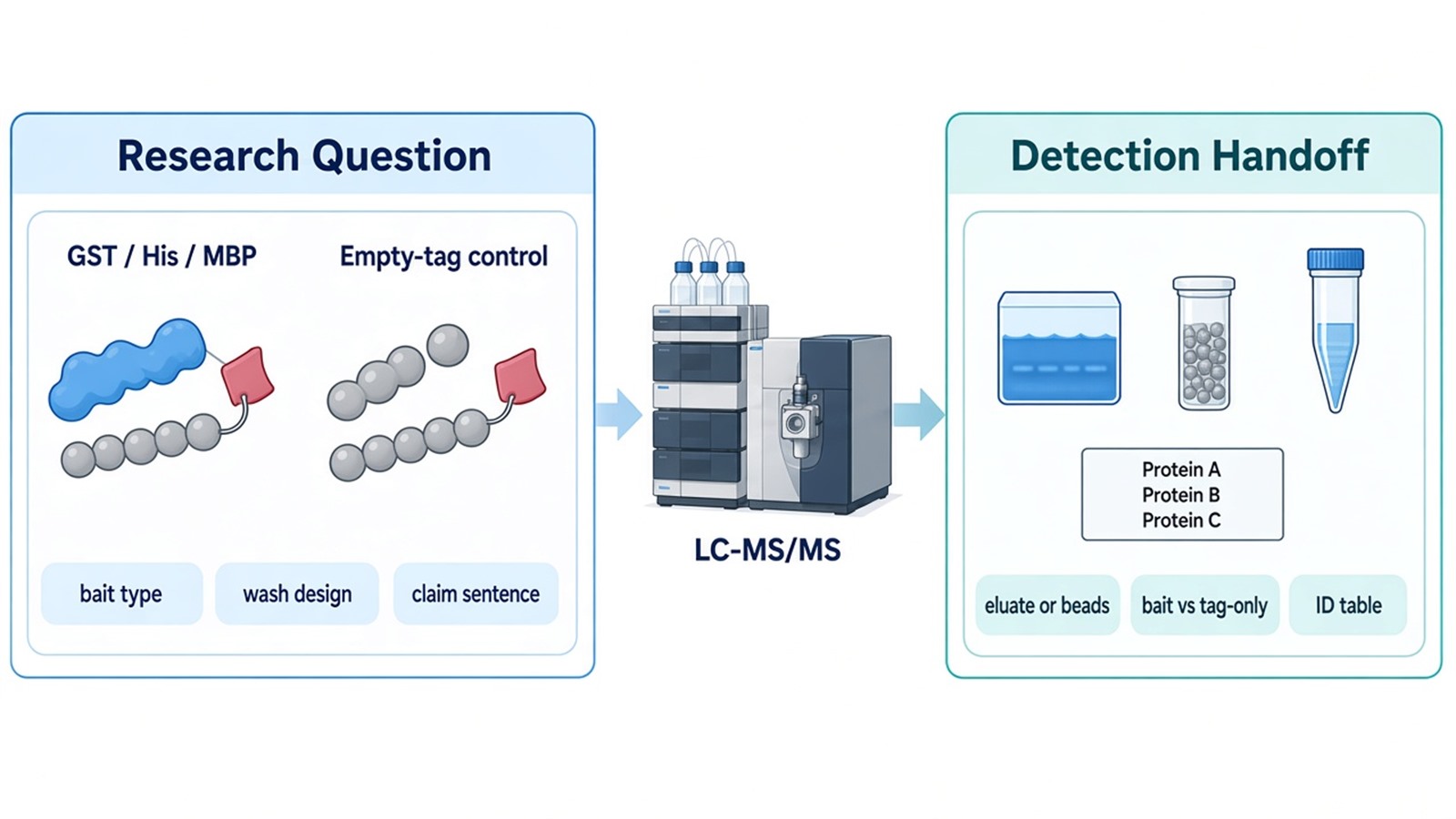
Figure 1. Pull-Down Research Question vs Detection Handoff.
When Pull-Down-MS Is the Right Detection Path
Pull-down-MS fits after the bait is immobilized and the wash is finished. It fits a named-pair retention test when both proteins are available. It fits discovery when a lysate is incubated with the bait and a tag-only control. It fits poorly as a first assay when no bait protein exists, when the claim is native-complex membership in tissue, or when the only available reagent is a blot-only antibody.
It also fits poorly when the publication sentence is direct binding in cells. Retention on a recombinant bait can support an in-vitro pair hypothesis. Orthogonal pair tests remain a later step. Affinity of a prepared pair is an SPR question, not a default identification output.
Identification depth is typically hundreds to thousands of proteins and depends on the sample. After controls, the usable set is the bait-enriched subset. Antibody chains, keratins, and the tag protein itself should be labeled.
|
Planning item |
Stays with the research plan |
Enters the detection service |
|---|---|---|
|
Bait type and handle |
GST, His, MBP, Strep, or biotin choice |
Immobilized bait already on resin or in eluate |
|
Empty-tag control |
Tag-only protein and bead-only resin |
Parallel tubes for search and intensity comparison |
|
Prey source |
Purified pair or lysate species |
Declared buffer and estimated protein |
|
Claim sentence |
Retention, discovery, or domain test |
Identification table scoped to that sentence |
|
Gene to protein |
Expression and purification |
Not accepted as detection intake |
The table is a handoff rule, not a ranking of tags.
Samples, Deliverables, and Delivery Requirements
Ship pull-down-MS materials as visible gel bands, washed beads, or liquid products. Planning amounts for liquid products are at least 20 ug total protein at more than 0.5 ug/uL, with SDS kept below 0.1 percent. Liquid tubes above about 10 ug are easier to process than low-microgram SDS eluates. Gel bands should use Coomassie, SYPRO Ruby, or an MS-compatible silver stain. High salt, undepleted detergent, and severely degraded material should not be shipped. Beads and solutions travel frozen on dry ice after a snap freeze. Gel slices can travel at room temperature or on ice packs.
State the bait handle, tag-only control, wash buffer, elution chemistry or on-bead status, and the claim sentence. State species and the protein database if a custom FASTA will be used.
Orbitrap-class high-resolution LC-MS/MS is the usual acquisition platform. Search should use UniProt or a client FASTA in MaxQuant or an equivalent disclosed workflow.
Intake is faster when the research-versus-detection split is mapped before shipment. The diagram below links bait type, empty-tag controls, and product format to a detection request.
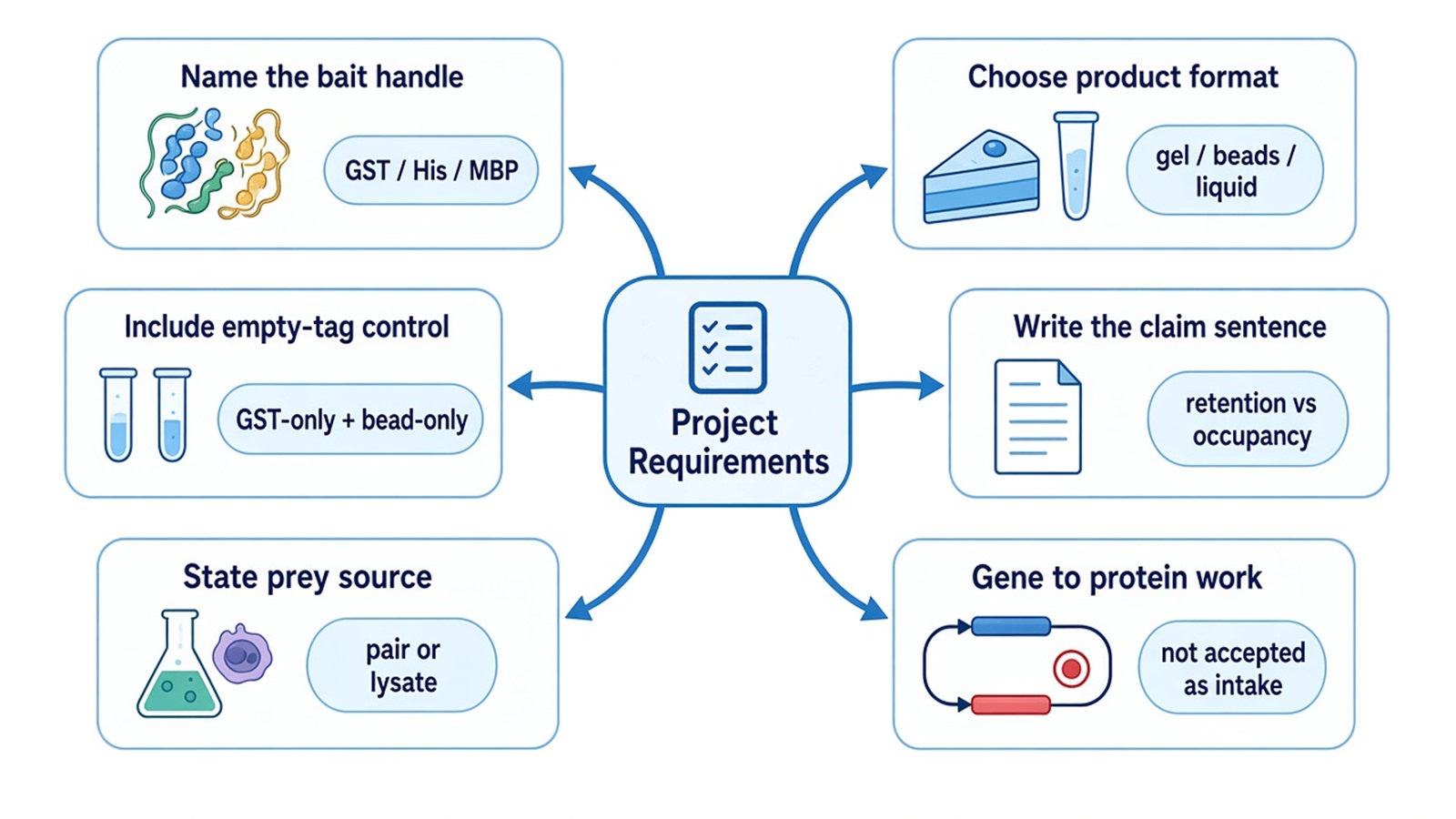
Figure 2. Matching Project Requirements With Pull-Down-MS Intake.
Deliverables typically include identification tables, bait versus tag-only intensity comparisons, and a short methods note on digest and search settings. Deliverables do not include gene-to-protein construction, a Western confirmation as the main result, a claim of direct cellular binding, or a guaranteed partner count. To start intake, send the bait handle, empty-tag plan, product format, and intended claim to info@MtoZ-Biolabs.com or use the site inquiry form so the detection path can be confirmed before shipment.
Frequently Asked Questions
1. Can gene synthesis and bait expression be bundled into detection intake?
No. The client supplies an active bait protein and a tag-only control. Vector construction and overexpression sit outside this detection handoff.
2. Is a bead-only tube enough if the bait is a GST fusion?
No. Bead-only resin measures matrix binding. GST-only protein measures tag binding. Both tubes are required before names are ranked.
3. Can an identification list replace a later Co-IP in cells?
No. The list reports in-vitro retention. A Co-IP tests whether the pair can be recovered from a physiological lysate. The two sentences are different.
4. How much liquid product is typically planned for pull-down-MS?
Plan at least 20 ug total protein and more than 0.5 ug/uL, with SDS below 0.1 percent. Gel bands should be visible. Feasibility still depends on residual detergent and bait recovery.
5. What should a feasibility email attach for a detection request?
Attach bait sequence and handle, tag-only control design, prey source, wash and elution notes, and the claim sentence. Feasibility review will treat those items as the research plan, not as a catalog add-on.
Researchers can separate the pull-down question from pull-down-MS intake, then confirm bait, empty-tag controls, and sample format through the MtoZ Biolabs Fusion Protein Interaction Analysis Service | Pull-Down and MS.
Reference
- M.Y. Hein, N.C. Hubner, I. Poser, J. Cox, N. Nagaraj, Y. Toyoda, I.A. Gak, I. Weisswange, J. Mansfeld, F. Buchholz, et al. (2015). A human interactome in three quantitative dimensions organized by stoichiometries and abundances. Cell, 163, 712-723. https://doi.org/10.1016/j.cell.2015.09.053
- D. Mellacheruvu, Z. Wright, A.L. Couzens, J.P. Lambert, N.A. St-Denis, T. Li, Y.V. Miteva, S. Hauri, M.E. Sardiu, T.Y. Low, et al. (2013). The CRAPome: a contaminant repository for affinity purification-mass spectrometry data. Nat. Methods, 10, 730-736. https://doi.org/10.1038/nmeth.2557
