Peptide Quantification Service
MtoZ Biolabs provides peptide quantification service for the identification, abundance comparison, and differential analysis of endogenous peptides in complex biological samples.
The service supports research involving disease-associated peptide alterations, biomarker discovery, regulatory peptide analysis, and protein degradation-related studies, providing quantitative insights into peptide changes associated with biological processes.
- Standardized Low-Molecular-Weight Peptide Enrichment Workflow
- High-Resolution MS for Deep Peptide Identification
- Advanced Bioinformatics for Reliable Data Analysis
Overview
Peptides are biomolecules composed of amino acids linked by peptide bonds. Compared with intact proteins, peptides generally have shorter amino acid chains and smaller molecular structures. They can exist as independent functional molecules or as naturally generated fragments produced during protein processing and degradation.
Peptide quantification is a mass spectrometry-based approach used to detect and measure peptide abundance in biological samples. By analyzing peptide-specific LC-MS/MS signals and applying appropriate quantification strategies, researchers can evaluate relative abundance changes across different conditions or determine the actual concentration of specific peptide targets.
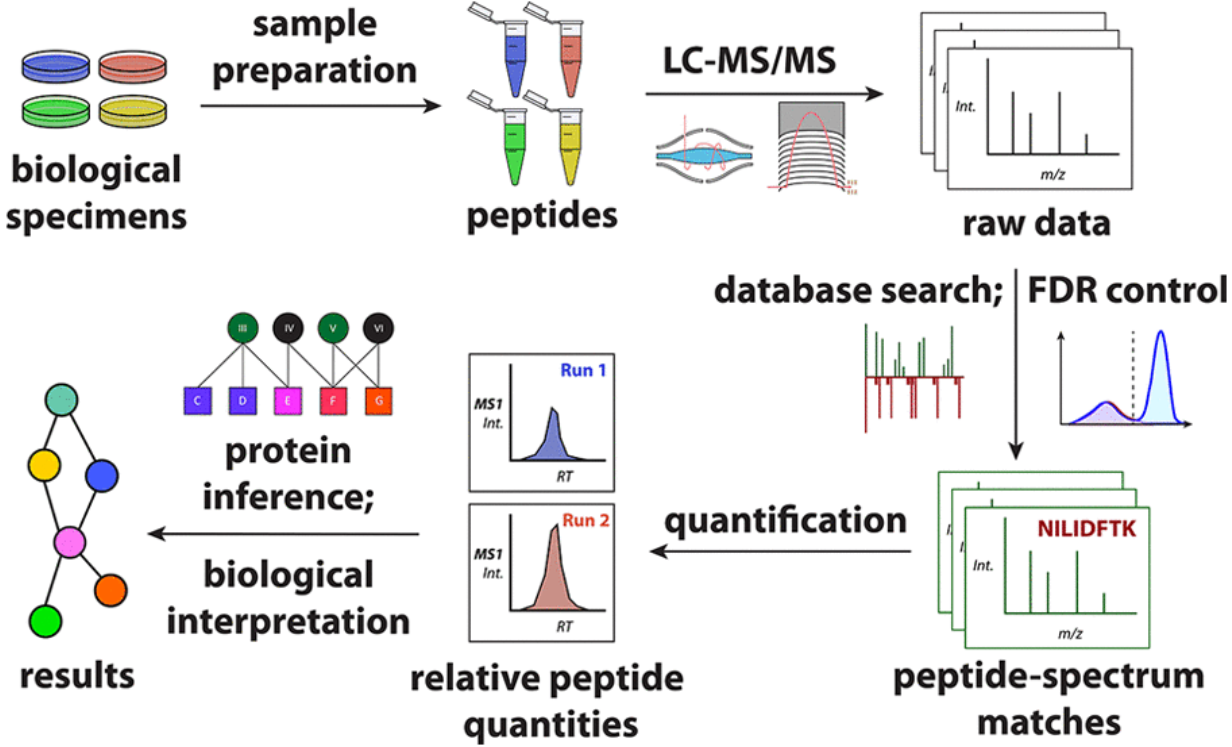
Figure 1. Workflow for Peptide Quantification
Choose the Right Peptide Quantification Workflow
Different research objectives require different peptide quantification strategies. The appropriate workflow depends on whether peptide targets are predefined, sample complexity, and the expected data output.
|
Research Objective |
Recommended Strategy |
|
Systematically profile endogenous peptides in complex biological samples and compare peptide abundance changes across conditions |
LC-MS/MS-based peptide quantification (label-free quantification) |
|
Identify peptides significantly altered under different treatments or biological states and generate differential peptide profiles |
LC-MS/MS-based differential peptide analysis |
|
Validate changes in candidate peptides identified from discovery studies |
PRM-based targeted peptide quantification |
|
Quantify a small number of predefined peptide targets with high selectivity and sensitivity |
MRM/SRM-based targeted peptide quantification |
|
Determine the actual concentration or absolute amount of specific peptide targets |
Stable isotope-labeled peptide-based absolute quantification (AQUA) |
Service at MtoZ Biolabs
MtoZ Biolabs provides LC-MS/MS-based peptide quantification services supporting multiple mass spectrometry acquisition modes and quantification strategies to meet different research requirements, including peptide abundance comparison, differential peptide analysis, and targeted peptide quantification.
1. Mass Spectrometry Acquisition Modes
MtoZ Biolabs supports the following LC-MS/MS acquisition strategies:
- DDA (Data-Dependent Acquisition): DDA selects specific precursor ions for fragmentation and generates high-quality MS/MS spectra for peptide identification and relative abundance comparison. It is suitable for endogenous peptide analysis in complex biological samples.
- DIA (Data-Independent Acquisition): DIA systematically collects fragment ion information within predefined mass windows, improving quantitative consistency and reproducibility across multiple samples.
- PRM/MRM/SRM Targeted Acquisition: For predefined peptide targets, targeted mass spectrometry approaches can be applied to achieve highly selective detection and quantitative measurement.
2. Peptide Quantification Strategies
Based on study objectives and experimental design, MtoZ Biolabs provides multiple peptide quantification strategies:
- Label-Free Quantification: Label-free quantification evaluates relative peptide abundance based on peptide-specific MS signal intensity without additional labeling. This strategy is suitable for comparative peptide profiling in complex biological samples.
- Isotope-Labeled Quantification: Stable isotope labeling strategies enable relative quantification between samples and improve quantitative consistency for multi-sample comparisons. Applicable approaches include TMT, iTRAQ, and SILAC-based quantification.
- Absolute Quantification: Absolute peptide quantification uses stable isotope-labeled standard peptides (such as AQUA peptides) combined with calibration curves to determine the actual amount or concentration of specific peptide targets.
Analysis Workflow
1. Sample Extraction and Peptide Enrichment
Peptides are extracted according to sample type, followed by low-molecular-weight peptide enrichment strategies, such as ultrafiltration, to enrich endogenous peptide components.
2. Sample Processing and Purification
Extracted peptides undergo denaturation, reduction, desalting, and purification procedures to improve sample quality and minimize potential interference during mass spectrometry analysis.
3. LC-MS/MS Analysis
Samples are analyzed using high-resolution Orbitrap-based mass spectrometry platforms. DDA acquisition is commonly applied to obtain peptide MS/MS fragmentation information for peptide identification.
4. Data Processing and Quantitative Analysis
Peptide identification and quantitative analysis are performed using professional bioinformatics tools, such as PEAKS and Byonic, based on appropriate reference databases and analytical requirements.
Service Advantages
- Optimized low-molecular-weight peptide enrichment workflow designed for endogenous peptide analysis.
- High-resolution mass spectrometry for reliable peptide identification and characterization.
- Professional bioinformatics analysis combined with manual MS/MS spectrum validation.
- Flexible workflow optimization based on sample characteristics and research objectives.
Applications
1. Biomarker Discovery
Identify potential disease-associated peptide candidates by comparing peptide abundance changes between different sample groups.
2. Disease-Associated Peptide Analysis
Investigate alterations in peptide composition and abundance associated with disease development and biological changes.
3. Regulatory Peptide Research
Analyze changes in biologically active peptides, including neuropeptides, hormone-related peptides, and other regulatory peptide molecules.
4. Protein Degradation Studies
Characterize naturally generated peptide fragments produced during protein degradation processes and investigate their abundance changes.
Sample Submission Requirements
|
Item |
Recommended Requirements |
|
Sample Types |
Biological fluids, cell samples, tissue samples, and other naturally derived biological samples |
|
Sample Status |
Dry powder samples are preferred. Solution samples should maintain stability and avoid repeated freeze-thaw cycles. |
|
Sample Amount |
For complex endogenous peptide samples, a total peptide amount of approximately 20–50 μg or above is recommended. |
|
Solution Sample Requirements |
Total protein amount above 20 μg and concentration above 0.6 μg/μL are recommended. |
|
Sample Purity |
Samples should minimize salts, detergents, lipids, and other components that may interfere with MS ionization efficiency. |
|
Sample Transportation |
Dry powder samples can be sealed and shipped at room temperature or with ice packs. Solution samples should be shipped on dry ice. |
|
Project Evaluation Information |
Please provide sample number, sample source, processing procedures, expected peptide molecular weight range, and research objectives. |
Deliverables
1. Raw mass spectrometry data files
2. Total ion chromatogram (TIC) plots
3. Peptide identification results
4. Complete peptide sequence information
5. MS/MS spectrum matching results
6. Peptide length and scoring distribution analysis
7. Protein origin annotation of identified peptides
8. Functional enrichment analysis (available upon request)
FAQs
Q1. Can peptide quantification analysis provide absolute peptide concentrations?
This service primarily provides peptide identification and relative abundance comparison rather than direct measurement of absolute peptide concentrations.
For projects requiring accurate concentration measurement of specific peptide targets, MtoZ Biolabs also provides targeted absolute quantification services using stable isotope-labeled standards and calibration strategies.
Q2. Can peptides larger than 5 kDa be analyzed?
If a sample mainly contains small proteins or larger protein-derived fragments, a conventional proteomics workflow is generally recommended. In such cases, proteins are typically enzymatically digested into peptides before LC-MS/MS analysis for protein and peptide identification.
Q3. Can modified peptides be detected?
Certain post-translationally modified or chemically modified peptides can be analyzed depending on the modification type, peptide abundance, analytical strategy, and database availability. Feasibility should be evaluated based on specific project requirements.
Contact Us
Need to determine whether your samples are suitable for peptide quantification analysis?
Contact our technical team for workflow recommendations tailored to your research objectives and sample characteristics.
MtoZ Biolabs, an integrated chromatography and mass spectrometry (MS) services provider.
Related Services
LC-MS-Based Peptide Quantitative Assays Service
Label-Free Peptide Quantification Service
Low-Abundance Peptide Quantification Service
