



An in vitro pull-down assay immobilizes a recombinant bait on beads and offers a prey in a tube. The prey may be a purified protein or a clarified lysate. After a written wash, retained proteins are eluted and read by stain, Western blot, or mass spectrometry (MS). The assay reports bead-retained association outside an intact cell. It does not simulate the cytoplasm, confirm an endogenous complex, or build an interaction network. Calling the method a protein pull-down does not change that limit. A cellular Co-IP, or an in-cell proximity method, is a different experiment.
The useful first decision is whether the prey is purified. A purified pair is the stricter binary test. A lysate can still be used in vitro; the bait is still on a bead, and bridged subunits can still ride. For the wider ligand-class map (tag, compound, nucleic acid), Affinity Pull-Down Assay provides a complementary assay-family discussion.
Researchers who already have a GST- or His-tagged bait, a purified prey, or a lysate for a tube capture can also review the MtoZ Biolabs Pull-Down Assay Service for project-specific feasibility and analysis planning.
What “In Vitro” Changes
In vitro means the contact is reconstituted after at least one component has been produced and immobilized outside the living cell. Bacterial or insect GST- or His-baits are typical. Missing eukaryotic modifications, inclusion bodies, and tag dimers are expected properties of that bait, not rare accidents.
A lysate offered to that bead is not a return to physiology. Membranes are gone, concentrations are diluted, and proteins that never met the bait in the cell can bind the tag or the resin. For antibody capture of proteins from a lysate without a recombinant handle, Workflow of Co-Immunoprecipitation for Protein Interaction Analysis provides a complementary cellular workflow.
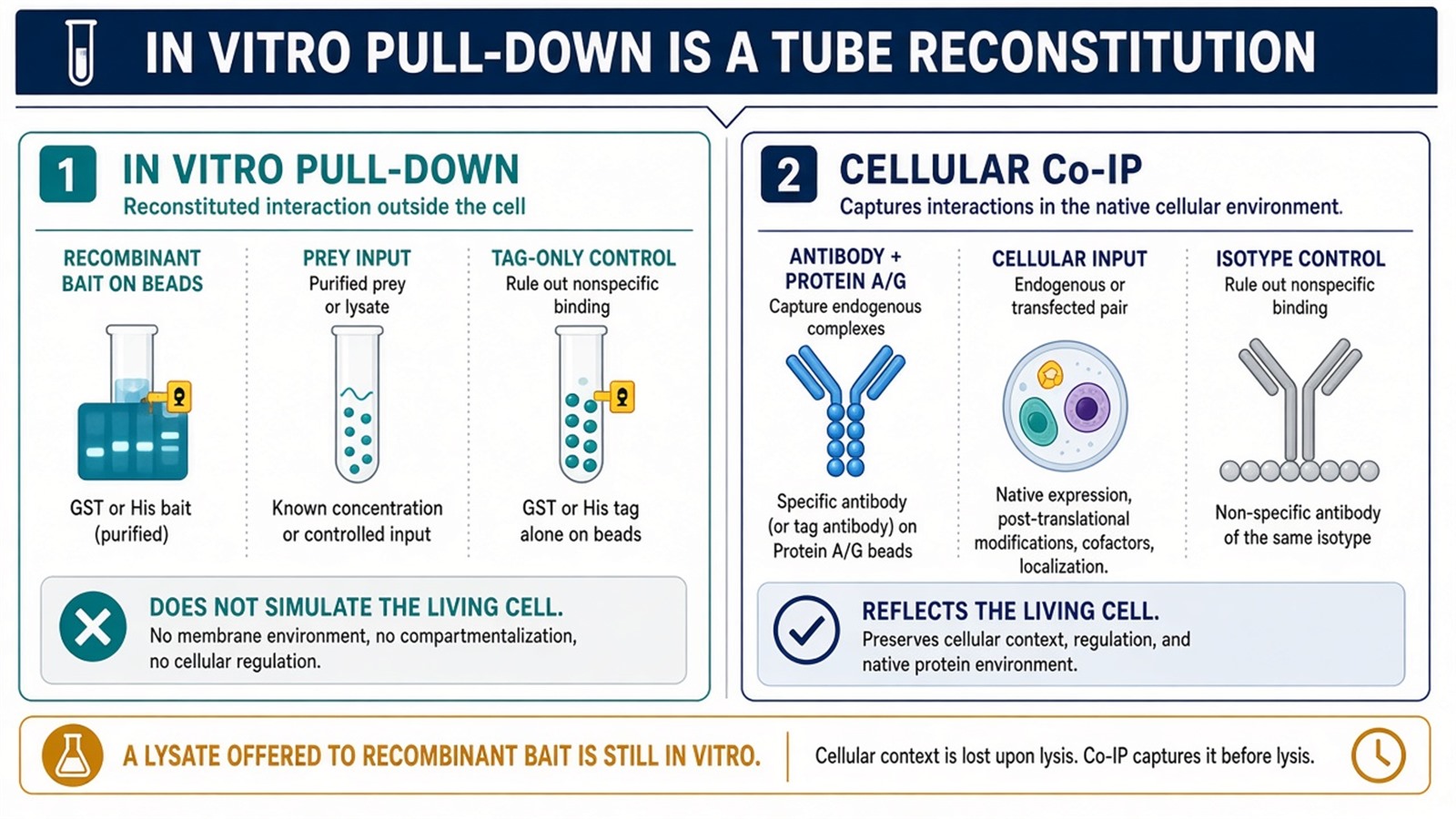
Figure 1. Recombinant bait on beads plus purified prey or lysate. The cell is not reconstituted. Co-IP of an endogenous pair is a different capture.
Write whether the prey is purified. A lysate in vitro is still in vitro.
Steps in the In Vitro Pull-Down Assay
The original six steps are kept. Each step has an in-vitro decision that later software cannot undo.
1. Preparation
Express the bait with GST, His, or another handle in a host that can fold that cargo. High purity is useful. It is not proof of activity. Prepare the matching resin and a tag-only protein for the control arm. If a lysate will be the prey source, clarify it and keep an input. For the GST-specific order, What Is the General Procedure for GST Pull-Down Analysis of Protein–Protein Interactions? provides a complementary GST procedure.
2. Immobilization of the Target Protein
Bind the tagged bait to the resin so that the interaction face remains accessible. GST-bait on glutathione beads is the common example. Empty tag must be immobilized at a comparable occupancy. Overloading the bead creates bait–bait contacts that look like prey.
3. Incubation and Binding
Offer purified prey or lysate at 4 °C for hours to overnight. Longer incubation is not a more physiological contact. It is more time for off-pathway binding. Match time, temperature, and input mass on the tag-only arm.
4. Washing
Wash with a written salt and detergent. High salt and non-ionic detergent can lower resin binders and can strip true partners. Specificity is the comparison to tag-only, not the salt concentration alone.
5. Elution
Compete with free glutathione or imidazole, raise salt, change pH, or use SDS. “Free affinity tags” as a generic eluent is imprecise; the competitor matches the handle. Bait and tag-only must use the same exit.
6. Detection
Western blot tests a nominated prey. SDS-PAGE stain shows mass. MS opens the eluate. For how to read those lanes or that table, How to Interpret the Results of a Pull-Down Experiment provides a complementary interpretation order.
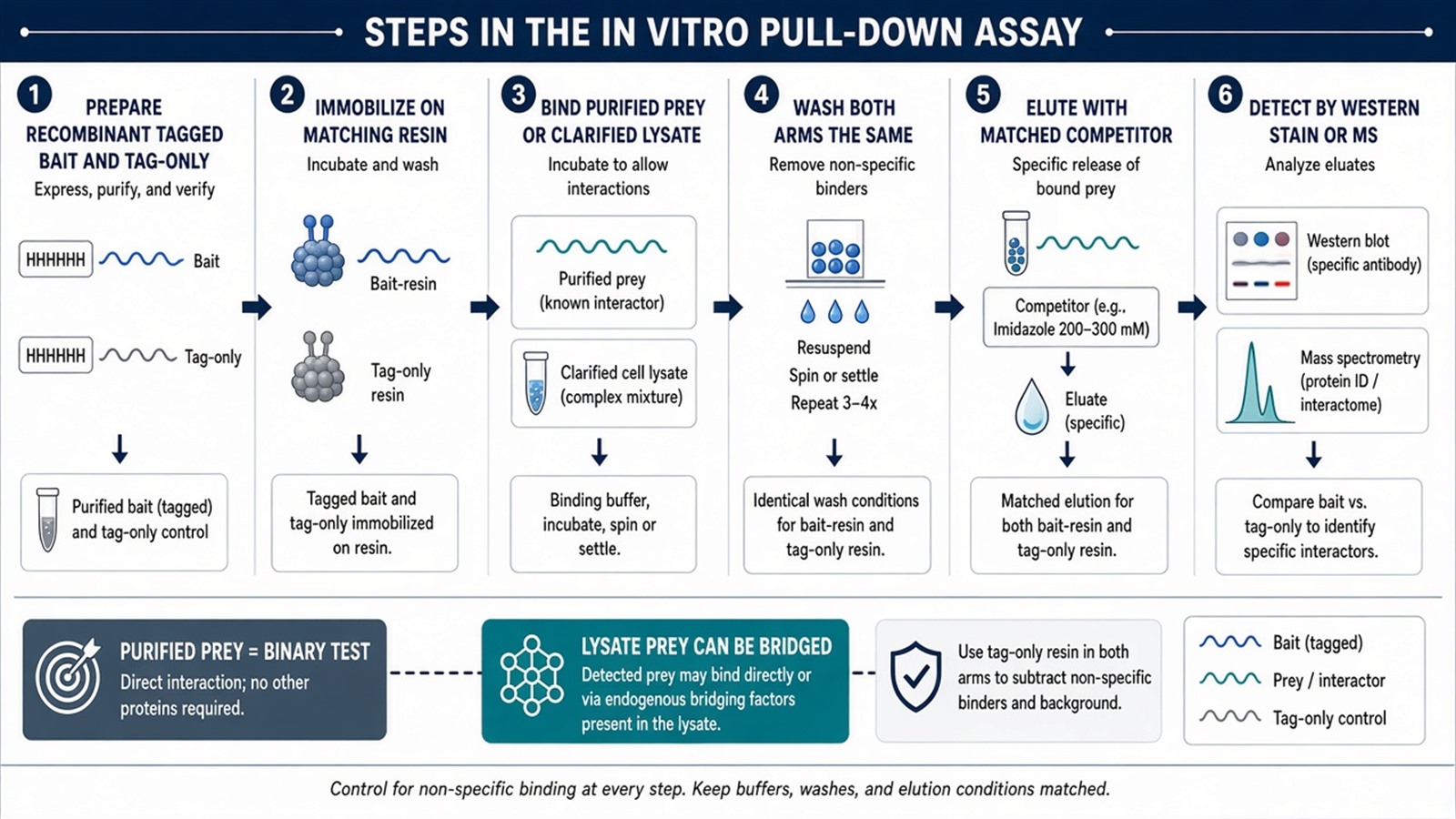
Figure 2. Preparation through detection stays in the tube. Tag-only travels with every step. A lysate prey does not convert the assay into Co-IP.
Precautions and Common Issues
Nonspecific binding is expected. High salt is a trade-off, not a default upgrade.
Protein stability in the tube is not the same as activity in the cell. A folded blot band can still be a tag binder.
Detection sensitivity follows bait occupancy and antibody or MS depth. A more sensitive blot does not create a partner that never bound.
Using a lysate and then claiming a new interaction network is the usual over-read. The list is proteins that stayed on that recombinant bait.
Advantages That Hold Only In Vitro
Defined components can be mixed one at a time. That is why a purified-prey pull-down can support a direct-association sentence more cleanly than a lysate Co-IP. The advantage disappears when the prey is an unfiltered extract and the tag-only arm is missing.
The same format can present a protein, a nucleic acid, or another immobilized ligand. Broad applicability is the choice of ligand, not a guarantee of a screen. Large-scale discovery is usually yeast two-hybrid or AP-MS. An in vitro pull-down is a confirmation or a small open list, not a library method.
High specificity and sensitivity are not properties of the format. They are outcomes of bait quality, the tag-only arm, and occupancy.
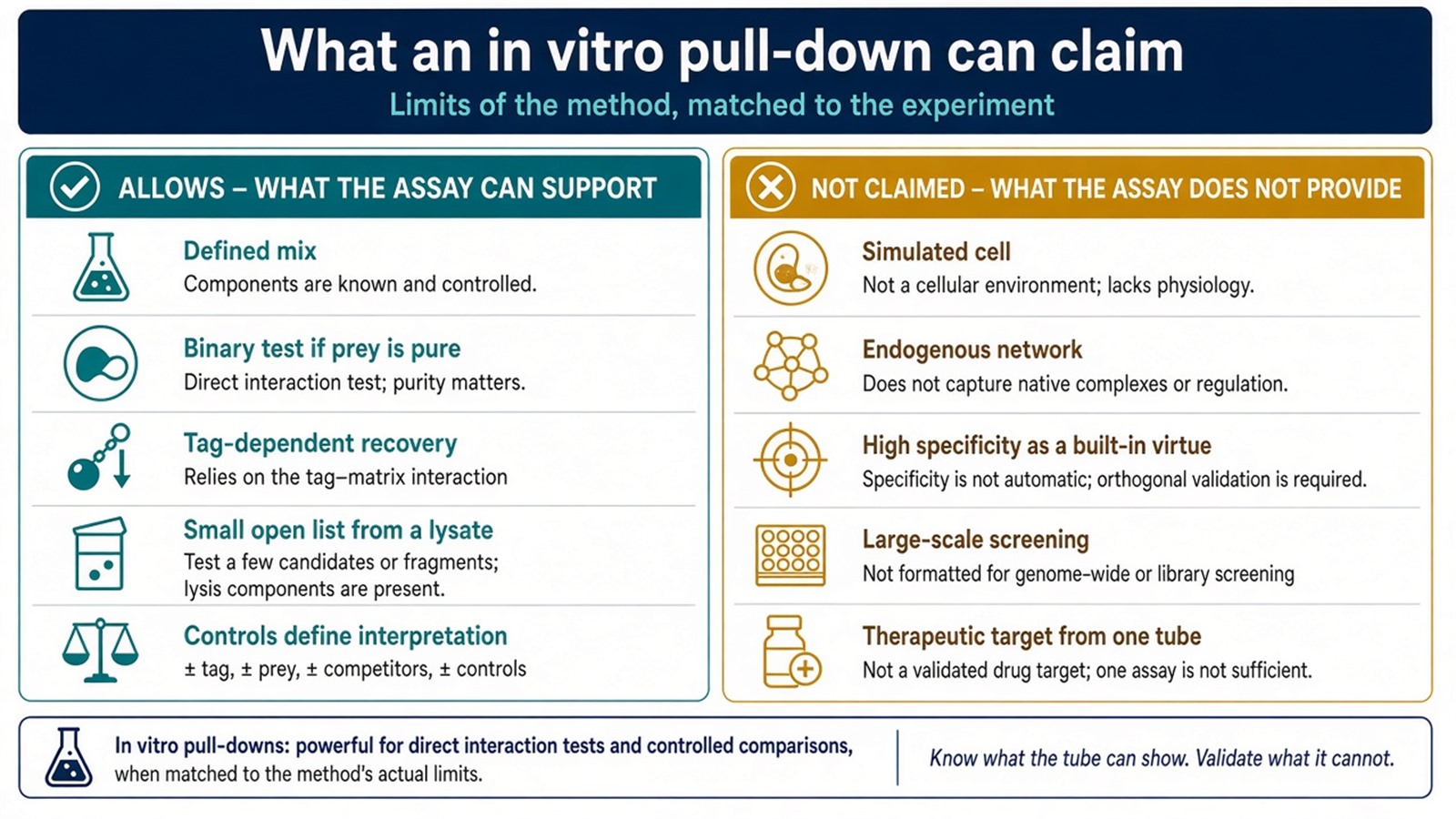
Figure 3. Supported: a tube reconstitution, a binary test if the prey is pure, a tag-dependent blot or MS list. Not supported: a simulated cell, a therapeutic target, or large-scale network discovery.
Experimental Limits
An in vitro pull-down reduces the problem to what that recombinant bait and wash can hold. Diagnostic language sits outside ordinary research reporting unless a separately validated assay framework is in place.
Project Planning and Service Scope
A usable in-vitro plan names the host for the bait, the tag-only arm, whether prey is purified or a lysate, the wash, the elution, and the readout, before the first induction. MtoZ Biolabs scopes recombinant tag pull-downs with Western or Orbitrap-class LC-MS/MS. Interpretability still follows those choices, not the phrase “in vitro.”
Once the tube design is specified and the readout is an open list, the project can be scoped as pull-down MS. Researchers who need identification of an in-vitro eluate can review the MtoZ Biolabs Pull Down based Protein Analysis Service with Mass Spectrometry for project-specific sample evaluation, feasibility assessment, and workflow planning.
Frequently Asked Questions
1. What is an in vitro pull-down assay?
A recombinant bait is immobilized and offered a purified prey or a lysate in a tube. Retained proteins are washed, eluted, and detected. The cell is not intact.
2. Does a lysate make the assay in vivo?
No. The bait is still recombinant and bead-bound. The lysate is only the prey source.
3. Can this assay confirm a known interaction?
It can show tag-dependent recovery of a nominated prey. Endogenous confirmation needs a cellular assay.
4. Is high-salt wash required?
Only as a written trade-off, used on both arms. It is not a specificity upgrade by itself.
5. How does this page differ from the affinity pull-down page?
This page states the in-vitro constraint and the purified-versus-lysate prey choice. The affinity page classifies ligands.
Reference
- Phizicky E.M., Fields S. (1995). Protein-protein interactions: methods for detection and analysis. Microbiol. Rev., 59, 94-123. https://doi.org/10.1128/mr.59.1.94-123.1995
- Vikis H.G., Guan K.L. (2004). Glutathione-S-transferase-fusion based assays for studying protein-protein interactions. Methods Mol. Biol., 261, 175-186. https://doi.org/10.1385/1-59259-762-9:175
- Einarson M.B., Pugacheva E.N., Orlinick J.R. (2007). GST Pull-down. CSH Protoc., 2007, pdb.prot4757. https://doi.org/10.1101/pdb.prot4757
- Berggård T., Linse S., James P. (2007). Methods for the detection and analysis of protein-protein interactions. Proteomics, 7, 2833-2842. https://doi.org/10.1002/pmic.200700131
- Lin J.S., Lai E.M. (2017). Protein-protein interactions: co-immunoprecipitation. Methods Mol. Biol., 1615, 211-219. https://doi.org/10.1007/978-1-4939-7033-9_17
