

DIA (Data Independent Acquisition) proteomics sequencing is used for high-throughput, high-sensitivity proteomics analysis. Compared with the traditional DDA (Data Dependent Acquisition) technology, DIA technology can provide a more comprehensive proteome coverage and more reliable quantitative results. DIA technology has a wide range of applications in biomedical research, disease biomarker discovery, and drug development. For a side-by-side view of how DIA and DDA differ in label-free quantitative designs, see DIA vs. DDA in Label-Free Quantitative Proteomics: A Comparative Analysis.
DIA Proteomics Sequencing
DIA technology systematically scans the entire mass range during mass spectrometry analysis, rather than analyzing only a few preselected ions. This means that each experiment can capture almost all peptide ion signals in the sample, without missing any potential valuable information.
1. Wide Scan
The DIA method first scans all preset mass windows, not dependent on the preselection of specific ions.
2. Data Processing
By using complex data processing software, analysts can extract information about specific peptides from a large amount of DIA data and perform subsequent identification and quantitative analysis.
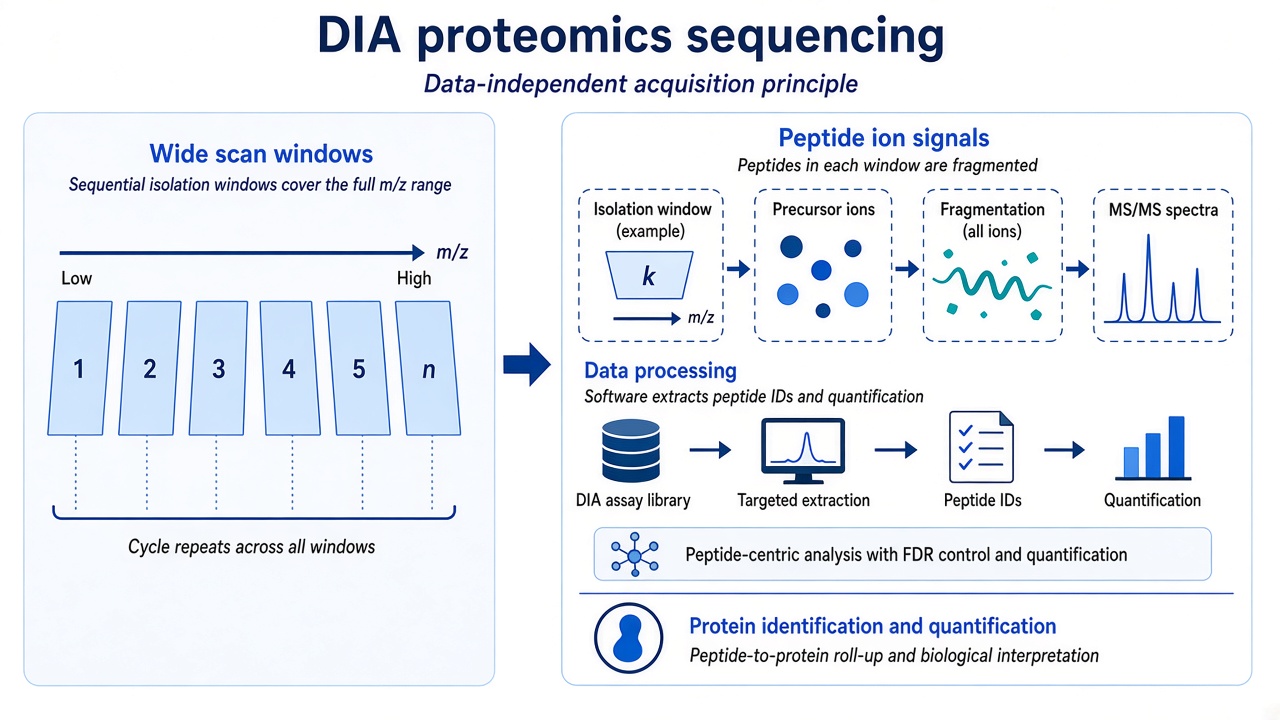
Figure 1. DIA sequencing scans preset mass windows across the full range so peptide signals can be extracted for identification and quantification.
1. Comprehensiveness
It can detect more proteins and peptides in the sample, providing more comprehensive proteome coverage.
2. Repeatability and Accuracy
Because it does not depend on the intensity of precursor ions, the results have higher repeatability and accuracy.
3. High-Throughput
Suitable for large-scale sample analysis, can handle a large amount of data, applicable to proteomics research of complex samples.
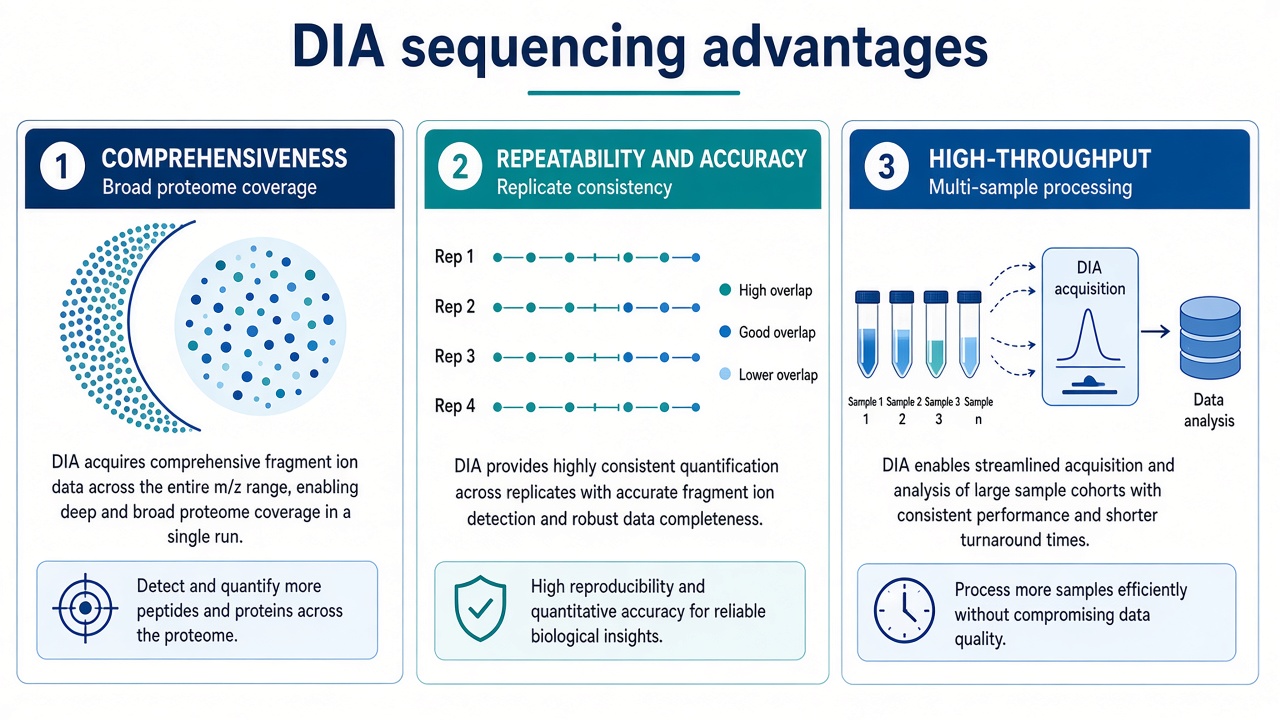
Figure 2. DIA sequencing is commonly valued for broader coverage, improved repeatability, and suitability for large sample sets.
1. Discovery of Biomarkers
Discover and verify potential biomarkers in disease diagnosis and treatment monitoring.
2. Systems Biology Research
Provides a large amount of data needed for protein expression, interaction, and network analysis in systems biology research.
3. Drug Development
Plays an important role in the discovery and verification of drug targets, and the study of drug action mechanisms.
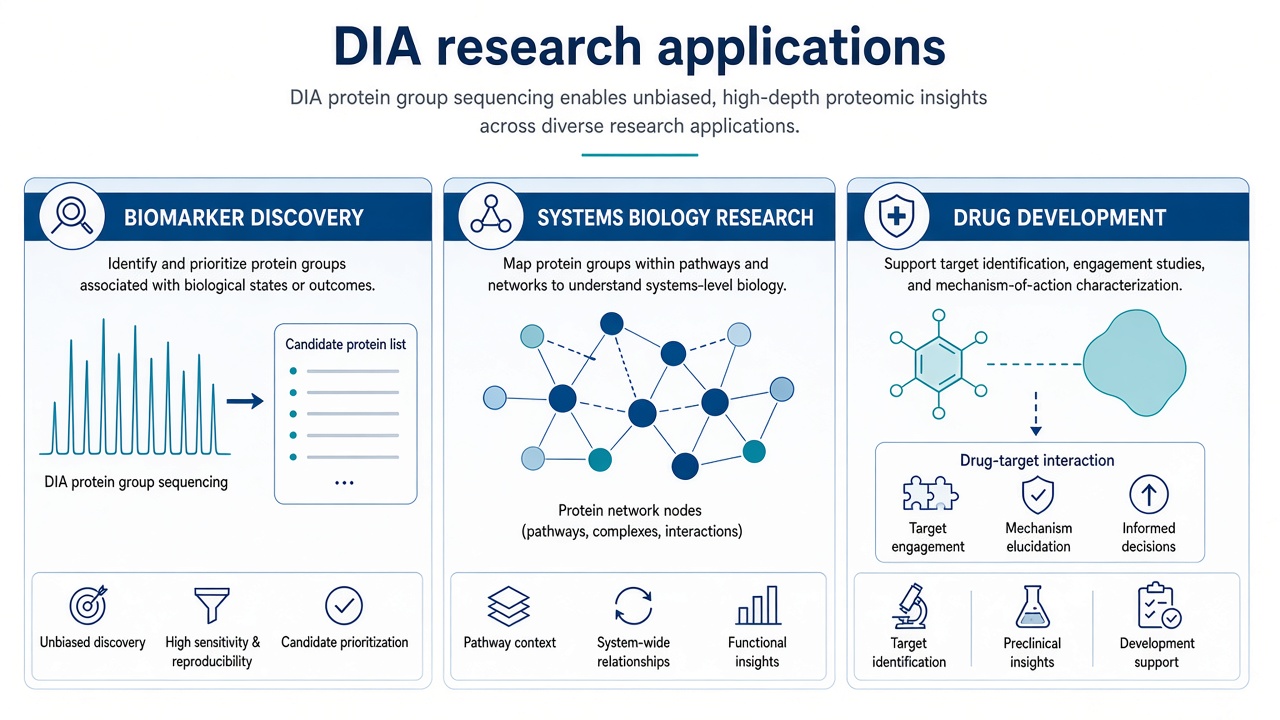
Figure 3. Typical DIA protein group sequencing applications include biomarker discovery, systems biology, and drug development studies.
Acquisition, library strategy, and data analysis steps for DIA projects are outlined in DIA Proteomics Workflow: Acquisition, Library Strategy and Data Analysis.
DIA proteomics sequencing technology has become an important tool in proteomics research due to its high-throughput, high-sensitivity, and comprehensiveness. With the continuous progress of analysis software and data processing capabilities, DIA technology will play an increasingly important role in future biomedical research and clinical applications. Researchers can also review the MtoZ Biolabs DIA Quantitative Proteomics Analysis Service for project-specific DIA feasibility, acquisition planning, and quantitative analysis support.
