



Although immunoassay-based methods such as ELISA and Western blot are widely employed, they exhibit inherent limitations in specificity, throughput, and quantitative accuracy. These constraints become particularly evident when analyzing complex biological matrices and low-abundance proteins. Consequently, there is a growing demand for analytical approaches that offer high sensitivity, robust reproducibility, and accurate quantification to support applications such as biomarker validation, drug target investigation, and cross-center clinical sample comparison. This article provides a systematic overview of the applications and value of PRM mass spectrometry in protein quantification. Broader selective-acquisition context for MRM and PRM panels is summarized in Targeted Mass Spectrometry Explained: How MRM, PRM, and Selective LC-MS/MS Acquisition Quantify Predefined Analytes.
What Is PRM Mass Spectrometry Technology?
Parallel Reaction Monitoring (PRM) is a targeted protein quantification strategy based on high-resolution mass spectrometry, typically implemented on advanced platforms such as the Thermo Fisher Orbitrap. It can be considered an evolution of Selected Reaction Monitoring (SRM), sharing a similar workflow while offering enhanced specificity and resolution. PRM operates by isolating predefined precursor ions and simultaneously acquiring the full spectrum of their fragment ions, thereby generating complete MS/MS spectra and substantially improving the reliability of targeted quantification.
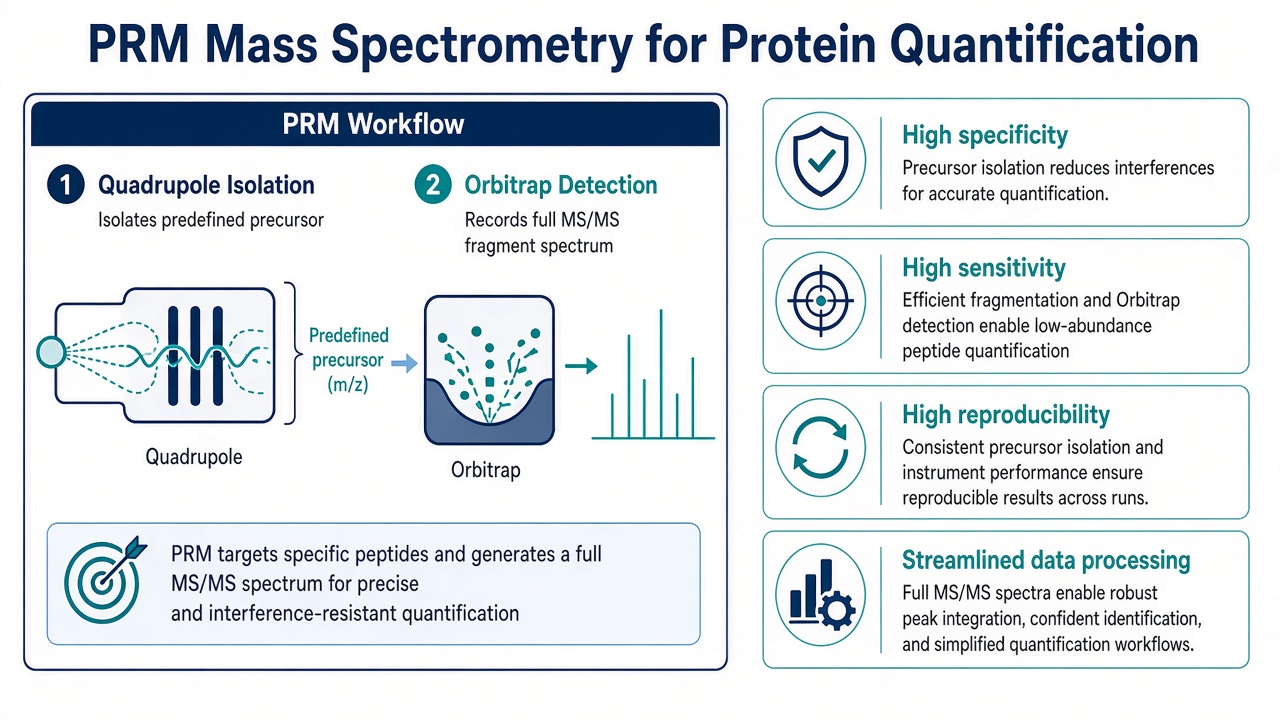
Figure 1. PRM isolates predefined precursors and records full fragment spectra to support specific, sensitive, and reproducible protein quantification.
Core Advantages of PRM Mass Spectrometry in Protein Quantification
1. High Specificity
PRM leverages high resolution and mass accuracy to monitor all fragment ions derived from selected precursors, enabling effective discrimination of isotopic interferences and background signals. This makes it particularly suitable for protein quantification in complex sample matrices.
2. High Sensitivity
Owing to the superior performance of Orbitrap-based platforms, PRM enables accurate detection of low-abundance proteins, making it highly effective in applications such as biomarker validation. How PRM supports low-abundance protein measurement is discussed further in How Does PRM Technology Facilitate the Analysis of Low-Abundance Proteins?.
3. High Reproducibility and Method Portability
In contrast to SRM, which relies on predefined and optimized transition pairs, PRM reduces subjective bias during method development and improves consistency across different laboratories and experimental batches.
4. Streamlined Data Processing
By capturing comprehensive fragment ion information, PRM facilitates more reliable interference discrimination. When integrated with software platforms such as Skyline, data analysis becomes more intuitive and efficient.
Application Scenarios of PRM Mass Spectrometry
1. Tumor Biomarker Validation
In cancer research, PRM is widely applied in the validation phase following LC-MS/MS-based discovery of candidate biomarkers, offering a broad dynamic range and strong reproducibility. In multi-omics studies, PRM is frequently used to validate candidate proteins identified during the Data-Dependent Acquisition (DDA) discovery phase. Its high throughput and sensitivity make it well suited for constructing multi-biomarker panels.
2. Disease Mechanism Studies
PRM enables dynamic monitoring of protein expression changes throughout disease progression, thereby facilitating mechanistic investigations. For instance, in autoimmune and neurodegenerative diseases, PRM can track temporal variations in specific proteins, providing molecular-level evidence that reflects disease progression over time.
3. Biopharmaceutical Development
PRM is applicable to key stages of biopharmaceutical development, including monitoring the expression levels of candidate therapeutic proteins and assessing immunogenicity. In the analysis of antibody therapeutics and fusion proteins, PRM supports the evaluation of stability and purity, as well as the monitoring of immunogenicity-related proteins, making it a valuable tool.
4. Comparative Analysis of Clinical Samples
PRM supports standardized comparisons across multiple tissues, time points, and clinical centers, ensuring high reproducibility of results. Its robustness against interference and strong reproducibility make it particularly suitable for large-scale, multi-center clinical studies, thereby facilitating the clinical translation of biomarkers.
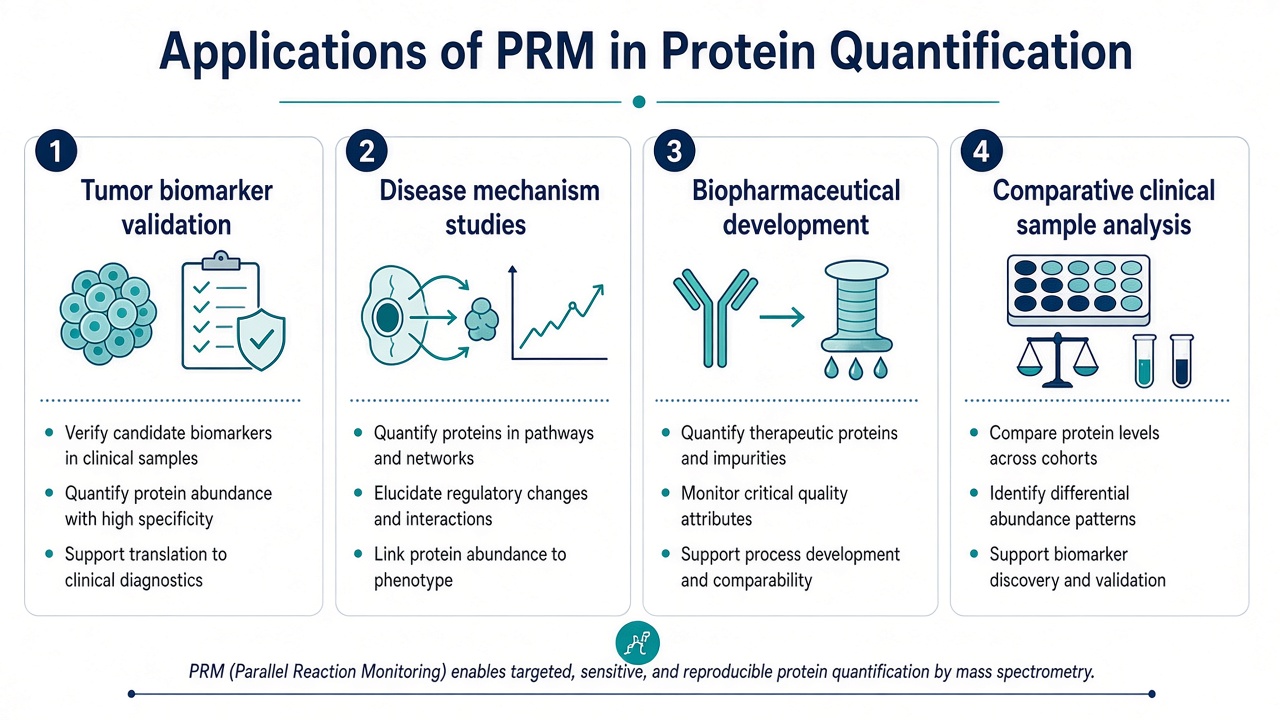
Figure 2. PRM supports biomarker validation, disease mechanism studies, biopharmaceutical development, and comparative clinical sample analysis.
Despite its advantages, PRM requires substantial technical expertise in both method development and data analysis. Critical factors include the selection of appropriate proteotypic peptides and stable isotope-labeled internal standards, the construction of reliable calibration curves, and the optimization of instrument parameters. In addition, the interpretation of high-throughput datasets places increasing demands on bioinformatics platforms and specialized personnel.
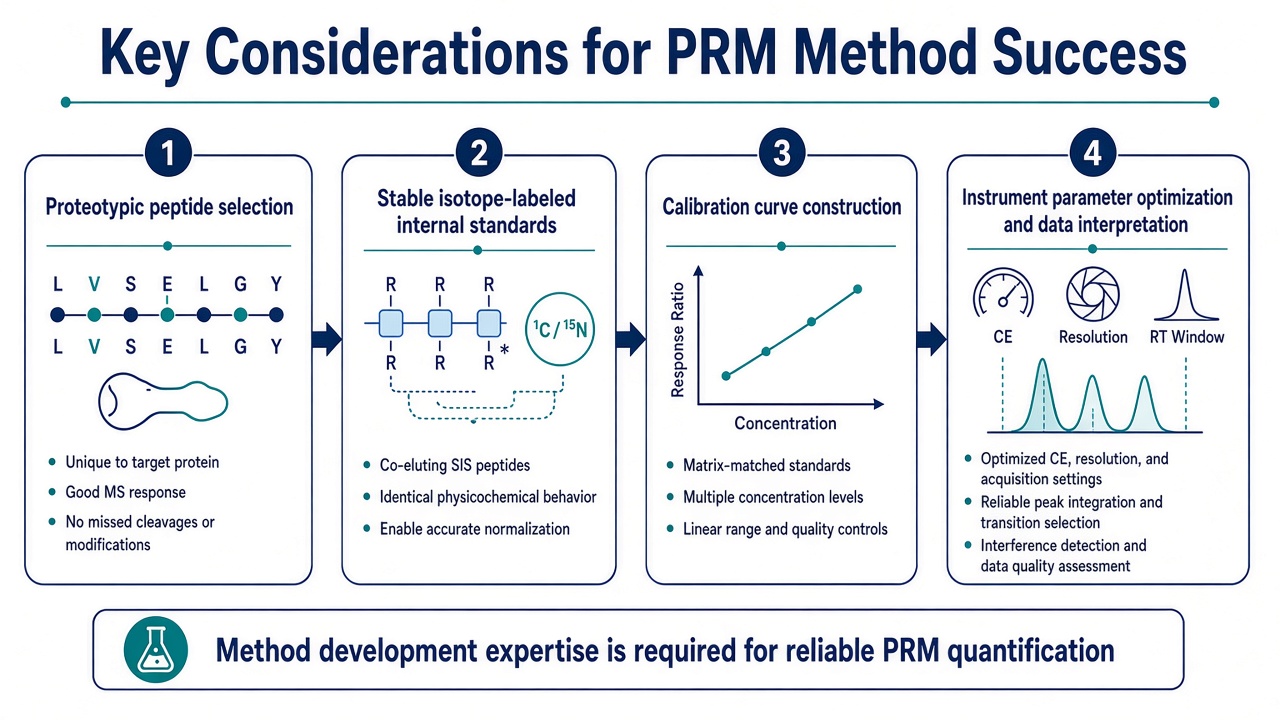
Figure 3. Reliable PRM quantification depends on proteotypic peptide selection, internal standards, calibration design, and optimized acquisition parameters.
MtoZ Biolabs PRM Solution
MtoZ Biolabs has established a fully standardized PRM mass spectrometry platform based on the Thermo Fisher Orbitrap Exploris series. Combined with a proprietary target peptide database, this platform enables high-coverage and high-accuracy quantitative analysis. Our experienced technical team provides end-to-end support, including target selection, method development, data analysis, and result interpretation. In addition, our bioinformatics team offers customized data visualization and in-depth analytical insights to enhance research productivity.
With its high specificity, sensitivity, and reproducibility, PRM mass spectrometry is playing an increasingly important role in protein quantification. As life science research continues to grow in complexity, PRM serves as a critical bridge between basic research and clinical application. Researchers can also review the MtoZ Biolabs Parallel Reaction Monitoring (PRM) Service for project-specific panel design, method development, and targeted protein quantification support.
