4D-PRM Targeted Proteomics Services
MtoZ Biolabs provides 4D-PRM targeted proteomics for quantitative verification of predefined proteins and peptides, with assay development, ion mobility-enabled LC-MS/MS, and targeted data analysis tailored to established candidate lists and study goals.
The added ion mobility dimension improves separation of target ions from complex peptide backgrounds, making 4D-PRM especially valuable when conventional PRM is challenged by signal interference, low target abundance, or demanding multiplex panels in practice.
- Focused verification of candidates from discovery proteomics
- Added selectivity for complex or interference-prone samples
- Multiplex analysis of multiple predefined peptide targets
- Absolute quantification with stable isotope-labeled standards
Technical Principles
Conventional PRM combines precursor selection with high-resolution fragment-ion acquisition for targeted peptide quantification. 4D-PRM introduces ion mobility separation before MS/MS, adding an orthogonal dimension that can improve discrimination of target ions from co-eluting or closely related interfering species.
On timsTOF-based platforms, ion mobility-enabled PRM can be implemented using prm-PASEF, which combines targeted PRM acquisition with trapped ion mobility separation and PASEF. Ion mobility information complements precursor m/z, chromatographic retention, and fragment-ion evidence, providing additional selectivity for targeted peptide analysis.
This added separation dimension is particularly valuable when complex sample backgrounds, interfering signals, or relatively low target abundance make conventional targeted analysis more challenging. 4D-PRM therefore serves as a focused option for assays that can benefit from greater target selectivity rather than as a universal replacement for conventional PRM.
4D-PRM Targeted Proteomics Service at MtoZ Biolabs
MtoZ Biolabs develops 4D-PRM assays around the proteins or peptides that need to be measured. Target information is reviewed together with available proteomics data, sample type, experimental design, and quantitative requirements before method development.
Analytical support may include:
- Candidate protein and target peptide evaluation
- Selection of suitable quantitative peptides
- 4D-PRM method development and optimization
- Ion mobility-enabled targeted LC-MS/MS acquisition
- Multiplex measurement of predefined peptide targets
- Quantitative data processing and target-specific assessment
- Stable isotope-labeled peptide standardswhen an appropriate absolute quantification strategy is required
- Study-specific quantitative results and data reporting
Candidate proteins identified through DIA, DDA, Label-Free, TMT, iTRAQ, or other discovery proteomics workflows can also be transferred into 4D-PRM for focused quantitative verification.
Service Advantages
1. Enhanced Target Selectivity
Ion mobility adds another separation dimension before fragmentation, helping distinguish selected peptide targets from co-eluting or closely related interfering ions in complex samples.
2. Improved Sensitivity for Targeted Analysis
4D-PRM combines focused acquisition of predefined peptides with ion mobility-enabled separation, providing an effective strategy for quantitative analysis of selected targets, including relatively low-abundance proteins.
3. Efficient Multiplex Targeting
Multiple predefined peptide targets can be incorporated into the same assay when chromatographic behavior, ion mobility characteristics, and acquisition conditions are compatible.
4. Multidimensional Target Confirmation
Ion mobility information complements precursor, chromatographic, and fragment-ion evidence during targeted analysis, providing additional confidence when evaluating selected peptide signals.
Applications
1. Discovery Proteomics Follow-Up
Candidate proteins identified through broad proteomic screening can be transferred into 4D-PRM for focused quantitative confirmation across selected samples or additional experimental groups.
2. Low-Abundance Target Verification
Selected low-abundance proteins can benefit from focused acquisition and the additional selectivity provided by ion mobility separation, particularly when background signals complicate conventional targeted measurements.
3. Candidate Biomarker Verification
Predefined protein candidates can be quantitatively evaluated across research samples to assess abundance differences and support further biomarker-oriented studies.
4. Treatment and Mechanism Studies
Selected proteins can be quantified across treatment groups, biological conditions, or time points to examine defined molecular responses and support mechanism-focused research.
5. Targeted PTM Verification
Predefined modified peptides, including phosphorylated or acetylated peptides, can be monitored when suitable target sequences and sample preparation strategies are available. Enrichment may be required depending on the modification type and target abundance.
Case Study
This study used 4D-PRM Target Proteomics technology to study the role of IL-25 in natural killer (NK) cells and its regulatory mechanism. The results showed that IL-25 can regulate a series of proteins related to immune signaling, cell survival and inflammatory response. These proteins are involved in the JAK-STAT signaling pathway and cytokine regulatory network, indicating that IL-25 plays a key role in regulating NK cell function.
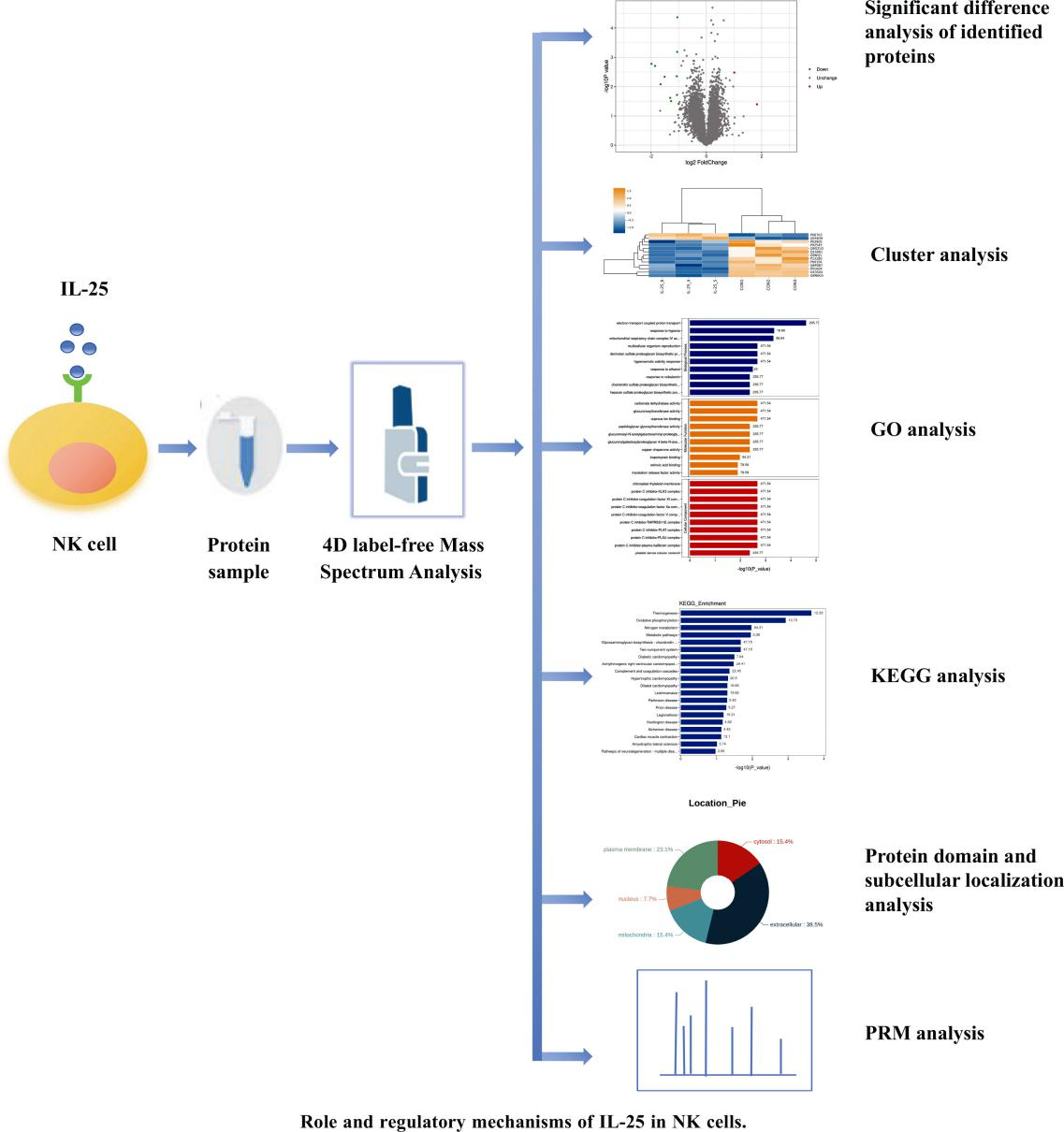
Feng J. et al. Protein and peptide letters. 2023.
Deliverables
1. Comprehensive Experimental Details
2. Materials, Instruments, and Methods
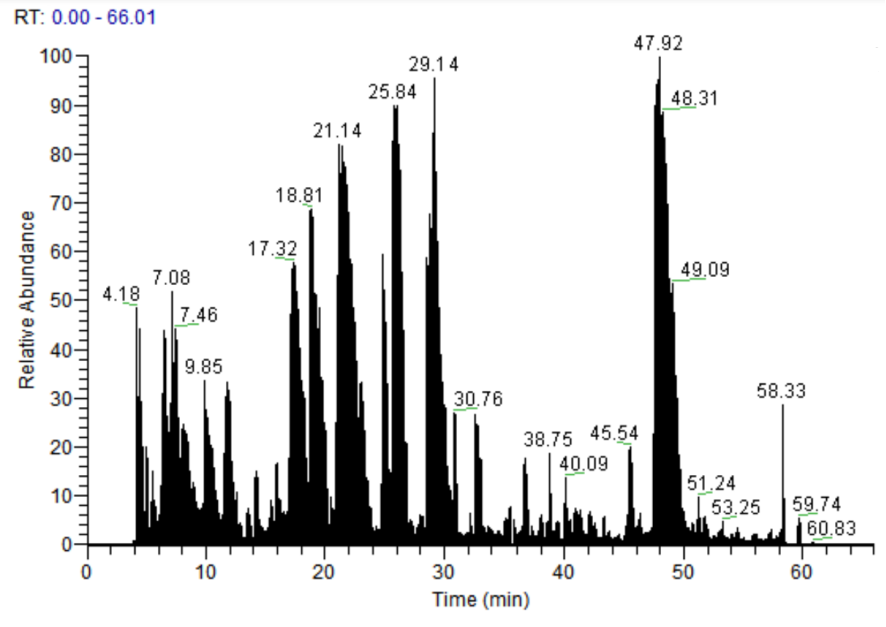
3. Total Ion Chromatogram & Quality Control Assessment (project-dependent)
4. Data Analysis, Preprocessing, and Estimation (project-dependent)
5. Bioinformatics Analysis
6. Raw Data Files
FAQ
Q1: How is 4D-PRM different from conventional PRM?
Both approaches use targeted high-resolution MS/MS to measure predefined peptide targets. 4D-PRM adds ion mobility separation before fragmentation, providing an additional dimension that can help distinguish target ions from interfering species.
Q2: Can multiple proteins be analyzed in the same 4D-PRM assay?
Yes. Multiple peptide targets can be incorporated when their chromatographic behavior, ion mobility characteristics, and acquisition requirements are compatible. Practical assay size depends on the target panel and required quantitative performance.
Q3: Can 4D-PRM support absolute quantification?
Yes, when an appropriate quantitative strategy is established. Stable isotope-labeled peptide standards and suitable calibration approaches can be incorporated for selected targets, with peptide suitability, sample matrix, and sample preparation taken into account.
Contact Us
If you have predefined proteins or peptides for targeted verification, please provide your species, sample type, experimental groups, candidate targets, available proteomics data, and quantitative goal.
MtoZ Biolabs can review the target information and assess whether 4D-PRM provides a meaningful analytical advantage for your study.
MtoZ Biolabs, an integrated chromatography and mass spectrometry (MS) services provider.
Related Services
MRM/PRM Quantitative Proteomics Service
Demo of DDA-MS Analysis Results