Peptide-Peptide/Protein Interaction Analysis Service
MtoZ Biolabs provides Peptide-Peptide/Protein Interaction Analysis Service using Biacore SPR to characterize binding affinity between peptides and proteins or between peptide pairs.
Compare candidate peptides through concentration-dependent binding measurements to support target evaluation, peptide selection, and sequence optimization.
- Label-free, real-time monitoring of peptide binding interactions
- Quantitative affinity assessment from concentration-dependent responses
- Association and dissociation analysis for suitable interactions
What Is Peptide-Peptide/Protein Interaction Analysis?
Peptide interaction analysis characterizes binding between peptides and their molecular partners, including proteins and other peptides. Surface plasmon resonance (SPR) provides a quantitative approach for evaluating these interactions by monitoring changes in the refractive index near a sensor surface as molecules bind.
During SPR analysis, one binding partner is immobilized on a sensor chip while the other is introduced as an analyte at different concentrations. The resulting sensorgrams are used to generate binding curves and estimate the equilibrium dissociation constant ((K_D)). When supported by the experimental design and data quality, association and dissociation rate constants can also be evaluated. These measurements help researchers compare peptide candidates, assess target binding, and prioritize sequences for further investigation.
When Peptide-Peptide/Protein Interaction Analysis Is a Good Fit
SPR-based analysis is particularly useful when a project requires quantitative binding measurements to compare candidate molecules or characterize their interaction behavior.
1. Designed Peptide Evaluation
Determine whether a candidate peptide binds its intended protein target.
2. Peptide-Peptide Binding Studies
Assess binding between two peptides and compare different peptide combinations.
3. Sequence Optimization
Compare wild-type, modified, or mutant peptide sequences for differences in binding affinity.
4. PPI Inhibitor Assessment
Characterize peptide binding to a protein involved in a known protein-protein interaction.
5. Binding Kinetics Analysis
Investigate association and dissociation behavior when kinetic characterization is required and supported by the assay.
Service at MtoZ Biolabs
MtoZ Biolabs provides Biacore SPR analysis to characterize binding interactions between peptides and proteins or between peptide pairs. Experimental conditions are tailored to the molecular properties of the binding partners and the research objectives.
1. Peptide-Protein Binding Analysis
Measure binding between candidate peptides and target proteins to estimate binding affinity (K_D) and characterize association and dissociation kinetics when supported by the experimental data.
2. Peptide-Peptide Binding Analysis
Evaluate binding between peptide pairs and quantify their interaction affinity when molecular properties and assay conditions are suitable for SPR analysis.
3. Peptide Candidate Comparison
Compare multiple peptide sequences or variants under consistent assay conditions to evaluate binding behavior and prioritize candidates based on their measured affinity.
Analysis Workflow
1. Sample Receipt and Project Assessment
Review the submitted peptides, target proteins, sample quantities, purity information, buffer composition, and research objectives. Assess sample suitability and determine an appropriate SPR assay configuration.
2. Sample Preparation and Assay Design
Prepare the peptide and target samples for analysis. Determine which binding partner will be immobilized and which will be introduced as the analyte, considering molecular properties and the intended measurements.
3. Sensor Surface Preparation and Immobilization
Prepare the sensor surface and immobilize the designated binding partner using an appropriate approach for the molecular system.
4. Concentration-Series Injection
Introduce the analyte at a series of concentrations and monitor the SPR response as binding occurs at the sensor surface.
5. Association and Dissociation Measurement
Record the sensor response during association and dissociation. Apply surface regeneration when required by the assay configuration.
6. Data Analysis and Reporting
Process the acquired data using Biacore Insight, estimate (K_D), and evaluate kinetic parameters when included in the study design and supported by the data. Compile the fitted binding curves and analytical findings into a PDF report.
Applications
1. Peptide-Based PPI Inhibitor Research
Characterize binding of peptides designed to interfere with protein-protein interactions.
2. Peptide Lead Optimization
Compare candidate sequences to support selection of peptides with favorable binding characteristics.
3. Peptide Probe Development
Evaluate designed peptides intended to recognize selected molecular targets.
4. Peptide-Based Therapeutic Research
Generate quantitative binding data to support early-stage peptide candidate evaluation.
5. Molecular Recognition Studies
Investigate binding between peptide ligands and their target proteins.
Sample Submission Suggestions
1. Sample Types
Peptides, purified proteins, and selected small-molecule compounds for compatible peptide-target binding studies. Other target formats can be reviewed during project assessment.
2. Sample Quantity
- Purified Proteins: Recommended input of 50-100 µg per target, with purity of at least 90%.
- Peptides and Compounds: Recommended input of 1-2 mg per sample.
3. Sample Handling
- Sample Form: Samples may be submitted as powders or solutions.
- Storage and Shipping: Flash-freeze solution samples in liquid nitrogen and ship on dry ice.
- Buffer Compatibility: Samples should not contain Tris. Avoid DTT, beta-mercaptoethanol, glycerol, detergents, and salt concentrations above 200 mM.
- Project Information: Provide peptide sequences, relevant modifications, target identity, sample concentration, purity information, and buffer composition where available.
Please contact MtoZ Biolabs before shipment to confirm sample compatibility, target requirements, and specific submission instructions.
Why Choose MtoZ Biolabs?
1. Project-Specific Assessment
Each project is evaluated according to the peptide properties, target characteristics, sample conditions, and research objectives to establish an appropriate analytical approach.
2. Integrated Data Analysis and Reporting
Biacore Insight is used for data processing and curve fitting, with (K_D) estimates, fitted binding curves, and a PDF report provided to support result interpretation.
3. One-Time Charge
Our pricing is transparent, with no hidden fees or additional costs.
Deliverables
1. Binding Affinity
Estimated (K_D) values supported by the experimental data.
2. Fitted Binding Curves
Binding curves and corresponding fitting results.
3. PDF Report
Summary of the SPR analysis and reported findings.
Case Study
In a published study, researchers identified conformationally constrained peptides derived from BLIP and BLIP-II that bind β-lactamases and disrupt the BLIP/β-lactamase interaction. SPR was used to characterize the binding of selected cyclic peptides to TEM-1 and KPC-2 β-lactamases, providing experimental evidence of peptide-target binding. The study illustrates how SPR-based binding analysis can support the evaluation and prioritization of candidate peptides designed to target protein-protein interaction interfaces.
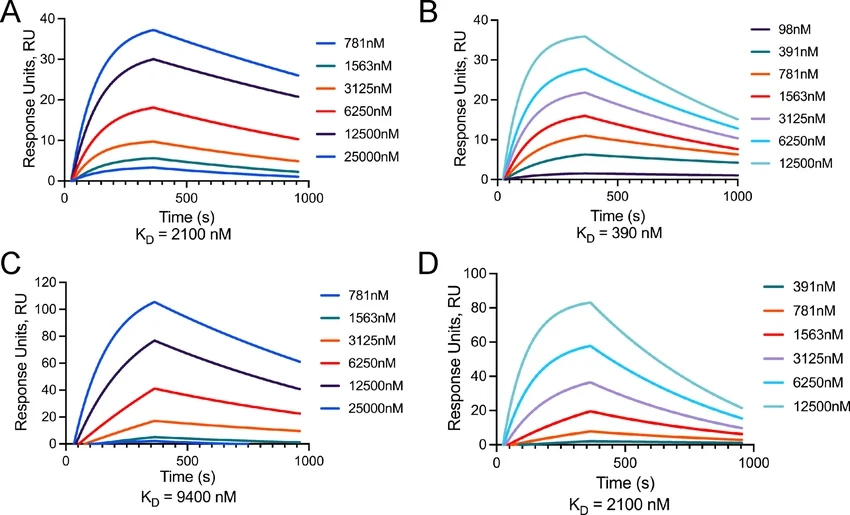
Boragine DM, Huang W. et al. ChemBioChem. 2022.
Figure 1. SPR Traces for the Determination of Peptide Binding Affinity to β‐lactamases
FAQ
Q1. Can cyclic or chemically modified peptides be analyzed by SPR?
Yes. Cyclic and chemically modified peptides can be considered for SPR analysis when their solubility, stability, and molecular properties are compatible with the assay. Because modifications may alter binding behavior, each candidate should be evaluated according to its specific characteristics.
Q2. Does a high-affinity peptide necessarily inhibit its target's protein-protein interaction?
No. A favorable (K_D) indicates binding affinity under the tested in vitro conditions, but it does not establish that the peptide blocks a protein-protein interaction or produces a particular biological effect. Cellular binding behavior may differ from in vitro measurements, and additional competition or functional assays may be needed to evaluate inhibitory activity.
Q3. Can (K_D) values from different SPR experiments be compared directly?
Not always. Differences in immobilization strategy, buffer conditions, molecular constructs, assay configuration, and data-fitting approaches can affect the reported values. Comparisons are most informative when the experimental conditions and analysis methods are appropriately aligned.
Contact Us
Evaluating a designed peptide or comparing candidate sequences against a target molecule? Share your peptide information, target identity, available sample quantities, and research objectives with MtoZ Biolabs. Our team can review your project requirements and help determine an appropriate SPR-based binding analysis strategy.
MtoZ Biolabs, an integrated chromatography and mass spectrometry (MS) services provider.
Related Services
Protein-Protein Interaction Analysis Service
SPR Based Protein Interaction Analysis Service
Demo for Peptide-Peptide/Protein Interaction Analysis Service
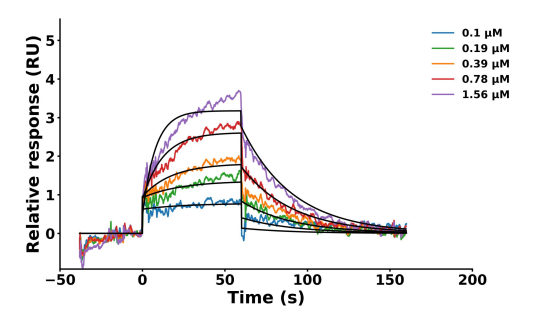
SPR Sensorgrams at Multiple Analyte Concentrations
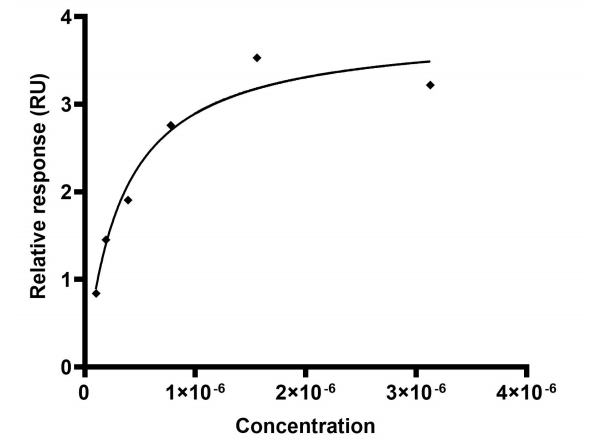
SPR Steady-State Binding Curve

