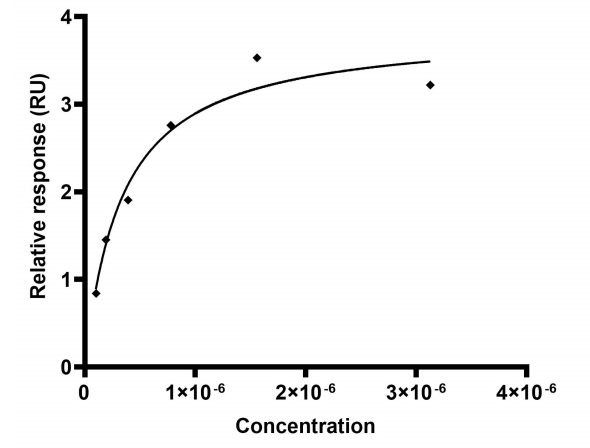
Protein Ligand Binding Assay Service
MtoZ Biolabs provides Protein-Ligand Binding Assay Service to characterize protein-ligand interactions using SPR, BLI, MST, DSF, and ITC, supporting the assessment of binding affinity, kinetics, thermal stability, and binding thermodynamics.
This service helps determine whether candidate compounds bind to target proteins, supporting target validation, lead compound prioritization, and investigations into molecular recognition and binding mechanisms.
- Real-Time Binding Kinetics
- Comprehensive Analysis Platform
- Flexible Experimental Design
- High-Quality and Reproducible Data
What Is a Protein Ligand Binding Assay?
A protein ligand binding assay is an experimental approach used to detect and characterize interactions between proteins and ligands. It evaluates whether binding occurs and investigates binding affinity, binding specificity, and binding kinetics.
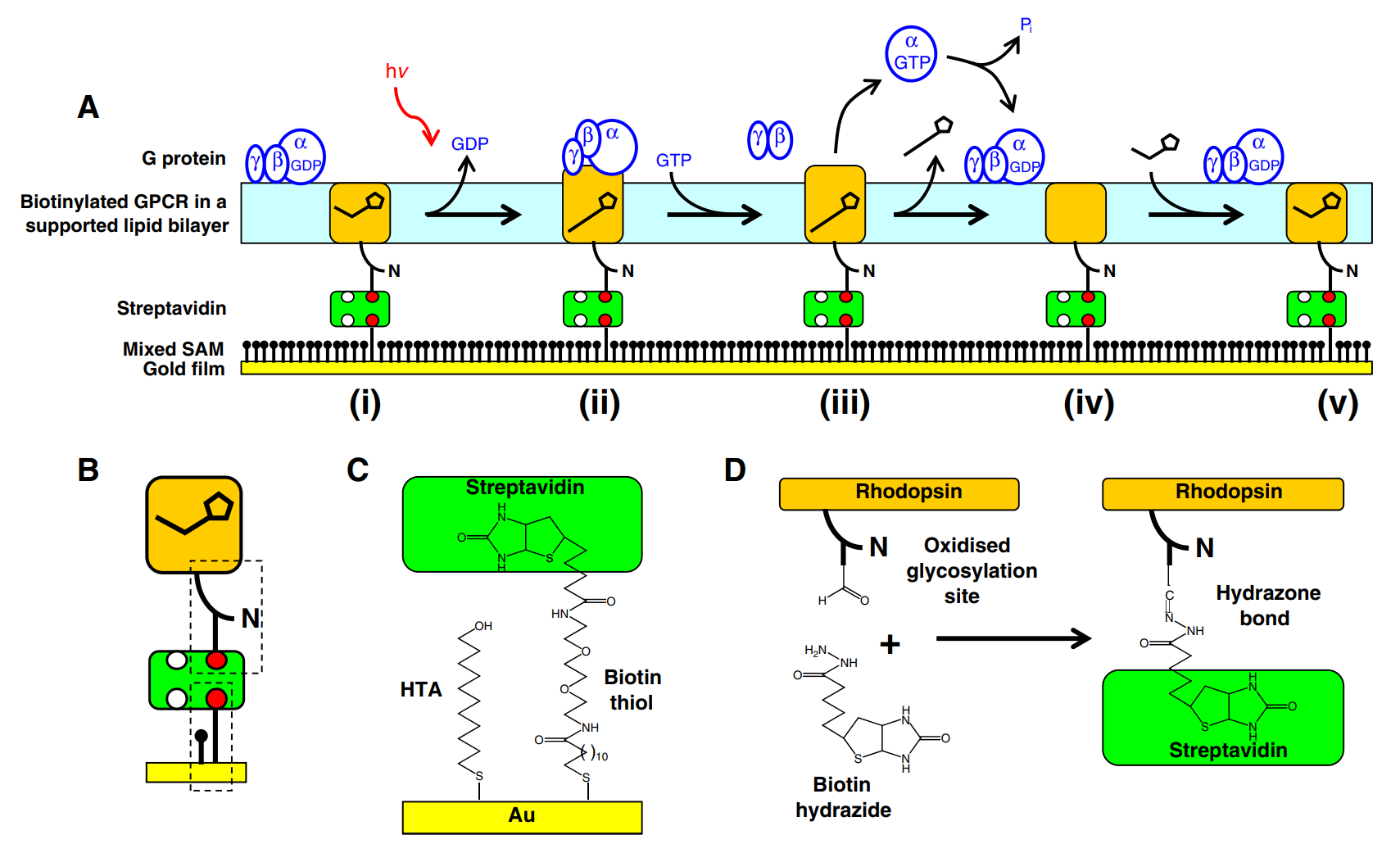
Patching, SG. et al. Biochim Biophys Acta. 2014.
Figure 1. SPR-Based Characterization of Rhodopsin-Ligand Interactions
1. Protein
Typically refers to a target protein, such as a receptor, enzyme, antibody, or other protein of interest.
2. Ligand
A molecule capable of binding to a target protein, including small-molecule compounds, peptides, proteins, and nucleic acids.
These assays help researchers determine whether candidate ligands interact with target proteins and characterize binding properties relevant to molecular recognition, target validation, and candidate compound evaluation.
Choose the Right Protein Ligand Binding Assay Workflow
Protein-ligand binding assay differs in their measurement principles and applications. Use the following comparison to select an appropriate method.
|
Method |
Principle |
Primary Outputs |
Suitable Applications |
|
SPR |
Real-time monitoring of changes in surface plasmon resonance signals during molecular association and dissociation |
Binding curves, binding affinity, and kinetic parameters |
Studies requiring real-time monitoring of association and dissociation and quantitative characterization of binding affinity and kinetics |
|
BLI |
Detection of interference signal changes caused by molecular binding and dissociation using a biosensor |
Real-time binding curves, binding affinity, and kinetic parameters |
Studies requiring real-time binding kinetics, candidate ligand comparison, or antibody epitope binning |
|
MST |
Measurement of changes in molecular thermophoretic behavior across ligand concentrations |
Binding curves and equilibrium binding affinity (KD) |
Studies requiring solution-based assessment of binding affinity or involving limited sample quantities |
|
DSF |
Monitoring of protein thermal unfolding through fluorescence changes |
Melting curves, melting temperature (Tm), and changes in melting temperature (Delta Tm) |
Rapid candidate ligand screening or evaluation of ligand-associated changes in protein thermal stability |
|
ITC |
Measurement of heat released or absorbed during protein-ligand binding |
Binding affinity (KD), enthalpy change (Delta H), entropy change (Delta S), and binding stoichiometry (n) |
Studies requiring direct characterization of binding thermodynamics, including enthalpic and entropic contributions and binding stoichiometry |
Service at MtoZ Biolabs
MtoZ Biolabs provides protein ligand binding assay service using SPR, BLI, MST, DSF, and ITC to investigate defined protein-ligand interactions. Experimental strategies are selected according to the target protein, ligand properties, available sample material, and required evidence.
Our services include:
- Ligand Screening and Ranking: Compare ligand binding to the same target protein to prioritize candidates.
- Binding Affinity Assessment: Use suitable methods, such as SPR, BLI, or MST, to evaluate equilibrium binding affinity between proteins and ligands.
- Structure-Activity Relationship (SAR) Studies: Evaluate binding differences among structurally related compounds to support lead optimization.
- Protein Stability Analysis: Use DSF to investigate changes in protein thermal unfolding behavior following ligand addition.
- Orthogonal Validation: Apply complementary methods as needed to strengthen binding evidence.
Analysis Workflow
1. Sample Preparation
Prepare the target protein and candidate ligand. Assess sample purity, concentration, stability, and buffer compatibility.
2. Method Selection and Condition Optimization
Select SPR, BLI, MST, DSF, or ITC based on the research objectives, molecular properties, and sample conditions. Optimize the experimental conditions accordingly.
3. Concentration-Dependent Binding Experiments
Establish a ligand concentration series and perform binding measurements to obtain experimental response data across different concentrations.
4. Data Fitting and Analysis
Fit the experimental data using an appropriate model for the selected method. Calculate applicable binding affinity parameters (KD) and compile the fitted curves and analytical results into a PDF report.
Service Advantages
1. Comprehensive Binding Analysis Platform
Integrate complementary techniques, including SPR, BLI, MST, DSF, and ITC, to support binding assessment, affinity measurement, kinetic analysis, thermal stability evaluation, and binding thermodynamics characterization.
2. Flexible Experimental Design
Select appropriate methods according to the target protein, ligand properties, sample conditions, and research objectives. Optimize concentration ranges, buffer conditions, and controls to meet project requirements.
3. High-Quality Data
Rigorous experimental quality control and data analysis support reliable and reproducible results.
4. One-Time Charge
Our pricing is transparent, with no hidden fees or additional costs.
Applications
1. Candidate Compound Evaluation
Compare binding-related responses among candidate compounds to support early-stage compound assessment and prioritization.
2. Protein Target Validation
Investigate interactions between a defined target protein and a candidate ligand to support target-focused research.
3. Protein-Ligand Recognition Studies
Characterize molecular interactions to improve understanding of how proteins recognize small molecules or peptide ligands.
4. Ligand-Associated Stability Analysis
Evaluate changes in protein thermal stability following ligand addition and compare responses across experimental conditions.
5. Conformational Dynamics Studies
Use HDX-MS to characterize ligand-responsive protein regions and investigate local or distal changes in protein conformational dynamics.
Sample Submission Suggestions
Sample requirements depend on the selected method, the molecular properties of the target protein and ligand, and the experimental design. Confirm project-specific sample quantities and preparation requirements before shipment.
|
Item |
Sample Requirements |
|
Sample Types |
Purified proteins, small-molecule compounds, or peptides |
|
Recommended Sample Quantity |
Protein: 50–100 µg per sample, with purity ≥90%; small-molecule compounds: 1–2 mg |
|
Sample Format |
Powder or solution |
|
Buffer Requirements |
Avoid samples containing DTT, β-mercaptoethanol, glycerol, or detergents. Salt concentrations should be below 200 mM. |
|
Additional Requirements |
Provide information about the target protein and ligand to assess compatibility with the selected analytical method. |
Deliverables
1. Binding Affinity (KD) Data
2. Fitting Curves
3. PDF Analysis Report
FAQs
Q1: Does a thermal shift detected by DSF prove direct protein-ligand binding?
No. A change in melting temperature may indicate ligand-associated changes in protein stability, but it does not independently establish direct binding or quantify binding affinity. Complementary binding assays can provide additional evidence of molecular interactions.
Q2: Can multiple candidate ligands be compared in the same project?
Yes. Multiple candidate ligands can be evaluated using a consistent experimental design when the selected method is suitable. Consistent sample preparation, buffer conditions, concentration ranges, and experimental controls help ensure meaningful comparisons.
Q3: What information is required to evaluate a protein-ligand binding project?
Provide the target protein identity, candidate ligand information, sample concentration, buffer composition, and research objectives. Information about ligand solubility, protein stability, and the type of evidence required helps determine the most appropriate analytical method.
Contact Us
Planning a protein-ligand binding study? Share your target protein, candidate ligand, available sample material, and research objectives with MtoZ Biolabs. Our team can assess project feasibility and discuss suitable experimental strategies for binding assessment, candidate compound comparison, or ligand-associated protein conformational analysis.
MtoZ Biolabs, an integrated chromatography and mass spectrometry (MS) services provider.
Related Services
Protein Interaction Analysis Service
Demo for Protein Ligand Binding Assay

SPR Kinetic Analysis Parameters
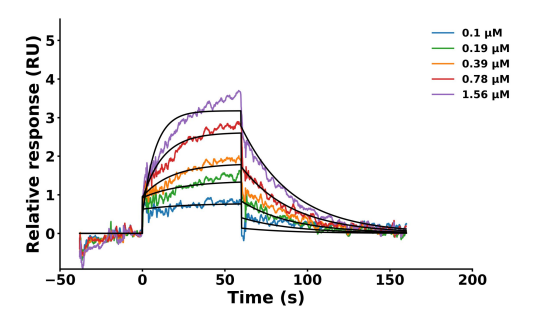
SPR Sensorgrams with Kinetic Fitting