Comparative Proteomics Service
MtoZ Biolabs provides comparative proteomics service using LC-MS/MS-based workflows to compare protein abundance patterns and identify proteomic differences between biological groups.
The service combines high-resolution LC-MS/MS platforms, quantitative proteomics workflows, and integrated bioinformatics analysis to support comparative studies involving cells, tissues, biological fluids, and other complex biological samples.
- Label-free, TMT, and DIA-based quantification options
- High-resolution LC-MS/MS protein profiling
- Differential protein and pathway analysis
What Is Comparative Proteomics?
Comparative proteomics is a mass spectrometry-based approach for comparing protein abundance patterns between biological conditions, sample groups, or experimental states.
By combining protein identification and quantitative analysis, comparative proteomics enables researchers to identify proteomic differences, discover candidate proteins, and interpret biological changes between groups.
Service at MtoZ Biolabs
MtoZ Biolabs provides the Comparative Proteomics Service using LC-MS/MS-based workflows for protein profile comparison across biological samples.
Based on sample characteristics, comparison design, and research objectives, suitable quantitative strategies can be selected, including label-free quantification, TMT-based quantification, and DIA-based proteomics.
The service supports comparative analysis of cells, tissues, biological fluids, microorganisms, and other compatible samples. Results can include protein identification, abundance comparison, differential protein analysis, and downstream biological interpretation through statistical and bioinformatics analysis.
When Comparative Proteomics Is a Good Fit
The Comparative Proteomics Service is suitable for studies requiring protein-level comparison between different biological groups or conditions, including:
- comparing proteome changes between experimental groups;
- identifying candidate proteins associated with biological conditions;
- evaluating molecular responses after treatment or perturbation;
- discovering protein signatures for further validation;
- generating candidates for targeted proteomics analysis.
Analysis Workflow
1. Study Design and Sample Evaluation
Sample type, comparison groups, replicate design, and analytical objectives are reviewed to determine an appropriate workflow.
2. Protein Extraction and Preparation
Proteins are extracted, quality assessed, digested, and prepared for LC-MS/MS analysis.
3. LC-MS/MS Analysis
Samples are analyzed using an appropriate quantitative proteomics strategy according to study requirements.
4. Protein Identification and Quantification
MS data are processed to generate protein identification and quantitative comparison datasets.
5. Comparative Data Analysis
Protein abundance differences are evaluated through statistical analysis, differential analysis, functional annotation, enrichment analysis, and pathway interpretation.
Why Choose MtoZ Biolabs?
1. Advanced Mass Spectrometry Platforms
High-resolution LC-MS/MS platforms support comprehensive protein profiling and quantitative comparison.
2. Flexible Quantitative Strategy Selection
Label-free, TMT-based, and DIA workflows are selected according to sample characteristics and study objectives.
3. Integrated Data Analysis
Differential analysis, functional annotation, and pathway interpretation support biological insights from proteomics data.
4. Transparent Project Planning and Pricing
Clear workflow design, deliverables, and pricing information help researchers plan their studies efficiently.
5. Technical Consultation and Support
Technical guidance is provided for workflow selection, study design, and project execution.
Deliverables
1. Comprehensive Experimental Details
2. Materials, Instruments, and Methods
3. Relevant Liquid Chromatography and Mass Spectrometry Parameters
4. The Detailed Information of Proteomics
5. Mass Spectrometry Image
6. Raw Data
FAQ
Q1. What is the difference between comparative proteomics and quantitative proteomics?
Comparative proteomics describes the purpose of comparing protein profiles between groups, while quantitative proteomics refers to the methods used to measure protein abundance differences. Quantitative approaches such as label-free quantification, TMT, and DIA are commonly used for comparative proteomics studies.
Q2. Can comparative proteomics identify differentially expressed proteins?
Yes. With appropriate quantitative workflows, biological replicates, and statistical analysis, comparative proteomics can identify proteins showing significant abundance differences between groups.
Q3. How do I choose between comparative proteomics and targeted proteomics?
Comparative proteomics is suitable for broad protein discovery and group comparison, while PRM or MRM is more suitable for focused quantification of predefined protein targets.
Q4. What information is needed before starting a comparative proteomics study?
Please provide sample type, number of groups, replicate design, available sample information, and research objectives. These details help determine the appropriate LC-MS/MS strategy.
Case Study
1. Comparative Proteomics of Saliva of Healthy and Gingivitis Individuals from Rio de Janeiro
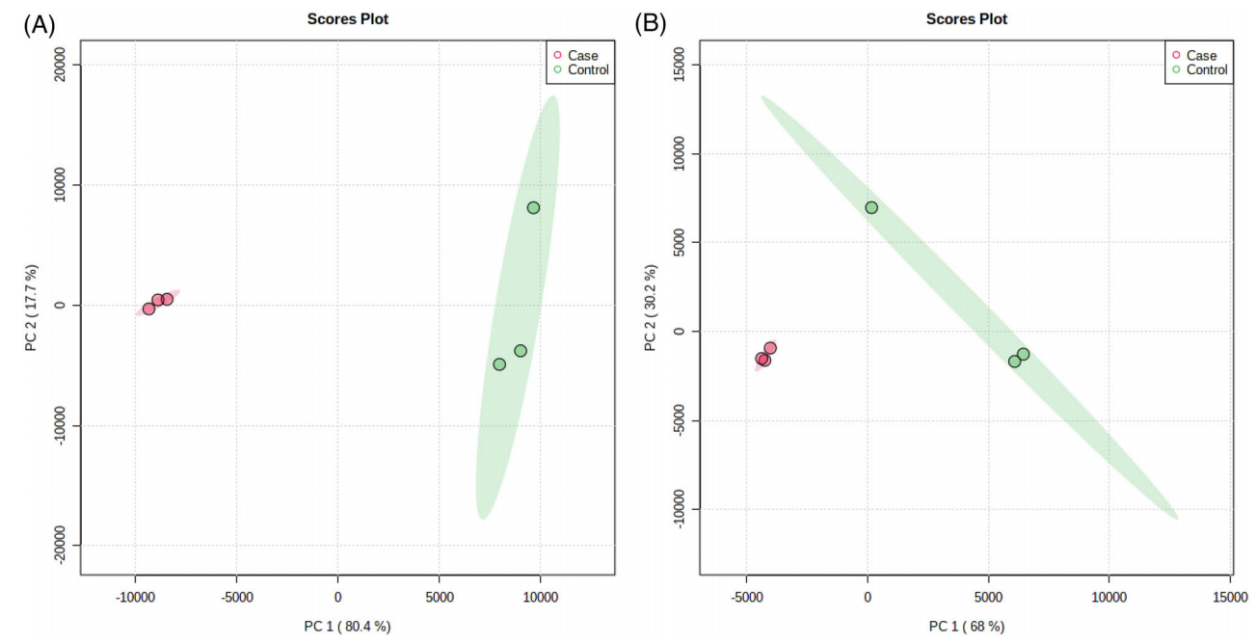
In this study, researchers identified human and bacterial proteomes from the saliva of individuals with gingivitis or healthy volunteers. The reported cohort included 18 participants (6 with gingivitis and 12 healthy controls). Comparative proteomics was performed using quantitative mass spectrometry. A total of 74 human proteins and 116 bacterial proteins were identified in saliva. The primary functional categories altered in the human proteome were immune response, followed by transport and protease inhibition. In the bacterial proteome, most identified proteins originated from Fusobacteria, followed by Chlamydiae and Spirochaetes. Statistically significant differences were observed between the groups. The 15 most important human proteins influencing the differences between the case and control groups included cystatin S, α-amylase, lactotransferrin, and elongation factor E. Researchers suggested that bacterial proteins from Porphyromonas gingivalis and Fusobacterium nucleatum subspecies, associated with the red and orange complexes, are closely linked to the development of periodontal disease.
Da, Silva, CVF. et al. Proteomics Clin Appl. 2023.
Figure 1. Principal Component Analysis of Case and Control Groups of Human and Bacterial Protein
Contact Us
MtoZ Biolabs provides mass spectrometry-based Comparative Proteomics Service for researchers seeking to compare protein profiles across biological conditions.
Contact our technical team with your sample information and study objectives to determine the most suitable proteomics workflow.
