SWATH Based Protein Quantitative Service
MtoZ Biolabs provides SWATH-oriented quantitative proteomics solutions for broad protein profiling and reproducible quantitative comparison across biological samples.
High-resolution DIA LC-MS/MS supports consistent peptide and protein measurement across multi-sample studies, with standardized data processing and downstream biological analysis.
- High-resolution DIA LC-MS/MS for quantitative proteome profiling
- Reproducible protein comparison across multi-sample studies
- Low-missingness quantitative data for downstream analysis
Overview
SWATH (Sequential Window Acquisition of All Theoretical Fragment Ion Spectra) is a data-independent acquisition (DIA)-based strategy designed for comprehensive and reproducible quantitative proteomics.
The precursor mass range is divided into sequential isolation windows, enabling systematic collection of fragment-ion information throughout the LC-MS/MS run. This acquisition approach supports broad proteome profiling and consistent protein measurement across multiple samples.
SWATH/DIA workflows are particularly valuable for comparative proteomics studies in which proteome depth, cross-sample consistency, and low missingness are important for downstream statistical and biological analysis.
SWATH Based Protein Quantitative Service at MtoZ Biolabs
MtoZ Biolabs provides SWATH-oriented quantitative proteomics solutions for multi-sample studies requiring broad proteome profiling and consistent protein quantification.
High-resolution DIA LC-MS/MS workflows are configured according to sample complexity, study scale, and quantitative objectives. Analytical platforms include Orbitrap Exploris 480 and Orbitrap Astral, with timsTOF-based ion mobility workflows available for suitable project requirements.
Our workflows support reproducible protein profiling across complex biological samples and generate peptide- and protein-level quantitative datasets for group comparison, statistical analysis, and downstream biological interpretation. Platform selection and analytical conditions are tailored to the required proteome depth, sample characteristics, and overall study design.
When This Service Is a Good Fit
SWATH/DIA quantitative proteomics is particularly suitable when:
- protein abundance needs to be compared across multiple samples or experimental groups;
- the study involves tens to hundreds of biological samples;
- low missingness is important for downstream statistical analysis;
- consistent quantitative performance is required across analytical batches;
- broad proteome screening is needed before targeted validation;
- suitable reference sequence resources are available for the study organism.
For projects focused on highly sensitive measurement of only a small number of predefined proteins, targeted approaches such as PRM or MRM may be more appropriate.
The standard workflow is designed for relative protein quantification rather than absolute concentration measurement.
Analysis Workflow
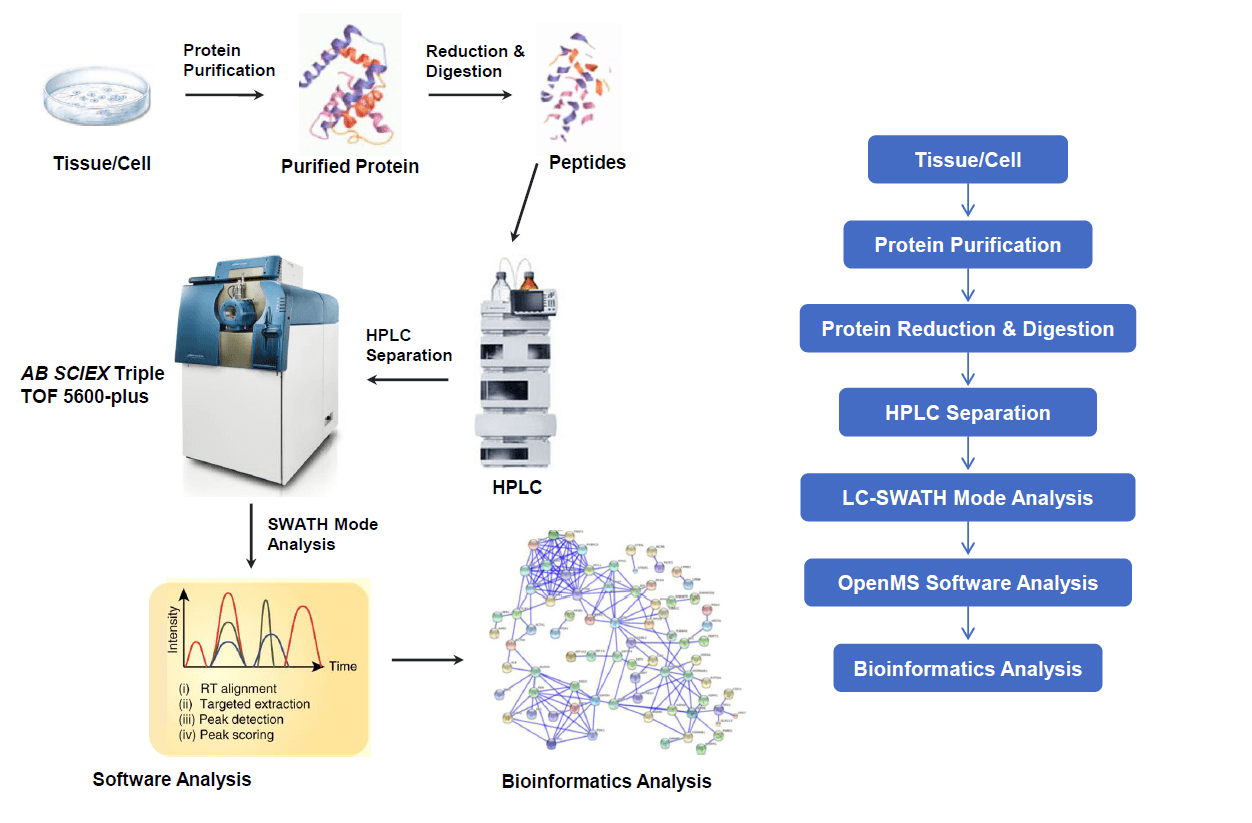
Figure 1. Workflow for SWATH proteomics
Sample Submission Requirements
1. Supported Sample Types
Suitable biological materials include animal and plant tissues, cultured cells, microorganisms, biological fluids, and other protein-containing samples.
2. Protein Amount and Concentration
Minimum protein amount: >20 μg per sample
Recommended protein amount: ≥50 μg per sample
Recommended concentration: >0.5 μg/μL
Final requirements may vary according to sample type and project design.
3. Storage and Shipping
Samples should be maintained under appropriate frozen conditions and shipped on dry ice.
High concentrations of salts, detergents, and other LC-MS/MS-incompatible components should be avoided. Severely degraded samples may compromise identification depth and quantitative reliability.
Applications
1. Large-Cohort Comparative Proteomics
Compare protein abundance across larger biological cohorts while maintaining consistent quantitative measurement across samples and batches.
2. Biomarker Candidate Discovery
Identify proteins showing reproducible abundance differences between study groups and prioritize candidates for subsequent validation.
3. Drug and Perturbation Response Studies
Characterize proteome-level changes following drug treatment, genetic manipulation, pathway perturbation, or other experimental interventions.
4. Systems Biology and Molecular Association Studies
Generate quantitative proteomic datasets for investigating coordinated pathways, molecular phenotypes, and protein-level associations across biological systems.
Service Advantages
1. High Quantitative Reproducibility
For qualified samples and appropriate study designs, standardized DIA workflows can achieve quantitative CVs below 10% and missing values below 5%, supporting robust multi-sample comparison.
2. Deep Proteome Coverage
High-resolution mass spectrometry supports broad peptide and protein identification across complex biological samples.
3. Flexible Data Reanalysis
Comprehensive DIA datasets can be revisited as analytical priorities, candidate targets, or biological questions evolve.
4. Scalable Multi-Sample Analysis
Standardized workflows support consistent processing and quantitative comparison across larger study sets.
Deliverables
1. Peptide and Protein Identification Results
Identification tables containing peptide- and protein-level information.
2. Protein Quantification Matrix
Relative protein abundance data across individual samples and experimental groups.
3. Quality Control Results
Identification and quantitative quality metrics for assessment of data consistency.
4. Differential Protein Analysis
Statistical comparison of protein abundance between predefined experimental groups.
5. Bioinformatics Analysis
PCA, clustering, GO, KEGG, PPI, and other project-specific analyses where applicable.
6. Raw and Processed Data
Raw mass spectrometry files, processed quantitative tables, figures, and PDF report.
FAQ
Q1. Is SWATH-MS a type of DIA?
Yes. SWATH is a specific implementation within the broader DIA framework. It uses sequential precursor isolation windows to systematically acquire fragment-ion information across a defined mass range.
Q2. What types of studies are most suitable for SWATH/DIA quantitative proteomics?
The workflow is particularly suitable for multi-sample comparative proteomics, cohort studies, treatment-response studies, and projects requiring reproducible quantitative protein profiling with low missingness.
Q3. Is SWATH/DIA suitable for low-abundance proteins?
Detection of low-abundance proteins depends on sample complexity and protein abundance range. For very low-abundance targets, depletion, fractionation, enrichment, or targeted PRM/MRM analysis may be considered.
Q4. How long does a typical project take?
A typical project requires approximately 3-4 weeks after qualified samples are received. Turnaround time depends on sample number, sample preparation requirements, acquisition workload, and downstream analysis.
Contact Us
SWATH/DIA quantitative proteomics is particularly suitable for projects requiring consistent protein comparison across larger sample sets.
Contact MtoZ Biolabs with your sample type, organism, sample number, experimental groups, and research objectives to establish an appropriate quantitative proteomics workflow for your study.
MtoZ Biolabs, an integrated chromatography and mass spectrometry (MS) services provider.
Related Services
Quantitative Proteomics Service
Protein Quantitation Assays Service
Demo for DIA Proteomics Analysis
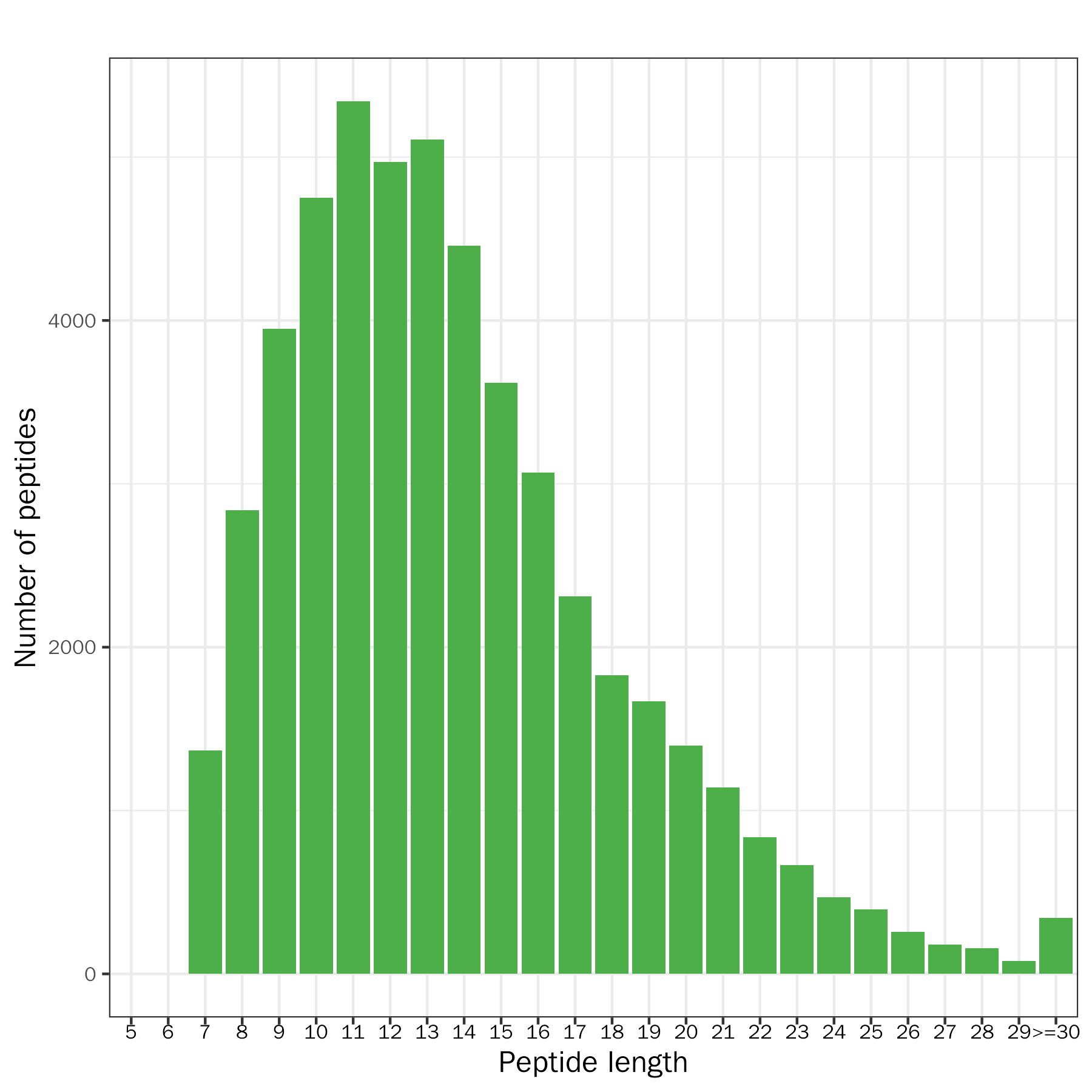
Peptide Length Distribution
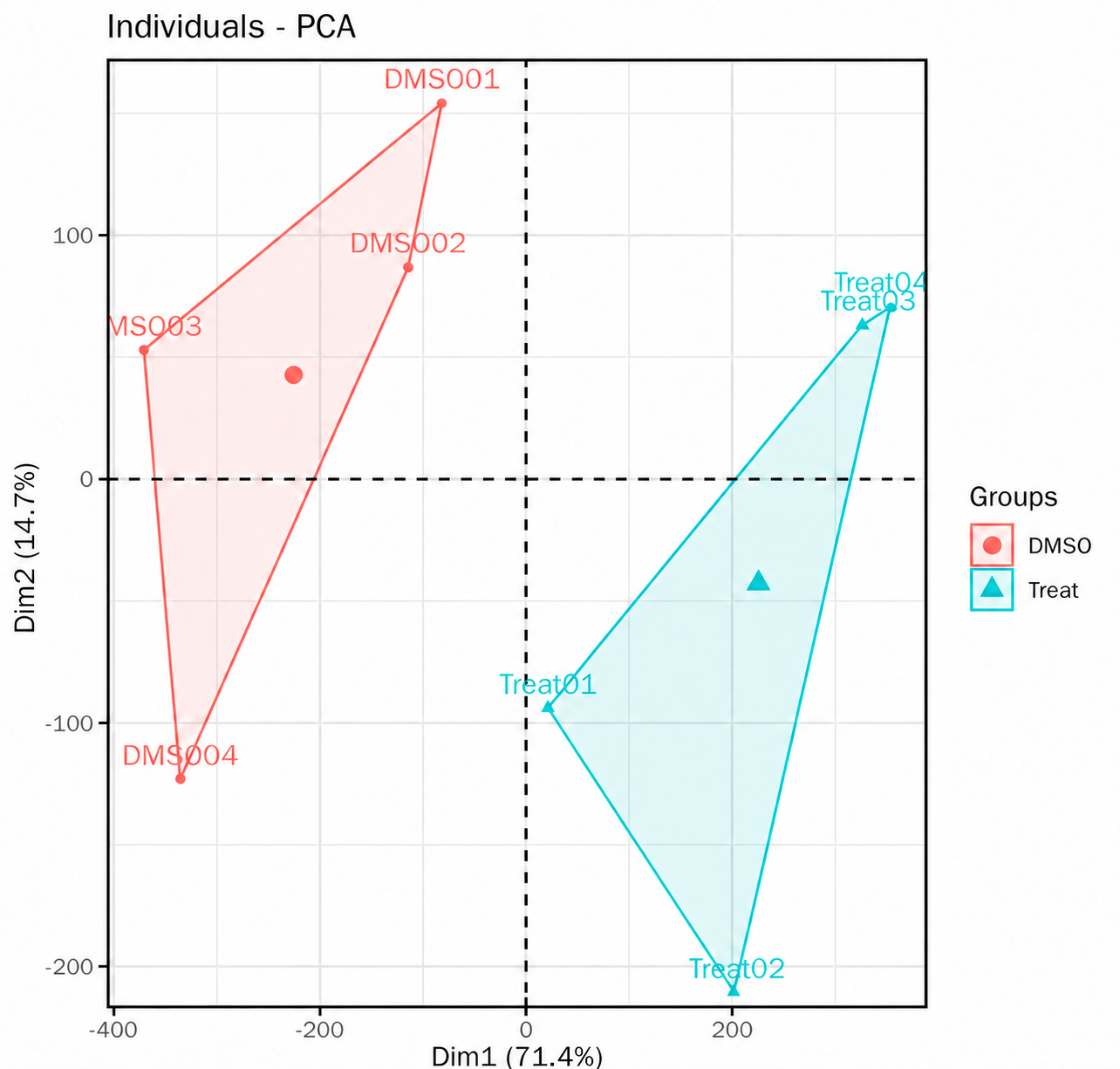
PCA Plot of Sample Grouping
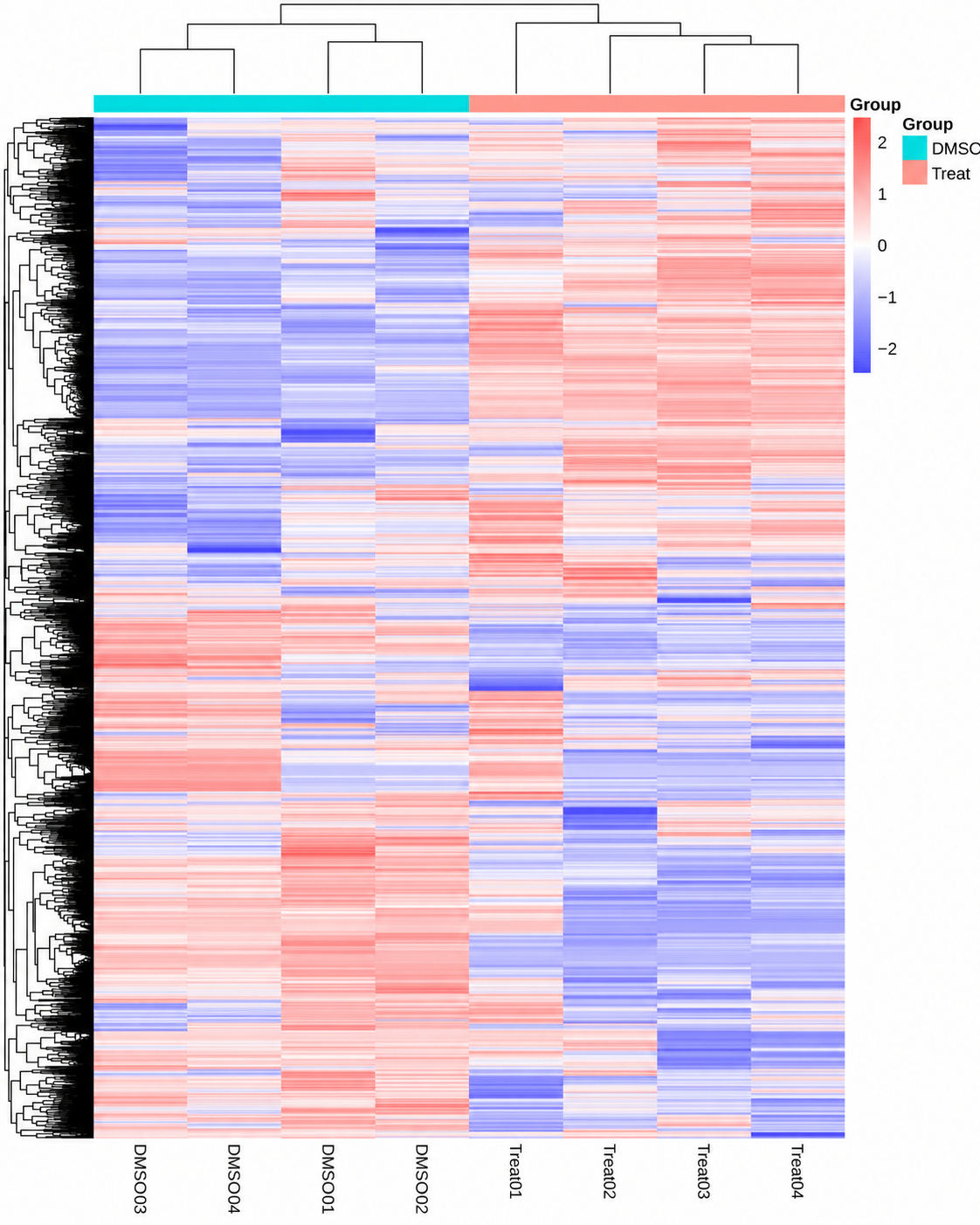
Hierarchical Clustering of Protein Abundance